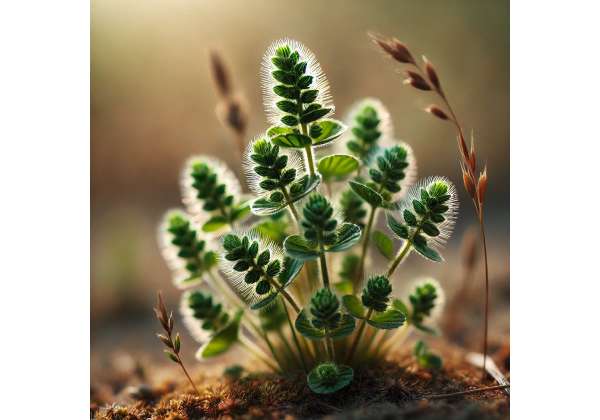
Fleawort is one of those old herbal names that still matters, but only if it is used carefully. In traditional European herbal medicine, fleawort refers to psyllium seed from small Plantago species, especially Plantago afra and Plantago indica, with Plantago psyllium often appearing in older botanical literature. Today, people usually know the plant through the broader word “psyllium,” which is now also used for related products such as ispaghula husk. That overlap can make the herb sound simpler than it really is.
At its core, fleawort is a bulk-forming fiber medicine. Its seeds contain mucilage that swells strongly in water, forming a gel-like mass that softens stools, increases stool bulk, and can make bowel movements easier and less painful. Beyond constipation, psyllium-type products are also studied for cholesterol lowering, blood sugar support, and bowel regularity. Still, not every study clearly separates Plantago psyllium from other psyllium species or husk preparations.
That is why this herb is best understood as effective, but not interchangeable. Its benefits are real, its safety rules matter, and correct form, fluid intake, and dosing make all the difference.
Quick Facts
- Fleawort is best known as a bulk-forming laxative that helps habitual constipation and promotes softer stools.
- It may also support LDL cholesterol and blood sugar control, although much of that evidence comes from broader psyllium research rather than perfectly separated Plantago psyllium studies.
- A common medicinal seed range for adults is 25 to 40 g daily in 3 divided doses, always with plenty of liquid.
- Taking fleawort without enough water can cause choking or intestinal blockage.
- People with swallowing problems, bowel narrowing, suspected obstruction, or unexplained rectal bleeding should avoid it unless a clinician advises otherwise.
Table of Contents
- What Is Fleawort
- Key Ingredients and How It Works
- What Fleawort Helps With
- How to Use Fleawort
- How Much Fleawort Per Day
- Safety, Interactions, and Who Should Avoid It
- What the Evidence Actually Says
What Is Fleawort
Fleawort is the traditional common name for certain psyllium-producing Plantago seeds. In practical herbal medicine, it usually refers to the seeds of Plantago afra or Plantago indica, while older literature may also use the name Plantago psyllium. This is more than a naming footnote. It is the reason many articles blur together several related plant materials that are not exactly the same.
The word “psyllium” is often used broadly in commerce. A supplement label may refer to psyllium seed, psyllium husk, or ispaghula husk, even though those materials can come from different Plantago species and differ in strength, swelling capacity, and studied dose. Fleawort, in the stricter herbal sense, is seed-based. Many modern over-the-counter products, however, rely more heavily on husk or on Plantago ovata. That means the evidence readers see online often applies to the psyllium category as a whole, not always to fleawort seed alone.
Even with that distinction, fleawort has a clear medicinal identity. It is a fiber herb used mainly for bowel regulation. Unlike stimulant laxatives, it does not force the bowel to contract aggressively. Instead, the seeds absorb water, expand, and form a soft mucilaginous bulk in the intestine. That bulk helps increase stool mass, improve moisture, and stimulate more natural bowel movement through physical rather than irritating action.
This gives fleawort a different profile from harsher options. In constipation care, it belongs in the same broad conversation as dietary fiber and other bulk agents, but not in the same class as fast-acting purgatives. That is why it can also be useful in conditions where softer stools are desirable, such as hemorrhoids, anal fissures, or recovery after anorectal procedures.
Another important point is that fleawort is not primarily a whole-plant herb in the way leaf or root medicines are discussed. The medicinal part is the ripe, dry seed, usually whole or powdered. Its activity comes mostly from fiber and mucilage, not from essential oils, alkaloids, or strongly absorbed phytochemicals. That low-systemic profile explains why the herb is often tolerated well when used correctly, but also why its effects depend heavily on water.
In daily life, fleawort makes the most sense for people dealing with sluggish, dry, or difficult stools rather than for people seeking a general “detox” herb. It is functional, not flashy. It does not act like a tonic, sedative, or stimulating digestive bitter. Its main job is mechanical support inside the gut.
That may sound simple, but it is exactly why fleawort remains relevant. When an herb can improve bowel regularity without strong irritation, it earns a lasting place in both pharmacy and self-care. The challenge is that the naming around psyllium can make a clear herb sound botanically messy. Understanding that distinction is the first step toward using fleawort wisely.
Key Ingredients and How It Works
The most important ingredient in fleawort is mucilage, a gel-forming soluble fiber concentrated in the seed coat and surrounding layers. This mucilage is rich in complex polysaccharides, especially arabinoxylan-type fibers, which can bind large amounts of water and swell into a soft, slippery mass. That swelling action is the center of the herb’s medicinal value.
In practical terms, fleawort works because the seed does not simply “add fiber.” It adds a very specific kind of water-holding fiber. When mixed with adequate liquid, the seeds expand and create a gel-like bulk that passes through the digestive tract. This can:
- Increase stool volume
- Soften dry stools
- Reduce stool hardness
- Improve ease of passage
- Encourage a more natural bowel movement reflex
This mechanism is why fleawort is classed as a bulk-forming laxative. It does not depend on direct stimulation of intestinal nerves. It works physically by changing stool texture, stool bulk, and water retention in the bowel. That makes it gentler than stimulant agents, although not automatically easier to use. It still has to be taken with enough fluid to work safely.
High-quality psyllium-type seeds can absorb many times their own weight in water. That is a remarkable property and the reason dosing must always be paired with liquid instructions. A seed that swells this strongly can help the bowel when used correctly, but it can also create serious problems if swallowed dry or with too little fluid.
Beyond mucilage, fleawort seeds contain smaller amounts of protein, fixed oil, sterols, and other minor constituents, but these play a supporting role. The medicinal identity of the herb is driven primarily by fiber, not by a highly active absorbed chemical. That is one reason fleawort behaves differently from many other herbal medicines. It acts mainly inside the gut rather than through systemic circulation.
This also explains why fleawort is often compared with other fiber medicines rather than aromatic or anti-inflammatory herbs. The best comparison is with other mucilage-rich or gel-forming fibers, including flax fiber, though fleawort is generally more standardized for laxative-style use. The difference is that fleawort’s swelling effect is particularly strong and clinically relevant.
A second useful point is the difference between seed and husk. Husk preparations usually have stronger swelling capacity per gram than whole seed. That matters because many modern fiber supplements use husk, while the fleawort monographs focus on psyllium seed. A person switching between products may think the materials are interchangeable when they are not. Whole seed, powdered seed, husk, and hydrophilic mucilloid products can all behave somewhat differently in dose and tolerance.
So how does fleawort work in plain language?
- You swallow the seed with enough liquid.
- The seed absorbs water and expands.
- The gel-like mass increases stool softness and bulk.
- The bowel wall senses more volume.
- This encourages easier, more regular defecation.
That mechanism sounds simple because it is simple. Fleawort’s power comes from physical action, not from chemical drama. The seed behaves like a structured, medicinal fiber. That is precisely why it can help with constipation, stool softening, and even some metabolic outcomes, yet still require careful instruction. With fleawort, water is not optional. It is part of the medicine.
What Fleawort Helps With
Fleawort helps most clearly with habitual constipation and with situations where soft, easy stool passage is desirable. That is the most established use and the one with the best regulatory and clinical support. If a person has infrequent, dry, or difficult bowel movements and needs a gentler bowel-regulating option, fleawort is one of the more credible herbal choices.
Its best-supported uses include:
- Habitual constipation
- Stool softening when straining should be minimized
- Hemorrhoids with painful passage
- Anal fissures
- Support after anal or rectal surgery when easy defecation is desirable
These uses make sense because the herb changes stool structure rather than triggering urgent evacuation. The effect usually begins within 12 to 24 hours, though full benefit may take 2 to 3 days. That timing is important. People who expect a same-day purge may think fleawort is weak, but that is simply not the right use pattern. It is meant to regulate, not shock the bowel.
A second area of interest is cholesterol support. Modern meta-analyses of psyllium broadly show reductions in LDL cholesterol and total cholesterol. That said, readers should know that much of this evidence comes from the broader psyllium literature and often involves Plantago ovata or mixed psyllium products rather than perfectly isolated Plantago psyllium seed. The practical takeaway is still useful: gel-forming psyllium fibers can help reduce LDL, but the evidence base is broader than fleawort seed alone.
Blood sugar support is another plausible benefit. Psyllium-type fibers can slow carbohydrate absorption and flatten post-meal glucose spikes. Recent meta-analytic work suggests psyllium can improve fasting blood sugar and HbA1c in some adults, especially at higher or repeated doses. Again, however, this is mostly category-level evidence rather than perfectly species-specific fleawort research.
For digestive comfort, fleawort can sometimes help people with irregularity-predominant bowel symptoms, especially where hard stools are part of the problem. But it is not the same as a direct antispasmodic digestive herb. People with gas-heavy or cramping IBS may compare it with peppermint, but the two work very differently. Peppermint mainly relaxes smooth muscle. Fleawort mainly changes stool bulk and water retention.
A realistic benefit hierarchy looks like this:
Most established:
- Habitual constipation
- Stool softening in painful defecation
Reasonably supported:
- LDL cholesterol lowering
- Some glycemic support
- Supportive role in bowel regularity
Possible but more context-dependent:
- Selected IBS-type constipation symptoms
- Satiety support as part of higher-fiber intake
Not established as a main use:
- Rapid laxation
- Weight-loss treatment by itself
- Replacement for evaluation of serious bowel symptoms
This last point matters. Fleawort is not a cure for abdominal pain, unexplained bowel change, bleeding, or bowel obstruction risk. It is a very good fiber medicine inside the right lane. It is a poor choice when the underlying problem is uncertain.
So what does fleawort really help with? Above all, it helps the bowel hold water, build form, and move more comfortably. Everything else, from cholesterol to glycemic benefit, is secondary to that gel-forming fiber action. That is why it remains both humble and clinically useful. It does one main job well, and that is often enough.
How to Use Fleawort
Fleawort is usually used as whole seed, powdered seed, or a dry oral preparation that is mixed with liquid and swallowed. Unlike many herbs, it is not primarily used as a tea. The medicinal method depends on swallowing the seed or powder with enough water to let the mucilage swell safely inside the gut.
This makes form selection especially important. Common preparations include:
- Whole ripe dry seeds
- Powdered seeds
- Sachets or granules for oral suspension
- Seed-based fiber mixtures
The best method depends on the product. Whole seeds may be stirred into water or juice and swallowed promptly. Powders or sachets are usually mixed into a liquid and taken right away before they thicken too much in the glass. Some people add psyllium-type seed preparations to soft food, but liquid guidance should still be followed because the swelling action remains the same.
A few practical rules matter every time:
- Measure the dose correctly.
- Mix with a generous amount of liquid.
- Swallow promptly after mixing.
- Follow with more liquid if directed.
- Do not take it immediately before bed.
Timing also matters. Regulatory guidance advises taking fleawort during the day and keeping it at least half an hour to one hour before or after other medicines. That helps reduce the chance that the fiber gel will interfere with medication absorption.
This interaction issue is one of the most overlooked parts of use. Because fleawort works by creating a physical gel mass, it can slow or reduce uptake of some orally administered substances. That is why it should be treated more like a timing-sensitive medicine than like a casual sprinkle-on fiber.
Fleawort is also different from faster laxatives. People who want same-night relief may be more familiar with senna, but senna and fleawort are not substitutes. Senna stimulates the bowel. Fleawort builds bulk and softens stool. They answer different problems and should not be confused.
How often should it be used? That depends on the goal. For constipation, it is commonly taken in divided daily doses. For stool softening, it may be used more steadily for a short period while symptoms resolve. Improvement can begin within a day, but consistent benefit often builds over several days.
A few common mistakes are worth avoiding:
- Swallowing the product with too little fluid
- Taking it right before lying down
- Using it for sudden severe constipation without evaluation
- Combining it casually with multiple laxatives
- Taking it right with other medicines
It is also wise to start thoughtfully rather than aggressively. Even though fleawort is gentle in mechanism, rapid increases in fiber can cause bloating, fullness, or abdominal pressure. A gradual build can help the gut adjust, especially in people who normally eat very little fiber.
In practical self-care, fleawort works best when the routine is disciplined: enough water, enough spacing from medicines, patience for the delayed effect, and a clear reason for use. That may sound less glamorous than a “gut detox” trend, but it is exactly what makes the herb reliable. Fleawort is not hard to use, but it does reward precision.
How Much Fleawort Per Day
For psyllium seed as covered in the EMA herbal monograph, the adult and adolescent daily range is 25 to 40 g of herbal substance or corresponding preparation, divided into 3 single doses. For children 6 to 12 years old, the recommended daily range is 12 to 25 g in 3 divided doses. These numbers are higher than many consumer expectations because they refer to psyllium seed, not necessarily husk-based products.
That seed-versus-husk distinction is essential. Husk products usually have greater swelling power per gram, so commercial psyllium husk doses are often lower than fleawort seed doses. Many supplement labels in everyday commerce refer to husk or mixed psyllium products rather than to Plantago psyllium seed alone. A person reading online advice may therefore see smaller gram amounts than the monograph lists for seed. Both can be correct within their own preparation type.
For fleawort seed specifically, practical use looks like this:
- Adults and adolescents over 12 years: 25 to 40 g daily
- Children 6 to 12 years: 12 to 25 g daily
- Divide the total into 3 single doses
- Always take with enough aqueous liquid
- Use during the day, not right before bed
Fluid guidance is not a side note. The monograph advises about 30 mL of liquid per 1 g of herbal substance. That means a 10 g single dose requires roughly 300 mL of water, juice, milk, or similar liquid. This sounds like a lot because it is. The liquid is part of what makes the dose safe.
A second dosing point is duration. If constipation does not improve within about 3 days, medical advice should be sought. Fleawort is appropriate for habitual constipation, but failure to respond can signal that the problem needs a different approach or more evaluation.
Readers should also know that meta-analysis on constipation suggests psyllium-type fiber tends to perform best when daily intake exceeds 10 g and when treatment continues for at least 4 weeks. That finding is useful, but it comes from broader fiber and psyllium studies, not only from Plantago psyllium seed monographs. It does, however, support the idea that fleawort is not a low-dose sprinkle remedy. It needs meaningful volume to work well.
For blood sugar or cholesterol support, many commercial products use lower gram amounts of husk or standardized psyllium fiber than the seed monograph does. This is another reason not to copy a dose from one product to another without checking the exact plant part and preparation.
A few sound dosing rules are:
- Match the dose to the exact preparation.
- Use divided doses instead of one large dry bolus.
- Pair every dose with enough fluid.
- Leave time between fleawort and other medicines.
- Reassess if there is no benefit within several days.
Fleawort dosing is a good example of why fiber medicines are not casual herbs. They seem simple, but the details matter. Correct dose, correct liquid, correct form, and correct timing are what turn a swelling seed into a safe therapeutic tool. Without those, even a gentle bulk laxative can become unsafe.
Safety, Interactions, and Who Should Avoid It
Fleawort is generally safe when used correctly, but its safety depends on one rule above all others: it must be taken with enough liquid. Most of the serious harm associated with psyllium seed or similar products comes not from toxicity, but from swelling in the wrong place or under the wrong conditions. If swallowed with too little fluid, fleawort can expand in the throat or esophagus and cause choking, or contribute to intestinal obstruction further down the digestive tract.
That is why it should not be used by people with:
- Difficulty swallowing
- Throat problems
- Esophageal narrowing or disease
- Known gastrointestinal constrictions
- Suspected or existing bowel obstruction
- Ileus or paralytic bowel states
- Megacolon
- Fecal impaction without clinical guidance
It should also be avoided in people with sudden bowel habit change lasting more than 2 weeks, undiagnosed rectal bleeding, or failure to defecate after using a laxative. These symptoms are not routine constipation warnings. They are signs that a medical cause needs to be ruled out before adding bulk fiber.
Common side effects are usually mild and may include:
- Bloating
- Gas
- Abdominal fullness
- Temporary distension
- Mild cramping early in use
Rare but important adverse effects include:
- Choking
- Esophageal obstruction
- Intestinal blockage
- Severe allergy or anaphylaxis
- Bronchospasm, rhinitis, or conjunctival irritation from powder exposure
Allergy deserves special attention. Psyllium seed powder is a recognized sensitizer, especially in people with repeated occupational exposure such as healthcare workers or caregivers. Inhalation of powder can trigger hypersensitivity, particularly in atopic individuals. This is why dry powder products should be handled carefully and not inhaled during preparation.
Medication timing is also important. Fleawort can delay absorption of orally taken drugs and nutrients. Reported concerns include minerals, vitamin B12, cardiac glycosides, coumarin derivatives, carbamazepine, lithium, antidiabetic medication, and thyroid hormones. Because of that, fleawort should be taken at least half an hour to one hour before or after other medicines, and sometimes under direct clinical supervision if the medication has a narrow safety margin.
This interaction risk is one reason fleawort should not be treated like an ordinary food ingredient when used medicinally. It is fiber, but it is therapeutic fiber, and therapeutic fiber can change how other substances move through the gut.
Who should avoid unsupervised use?
- People with swallowing difficulty
- People with bowel obstruction risk
- Very frail or debilitated adults
- Anyone with unexplained rectal bleeding
- People with confirmed psyllium allergy
- People taking complex medication regimens without spacing guidance
Pregnancy and breastfeeding are more nuanced. Bulk-forming laxatives are often considered reasonable options, but because exact fleawort seed data are limited and medication timing can be important, clinician-guided use is the safer path.
One more practical point matters. People sometimes use fleawort when they really want faster relief. That often leads to frustration, under-hydration, or inappropriate stacking with stronger laxatives such as magnesium citrate. That is rarely the best plan. Fleawort is safer when used as intended: steady, fluid-rich, and mechanically supportive.
What the Evidence Actually Says
The evidence for fleawort is strong in one area, moderate in a few others, and often blurred by naming overlap. That is the most honest way to summarize the literature.
The strongest evidence supports psyllium seed as a bulk-forming laxative for habitual constipation and for situations in which softer stools are desirable. This is backed not only by long-standing use, but by an official EMA monograph that recognizes well-established medicinal use for constipation and stool softening. In that respect, fleawort is one of the more credible traditional herbal laxatives.
The next level of evidence concerns broader psyllium benefits, especially cholesterol lowering and blood sugar support. Recent meta-analyses suggest psyllium supplementation can reduce LDL cholesterol and total cholesterol, and can improve fasting blood sugar and HbA1c in some adults. These are meaningful findings, but they come with an important limitation: many trials use the broad term “psyllium,” and many involve Plantago ovata husk or mixed psyllium products. The EMA assessment itself explicitly notes that when “Plantago psyllium” appears in the literature, it is often unclear whether the investigated material was truly Plantago psyllium or Plantago ovata.
That single point changes how responsible writing should frame the herb. Fleawort can benefit from the broader psyllium evidence base, but it cannot claim all of it as species-pure proof. A careful article therefore distinguishes between:
- Fleawort seed evidence
- General psyllium evidence
- Ispaghula or Plantago ovata husk evidence
Those categories overlap, but they are not identical.
Constipation research remains the clearest clinically useful area. A 2022 meta-analysis of fiber supplementation in chronic constipation found psyllium to be the most effective fiber type studied, with better results at doses above 10 g daily and treatment durations of at least 4 weeks. That finding is highly relevant to real-world care, even if it includes broader psyllium products rather than fleawort seed alone.
Metabolic outcomes are promising but should stay secondary. Psyllium may help lower LDL and improve some glycemic markers, but it is not a substitute for diet, medication, or structured disease management. The evidence is best used as support for adding viscous fiber, not as proof that fleawort alone treats dyslipidemia or diabetes.
Safety evidence is also clear enough to shape practice. Case reports and official monographs confirm the major risks: choking, esophageal obstruction, intestinal blockage with inadequate fluid, and allergic sensitization, especially to powder. That means fleawort is not a “gentle because natural” product. It is gentle in mechanism, but only when the instructions are followed carefully.
So what does the evidence actually say?
- Strong: constipation relief and stool softening
- Moderate: LDL lowering and glycemic support in broader psyllium research
- Limited: exact species-separated Plantago psyllium clinical data
- Very clear: fluid intake and contraindications are central to safe use
This is why fleawort remains valuable. It is not fashionable, but it is functional. It does not need inflated claims to be useful. Its best evidence already gives it a solid place in herbal and clinical bowel care, as long as the label, the species, and the preparation are understood correctly.
References
- Community herbal monograph on Plantago afra L. et Plantago indica L., semen 2013 (Monograph)
- The Effect of Fiber Supplementation on Chronic Constipation in Adults: An Updated Systematic Review and Meta-Analysis of Randomized Controlled Trials 2022 (Systematic Review)
- The effect of psyllium on fasting blood sugar, HbA1c, HOMA IR, and insulin control: a GRADE-assessed systematic review and meta-analysis of randomized controlled trials 2024 (Systematic Review)
- Psyllium supplementation and lipid profiles: systematic review and dose-response meta-analysis of randomized controlled trials 2025 (Systematic Review)
- Intestinal obstruction caused by a laxative drug (Psyllium): A case report and review of the literature 2018 (Case Report)
Disclaimer
This article is for educational purposes only and does not replace medical advice, diagnosis, or treatment. Fleawort can be useful for constipation and stool softening, but it must be taken with enough liquid and should not be used when obstruction, swallowing difficulty, rectal bleeding, or unexplained bowel changes are present. People who are pregnant, breastfeeding, taking prescription medicines, or managing chronic gastrointestinal, thyroid, or metabolic conditions should speak with a qualified healthcare professional before using it medicinally. Seek urgent medical help for choking, chest pain, breathing difficulty, severe abdominal pain, or inability to pass stool after use.
If this article helped you, please share it on Facebook, X, or another platform you prefer so more readers can find careful, evidence-based herbal guidance.