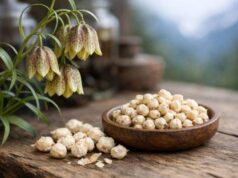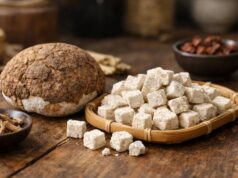
Foxnut, the seed of Euryale ferox, sits at an interesting crossroads between food and traditional medicine. It is widely known as makhana or gorgon nut, and it has been eaten for centuries in South and East Asia as a roasted snack, porridge ingredient, and restorative seed in classical systems of medicine. Modern interest in foxnut comes from two different directions at once: its practical nutrition as a light, low-fat, gluten-free seed food, and its richer phytochemical profile, especially in the seed coat and shell, which contain polyphenols and other bioactive compounds.
For most readers, the important question is not whether foxnut is trendy, but whether it offers real health value. The answer is yes, with limits. Plain foxnut can support satiety, provide useful minerals and plant compounds, and fit well into lower-grease, higher-fiber eating patterns. It may also have potential for metabolic and gut health, though many stronger claims still come from laboratory and animal research rather than large human trials. That makes foxnut worth understanding carefully: it is a promising functional food, but not a miracle cure, and the form you use matters as much as the plant itself.
Key Facts
- Plain foxnut can support fullness and steadier snacking because it is light, low in fat, and rich in starch with some protein.
- Seed coat and shell extracts show stronger antioxidant and anti-inflammatory activity than ordinary popped foxnut.
- A practical food-based range is about 15 to 30 g popped foxnut per serving, or roughly 20 to 40 g dry seeds when cooked.
- Flavored foxnut snacks can be high in sodium, sugar, or added fat, which changes the health picture.
- People who are pregnant, breastfeeding, highly constipated, or using medicinal-dose extracts should be more cautious.
Table of Contents
- What is foxnut
- Key ingredients and nutrition
- What benefits are most realistic
- Does foxnut help blood sugar and digestion
- How is foxnut used
- How much should you take
- Safety and evidence overview
What is foxnut
Foxnut is the edible seed of Euryale ferox, an aquatic plant in the water-lily family. The plant grows in ponds and wetlands and produces large, spiny fruits containing hard seeds. Once harvested, cleaned, dried, and processed, those seeds become the familiar foxnut used in food and traditional medicine. In India, it is widely called makhana. In Chinese medicine, it is known as qian shi. You may also see it called gorgon nut or prickly water lily seed.
One reason foxnut creates confusion is that it is often marketed in three different identities at once:
- as a healthy snack,
- as a traditional medicinal seed,
- and as a functional food ingredient.
All three descriptions are partly true, but they are not interchangeable. A plain bowl of popped foxnut is not the same thing as a concentrated shell extract used in a lab study, and neither is the same as a classical decoction or powdered seed in traditional practice.
Botanically, foxnut is not a tree nut and not a cereal grain. It is a seed from an aquatic flowering plant. Nutritionally, though, people often use it the way they would use grain-like foods: roasted as a snack, simmered into porridge, or milled into flour and mixed into recipes. That food identity is important because it changes how we should judge the herb. Foxnut is usually better understood as a medicinal food than as a strong stand-alone botanical remedy.
Its traditional reputation centers on astringent and restorative uses. In classical systems, foxnut has been used for loose stools, excessive discharge, weakness, frequent urination, and general recovery support. Modern readers do not need to adopt those frameworks literally to appreciate the underlying pattern: foxnut was valued as a gentle, stabilizing seed rather than an aggressive stimulant or purge.
A practical way to think about foxnut is this:
- It is first a seed food.
- It has second-level medicinal interest because of its bioactive compounds.
- Its benefits depend heavily on processing.
That last point matters more than many people realize. Raw seed, popped snack, flour, seed coat, and shell extract do not behave the same way. Popping changes texture and convenience. Roasting changes flavor. Milling changes how fast the starch is digested. Extracting shell polyphenols concentrates compounds that ordinary snack portions may provide only in small amounts.
Foxnut also differs from many “superfoods” because it is not especially rich in one flashy nutrient. Its value comes from a combination of digestible starch, modest protein, minerals, low fat, and non-nutrient plant compounds. In other words, it is more useful than dramatic. That usually makes it a better long-term food than a short-term fad.
Key ingredients and nutrition
Foxnut’s composition explains why it appeals to both traditional herbalists and modern nutrition-minded eaters. The edible seed is dominated by carbohydrate, especially starch, but it also contains protein, small amounts of fiber, minerals, and several classes of phytochemicals. It is naturally low in fat, which is one reason plain foxnut feels light compared with fried snack foods.
The main nutritional components include:
- Starch: This is the seed’s primary fuel source. Some foxnut starch behaves like resistant starch or low-digestibility starch, depending on the variety and preparation.
- Protein: Foxnut is not a high-protein food in the way soy or legumes are, but it contributes useful plant protein for a snack or porridge ingredient.
- Minerals: It provides meaningful amounts of minerals such as magnesium, phosphorus, and trace elements that support energy metabolism and tissue function.
- Polyphenols: These are more concentrated in the seed shell and coat than in the popped white kernel. They help explain many of the plant’s antioxidant and anti-inflammatory findings.
- Tocopherols and related lipophilic compounds: Present in smaller amounts, these contribute to the seed’s bioactive profile.
- Polysaccharides and other secondary compounds: These are part of the reason foxnut appears in pharmacological research on metabolic and immune-related effects.
One of the most useful distinctions is between the kernel and the shell. The popped seed that most people eat is nutritionally helpful, but many of the stronger laboratory effects come from extracts made from the shell or seed coat. That means a benefit seen in a concentrated shell extract should not be assumed to occur at the same strength from a handful of roasted foxnut.
Processing changes the chemistry as well. Recent work on Euryale ferox has shown that frying and other traditional processing methods shift the balance of identified compounds. That is a useful reminder that “foxnut” is not chemically fixed. The plant material, region of origin, variety, and preparation all matter.
In everyday meal planning, foxnut fits best among seed-like, gluten-free staples rather than among sugary snack foods. If you already use foods like buckwheat as a gluten-free staple, foxnut belongs in a similar conversation: not identical in taste or structure, but comparable in the sense that it can widen grain-free or gluten-free variety.
Another practical nuance is satiety. Foxnut looks airy once popped, so a serving can appear large while containing less fat than chips or fried namkeen. That can be helpful for portion control, but only if the product is plain or lightly seasoned. Once it is coated with butter, salt blends, sweeteners, or flavor powders, its health profile shifts.
So when people ask for foxnut’s key ingredients, the best answer is layered. The edible seed offers starch, modest protein, and minerals. The shell and coat contribute the more pharmacologically interesting polyphenols. And the final effect depends not just on the species, but on which part of the plant you are actually consuming.
What benefits are most realistic
Foxnut is often promoted for everything from weight loss to reproductive strength to blood sugar control. Some of that enthusiasm has a reasonable basis, but the strongest real-world benefits are more modest and more useful than the marketing suggests.
The most realistic benefits of plain foxnut are these:
- better snack quality compared with fried refined snacks,
- support for fullness and appetite control,
- a gentle contribution to mineral intake,
- and a role in steadier meal patterns when it replaces, rather than adds to, ultra-processed foods.
Because foxnut is light, low in fat, and fairly bulky after popping, it can make portion control easier. That does not mean it directly burns fat. It means it may help some people snack with less grease and more structure. That is a meaningful benefit, even if it is not dramatic.
Its second plausible benefit is metabolic support. Foxnut contains starch fractions and bioactives that have been studied for effects related to glycemic response, lipid handling, and oxidative stress. This is where the claims need care. Laboratory and food-model findings are encouraging, but they do not automatically mean that a flavored foxnut snack will lower blood sugar or cholesterol in everyday life. The food context still matters most.
Traditional systems also describe foxnut as a stabilizing or restorative seed. In modern language, that may translate best into support during recovery, gentle nourishment, and usefulness in easy-to-digest meals such as porridges and milk-based preparations. That is not the same as treating disease, but it helps explain why foxnut remains common in convalescent and festival foods.
There is also a digestive-satiety story. Foxnut is not the highest-fiber seed in the pantry, yet it can still help create more satisfying meals because of its texture, slow chewing, and starch profile. Combined with yogurt, milk, lentils, or nuts, it can become more filling than its nutrition label alone might suggest.
Another realistic benefit is substitution value. When foxnut replaces calorie-dense processed snacks, it can support better food choices without requiring a total dietary overhaul. That type of swap often matters more than chasing one “best” ingredient. In that sense, foxnut works best the way amaranth in a nutrient-dense eating pattern works best: as part of a broader, higher-quality food routine.
What should readers be skeptical of?
- claims that foxnut alone treats diabetes,
- claims that snack portions provide the same activity as laboratory extracts,
- claims that it has proven hormone-boosting or fertility-enhancing effects in humans,
- and claims that it can compensate for an otherwise poor diet.
A helpful rule is this: foxnut’s strongest benefit is not magic chemistry. It is the combination of reasonable nutrition, good culinary flexibility, and a phytochemical profile that makes it more interesting than a typical starch snack. That is enough to make it worthwhile, but not enough to support oversized health promises.
Does foxnut help blood sugar and digestion
This is one of the most searched questions about foxnut, and the answer is nuanced. Foxnut may support blood sugar and digestion, but the effect depends heavily on the form, the meal, and the person using it.
For blood sugar, foxnut has three points in its favor:
- some of its starch behaves more slowly than highly refined starches,
- parts of the plant show enzyme-inhibiting and glycemic-lowering potential in lab and food-model work,
- and plain foxnut is often lower in fat and sugar than commercial snack foods it can replace.
Researchers have also explored foxnut resistant starch and seed shell extracts for lower digestibility and lower predicted glycemic impact. Those findings are promising, especially for food science and product development. Still, they do not mean every foxnut snack is automatically “diabetic-friendly.” A sugar-coated or heavily seasoned foxnut product can lose much of that advantage.
For digestion, foxnut is gentle for many people, especially when cooked into porridge, kheer-style preparations, soups, or soft grain bowls. Traditional practice often places it in the category of foods that help “bind” or “steady” the gut. In modern terms, that may make the most sense for people dealing with loose stools or post-illness recovery meals.
But there is an opposite side to that same property. Dry roasted foxnut eaten in large quantities, especially without enough water, may feel binding or constipating for some people. That is an under-discussed point. A food praised for digestive steadiness is not necessarily ideal for every digestive pattern.
The form matters:
- Plain popped foxnut is best for everyday snacking.
- Cooked whole or broken seeds are better for softness and gentle digestion.
- Flour or powder may digest faster depending on the recipe.
- Shell extracts are research materials, not ordinary food equivalents.
Pairing also matters. Foxnut tends to perform better in digestion and blood sugar control when it is eaten with protein, fat, or fiber-rich foods rather than by itself. A bowl of foxnut with yogurt and nuts will usually land differently than a sweetened foxnut dessert. The same is true for savory recipes with legumes or vegetables.
People building a lower-glycemic diet can think of foxnut as a supporting food, not the foundation of the whole plan. It belongs beside other smart pattern choices such as pulses, minimally refined grains, vegetables, and foods with known glycemic advantages. In that broader context, yacon in glycemic-conscious eating offers a useful contrast: foxnut contributes through meal structure and starch quality, while yacon is often discussed more for fructooligosaccharides and prebiotic effects.
So yes, foxnut may help with blood sugar and digestion in the right setting. But its benefit is contextual, not automatic. The clearest message is that plain, minimally processed foxnut can support a steadier diet pattern, while the strongest metabolic claims still need better human evidence.
How is foxnut used
Foxnut is one of those foods whose usefulness expands quickly once you stop thinking of it as only a snack. It can be used as a roasted nibble, a porridge ingredient, a flour, a thickener, or a traditional restorative seed in mixed preparations.
The most common uses are:
- Popped and roasted: the familiar snack form, usually dry-roasted and lightly seasoned.
- Simmered in milk or water: used in porridges, sweet dishes, and recovery foods.
- Ground into flour or powder: mixed into doughs, porridges, or tonic-style recipes.
- Added to savory dishes: curries, dry vegetable mixes, or soup-like preparations.
- Used in traditional herbal formulas: especially in East Asian and South Asian practice.
The healthiest everyday use is usually the simplest one: plain or lightly seasoned popped foxnut. It works well as a bridge food for people trying to move away from fried snacks but who still want crunch and volume. Dry roasting with a little ghee or oil is reasonable; drenching it in flavor coatings is what changes it from functional snack to flavored snack food.
In cooked dishes, foxnut becomes softer and more substantial. This is where it shows its older medicinal-food identity. In porridges and light desserts, it is often used for people who want something easy to digest but more nourishing than thin gruel. That softer use is also more suitable for older adults, people recovering from illness, or anyone who finds dry snacks irritating.
Traditional combinations matter too. Foxnut is often paired with seeds, nuts, milk, or mild grains rather than pungent herbs. That pairing reflects its nature as a stabilizing, food-like botanical. In texture and use, it sometimes overlaps with the role of lotus seed in traditional porridges and tonics, though the two plants are not the same and should not be treated as identical.
A few practical use tips make a big difference:
- Choose plain foxnut first. Salted and flavored versions are best treated as occasional snacks.
- If using it for satiety, pair it with protein such as yogurt, milk, or roasted chickpeas.
- If using it for gentler digestion, choose a cooked or softened preparation rather than a dry one.
- If buying powder or capsules, check whether the product contains whole seed, seed extract, or shell extract.
That last step is especially important. Many “active compound” studies focus on parts of the plant that are not equivalent to everyday popped makhana. So product labels matter.
Foxnut also works well in home cooking because it absorbs flavors without dominating them. You can toast it into curries, fold it into trail mixes, or add it to desserts for texture. That versatility is part of its real value. A food is only useful if people can eat it consistently, and foxnut is easier to repeat than many more obscure functional foods.
How much should you take
Foxnut dosing depends on whether you are using it as a food, a traditional seed remedy, or a concentrated commercial product. Those are not the same situation, so one universal number is not realistic.
For ordinary food use, practical ranges are fairly simple:
- Popped foxnut as a snack: about 15 to 30 g per serving.
- Dry seeds for cooking: about 20 to 40 g before simmering, depending on the recipe and appetite.
- Foxnut flour or powder in food: about 5 to 15 g at a time, often mixed into porridge, milk, or dough.
These are food-based ranges, not medical prescriptions. They make sense because foxnut is usually eaten like a light staple or snack rather than swallowed in tiny medicinal amounts.
Traditional use can be a bit different. In classical practice, dried foxnut seed may be used in larger simmered preparations or formulas intended for diarrhea, discharge, or general weakness. In those settings, amounts are often measured as dried herb weight rather than snack portions. Because product quality and tradition differ by region, it is smarter to treat those ranges as practitioner territory rather than self-prescription territory.
Timing depends on the goal:
- For snacking and satiety, foxnut works well mid-morning or mid-afternoon.
- For gentler digestion, cooked foxnut is often better in the evening or as part of a soft meal.
- For sports recovery or energy, it works best when paired with protein rather than eaten alone.
Duration also matters. As a food, foxnut can be eaten regularly if tolerated well. As a medicinal-dose powder, extract, or formula ingredient, longer use deserves more caution because the evidence base is thinner and the intended purpose is different.
A few variables affect the right amount:
- your total calorie needs,
- whether the product is plain or highly seasoned,
- whether you are eating it dry or cooked,
- whether you are using a whole-food product or a concentrated extract,
- and whether constipation or poor fluid intake is a problem.
A useful rule is to begin with the smaller end of the range and assess three things: fullness, bowel response, and how the food fits your broader meal pattern. Foxnut is easy to overrate because it feels “light.” That can lead people to graze on flavored varieties without realizing they are taking in added sodium or calories.
For children, older adults, and people with swallowing difficulty, softer preparations are usually safer than dry, crunchy ones. For pregnancy, breastfeeding, and medicinal extracts, food-level use is generally more comfortable territory than concentrated supplementation.
In short, foxnut works best when the dose matches the form. Snack portions suit everyday use. Cooked portions suit gentle nourishment. Extracts and powders deserve more care and clearer purpose.
Safety and evidence overview
Foxnut is generally safer as a food than as a medicinal extract, but “food” does not mean “risk-free.” The main safety issues are not dramatic toxicity in healthy adults eating plain foxnut. They are product quality, digestive fit, and the gap between everyday use and research claims.
The most common practical downsides are:
- bloating or heaviness if eaten in large dry portions,
- constipation in people who already run dry or low-fiber,
- excess sodium or flavor additives in commercial products,
- and possible seed allergy, though that appears uncommon.
One underappreciated safety issue is seasoning load. Many packaged foxnut snacks are marketed as healthy while carrying enough salt, sugar, or added fat to change the equation. A person may be choosing foxnut for blood pressure or weight reasons while actually buying a highly flavored product that works against those goals.
People who should be more careful include:
- anyone with chronic constipation or low fluid intake,
- people using concentrated extracts rather than whole food,
- pregnant or breastfeeding people considering medicinal-dose use,
- those with known seed allergies,
- and people with diabetes who assume every foxnut product is low-glycemic.
The evidence story is equally important. Foxnut does have a respectable research base, but it is not the kind of evidence that supports sweeping health claims. A large share of the literature falls into these categories:
- phytochemical and composition studies,
- in vitro work on antioxidant, anti-inflammatory, or antibacterial activity,
- food-science studies on starch digestibility and glycemic potential,
- and animal or mechanistic research.
That means the evidence is strongest for three conclusions:
- Foxnut is a legitimate nutrient-rich seed food.
- Its shells and seed coats contain bioactives with real laboratory activity.
- Processing changes the chemistry and likely changes the effect.
What is still limited is high-quality human clinical evidence showing that normal foxnut intake reliably improves specific medical outcomes. That gap matters. It does not make the plant useless, but it should keep expectations realistic.
A crucial nuance is that shell extracts often look stronger than the popped kernel used in snacks. So if a paper shows anti-inflammatory action from corilagin-rich shell material, that is scientifically interesting, but it does not mean a bowl of foxnut provides the same effect. This distinction between edible food form and extract form is one of the most important truths in the whole foxnut discussion.
The evidence also supports foxnut’s role as a food ingredient for lower-digestibility starch products and functional formulations. That is promising for the future of foxnut-based foods. Still, the present-day reader is best served by a calm conclusion: foxnut is a useful, versatile seed food with a credible traditional record and some exciting preclinical science, but it is still better treated as a supportive food than as a proven therapeutic agent.
References
- The Ethnopharmacological, Phytochemical, and Pharmacological Review of Euryale ferox Salisb.: A Chinese Medicine Food Homology 2023 (Review)
- Euryale ferox, a prominent superfood: Nutritional, pharmaceutical, and its economical importance 2022 (Review)
- Comparative study on structural characterization, physicochemical properties, and in vitro probiotic activities of resistant starch from different varieties of Euryale ferox 2025
- Effect of Euryale ferox seed shell extract addition on the in vitro starch digestibility and predicted glycemic index of wheat-based bread 2023
- The Effect and Mechanism of Corilagin from Euryale Ferox Salisb Shell on LPS-Induced Inflammation in Raw264.7 Cells 2023
Disclaimer
This article is for educational purposes only and does not replace medical advice, diagnosis, or treatment. Foxnut is a food with traditional medicinal uses, but many of its stronger health claims are still based on laboratory, animal, or food-model studies rather than large human trials. Seek guidance from a qualified healthcare professional before using foxnut extracts or powders for a medical purpose, especially during pregnancy, breastfeeding, chronic illness, or while taking prescription medicines.
If you found this article useful, please share it on Facebook, X, or your preferred platform.