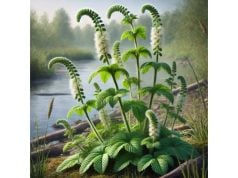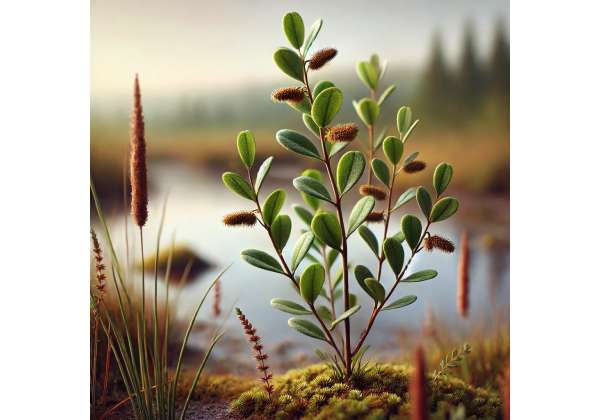
Gale, better known as sweet gale or bog myrtle, is an aromatic shrub that grows in cool, wet landscapes across northern Europe, parts of North America, and parts of Asia. For centuries, people have valued it as more than a fragrant plant. Its leaves and fruits were used to scent homes and clothing, flavor traditional drinks, and support folk remedies for skin irritation, digestion, and urinary discomfort. Today, sweet gale draws interest for a different reason: it contains a dense mix of volatile oils and polyphenols that may help explain its long reputation as an insect-repelling, mildly astringent, and biologically active herb.
What makes gale especially interesting is the gap between tradition and science. Its aroma, chemistry, and topical potential are well documented, but modern human studies are still limited. That means it may be useful, especially for external and aromatic applications, but it should be used with restraint and realistic expectations. The most sensible way to approach sweet gale is as a potent old-world herb with promising properties, not as a proven cure-all.
Quick Overview
- Sweet gale is best known for its aromatic insect-repelling use and its traditional role in soothing minor skin and digestive complaints.
- Its key compounds include alpha-pinene, 1,8-cineole, limonene, myrcene, linalool, and several flavonoid-like plant chemicals.
- A cautious tea trial is 1 to 2 g dried leaf in 250 mL hot water, once or twice daily for short-term use.
- Do not ingest the essential oil casually; concentrated preparations can irritate skin, stomach, and mucous membranes.
- Pregnant or breastfeeding people, children, and anyone with significant kidney disease should avoid internal use unless a qualified clinician advises otherwise.
Table of Contents
- What is gale and why use it
- Key ingredients in sweet gale
- What benefits can you expect
- How to use gale
- How much gale per day
- Gale side effects and interactions
- What the research really shows
What is gale and why use it
Sweet gale is a low, resinous shrub in the Myricaceae family. It usually grows in fens, bog margins, wet heaths, and other acidic, moisture-rich habitats. The plant is easy to recognize when crushed: the leaves release a spicy, resinous scent that feels part herbal, part conifer, and part citrus-peel. That fragrance is not just pleasant. It is the reason gale has been used for practical household purposes for generations.
Historically, sweet gale filled several roles at once. It was placed in cupboards and bedding to discourage moths and other pests. It was used in traditional beer and wine making before hops became dominant. In folk medicine, different parts of the plant were taken or applied for digestive complaints, worms, itching, minor skin issues, and urinary discomfort. Some traditions also describe it as styptic or drying, which fits its mildly astringent character.
A useful way to think about gale is to separate its older uses into three categories:
- Aromatic use, such as sachets, room fragrance, and insect deterrence.
- Topical use, such as washes or compresses for irritated skin.
- Internal folk use, mainly as a short-term tea or infusion.
That distinction matters because the plant is strongest as an aromatic herb. Its scent profile is robust, and modern analysis confirms that its essential oils are highly variable but often rich in monoterpenes and sesquiterpenes. In plain language, that means one batch may smell sharper, greener, or more camphor-like than another, depending on where it was grown, which plant part was harvested, and the season.
Another practical point is that the fruits tend to hold much more essential oil than the leaves. Female plants bearing fruit can therefore be far more aromatic than leafy material gathered from other specimens. This helps explain why traditional users often had strong opinions about which part of the plant worked best.
Sweet gale is also a plant that rewards restraint. It is potent, ecologically specialized, and not as interchangeable as more common kitchen herbs. If you enjoy the crisp, resinous feel described in juniper’s aromatic overview, you will recognize some of the same broad scent families here, though sweet gale is its own plant with its own cautions.
The bottom line: gale is best understood as a concentrated northern aromatic with a long history in pest control, household use, and short-term herbal practice. Its tradition is rich, but it is not an everyday herb for casual overuse.
Key ingredients in sweet gale
The chemistry of sweet gale helps explain both its fragrance and its traditional reputation. Its most discussed compounds are volatile oils, especially monoterpenes and sesquiterpenes, along with less volatile polyphenols and dihydrochalcone-type molecules. These do not all act the same way, and that is why gale can smell sharp, feel drying, and show different effects in lab testing.
Among the most important volatile constituents reported in sweet gale are:
- alpha-pinene
- 1,8-cineole
- limonene
- myrcene
- beta-pinene
- linalool
- delta-cadinene
- nerolidol
- germacrone
These names matter less than what they suggest functionally. Alpha-pinene and limonene often contribute bright, resinous, lifting aromas. Cineole tends to create a more penetrating, fresh, almost clearing scent. Myrcene can smell softer and greener. Linalool adds a floral aspect. Sesquiterpenes such as nerolidol and cadinene usually deepen the aroma and may help explain why some sweet gale preparations smell rounder, heavier, or longer-lasting.
Sweet gale also contains less volatile compounds that are easy to overlook but important to its medicinal profile. These include flavonoids, tannin-like polyphenols, and unusual compounds such as myrigalone A and related molecules. These have attracted research interest because some show antioxidant, antimicrobial, enzyme-modulating, or other biological activity in test systems. That does not automatically mean the whole herb will do the same thing in people, but it does tell us that sweet gale is chemically active rather than inert.
A few practical lessons come from this chemistry.
First, gale is not chemically uniform. Fruit, leaf, and branch oils can differ. Wild populations from one habitat may smell very different from plants in another habitat. Extraction method also matters. A water infusion, alcohol tincture, steam-distilled oil, and fresh crushed leaf will not deliver the same balance of compounds.
Second, sweet gale is more than an essential oil plant. The whole herb contains both aroma molecules and nonvolatile compounds, so tea and tincture may feel different from topical oil.
Third, stronger is not always better. A fruit-rich or oil-heavy preparation may be more active, but it may also be more irritating or less suited to internal use.
If you already know cineole-rich eucalyptus, that comparison helps explain why some sweet gale samples smell brisk and opening rather than sweet and floral. Still, gale usually feels earthier, more resinous, and less straightforward.
In real-world herbal practice, these ingredients point to a plant with three likely strengths: scent-driven insect deterrence, a mild drying or astringent effect on tissue, and broad laboratory bioactivity worth respecting but not exaggerating. Chemistry makes gale interesting. It also makes consistency harder, which is one reason dosing and outcomes can vary so much from one preparation to another.
What benefits can you expect
The most helpful way to talk about sweet gale benefits is to rank them by confidence rather than by hype. Some uses are strongly rooted in tradition and supported by chemistry. Others look promising in laboratory work but remain unproven in human medicine.
Most realistic benefit: insect deterrence
This is the clearest modern use. Sweet gale has a long ethnobotanical reputation as a plant that discourages moths, midges, fleas, and similar pests. Recent work on its essential oils supports that reputation, especially for certain fruit-rich or monoterpene-rich oils. That does not mean every homemade preparation will perform like a commercial repellent, but it does mean the traditional use has a plausible basis.
Reasonable traditional use: topical skin support
Because sweet gale is aromatic and mildly astringent, a cooled infusion or very dilute external preparation may help with itchy, irritated, or bite-prone skin. The goal here is modest: comfort, cooling, and dryness where there is minor weeping or irritation. That topical logic resembles the reason people reach for witch hazel for skin use, though sweet gale is usually more fragrant and less familiar.
Possible but less certain: digestive and urinary support
Traditional herbal sources place sweet gale among short-term remedies for indigestion, sluggish digestion, and urinary discomfort. Its bitterness is low to moderate, but its aromatic nature may stimulate digestive response in some people. Its drying and traditional diuretic reputation may also explain why it was used for urinary complaints. Still, these are folk uses, not modern evidence-based indications.
Laboratory promise: antimicrobial and antioxidant effects
Extracts and essential oils from sweet gale have shown antioxidant and antimicrobial activity in test systems. That matters because it supports the idea that the plant is pharmacologically active. It does not prove that drinking a cup of tea will treat infection or meaningfully reduce inflammation in the body.
A realistic benefit summary looks like this:
- Strongest fit: aromatic repellent and household herb.
- Good secondary fit: diluted topical support for minor skin annoyance.
- Traditional fit: short-term digestive or urinary support.
- Weakest fit: internal medicinal claims made as if they were clinically proven.
The biggest mistake with gale is expecting one plant to excel in all four areas equally. It does not. Sweet gale is most convincing when used in ways that respect its aroma and external character. It is much less convincing when marketed as a broadly proven internal remedy.
For most readers, the best question is not “What can gale cure?” but “What role does it play best?” The answer is simple: it performs best as a potent aromatic herb with practical topical value and cautious, limited internal use.
How to use gale
How you use sweet gale should depend on what you want from it. The plant makes the most sense when the preparation matches the goal. Fragrance-led purposes call for different forms than gentle internal use.
Common forms
- Dried leaf or leafy tops for infusion.
- Fresh branches or dried material for sachets and cupboards.
- Tincture for short-term herbal use.
- Essential oil for external aromatic use only.
- Strong infusion for washes or compresses.
Best uses by form
Tea or infusion is the gentlest internal option. This is usually made from dried leaf rather than concentrated fruit material. It is the form to consider when the aim is traditional digestive support or a short self-trial for mild discomfort.
A cooled strong infusion works better for skin than for drinking. You can soak a clean cloth in it and use it as a short compress on intact skin after insect exposure, minor itch, or irritation.
Dried plant material in sachets is one of the most traditional uses. It is simple, low-risk, and closely aligned with what sweet gale does well. Closets, drawers, entry spaces, and camping gear are natural places for this.
Essential oil is where people need the most caution. Sweet gale oil is concentrated and chemically variable. It should not be swallowed casually, and it should never be used neat on the skin. A very dilute external blend is the safer route.
Practical preparation ideas
For a short tea trial, use dried herb in hot water, steep covered, then strain. Drink slowly and assess tolerance.
For a compress, make the infusion somewhat stronger than tea, let it cool, then apply for 10 to 15 minutes.
For household use, fill a breathable sachet with dried leaves and refresh it when the scent fades.
For topical oil use, keep dilution low and patch test first.
One more practical point: sweet gale is not the herb I would choose for daily, indefinite digestive use. If your goal is routine post-meal comfort, many people do better with peppermint tea for post-meal bloating, while gale is better reserved for specific situations.
That is the pattern to remember. Use gale where its strong aroma is an advantage. Use it more lightly where your body has to process it internally. And skip concentrated experiments unless you know exactly what preparation you have and why you are using it.
How much gale per day
There is no well-established modern human dosing standard for sweet gale. That is the single most important dosage fact. Unlike better-studied herbs, gale does not have a strong clinical literature that lets you quote a confident evidence-based daily amount. So the best approach is cautious, short-term, and form-specific.
Conservative practical ranges
For dried herb infusion, a sensible starting range is:
- 1 to 2 g dried leaf in 250 mL hot water
- Steep 8 to 10 minutes
- Take 1 cup once daily at first
- If well tolerated, increase to 1 cup up to twice daily
For tincture, only use a professionally prepared product with clear strength listed. In general practice, a cautious range would be:
- 0.5 to 1 mL once or twice daily to start
- Avoid long continuous use without supervision
For a strong external wash or compress:
- 2 to 4 g dried herb in 250 mL hot water
- Apply to intact skin for 10 to 15 minutes
- Use 1 to 3 times daily as needed for short periods
For essential oil on skin:
- Keep adult dilution around 0.5% to 1%
- Use only on small areas after patch testing
- Do not use on broken skin, around eyes, or on children
Timing and duration
Sweet gale is better suited to short trials than to routine long-term use. A practical schedule is 3 to 7 days for an acute self-care goal, then reassess. If you see no benefit, increasing the dose aggressively is not a smart next step. Choose a better-matched herb instead.
Take tea after meals if your target is digestion. Use a compress or diluted oil before outdoor exposure if your target is biting insects. Use sachets continuously but replace them as the scent fades.
What changes the right dose
- Plant part used, especially leaf versus fruit
- Preparation strength
- Body size and sensitivity
- Other medicines
- Kidney function
- Pregnancy, breastfeeding, or age
The practical message is simple: with gale, low dose and clear purpose matter more than chasing a high dose. Since human data are limited, the safest dose is the smallest amount that meets a narrow goal. If what you want is a gentle daily wellness tea, sweet gale is usually not the first herb to reach for.
Gale side effects and interactions
Sweet gale deserves more caution than its pleasant smell might suggest. Most problems come from overconcentrated preparations, casual essential oil use, or treating a traditional herb as if it were fully standardized and universally safe.
Possible side effects
Internal use may cause:
- stomach upset
- nausea
- headache
- dry mouth
- an overly “hot” or irritating feeling in sensitive people
Topical use may cause:
- redness
- itching
- rash
- contact irritation, especially from essential oil
Because gale can be chemically strong, skin reactions are not rare if people use a concentrated oil without dilution.
Who should avoid it
Avoid internal sweet gale if you are:
- pregnant
- breastfeeding
- giving herbs to a child
- living with significant kidney disease
- highly sensitive to aromatic herbs or essential oils
Pregnancy deserves a special note. The main issue is not that sweet gale has been well studied and proven harmful. It has not. The problem is the opposite: there is too little direct safety data, and concentrated essential oils raise extra concern during pregnancy. That is enough reason to avoid internal use and to be very cautious even with external exposure.
People with eczema, fragrance allergy, asthma triggered by scent, or very reactive skin should also test carefully or avoid the oil altogether.
Potential interactions
No interaction list for sweet gale is as well established as it is for major clinical herbs. Still, caution is sensible with:
- diuretic medicines
- kidney-active medicines
- multiple essential oils used together
- strong alcohol-based tinctures in people who need to avoid alcohol
If your aim is calm digestion or bedtime comfort, a gentler herb is often better. For that purpose, many people would start with chamomile for digestion and relaxation before considering sweet gale.
Safety rules worth following
- Do not ingest the essential oil unless a qualified clinician specifically directs it.
- Patch test any topical product first.
- Keep internal use short-term.
- Stop if you notice stomach upset, dizziness, or skin irritation.
- Choose cultivated or responsibly sourced material whenever possible.
Sweet gale is safest when treated as a specialized herb rather than a casual daily supplement. Respect its concentration, and most avoidable problems become much less likely.
What the research really shows
Research on sweet gale is interesting, but it is not broad enough to justify sweeping health claims. The evidence base is strongest in four areas: plant chemistry, extraction studies, laboratory antioxidant and antimicrobial activity, and insect-repellent testing of essential oils. It is much weaker for everyday internal medicinal use in humans.
Where evidence is strongest
Modern studies consistently show that sweet gale contains a complex and variable essential-oil profile. They also show that fruit and leaf material differ, that season changes the profile, and that extraction method can shift results. This matters because the preparation you use changes what you are really taking.
There is also credible experimental support for insect-repellent activity from certain essential oils. That does not automatically translate into all homemade forms, but it does support the plant’s oldest practical claim.
Lab studies also report antioxidant and antimicrobial effects. These findings are useful for explaining why the herb may have topical or preservative value. They are not the same as clinical proof for treating infection, inflammation, or chronic disease.
Where evidence is weak
Human trials are the missing piece. There is little to no robust clinical evidence showing that sweet gale tea or tincture reliably improves digestion, urinary symptoms, skin disease, pain, or inflammation in real patients. Much of the medicinal story still rests on ethnobotany, chemistry, and preclinical work.
That means some claims should be viewed cautiously:
- “supports digestion” is plausible but not well proven
- “helps urinary complaints” is traditional, not clinically confirmed
- “antimicrobial” is true in laboratory contexts, not a license for self-treating infection
- “anti-inflammatory” is a mechanistic idea, not a settled medical outcome
The honest takeaway
Sweet gale is a good example of a plant that is more credible than a folk myth, but less proven than a clinical herb. It has real chemistry, real traditional uses, and real experimental signals. It also has real limits.
The most defensible evidence-based summary is this:
- Best supported use: aromatic and insect-repelling applications.
- Reasonably plausible use: diluted topical support and short-term traditional self-care.
- Least supported use: confident internal therapeutic claims.
That is not a dismissal. It is a useful boundary. If you treat sweet gale as a fragrant, potent, historically important herb with selective modern support, you are likely to use it well. If you treat it as a proven daily medicine for many symptoms, you will almost certainly ask more of the evidence than it can honestly deliver.
References
- Repellent activity against Aedes aegypti and metabolomic profiling of Myrica gale L. essential oils from Irish boglands 2026. ([Nature][1])
- Chemical Composition of Essential Oils and Local Knowledge of Myrica gale in Lithuania 2023 (Research Article). ([MDPI][2])
- Effect of Extraction Methods on Essential Oil Composition: A Case Study of Irish Bog Myrtle-Myrica gale L. 2023 (Research Article). ([MDPI][3])
- Phytochemicals with Added Value from Morella and Myrica Species 2020 (Review). ([MDPI][4])
- Maternal Reproductive Toxicity of Some Essential Oils and Their Constituents 2021 (Review). ([PMC][5])
Disclaimer
This article is for educational purposes only. Sweet gale is a traditional herb with limited human clinical research, so it should not replace medical care, diagnosis, or prescribed treatment. Do not use it to self-treat infection, persistent urinary symptoms, severe skin reactions, pregnancy-related symptoms, or ongoing digestive problems without professional guidance. Concentrated essential oil use deserves extra caution.
Please share this article on Facebook, X, or your preferred platform if you found it useful.