Gallbladder removal (cholecystectomy) is one of the most common abdominal surgeries, and for many people it brings lasting relief from gallstone pain. Still, it can take time for digestion to feel “normal” again. Without a gallbladder to store and release bile in a timed burst, bile flows more continuously into the small intestine. Most bodies adapt well—but in the weeks after surgery, and sometimes longer, that shift can lead to loose stools, urgency, bloating, and food sensitivity.
The good news is that these side effects are often manageable with a practical approach: adjusting meal size and fat load, choosing the right kind of fiber, and using a stepwise plan to reintroduce richer foods. This article explains why diarrhea and gas happen after gallbladder removal, what patterns are expected, and which foods and strategies typically help—plus when ongoing symptoms deserve medical follow-up.
Essential Insights
- Many digestive side effects improve over weeks as the gut adapts to continuous bile flow.
- Diarrhea after gallbladder removal often relates to bile acids reaching the colon and can be treatable.
- Smaller meals and a lower fat load per meal can reduce urgency and cramping, especially early on.
- Soluble fiber foods (and sometimes supplements) can thicken stool and calm post-meal symptoms.
- Blood in stool, fever, jaundice, dehydration, or rapid weight loss are not typical and need prompt medical evaluation.
Table of Contents
- What changes in digestion after gallbladder removal
- Diarrhea after cholecystectomy and why it happens
- Bloating and gas: common causes and fixes
- Foods that help diarrhea and bloating
- Practical meal strategies and simple ideas
- When symptoms persist and what to ask about
What changes in digestion after gallbladder removal
The gallbladder is a storage pouch, not a bile factory. Your liver makes bile continuously, and the gallbladder normally concentrates it and releases a larger amount when you eat—especially when you eat fat. After removal, bile still reaches the intestine, but in a steadier “trickle.” That single change explains many of the short-term side effects people notice.
A realistic timeline for adjustment
Most people experience a period of digestive “relearning,” often in phases:
- First days to 2 weeks: appetite may be lower, stools may be looser, and nausea or early fullness can show up as anesthesia, pain medicines, and reduced movement slow the gut.
- Weeks 2 to 8: bile flow stabilizes, eating patterns normalize, and many people can expand their diet. This is also when some notice post-meal urgency, especially after richer foods.
- After 2 to 3 months: for many, digestion is close to baseline. For a smaller group, diarrhea, bloating, or upper abdominal discomfort persists and benefits from targeted evaluation.
What “normal” side effects can look like
Common, often temporary, experiences include:
- Loose stool or urgency after meals (especially higher-fat meals)
- More frequent bowel movements than before surgery
- Bloating and extra gas, especially if diet becomes more restricted or repetitive
- Mild cramping that improves after a bowel movement
- Food sensitivity to fried foods, heavy sauces, full-fat dairy, and very large portions
These symptoms can be uncomfortable, but they are not automatically a sign that something went wrong. They often respond to meal pattern changes more than to drastic elimination diets.
What is less typical
Some symptoms are not “expected recovery” and should shift you into a more cautious mindset:
- Fever, chills, or worsening severe abdominal pain
- Yellowing of skin or eyes (jaundice)
- Persistent vomiting or inability to hydrate
- Black stools, visible blood, or severe weakness
- Rapid, unintentional weight loss
The goal is not to become alarmed—it is to distinguish common adjustment symptoms from signs that deserve prompt medical care.
Diarrhea after cholecystectomy and why it happens
Diarrhea after gallbladder removal ranges from mild “looser than usual” stools to frequent watery bowel movements with urgency. People often describe a distinct pattern: stools are most likely to loosen after meals, and the worst episodes may follow fatty foods or larger portions.
The main mechanism: bile acids reaching the colon
Bile acids are detergents that help break down fat. Normally, most bile acids are reabsorbed at the end of the small intestine and recycled back to the liver. After gallbladder removal, bile may enter the small intestine more continuously, and in some people that increases the chance that extra bile acids spill into the colon. When bile acids reach the colon, they can:
- Pull water into the bowel
- Speed up colonic movement
- Trigger urgency and cramping
This pattern is often called bile acid diarrhea (or bile acid malabsorption), and it can be treated. Importantly, bile acid diarrhea can exist even if routine blood work looks normal.
What the diarrhea pattern often looks like
Many people notice:
- Loose stools beginning 30 to 90 minutes after eating
- A sense of “I need to go now,” sometimes with incomplete emptying
- Worse symptoms with fried foods, creamy foods, sausage, pizza, fast food, and rich desserts
- Improvement when meals are smaller and fat is spread across the day
A helpful self-check is whether diarrhea is watery and urgent versus simply softer. Softer stool is common early on. Frequent watery stool that persists, disrupts daily life, or wakes you at night deserves more attention.
Who is more likely to get it
There is no single profile, but persistent diarrhea tends to be more likely when:
- You already had a sensitive gut or stool variability before surgery
- You return quickly to large, high-fat meals
- You experienced gallbladder-related diarrhea before surgery
- You take medicines that loosen stool (for example magnesium-containing products, certain diabetes medicines, or some antibiotics)
Why “low fat” helps some people but not everyone
Fat does not cause bile acid diarrhea by itself—but higher fat meals stimulate bile release and can intensify symptoms in a gut that is already prone to urgency. Many people do best with a middle ground:
- Avoid extreme fat restriction long term
- Use a lower fat load per meal early on
- Reintroduce richer foods gradually and in smaller portions
If diarrhea is persistent, the most useful next step is often not more restriction, but identifying whether bile acids are the driver and treating that mechanism directly.
Bloating and gas: common causes and fixes
Bloating after gallbladder removal is common, and it is not always caused by “too much gas.” For many people, it is a mix of changed motility, altered meal patterns, and temporary food intolerance during recovery.
Why bloating can increase after surgery
Several factors can stack together:
- Slower gut movement in early recovery: anesthesia, opioid pain medicines, and reduced activity can slow motility and increase bloating.
- Diet shifts that change fermentation: if you suddenly eat less variety—fewer vegetables, fewer whole grains, fewer fruits—your microbiome may shift and gas patterns can feel different.
- More fat reaching the colon: if fat digestion is less efficient early on, extra fat can alter stool and gas.
- Air swallowing: pain, anxiety, eating quickly, chewing gum, and carbonated drinks can increase swallowed air.
- Temporary lactose sensitivity: some people tolerate dairy poorly after surgery, especially in the first weeks.
Bloating is also commonly paired with irregular stools—constipation one day and loose stool the next. That “pendulum” can happen when the colon alternates between slowed transit and rapid emptying after meals.
Patterns that point to a practical fix
Use the pattern to choose the simplest next move:
- Bloating with constipation: focus on hydration, gentle soluble fiber, and consistent movement (walking after meals).
- Bloating with diarrhea: reduce fat load per meal, add soluble fiber, and consider whether bile acids are involved.
- Bloating that peaks at night: look at carbonated drinks, large late meals, and fast eating.
- Bloating with upper abdominal pressure and burping: smaller meals and slower eating often help more than cutting entire food groups.
Food-related bloating triggers to test methodically
Rather than eliminating many foods at once, test one lever at a time for 3 to 4 days:
- Carbonation and gum: remove to see if bloating drops.
- High-fat “combo” meals: reduce fried plus creamy meals first.
- Sugar alcohols: products containing sorbitol, mannitol, maltitol, or xylitol can worsen gas and diarrhea.
- Very large raw salads: healthy, but sometimes too bulky early on; try cooked vegetables instead.
A simple “de-bloat routine” that is often effective
- Eat smaller portions and stop at “comfortable, not full.”
- Walk 10 to 15 minutes after meals when possible.
- Use cooked, tender vegetables and soups rather than large raw portions early on.
- Choose soluble fiber foods (oats, bananas, rice, potatoes) to calm the colon.
- Reintroduce higher-fat foods slowly, in half portions, and earlier in the day.
If bloating is severe, persistent, or paired with unintentional weight loss, ongoing vomiting, or fever, it should be evaluated rather than managed as routine recovery.
Foods that help diarrhea and bloating
The most helpful foods after gallbladder removal tend to do one of two things: reduce the fat load hitting the gut at once or absorb water and bile acids to firm the stool. You do not need a perfect diet—just a strategy that is easy to repeat.
The “two-lever” approach
Most people improve fastest by adjusting two variables:
- Fat per meal (not necessarily fat per day)
- Soluble fiber intake (the stool-firming type)
If you only lower fat, stools may improve but hunger and cravings can rise. If you only add fiber without adjusting fat, urgency may still break through. Together, they often work better.
Soluble fiber foods that often firm stool
Soluble fiber forms a gel-like texture in the gut. It can thicken stool and may reduce how irritating bile acids feel in the colon. Good options include:
- Oatmeal and oat bran
- Barley
- White rice or rice porridge
- Potatoes or sweet potatoes (baked or boiled)
- Bananas (especially slightly underripe)
- Applesauce
- Carrots and squash (well-cooked)
- Psyllium-containing cereals or fiber products (start low and increase slowly)
Start with one to two servings per day and increase gradually. Jumping quickly to very high fiber can worsen gas and bloating.
Lower-fat proteins and meals that digest smoothly
During the first weeks, many people do better with leaner proteins and gentle cooking methods:
- Skinless chicken or turkey, baked or poached
- Fish, steamed or baked
- Eggs (often tolerated, but portions matter)
- Tofu and tempeh
- Yogurt or kefir if dairy is tolerated (choose lower-fat first)
Helpful cooking methods include grilling, baking, steaming, and simmering rather than frying.
Foods that commonly worsen symptoms early on
These are not “bad foods,” but they are high-risk when your gut is adapting:
- Fried foods and fast food
- Heavy cream sauces and large portions of cheese
- Processed meats (sausage, pepperoni)
- Very spicy meals when diarrhea is active
- Large amounts of nuts, nut butters, and avocado in one sitting (healthy fats, but high load)
- Desserts with both fat and sugar (a common urgency trigger)
A gentle reintroduction rhythm
A practical way to expand your diet is to treat higher-fat foods like a tolerance ladder:
- Try a small portion at lunch rather than late at night.
- Pair it with a soluble fiber base (rice, oats, potato) rather than an empty stomach.
- Wait 24 hours before increasing the portion again, so you can clearly see cause and effect.
This approach keeps your diet broad while lowering the chance that one challenging meal derails your whole week.
Practical meal strategies and simple ideas
Diet advice advice often fails because it is vague. The most useful plan after gallbladder removal is specific enough to follow on a busy day, but flexible enough to fit real life.
Portion and timing rules that usually work
Try these as a 10-day experiment:
- Eat 4 to 5 smaller meals rather than two large ones.
- Keep fat moderate and spread out across the day (avoid stacking fried food + cheese + dessert in one sitting).
- Avoid very large meals within 3 hours of bedtime.
- If diarrhea is active, make lunch your “main meal” and keep dinner simpler.
A helpful mental model is a fat budget per meal. Many people tolerate modest fat amounts well, but a single high-fat meal can overwhelm the system early on. Spreading fat across meals is often easier than trying to eliminate it.
Simple meal templates
Use repeatable templates rather than starting from scratch every day:
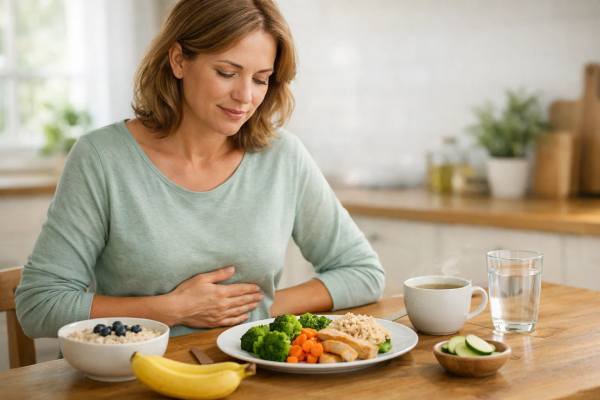
- Breakfast: oatmeal with banana and cinnamon; or eggs with toast and cooked spinach
- Lunch: rice bowl with chicken or tofu, cooked carrots and zucchini, and a light sauce
- Dinner: baked fish with potatoes and roasted squash; or soup with shredded chicken and rice
- Snack options: applesauce; a banana; crackers with a small portion of hummus; yogurt if tolerated
A one-day gentle menu example
- Breakfast: oatmeal made with water or low-fat milk, topped with banana
- Mid-morning: applesauce or a small yogurt (if tolerated)
- Lunch: grilled chicken, white rice, cooked carrots, and a drizzle of olive oil
- Afternoon: crackers and a small portion of peanut butter (if diarrhea is controlled)
- Dinner: baked cod, potato, and steamed zucchini
- If hungry later: a small bowl of rice porridge or a banana
This pattern is not meant to be permanent. It is a symptom-calming baseline you can expand once stools and bloating settle.
How to reintroduce higher-fat foods without triggering a setback
When you feel stable for several days:
- Choose one higher-fat item (for example, a small serving of cheese or a half portion of fried food).
- Eat it earlier in the day and not on an empty stomach.
- Keep everything else that day “easy” and familiar.
- If symptoms flare, step back to your baseline for 48 hours, then retry with a smaller portion.
Hydration and electrolytes matter more than most people think
If diarrhea is frequent, hydration becomes part of digestion support. Signs you may need more fluids and electrolytes include headache, dizziness when standing, leg cramps, and dark urine. Water helps, and on heavier diarrhea days, an oral rehydration-style drink can be more effective than plain water alone.
When symptoms persist and what to ask about
Most people improve with time and basic meal adjustments. If symptoms persist—especially watery diarrhea and urgency—there are treatable causes worth discussing with a clinician.
When ongoing symptoms are worth evaluating
Consider follow-up if any of these apply:
- Diarrhea remains frequent or watery beyond 4 to 8 weeks
- You have urgency that limits leaving home, or accidents
- Symptoms wake you at night
- You are losing weight unintentionally
- You have persistent upper abdominal pain, fever, or jaundice
- You have blood in stool, black stools, or signs of anemia (unusual fatigue, shortness of breath)
Common treatable explanations
Bile acid diarrhea is one of the most important to identify because it can respond well to targeted therapy. Clinicians may approach it by:
- Using specific tests where available
- Considering a therapeutic trial of a bile acid–binding medicine when the pattern is classic
Other possibilities depend on your symptoms:
- Post-cholecystectomy syndrome: an umbrella term for persistent symptoms after surgery that can include diarrhea, bloating, and pain. The cause varies, so evaluation is symptom-driven.
- Medication effects: magnesium, metformin, some antibiotics, and certain supplements can worsen stool looseness.
- Irritable bowel syndrome overlap: surgery may unmask an underlying gut sensitivity pattern rather than create it.
- Fat malabsorption patterns: less common, but relevant if stools are bulky, greasy, or difficult to flush.
Treatments that may be discussed
Depending on your situation, a clinician may recommend:
- Soluble fiber supplementation (often psyllium) with slow titration to reduce urgency and firm stool
- Bile acid binders for suspected bile acid diarrhea; these are taken with attention to timing because they can bind other medications
- Short-term anti-diarrheal medicines for symptom control in select cases
- Diet adjustments with guidance so you reduce triggers without cutting unnecessary nutrients
If bloating is dominant, your clinician may also evaluate constipation patterns, food intolerances, or the need for a structured elimination-and-rechallenge plan.
A focused “what to bring” checklist for your appointment
A short, clear record makes diagnosis easier:
- Stool frequency and consistency (a simple daily note)
- Whether symptoms are meal-triggered and which meals are most problematic
- Any nighttime diarrhea, fever, or visible blood
- Your usual diet pattern and what you changed after surgery
- Medications and supplements started or stopped around the time symptoms began
This shifts the visit from guesswork to pattern recognition—and speeds up effective treatment.
References
- Postcholecystectomy diarrhoea rate and predictive factors: a systematic review of the literature 2022 (Systematic Review)
- Diagnosis and treatment of post-cholecystectomy diarrhoea 2023 (Review)
- Dietary Considerations in Cholecystectomy: Investigating the Impact of Various Dietary Factors on Symptoms and Outcomes 2024 (Review)
- Clinical perspectives on post-cholecystectomy syndrome: a narrative review 2025 (Review)
- Evidence-Based Clinical Guidelines for Chronic Diarrhea 2023 2024 (Guideline)
Disclaimer
This article is for educational purposes only and does not provide medical advice, diagnosis, or treatment. Recovery after gallbladder removal varies, and new or persistent digestive symptoms may have more than one cause. Seek urgent medical care if you have severe or worsening abdominal pain, fever or chills, yellowing of the skin or eyes, black or bloody stools, persistent vomiting, dehydration, fainting, or rapid unexplained weight loss. For ongoing diarrhea, bloating, or pain—especially if symptoms last beyond several weeks—work with a qualified clinician to confirm the cause and choose safe, individualized treatment, particularly if you are pregnant, immunocompromised, or have significant chronic disease.
If you found this article helpful, consider sharing it on Facebook, X (formerly Twitter), or any platform you prefer.