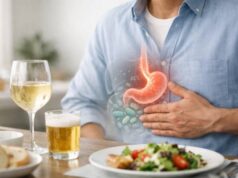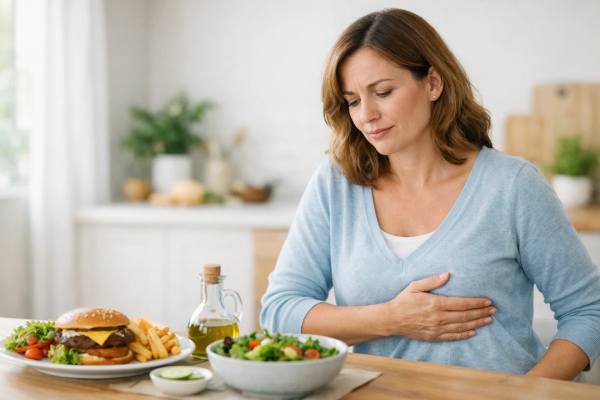
Gallstones are common, and most people who have them do not know it—until the first painful episode arrives after a meal. When stones block bile flow, symptoms can range from short, intense “attacks” to complications that require urgent treatment. The challenge is that gallstone pain can mimic indigestion, reflux, or even pancreatitis, so understanding the typical patterns helps you respond appropriately and avoid delays in care.
This article explains how gallstones form, what a classic gallstone attack feels like, and which triggers make symptoms more likely. You will also learn the warning signs that suggest a complication, what tests clinicians use to confirm the diagnosis, and when surgery becomes the safest long-term option. Along the way, you will find practical, food-focused steps to reduce flare-ups while you arrange evaluation.
Key Takeaways
- Gallstone pain commonly builds to a steady peak in the upper abdomen and can radiate to the right shoulder blade.
- Large, high-fat meals and long gaps between meals can trigger attacks in susceptible people.
- Fever, jaundice, or pain lasting longer than 6 hours can indicate complications and should not be managed at home.
- If symptoms recur, planned surgery often prevents repeat attacks and lowers the risk of emergency complications.
Table of Contents
- How gallstones form and who gets them
- Gallstone symptoms and pain patterns
- Common triggers and everyday prevention
- Warning signs of complications
- How gallstones are diagnosed
- When surgery is needed and why
How gallstones form and who gets them
Gallstones are hardened collections of bile components that form inside the gallbladder. The gallbladder’s job is to store bile made by the liver and release it when you eat, especially when you eat fat. When bile chemistry shifts—too much cholesterol, not enough bile salts, reduced gallbladder movement, or increased bilirubin—crystals can form and gradually grow into stones.
Two main types of gallstones are common:
- Cholesterol stones: the most frequent type in many regions. They form when bile becomes “overloaded” with cholesterol relative to the substances that keep it dissolved.
- Pigment stones: more likely when bilirubin levels in bile are higher (for example, with certain blood disorders) or when infection and inflammation play a role.
Some people develop biliary sludge, a thickened mixture of bile that can cause similar symptoms and sometimes progresses to stones. Sludge matters because it can still block ducts and trigger attacks even if no large stone is seen.
Who tends to develop gallstones? Risk rises with a mix of biology and environment. Common risk factors include:
- Family history of gallstones
- Pregnancy and the postpartum period
- Higher body weight, insulin resistance, and type 2 diabetes
- Rapid weight loss or repeated weight cycling
- Older age
- Certain blood conditions associated with increased bilirubin breakdown
A key point for readers is this: having gallstones is not the same as having gallstone disease. Many people have “silent” stones that never cause symptoms. Problems begin when stones obstruct bile flow, irritate the gallbladder, or pass into the bile ducts. Once symptoms start, attacks often recur unless the underlying issue is addressed.
Gallstone symptoms and pain patterns
When someone says “I had a gallbladder attack,” they are often describing biliary colic—pain caused by a stone temporarily blocking the cystic duct while the gallbladder contracts. The pain can be severe, but the pattern is often recognizable once you know what to look for.
Typical pain features include:
- Location: right upper abdomen under the ribs, or the upper middle abdomen
- Quality: deep ache, squeezing pressure, or a “gripping” pain rather than a sharp surface pain
- Radiation: pain spreading to the right shoulder or right shoulder blade, and sometimes into the back
- Timing: often begins after eating (especially a heavier meal), builds over 15–60 minutes, then gradually eases
A classic biliary colic episode often lasts 30 minutes to a few hours. Importantly, many people feel nearly normal once it passes—until the next episode.
Other common symptoms that travel with the pain:
- Nausea and sometimes vomiting
- Sweating, clamminess, and restlessness
- A sense of bloating or upper abdominal fullness
Symptoms that suggest bile duct involvement can look different. If a stone passes into or blocks the common bile duct, you may notice:
- Jaundice (yellowing of skin or eyes)
- Dark urine and pale stools
- More generalized illness or shaking chills if infection develops
Gallstones can also be silent. Many people have no symptoms at all, and stones are found incidentally during imaging for another reason. If you are asymptomatic, the management plan is often different than if you have recurring attacks.
Because gallbladder pain can resemble reflux, ulcers, kidney stones, and pancreatitis, the safest mindset is: new, severe, or unusual upper abdominal pain deserves proper evaluation—especially if you have fever, jaundice, faintness, or persistent vomiting.
Common triggers and everyday prevention
Gallstone symptoms often flare when the gallbladder is strongly stimulated to contract. The most common trigger is not a single “bad” food—it is a pattern: large meals, high fat load, and irregular eating.
Common trigger patterns include:
- High-fat meals: fried foods, rich sauces, heavy desserts, large portions of cheese
- Large meals after fasting: skipping meals, then eating a big dinner
- Late-night heavy meals: especially if you lie down soon afterward
- Rapid weight loss: very low-calorie diets and aggressive weight-cutting can increase stone formation risk
- Dehydration and low-fiber patterns: can worsen constipation and gut discomfort, which can amplify post-meal symptoms
If you are prone to biliary colic, the goal is to reduce pressure spikes in the system while you arrange evaluation.
A practical “stabilize first” plan (10–14 days)
- Eat smaller meals more consistently (for example, 4 smaller meals rather than 2 large ones).
- Keep fat moderate and spread out across the day rather than concentrated in one meal.
- Choose cooking methods like baking, grilling, steaming, or simmering rather than deep-frying.
- Add gentle fiber if constipation is present (oats, cooked vegetables, fruit you tolerate), and drink enough fluid to avoid hard stools.
- Avoid extreme restriction: going ultra-low-fat can backfire by leading to rebound overeating.
Prevention is also about risk modification over time. If gallstones are present, diet cannot reliably “dissolve” them for most people, but lifestyle changes can still reduce attacks and lower future risk:
- Aim for gradual weight loss if needed, rather than rapid loss.
- Build sustainable activity (even brisk walking most days can help metabolic risk factors).
- If you are using a rapid weight-loss program or weight-loss medication, discuss gallstone risk with a clinician, especially if you develop upper abdominal pain.
If you are already having attacks, consider prevention a bridge strategy—useful, but not a substitute for confirming the diagnosis and discussing definitive treatment.
Warning signs of complications
Many gallstone attacks resolve on their own. The concern is what happens when the obstruction persists or inflammation and infection develop. These complications are the reason clinicians take certain symptoms seriously.
Seek urgent medical care if you have:
- Pain lasting longer than 6 hours, especially if it is getting worse
- Fever or chills
- Jaundice, dark urine, or pale stools
- Persistent vomiting or inability to keep down fluids
- Confusion, faintness, severe weakness, or rapid heartbeat
What these warning signs can mean
- Acute cholecystitis: the gallbladder becomes inflamed, often after sustained blockage of the cystic duct. Pain is usually persistent (not just waves), and fever or tenderness can appear.
- Choledocholithiasis: a stone in the common bile duct, which can cause jaundice and abnormal liver-related blood tests.
- Cholangitis: infection in the bile ducts. This can escalate quickly and is a medical emergency, especially when fever and jaundice occur together.
- Gallstone pancreatitis: inflammation of the pancreas triggered by a stone passing near the pancreatic duct opening. Pain is often severe in the upper abdomen and may radiate through to the back, commonly with nausea and vomiting.
Less common but important complications include gallstone ileus (bowel obstruction from a large stone) and conditions where stones compress nearby ducts. These are not typical “diet problems,” and they require medical evaluation.
A useful home decision rule
- If you have classic post-meal gallstone pain that improves within a few hours and you feel otherwise well, you still need follow-up, but it may not be an emergency at that moment.
- If pain does not improve, or systemic symptoms appear (fever, jaundice, faintness, repeated vomiting), treat it as urgent.
The safest approach is to respect the time course: typical biliary colic resolves; complications persist and escalate.
How gallstones are diagnosed
Diagnosis is a combination of symptom pattern, physical exam, blood work (when needed), and imaging. The key clinical question is not only “Are there stones?” but also “Is this an uncomplicated attack or a complication that needs immediate treatment?”
What clinicians ask about
Expect questions that focus on:
- Exact location, radiation, and duration of pain
- Relationship to meals (especially high-fat meals)
- Frequency and trajectory (worsening? more frequent?)
- Fever, chills, jaundice, dark urine, pale stools
- Persistent vomiting or dehydration symptoms
- Past history of pancreatitis or liver enzyme abnormalities
First-line imaging: abdominal ultrasound
Ultrasound is often the initial test because it can detect gallstones and evaluate gallbladder inflammation. It may also suggest bile duct obstruction if there is duct dilation.
Common blood tests and what they help rule in or out
Blood work is especially useful when symptoms are severe or prolonged. Clinicians may check:
- Infection markers that rise with inflammation
- Liver-related enzymes and bilirubin to evaluate bile duct involvement
- Pancreatic enzymes when pancreatitis is a concern
A normal set of labs does not always exclude gallstone disease if a stone blocked briefly and then moved. That is why the symptom pattern still matters.
When additional tests are used
Depending on the scenario, clinicians may use:
- Functional imaging to assess gallbladder obstruction when ultrasound is unclear
- MRI-based imaging to visualize bile ducts and look for duct stones
- Endoscopic ultrasound in selected cases where duct stones are suspected but not confirmed
- An endoscopic procedure that can remove duct stones when they are present (this is usually therapeutic, not just diagnostic)
Why diagnosis is sometimes delayed
Gallstone pain can be intermittent, and imaging often happens after the episode has resolved. A useful takeaway is to document your episodes: time of onset, meal context, duration, where pain traveled, and whether you had fever or jaundice. This detail can speed accurate diagnosis and help clinicians choose the right next step.
When surgery is needed and why
Surgery for gallstones usually means laparoscopic cholecystectomy—removal of the gallbladder through small incisions. The decision is typically based on symptom history and complication risk, not on stone size alone.
When surgery is commonly recommended
Surgery is often advised when you have:
- Symptomatic gallstones (biliary colic), especially if attacks recur or disrupt daily life
- Acute cholecystitis
- Gallstone pancreatitis (after recovery, to prevent recurrence)
- Common bile duct stones, typically after the duct is cleared, to reduce the chance of future events
A practical message: once you have confirmed symptomatic gallstones, the likelihood of repeat attacks is substantial, and waiting can turn a planned procedure into an urgent one.
When surgery may not be needed right away
If gallstones are found incidentally and you have no symptoms, many people are managed with observation. There are exceptions, and clinicians may consider surgery in select higher-risk situations based on the full clinical picture (for example, certain coexisting conditions or specific gallbladder findings). The decision is individualized, balancing surgical risk against the probability and consequences of future complications.
Non-surgical options and their limits
Some people ask about dissolving stones. In carefully selected cases—typically small cholesterol stones—medicine may reduce stone burden over time. However, this approach:
- Works slowly (months) and is not suitable for many stone types
- Has recurrence risk when treatment stops
- Does not address all causes of symptoms, especially if duct stones or complications are involved
Because of those limitations, non-surgical options are usually considered when surgery is not feasible or when the situation is very specific.
What to expect from gallbladder removal
Most people recover well and eat a broad diet again. Short-term effects can include:
- Temporary diarrhea or urgency, especially after higher-fat meals
- Bloating as the gut adapts to steady bile flow
- Gradual improvement over weeks with sensible meal pacing
A simple recovery-friendly eating approach is to keep meals smaller and spread fat across the day, then reintroduce richer foods gradually.
How to decide what to do next
If you suspect gallstones, the safest sequence is:
- Confirm the diagnosis with appropriate evaluation.
- Use short-term trigger reduction to prevent attacks while waiting.
- Treat urgent symptoms urgently.
- If attacks recur or complications occur, discuss definitive treatment rather than relying on repeated “wait it out” cycles.
References
- Evidence-based clinical practice guidelines for cholelithiasis 2021 2023 (Guideline)
- Clinical update on acute cholecystitis and biliary pancreatitis: between certainties and grey areas 2024 (Review)
- Management of cholelithiasis with choledocholithiasis: Endoscopic and surgical approaches 2021 (Review)
- Management of Gallstone Pancreatitis: A Review 2024 (Review)
Disclaimer
This article is for educational purposes only and does not provide medical advice, diagnosis, or treatment. Upper abdominal pain can have many causes, including emergencies. Seek urgent medical care if you have severe or worsening pain, fever or chills, yellowing of the skin or eyes, dark urine or pale stools, black or bloody stools, persistent vomiting, dehydration, fainting, chest pressure, shortness of breath, or rapid unexplained weight loss. If you are pregnant, immunocompromised, or have significant chronic medical conditions, contact a qualified clinician early when symptoms begin.
If you found this helpful, please consider sharing it on Facebook, X (formerly Twitter), or any platform you prefer.