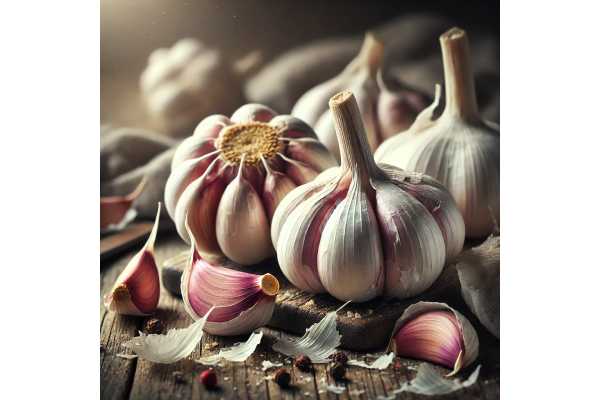
Garlic has a rare combination of everyday familiarity and strong scientific interest. This small, pungent bulb is used around the world to build flavor in soups, sauces, marinades, stir-fries, and roasted dishes, and it is also studied for potential roles in heart health, immune function, and metabolic support. Raw garlic is surprisingly rich in certain vitamins and minerals and provides unique sulfur-containing compounds such as allicin, which are responsible for its scent and some of its biological activity.
In the kitchen, garlic can be gentle and sweet when roasted or sharp and assertive when minced raw, which makes it easy to adapt to different palates and cuisines. At the same time, its potency means more is not always better: large supplemental doses can cause digestive upset and may interact with medications. This guide walks you through the practical benefits, nutrition details, uses, and safety questions so you can enjoy garlic confidently and appropriately.
Garlic Fast Facts
- Typical culinary portion is 1–3 cloves (about 3–9 g) daily, several days per week.
- Garlic provides notable vitamin B6, vitamin C, manganese, and other minerals while remaining low in calories.
- High intakes, especially raw or in supplements, can trigger heartburn, gas, or stomach discomfort in sensitive individuals.
- People using blood-thinning medication or preparing for surgery should avoid high-dose garlic supplements unless cleared by their health-care team.
- Those with known allium allergy, recurrent dermatitis from handling garlic, or severe digestive reactions should limit or avoid it.
Table of Contents
- Garlic Basics and Culinary Role
- Garlic Nutrition Profile per 100 Grams
- Research Based Benefits of Garlic
- Garlic Risks Allergies and Interactions
- Buying Quality Garlic and Storage
- Cooking Garlic and Preserving Nutrients
- Garlic Portions Comparisons and FAQs
Garlic Basics and Culinary Role
Garlic (Allium sativum) is a bulb vegetable in the same family as onions, leeks, shallots, and chives. A garlic bulb is made of multiple cloves wrapped in papery skin, and each clove can be separated and used on its own. This structure makes it simple to adjust how much garlic you add to a dish.
When intact, a clove of garlic has a fairly mild aroma. Once sliced, crushed, or minced, an enzyme reaction transforms sulfur-containing compounds into allicin and related molecules that provide garlic’s characteristic smell and flavor. This reaction happens quickly and is strongest when garlic is finely chopped or crushed and allowed to sit briefly before cooking.
In cooking, garlic is usually a foundation ingredient rather than a main component of the meal. Common uses include:
- Gently sautéed in oil as the base of sauces, soups, and stews
- Roasted whole to create a soft, spreadable paste with a sweet, nutty taste
- Used raw in dressings, dips, salsas, and condiments for a sharper flavor
- Blended into marinades for meats, seafood, tofu, or vegetables
Different preparations change garlic’s intensity. Roasting or long simmering softens harsh notes and develops sweetness, while raw minced garlic stays hot and pungent. Many traditional cuisines pair garlic with herbs and acidic ingredients, such as lemon juice or vinegar, to brighten flavor and balance richness.
Because garlic is so strong, small amounts significantly affect taste. This is helpful if you need to keep sodium or added fats lower: boosting flavor with garlic, herbs, and spices allows you to reduce reliance on heavy sauces or excess salt without sacrificing enjoyment.
Garlic Nutrition Profile per 100 Grams
Garlic is usually eaten in small quantities, but gram for gram it is relatively nutrient dense. The values below refer to raw garlic per 100 g (roughly two bulbs). In everyday life most people consume far less than this at one time, but using the 100 g basis makes it easier to compare with other foods.
Macros and Electrolytes (per 100 g raw garlic)
| Nutrient | Amount per 100 g | % Daily Value (%DV)* |
|---|---|---|
| Energy | 149 kcal | 7 % |
| Protein | 6.4 g | 13 % |
| Total carbohydrate | 33.1 g | 12 % |
| Dietary fiber | 2.1 g | 8 % |
| Total sugars | 1.0 g | – |
| Total fat | 0.5 g | 1 % |
| Saturated fat | 0.1 g | 1 % |
| Sodium | 17 mg | 1 % |
| Potassium | 401 mg | 9 % |
*%DV values are approximate for a 2,000 kcal diet.
From a macronutrient perspective, garlic is very low in fat, provides moderate carbohydrate with some fiber, and contains a small but meaningful amount of protein. Because typical portions are small, garlic adds relatively few calories to a meal.
Key Vitamins (per 100 g raw garlic)
| Vitamin | Amount per 100 g | %DV (approximate) |
|---|---|---|
| Vitamin C | 31 mg | 35 % |
| Vitamin B6 (pyridoxine) | 1.2 mg | 70 % |
| Thiamin (vitamin B1) | 0.2 mg | 17 % |
| Niacin (vitamin B3) | 1.0 mg | 4 % |
| Folate | 3 µg | 1 % |
Vitamin B6 and vitamin C stand out, supporting nervous system function, immune response, and antioxidant defenses.
Key Minerals (per 100 g raw garlic)
| Mineral | Amount per 100 g | %DV (approximate) |
|---|---|---|
| Manganese | 1.7–2.0 mg | 70–85 % |
| Calcium | 180 mg | 18 % |
| Phosphorus | 153 mg | 12 % |
| Magnesium | 25 mg | 6 % |
| Iron | 1.7–2.0 mg | 10–20 % |
| Selenium | 14 µg | 25 % |
| Copper | 0.3 mg | 33 % |
Manganese, calcium, selenium, and copper are relatively high compared with many other vegetables, especially considering how little garlic is usually used at once.
Bioactive and sulfur compounds
Beyond classic nutrients, garlic contains organosulfur compounds such as allicin, diallyl disulfide, and S-allyl cysteine. These are not listed on nutrition labels but are thought to contribute to potential benefits related to blood pressure, cholesterol, oxidative stress, and microbial balance. Different forms of garlic (raw, cooked, aged extracts, powders, oils) have different profiles of these compounds, which partly explains why research findings can vary depending on the preparation used.
Research Based Benefits of Garlic
Garlic has been used for centuries in traditional systems of medicine, but modern research focuses on well-designed human studies, particularly in people with elevated cardiovascular or metabolic risk.
Cardiovascular and blood pressure support
Multiple controlled trials and pooled analyses suggest that standardized garlic preparations can produce modest reductions in blood pressure in adults with hypertension or high cardiometabolic risk. Average changes are small but measurable, often on the order of a few millimeters of mercury for both systolic and diastolic readings. These effects appear more consistent in people starting with higher blood pressure.
Garlic also seems to have a favorable effect on blood lipids in some studies. Regular intake of certain garlic supplements has been associated with reductions in total cholesterol and low-density lipoprotein (LDL) cholesterol, and in some cases triglycerides, especially when combined with other nutrition and lifestyle changes. The size of these improvements is generally modest compared with prescription treatment, so garlic should be viewed as a supportive food or adjunct, not a replacement for medical therapy.
Metabolic health and blood sugar
Research in people with type 2 diabetes and prediabetes indicates that garlic, typically in capsule form, may contribute to improvements in fasting blood glucose and selected markers of insulin function when used alongside standard care. Results are not uniform across all studies, and doses and formulations vary widely. Still, the overall pattern supports garlic as one possible component of a broader diet and lifestyle plan.
Antioxidant and anti-inflammatory effects
Garlic’s sulfur compounds can influence oxidative stress and inflammatory pathways in laboratory and animal models. Human studies suggest that garlic may modestly improve certain antioxidant markers and reduce some inflammatory indicators, although the magnitude of change is usually small. These subtle shifts may help explain its broader cardiometabolic effects, especially when garlic is consumed regularly over long periods.
Immune and antimicrobial considerations
In test-tube and animal work, garlic extracts can inhibit the growth of several bacteria, fungi, and viruses. A small number of human studies report fewer or shorter episodes of common colds among individuals using specific garlic preparations daily. While this is encouraging, the evidence base is still limited and does not justify using garlic instead of recommended vaccinations, antiviral medications, or antibiotics when they are medically indicated.
Overall, garlic appears to offer modest, supportive benefits across several areas of health, with the best evidence in cardiovascular risk reduction. The greatest value likely comes from using garlic consistently as part of a healthy dietary pattern, rather than relying on it as a single “hero” ingredient.
Garlic Risks Allergies and Interactions
For most people, culinary amounts of garlic are safe and well tolerated, but higher intakes, supplements, and certain medical situations require more caution.
Digestive side effects
Garlic can cause heartburn, burping, gas, bloating, and loose stools, especially when eaten raw or in large amounts. These symptoms are more common in individuals with sensitive digestion, reflux, or conditions such as irritable bowel syndrome. Cooking garlic thoroughly, eating smaller amounts at a time, and combining it with other foods usually makes it easier to tolerate.
Garlic also contains fermentable carbohydrates that can be problematic for people following a low-FODMAP pattern. Those with irritable bowel symptoms are sometimes advised to limit onion and garlic and instead use garlic-infused oil to capture aroma without as much fermentable material.
Allergy and skin irritation
True allergy to garlic is not common but can occur, with symptoms such as hives, swelling, or breathing difficulty after ingestion. More frequently, people develop contact dermatitis on the hands from handling large quantities of raw garlic, especially in professional kitchens or food manufacturing. In that case, wearing gloves and reducing direct contact can help.
Bleeding risk and surgery
Garlic may have mild antiplatelet effects, meaning it can decrease blood clotting activity slightly. At culinary doses this is usually not a major issue, but high-dose supplements or concentrated extracts can contribute to an increased bleeding tendency, especially when combined with anticoagulant or antiplatelet medications. Because of this, many clinicians recommend avoiding concentrated garlic products for at least a week before elective surgery or invasive dental procedures and ensuring that your health-care team knows about any garlic supplements or other herbal products you use.
Drug interactions
Garlic supplements may interact with:
- Anticoagulants and antiplatelet agents
- Some medicines used for heart conditions
- Certain drugs metabolized by specific liver enzymes
The practical takeaway is that anyone on long-term or complex medication regimens should speak with a pharmacist or physician before starting high-dose garlic supplements. Culinary use in normal amounts is less likely to pose a problem.
Food safety concerns with garlic-in-oil
Garlic stored in oil at room temperature creates an environment where Clostridium botulinum bacteria can grow and produce botulism toxin. Commercial products are formulated to reduce this risk, but homemade garlic-in-oil mixtures should always be refrigerated promptly and used within a few days, or frozen for longer storage. They should not be kept at room temperature.
In summary, normal dietary use of garlic is safe for most adults. The main concerns—digestive discomfort, bleeding risk, medication interactions, and rare allergy—become more significant at high intakes or with concentrated supplemental forms.
Buying Quality Garlic and Storage
Good garlic starts with good bulbs. Paying attention at the store or market helps ensure consistent flavor and longer shelf life.
Choosing fresh garlic
Look for bulbs that are:
- Firm and heavy for their size
- Wrapped in dry, intact papery skin
- Free from mold, dark spots, or soft patches
- Showing little or no green sprouting from the top
Softneck garlic, the type most common in supermarkets, has a flexible stem and stores well. Hardneck garlic, often found at farmers’ markets, has a stiff central stalk and can have more complex, sometimes sharper flavors.
How to store whole bulbs and cloves
For whole, unpeeled bulbs:
- Keep them in a cool, dry place with good air circulation
- Avoid sealed plastic bags that trap moisture
- Store at room temperature rather than in the refrigerator for long-term keeping
Once you break a bulb and separate the cloves, storage time shortens. Unpeeled cloves can still be kept at room temperature for a week or two in a ventilated container. Peeled cloves should be refrigerated in a covered container and used within several days.
Chopped, minced, or pureed garlic is most flavorful when used soon after preparation. If you make a larger batch, refrigerate it promptly and use within a short window, or freeze small portions for longer storage.
Prepared and dried garlic products
Convenient options include:
- Pre-peeled cloves packed in containers
- Jarred chopped garlic packed in water or oil
- Garlic paste or puree
- Garlic powder and granulated garlic
These save preparation time and can be helpful if peeling or chopping is difficult. However, jarred products may contain added salt, oil, or preservatives, and dried products can lose aroma over time. Check labels if you monitor sodium or fat intake, and try to buy amounts you will use within about a year to maintain quality.
In general, cool, dry, and dark storage with some airflow is ideal for both fresh bulbs and dried garlic products.
Cooking Garlic and Preserving Nutrients
How garlic is prepared and cooked influences both its flavor and its beneficial compounds.
Chopping, crushing, and resting
When garlic is cut or crushed, the enzyme alliinase converts alliin into allicin, a key sulfur compound. Allicin formation takes a few minutes and stops when the enzyme is inactivated by heat. To encourage the reaction:
- Crush, mince, or finely chop the garlic.
- Let it sit at room temperature for about 5–10 minutes.
- Then add it to the pan or dish.
This simple step can make a meaningful difference in the type and amount of sulfur compounds present.
Heat and cooking methods
- Gentle sautéing in oil over medium heat is a classic way to start sauces and soups. Stir frequently and remove from heat when the garlic becomes fragrant and just begins to turn lightly golden.
- High heat can quickly burn garlic, turning it bitter and destroying many delicate flavor compounds. To avoid this, add garlic later in the cooking process or mix it with other ingredients so it is not in direct contact with very hot pan surfaces.
- Roasting whole bulbs or large cloves in their skins produces a sweet, mellow paste that is easy to spread on bread or stir into mashed vegetables. Some heat-sensitive nutrients decrease, but the preparation is often more digestible.
- Raw garlic delivers the strongest flavor and may preserve more of certain sulfur compounds, but it can irritate the mouth and stomach in some people. Using small amounts in dressings, dips, or salsas and combining with oil and acidity helps soften the impact.
Nutrient retention tips
Water-soluble vitamins such as vitamin C are most prone to loss with prolonged heat and large volumes of cooking water. Minerals are stable but can leach into boiling water and be lost if the water is discarded. Organosulfur compounds change form with heat but do not disappear entirely.
Practical strategies include:
- Using shorter cooking times when possible
- Adding at least some garlic later in the cooking process
- Using cooking liquids (broths, sauces) in the final dish instead of discarding them
- Varying between raw, lightly cooked, and roasted preparations over the week
For people sensitive to the carbohydrates in garlic, garlic-infused oil can provide flavor: the oil captures volatile aromatic compounds, while the fermentable components largely remain in the garlic solids, which are discarded.
Garlic Portions Comparisons and FAQs
How much garlic is reasonable per day?
For most healthy adults, using about 1–3 cloves per day in food, several days per week, is a practical and generally well-tolerated range. Some people enjoy more, but digestive comfort is a good guide. If you are new to garlic or have a sensitive stomach, start with smaller amounts and increase gradually.
Supplement studies often use doses equivalent to several cloves per day in the form of standardized powders, aged extracts, or oils. These higher intakes are usually reserved for specific health goals and should be supervised by a health professional, especially if you take medications.
How does garlic compare with other allium vegetables?
Compared with onions, shallots, and leeks:
- Garlic is more concentrated in flavor, so you use less by weight.
- It tends to supply higher amounts of some vitamins and minerals per gram.
- It shares similar sulfur compound families but in different proportions.
Onions and leeks usually contribute more bulk and fiber per serving, while garlic contributes potent aroma and more concentrated micronutrients relative to its small volume.
Fresh garlic versus supplements
Food and supplements play different roles:
- Fresh garlic offers flavor, modest nutrients, and a broad mix of sulfur compounds, integrated into meals.
- Supplements allow standardized dosing and are sometimes used in research or clinical settings for blood pressure or cholesterol support.
- Supplements can reduce odor in some formulations but may increase the risk of side effects or interactions when taken in high doses.
For most people, building a pattern of regular culinary garlic use within an overall healthy eating pattern is a sensible first step. Supplements should be considered only when there is a clear reason and under professional guidance.
Who should be especially cautious?
You may need to limit or avoid garlic, especially concentrated products, if you:
- Have a known allergy or reproducible severe reaction to garlic or other allium vegetables
- Take anticoagulant or antiplatelet medication or have a bleeding disorder
- Are scheduled for surgery or an invasive dental procedure in the near future
- Have irritable bowel syndrome and find that garlic worsens your symptoms
When in doubt, discussing your typical intake and any planned supplements with a health-care professional can help you find an approach that is both safe and realistic.
Key takeaways for everyday use
- Use garlic regularly, but in amounts your digestion and lifestyle tolerate.
- Rely on garlic, herbs, and spices to increase flavor while moderating salt and heavy sauces.
- Store bulbs properly, rotate stock, and explore multiple cooking methods to keep meals interesting.
Garlic is best viewed as one valuable supporting player in a diverse, plant-forward diet rather than a single, stand-alone remedy.
References
- Effects of Garlic Supplementation on Cardiovascular Risk Factors in Adults at High Cardiometabolic Risk: A Systematic Review and Meta-Analysis of Randomized Controlled Trials 2025 (Systematic Review)
- Garlic Consumption Can Reduce the Risk of Dyslipidemia: A Systematic Review and Meta-Analysis 2024 (Systematic Review)
- Effect of Garlic on Blood Pressure: A Systematic Review and Meta-Analysis 2008 (Systematic Review)
- Herbal and Dietary Supplement–Drug Interactions in Cardiovascular Patients 2019 (Guideline/Review)
- Is Homemade Garlic in Oil Safe? 2021 (Food Safety Guidance)
Disclaimer
The information in this article is intended for general education about garlic and its potential health effects. It is not a substitute for personalized advice from a physician, registered dietitian, pharmacist, or other qualified health professional who understands your medical history, medications, and individual needs. Always seek professional guidance before making significant changes to your diet, starting supplements, or altering prescribed treatments, and never ignore or delay medical advice because of something you have read online.
If you found this article helpful, you are warmly encouraged to share it on Facebook, X (formerly Twitter), or any platform you prefer. Thoughtful sharing helps more people access reliable nutrition information and supports the continued creation of clear, evidence-informed content.