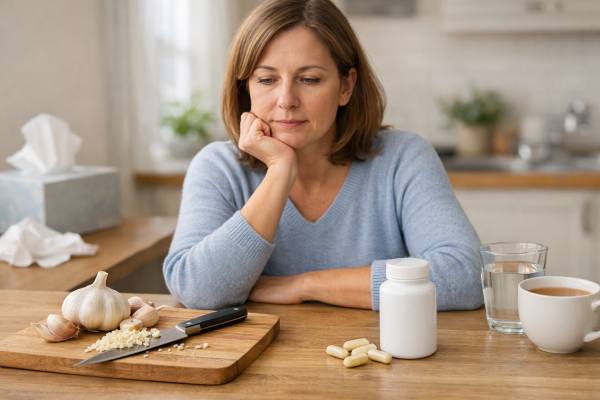
Garlic has a strong reputation as a “cold fighter,” and it’s easy to see why: it smells medicinal, it’s been used for centuries, and lab research shows that garlic compounds can affect microbes and immune signaling. But colds are complicated—caused by many different viruses—and what works in a petri dish does not always translate to fewer sick days at home. If you are thinking about garlic when a cold starts, the most useful approach is practical and balanced: understand what garlic can realistically do, choose the form that fits your body and lifestyle, and avoid the common safety traps (especially high-dose supplements and medication interactions). This guide breaks down the difference between culinary garlic and supplements, what clinical research actually suggests, and which side effects matter most. You’ll also get a clear, symptom-friendly way to use garlic without turning your recovery into an experiment.
Quick Overview
- Garlic may offer modest support for immune function, but evidence for preventing or treating colds remains limited and inconsistent.
- Culinary garlic is generally safer and easier to fit into sick-day meals than high-dose supplements.
- Supplements can raise the risk of side effects and interactions, especially related to bleeding and certain medications.
- Skip topical “garlic remedies” on skin or in the nose because chemical irritation and burns can occur.
- If you try garlic, use it as a supportive add-on for 3–7 days while prioritizing sleep, fluids, and symptom relief.
Table of Contents
- Why garlic is linked to cold relief
- Food garlic versus supplements: what changes
- What the evidence says about garlic and colds
- Practical ways to use garlic during a cold
- Side effects, interactions, and who should avoid it
- How to choose a safer garlic supplement if you use one
Why garlic is linked to cold relief
Garlic’s cold-season fame rests on a real biological foundation—just not a simple one. The main story is chemistry. When you crush or chop garlic, an enzyme called alliinase converts a compound in the clove into allicin, a short-lived molecule that contributes to garlic’s sharp smell and many of its lab-observed effects. Allicin does not stick around for long; it breaks down into other sulfur compounds, some of which may also influence inflammation and immune signaling.
Why that matters for colds
Colds are usually caused by viruses that infect the lining of your nose and throat. The symptoms you feel—sore throat, congestion, cough, fatigue—are partly from the virus and partly from your immune response. Garlic is often discussed because it may influence several steps in that process:
- Antimicrobial activity in lab settings: garlic compounds can inhibit some bacteria and viruses in controlled experiments, though those conditions do not match the human airway.
- Immune signaling effects: certain garlic preparations appear to affect cytokine activity (chemical messengers), as well as immune cell behavior.
- Anti-inflammatory and antioxidant pathways: garlic extracts contain compounds that may reduce oxidative stress or modulate inflammatory cascades.
All of that sounds promising, but the leap from “biologically active” to “reliably shortens my cold” is a big one. Your airway exposure, digestion, metabolism, dose, and the specific virus involved all influence whether a kitchen ingredient can make a measurable difference.
The expectation gap: what garlic can and cannot do
A realistic view helps you use garlic wisely. Garlic is unlikely to “kill the cold virus” in your throat in the direct way people imagine. If garlic helps at all, it is more likely through gentle, indirect support—such as small effects on immune function—or by improving your ability to eat and drink when you feel miserable (warm garlic soup is often easier to tolerate than a dry sandwich). In other words, garlic may be helpful as part of a supportive routine, but it is not a substitute for rest, hydration, and appropriate medical care when symptoms are severe.
Food garlic versus supplements: what changes
“Garlic” is not one product. The form you choose changes the active compounds you actually consume, how predictable the dose is, and how likely you are to experience side effects.
Culinary garlic: lower dose, higher flexibility
Using garlic in food typically means smaller amounts spread across meals. That has two advantages when you are sick:
- Tolerance is better for many people because garlic is diluted by other ingredients and eaten with food.
- You can adjust texture and temperature, which matters for sore throat, cough, and nausea.
The tradeoff is dose consistency. One clove can vary in size, and cooking methods change how much alliinase activity remains. If you sauté garlic immediately at high heat, you may inactivate alliinase quickly. If you chop garlic and let it sit for a short period before heating, you may preserve more of the allicin-forming reaction. In practice, this is less about “optimizing chemistry” and more about choosing what you can comfortably eat.
Supplements: higher dose, higher uncertainty
Garlic supplements can be convenient, but they raise three practical issues:
- Standardization varies. Some products are labeled for “allicin potential,” others for specific compounds (like S-allyl cysteine in aged garlic extract), and some provide little meaningful detail.
- The “allicin problem.” Allicin is unstable. Products may contain precursors designed to generate allicin after swallowing, but real-world conversion depends on formulation and digestion.
- Side effects and interactions are more likely at concentrated doses, especially stomach upset and bleeding-related concerns.
Aged garlic extract and other common forms
You may see several supplement styles:
- Aged garlic extract: produced by aging garlic in alcohol or water-based solutions, shifting the compound profile toward more stable sulfur compounds.
- Garlic powder tablets: often marketed for “odor control” or cardiovascular benefits, with variable compound content.
- Garlic oil capsules: different sulfur compounds than fresh garlic, sometimes harsher for reflux-prone people.
- Enteric-coated tablets: intended to dissolve lower in the digestive tract to reduce garlic breath and stomach irritation, with mixed results.
A simple way to decide: if you mainly want comfort support during a cold, food garlic is often the gentler first step. If you are considering supplements, it should be a deliberate choice—based on your medications, your risk factors, and the specific product’s transparency.
What the evidence says about garlic and colds
The most honest summary is this: garlic is biologically interesting, widely used, and plausibly helpful—but clinical proof for colds remains thin.
Prevention versus treatment are different questions
People look to garlic in two ways:
- Prevention: “If I take garlic regularly, will I catch fewer colds?”
- Treatment: “If I start garlic now, will this cold end sooner or feel milder?”
Prevention studies are easier to measure because you can compare how many colds occur over a season. Treatment studies are harder because colds vary wildly in severity, timing, and the viruses involved.
What trials and reviews suggest
Clinical research on garlic and the common cold has been limited, with a small number of human trials and inconsistent replication. Some reports suggest fewer colds in groups using specific garlic preparations over time, but the body of evidence is not large enough to draw confident, general conclusions for the average person.
A useful way to interpret the current evidence is to focus on what is consistent across cautious reviewers:
- Evidence is insufficient to claim that garlic reliably prevents colds. A positive study result does not automatically generalize when follow-up trials are limited.
- There is no strong, consistent proof that garlic shortens cold duration once symptoms start.
- Some garlic preparations may influence immune markers, but improved lab markers do not always equal fewer sick days.
Why the evidence feels messy
Garlic research is difficult to compare because “garlic” is not a single, uniform intervention. Studies may use different:
- Garlic species, processing methods, and doses
- Outcome measures (number of colds, symptom scores, workdays missed)
- Populations (healthy adults, stressed individuals, older adults)
- Timeframes (weeks versus months)
That variation creates a common pitfall: people hear “garlic helped” without realizing it may refer to one specific formulation, taken consistently, in one specific group, measured in one specific way.
A practical, evidence-respecting takeaway
If you enjoy garlic and tolerate it well, using it as part of a supportive routine during cold season is reasonable. But if you are relying on garlic as your primary prevention plan, you are likely overestimating what the evidence supports. The more reliable prevention strategy is still layered: vaccination where appropriate, hand hygiene, sleep support, and avoiding close contact when people are actively ill. Garlic can be a side character in that story, not the main plot.
Practical ways to use garlic during a cold
If you want to use garlic when a cold is brewing, the goal is comfort and consistency—not extreme dosing. A cold already stresses your body. Your plan should reduce friction: easy meals, soothing textures, and minimal stomach irritation.
Use a “comfort-first” approach
Choose preparations that match your symptoms:
- Sore throat: warm soups, broths, and soft foods with gentle garlic flavor
- Cough and congestion: warm liquids and steam-friendly meals (soups often help you hydrate while eating)
- Low appetite or nausea: small portions, milder garlic intensity, and food-based intake rather than capsules
Simple, realistic food ideas
- Garlic and ginger broth: simmer broth with sliced ginger; add minced garlic near the end to keep flavor gentle, then sip like tea.
- Chicken soup with garlic: add crushed garlic late in cooking; keep spices mild if your throat is raw.
- Garlic oatmeal or savory congee: yes, it works—use a small amount of garlic with salt and a drizzle of olive oil for calories when appetite is low.
- Yogurt and garlic dip (if tolerated): for people without reflux, a mild garlic yogurt sauce can be soothing with soft bread or rice.
If raw garlic burns your throat or triggers coughing, do not force it. Many people tolerate cooked garlic far better during illness.
How much is “reasonable” when you’re sick
There is no clinically proven “best dose” of garlic for colds. For most adults who tolerate garlic, a practical food range is about 1 to 2 cloves across the day, folded into meals, for a few days. If you are sensitive to reflux or nausea, start lower. For children, use culinary amounts in food only, and keep flavors mild.
For supplements, follow the product label and avoid “stacking” multiple garlic products at once (for example, garlic capsules plus concentrated garlic oil plus raw garlic shots). More is not automatically better, and side effects often rise faster than benefits.
Timeframe and expectations
Consider a short trial window: 3 to 7 days, focused on symptom support. If you notice stomach pain, worsening heartburn, dizziness, easy bruising, or unusual bleeding (like frequent nosebleeds), stop and reassess. If you notice no benefit, that is also useful information—your body may simply not respond in a meaningful way.
Garlic works best when you treat it as part of a “sick-day system”: fluids, sleep, gentle nutrition, and symptom relief. If garlic helps you eat more soup and drink more broth, that alone can be worthwhile.
Side effects, interactions, and who should avoid it
Garlic is a food, but concentrated garlic—especially in supplement form—can behave more like a medication. Most side effects are minor, yet a few are important enough to treat seriously.
Common side effects
- Bad breath and body odor: common with both food and supplements
- Heartburn and reflux: especially with raw garlic or garlic oil
- Stomach upset: nausea, bloating, gas, or diarrhea, more likely with higher doses
- Mouth and throat irritation: raw garlic can sting inflamed tissue during a cold
If you already have reflux, gastritis, or a sensitive stomach, garlic supplements are more likely to be uncomfortable than helpful.
Bleeding risk and medication interactions
One of the most consistent safety concerns is garlic’s potential to affect platelet function and bleeding risk, particularly with supplementation and around surgery. That matters most if you:
- Take anticoagulants or antiplatelet medications (commonly called blood thinners)
- Have a bleeding disorder
- Have surgery or dental procedures scheduled
- Bruise easily or have frequent nosebleeds
A practical safety rule used in many clinical settings is to avoid nonessential herbal supplements—garlic included—for about 2 weeks before surgery, unless your clinician says otherwise.
Other interaction-prone situations
Garlic supplements may also be a concern if you:
- Take medications with narrow safety margins where interactions matter
- Use multiple supplements that can affect clotting
- Have blood pressure that runs low, because some garlic preparations can modestly lower blood pressure in certain people
- Have diabetes and are prone to low blood sugar, since garlic may influence glucose control in some contexts
The safest move is simple: if you take prescription medications and want a garlic supplement, ask a pharmacist or clinician to screen for interactions. Culinary garlic in normal food amounts is usually less of a concern, but it is not “interaction-proof” in every situation.
A clear warning about topical garlic
Using raw garlic on the skin, under bandages, or as a “natural rub” for cough is risky. Chemical irritation and burns can occur, especially with prolonged contact. The same caution applies to putting garlic in the nose. These practices can injure tissue and make symptoms worse.
Who should generally skip garlic supplements
Food garlic is one thing; supplements are another. Consider avoiding garlic supplements if you are pregnant, immunocompromised, on blood thinners, preparing for surgery, or have significant reflux. If you decide to use garlic at all in these contexts, keep it culinary and modest unless a clinician specifically supports supplementation.
How to choose a safer garlic supplement if you use one
If you still want a garlic supplement, the safest path is to reduce the two biggest risks: unpredictable content and avoidable interactions.
Start with the decision: do you need a supplement?
Ask yourself two questions:
- Can I get what I want from food garlic? If your goal is comfort during a cold, food is often enough.
- Am I trying to solve prevention with pills? If yes, remember that evidence for cold prevention is limited and product-to-product variation is high.
Supplements make more sense when you are seeking a standardized preparation for a defined reason and you have screened for medication risks.
What to look for on a label
A more trustworthy garlic supplement usually does at least some of the following:
- Names the form clearly (for example, aged garlic extract versus garlic oil)
- Provides a standardized marker (such as specific sulfur compounds or an “allicin yield” claim)
- Lists the dose per serving in a way that is consistent and measurable
- Avoids exaggerated immune claims that sound like guaranteed prevention or cure
- Uses third-party quality testing when available (helpful for consistency, though it does not guarantee effectiveness)
Be cautious with “mega-dose” positioning. Very high doses often raise side effect risk without reliable evidence of greater cold benefit.
How to use a supplement more safely
- Use one garlic product at a time. Do not stack capsules, oils, and high raw intake together.
- Take with food if your stomach is sensitive.
- Set a short window (for example, 1–2 weeks during peak exposure or a few days during symptoms) and reassess.
- Stop early if you develop heartburn, nausea, dizziness, easy bruising, or unusual bleeding.
- Pause before procedures and disclose use to your clinician.
Food-first, supplement-second: a simple framework
If you want garlic for a cold, start with a food approach for a few days: garlic in soup, broth, or soft meals. If you tolerate that well and still want supplementation, choose one product, use it conservatively, and keep your expectations realistic. Garlic may be a helpful adjunct, but it is not an antiviral substitute—and it should never be used in ways that increase your risk.
References
- Garlic: Usefulness and Safety | NCCIH 2025 (Federal Fact Sheet)
- Garlic for the common cold – PMC 2014 (Systematic Review)
- Natural Products for the Prevention and Treatment of Common Cold and Viral Respiratory Infections – PMC 2023 (Review)
- Dietary supplements and bleeding – PMC 2022 (Review)
- Garlic bioactive substances and their therapeutic applications for improving human health: a comprehensive review – PMC 2024 (Review)
Disclaimer
This article is for general educational purposes and does not provide medical advice, diagnosis, or treatment. Colds can resemble other infections, and safe use of herbs and supplements depends on your age, pregnancy status, medical conditions, allergies, and medications. Garlic supplements may increase bleeding risk and can interact with certain drugs; talk with a qualified clinician or pharmacist before using supplements if you take prescription medications, have a bleeding disorder, or have surgery or dental procedures planned. Seek urgent care for trouble breathing, chest pain, confusion, severe dehydration, or rapidly worsening symptoms.
If you found this article helpful, please consider sharing it on Facebook, X (formerly Twitter), or any platform you prefer.