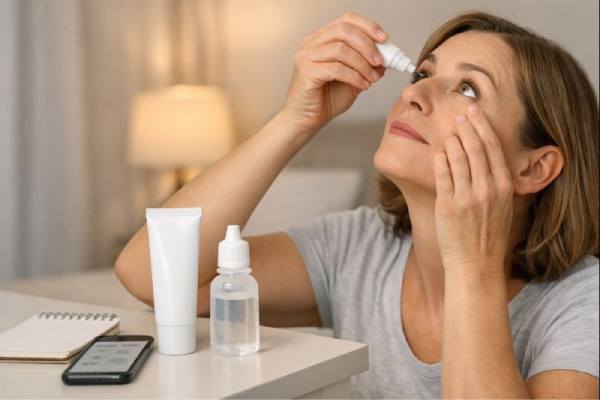
Dry eye treatment can feel like guesswork until you understand one simple idea: not every dry eye needs the same kind of moisture. Standard artificial tears (drops) are designed to refresh and stabilize the tear film quickly, while gels and gel drops stay on the eye longer and act more like a protective cushion. That difference affects everything—how long relief lasts, how blurry your vision feels afterward, and when you can safely use them (especially if you drive, work on screens, or wear contact lenses). Choosing the right format can reduce burning and gritty sensations, improve clarity during the day, and make mornings and nights more comfortable. This article compares gels and drops in plain terms, explains which symptoms each addresses best, and offers practical routines that fit real schedules. It also covers preservatives, contact lens considerations, and the warning signs that mean dryness may not be the whole story.
Key Takeaways
- Drops are best for fast, repeatable daytime relief and for use around screens and errands.
- Gels last longer and protect the surface better but commonly cause temporary blur, especially right after use.
- If you need drops more than 4 times daily, preservative-free options are usually the safer default.
- Many people do best with a two-part plan: drops in the day and gel at night or during flare-ups.
- Try a structured routine for 2 weeks before switching products; consistency often matters more than brand.
Table of Contents
- How drops and gels work differently
- When drops are the better choice
- When gels work better than drops
- Preservatives, ingredients, and safety
- Contact lenses and special situations
- Building a simple routine that sticks
How drops and gels work differently
Dry eyes are not only “not enough tears.” Many people have tears, but the tear film breaks up too quickly. A healthy tear film has layers: an oil layer that reduces evaporation, a watery layer that hydrates, and a mucin layer that helps tears spread evenly. Drops and gels can support these layers, but they do it with different trade-offs.
Drops: quick refresh and fast clearing
Most artificial tears are low-to-moderate viscosity solutions designed to spread quickly and clear with minimal blur. They mainly help by:
- Adding temporary moisture and smoothing the surface
- Reducing friction during blinking
- Supporting tear film stability for a short window
- Diluting irritants (smoke, dust, allergens) on the ocular surface
Because they are thinner, drops are ideal when you need to function immediately afterward—reading, driving, working, or switching between tasks. The downside is that they usually do not last as long, especially in windy environments, heated offices, or long screen sessions where blinking decreases.
Gels and gel drops: longer “dwell time” on the eye
Gels are thicker and adhere to the ocular surface longer. Some products are true gels, and others are “gel drops” that start as a drop and become more gel-like on the eye. Their main benefits are:
- Longer-lasting comfort compared with standard drops
- Better protection when the surface is irritated or the tear film is very unstable
- Less frequent dosing for many people
The main trade-off is temporary blur. Thicker products can scatter light and coat the surface unevenly until blinking spreads them. For some, the blur lasts seconds; for others, several minutes. That blur is why gels are often better for evening use, pre-sleep use, or times when you can pause and let vision clear.
Dry eye type influences what feels best
- If your eyes feel dry mainly during screens and improve with blinking, you may do well with daytime drops plus behavior changes (blink breaks, airflow control).
- If you wake with burning, crusting, or “sand in the eyes,” overnight protection is often missing, and gels can be more helpful.
- If you have evaporative dry eye from meibomian gland dysfunction, surface hydration helps, but addressing lid health and oil quality can be the higher-leverage step.
A practical way to think about “which works better”
Drops win on convenience and clear vision. Gels win on duration and surface protection. Many people mistakenly treat it as a brand problem when it is actually a format problem. Once the format matches your daily pattern—daytime function versus overnight protection—results often improve without chasing dozens of products.
When drops are the better choice
Drops are the first-line choice for most people because they are easy to use throughout the day and rarely disrupt vision for long. They are especially helpful when dry eye symptoms fluctuate with environment and visual demand.
Best scenarios for standard drops
Drops are often the better option if you:
- Need fast relief with minimal blur (commuting, meetings, reading)
- Experience dryness that builds during screen time
- Work in a dry or air-conditioned environment and need repeat dosing
- Have allergy seasons where your eyes feel gritty and irritated
- Prefer a “light” feel and dislike thicker products
For many, a drop used before a long task works better than waiting until symptoms peak. Think of drops as prevention as much as rescue.
Signs your drops are not lasting long enough
You may benefit from either more frequent dosing, a different drop type, or adding gel support if:
- Relief lasts less than 30 to 60 minutes
- You need drops every hour to stay comfortable
- Symptoms spike late afternoon despite repeated dosing
- Vision fluctuates and clears only after frequent blinking
In these cases, the issue is often tear film instability or evaporation rather than simple “lack of moisture.” Drops can still help, but they may need to be paired with a longer-acting format or an upstream strategy like eyelid hygiene and airflow control.
Drop categories and how they feel
Even within “drops,” there are differences:
- Watery, low-viscosity drops: feel light and clear quickly, but wear off faster.
- Lipid-containing drops: can help evaporative dry eye by supporting the oil layer; some people notice a brief filmy sensation.
- “Long-lasting” drops: slightly thicker, often a middle ground between standard drops and gels.
If your main issue is dryness during screens, many people do well with a slightly thicker “long-lasting” drop used at planned intervals rather than a very watery drop used reactively.
How to use drops for best effect
Technique matters more than most people expect:
- Wash hands.
- Tilt head back and pull the lower lid down gently.
- Place one drop into the pocket without touching the bottle tip to lashes or skin.
- Close the eye softly for 10 to 20 seconds.
- If you use multiple eye products, separate them by a few minutes so the first product is not immediately diluted.
If you blink hard or squeeze the lids right after instillation, you can pump the drop out and reduce benefit.
When drops alone may be enough
If your symptoms are mild to moderate and mostly daytime-related, a consistent drop plan plus environmental tweaks can be sufficient. Many people are surprised how much relief comes from predictable dosing and blink breaks rather than constantly switching brands.
When gels work better than drops
Gels and gel drops are often the better choice when you need longer-lasting surface protection—especially at night or during flare-ups where the ocular surface is irritated and drops feel like they “disappear” instantly.
Common scenarios where gels outperform drops
Consider gels if you:
- Wake with burning, gritty sensation, or sticky lids
- Have nighttime dryness, incomplete lid closure, or wake to use drops
- Have moderate to severe dry eye where drops provide only brief relief
- Experience dry eye flares during illness, travel, or intense screen periods
- Notice that your eyes feel scratched or inflamed, not just “a little dry”
Gels act like a cushion. They reduce friction and help the surface recover when it has been stressed.
Nighttime use: a high-value role for gels
Sleep is a long period without frequent blinking. If the eyelids do not close fully, or if tear evaporation is high, the surface can dry significantly overnight. Gels can help by staying in place longer, reducing morning irritation.
A practical approach many people tolerate:
- Use standard drops in the evening if you need immediate clarity
- Use gel shortly before bed, when temporary blur is not a problem
If you read in bed, apply gel after you are finished rather than before.
Daytime gel use: possible, but plan for blur
Gel drops can be used during the day if your symptoms are severe, but expect temporary blur. If you try daytime gel use:
- Choose a time when you can pause for several minutes
- Avoid immediate driving or operating machinery until vision is clear
- Use a smaller amount first; more gel is not always better and can increase blur
Some people use gels strategically: one dose at lunch or late afternoon to prevent the “end-of-day crash,” then drops as needed for clarity.
What the blur means and when it is a concern
Temporary blur is expected because gels coat the eye. It should clear with blinking and time. However, seek evaluation if you experience:
- Persistent blur that does not clear well
- Significant pain, light sensitivity, or redness after using a product
- New discharge or eyelid swelling
These are not typical “gel side effects” and may suggest irritation, allergy, or another ocular surface issue.
Gels and ointments are not identical
Some people move from drops to gels and then to ointments. Ointments are typically the thickest and most blurring, and they are often reserved for nighttime protection or specific clinical situations. If gel does not hold overnight and you are waking with significant symptoms, a clinician may discuss stronger nighttime protection options—but it is best to do that in the context of diagnosing the underlying dry eye type.
Gels are often the bridge product: more protective than drops, more tolerable than ointment for many users, and especially useful for nighttime and flare control.
Preservatives, ingredients, and safety
The choice between gel and drops is only part of the decision. Preservatives, packaging, and ingredients can strongly influence comfort—especially when you use products frequently.
Preservatives: the “frequency rule”
Preserved drops can be fine for occasional use, but frequent exposure to preservatives can irritate the ocular surface and worsen dry eye symptoms in some people. A practical rule many clinicians use is:
- If you use artificial tears more than 4 times per day, consider switching to preservative-free options.
This is not a strict medical law, but it is a helpful guideline because frequent dosing increases cumulative exposure.
Preservative-free does not mean “stronger,” it means gentler
Preservative-free drops and gels are often packaged in single-use vials or special multi-dose bottles designed to keep the solution sterile without chemical preservatives. They can be especially helpful if you have:
- Sensitive eyes that burn with standard drops
- Ocular surface inflammation
- Allergy-prone eyelids
- Post-surgical dryness (under clinician guidance)
Ingredient families and what they do
You will see recurring ingredient types across drops and gels:
- Humectants and lubricants that bind water and improve comfort
- Polymers that increase viscosity and extend dwell time
- Lipid components that support the tear film’s oil layer
- Electrolytes that make the solution more tear-like for some users
The “best” ingredient depends on your symptoms. If your eyes feel dry mainly in wind and air conditioning, a lipid-supporting drop can be helpful. If you feel scratchy and irritated, a more protective gel-like product may feel better.
Compatibility with other eye medications
If you use prescription eye drops, spacing matters. Lubricants can dilute other medications if used immediately before or after. A simple strategy:
- Separate different eye products by several minutes.
- Use thinner drops before thicker gels when both are needed, unless directed otherwise.
If you are on glaucoma medications or other chronic drops, preservative exposure from those medications can also contribute to dryness. In that situation, choosing preservative-free lubricants can be a meaningful step.
When a product is the wrong fit
Stop using a product and seek advice if you have:
- Burning that is sharp and persistent rather than mild and brief
- Increasing redness after each use
- Eyelid swelling or itching that suggests allergy
- Thick discharge or worsening light sensitivity
Dry eye can make the eyes reactive, but a product that consistently worsens symptoms is not something to push through. Switching format, switching preservative status, or reassessing the underlying diagnosis is often the right next move.
Contact lenses and special situations
Contact lens wear changes the dry eye equation because the lens interacts with the tear film and can reduce oxygen, alter tear distribution, and increase evaporation. The “gel versus drops” decision is often different for lens wearers.
Using lubricants with contacts
Not all products are designed for use with lenses in place. In general:
- Many standard lubricating drops are compatible with contact lenses, but you should confirm the labeling.
- Thicker gels often blur more with lenses and may not be recommended while lenses are worn.
- If you need frequent lubrication with contacts, consider whether your lens type, wear time, or environment is driving the problem.
A practical approach is to use contact-compatible drops during the day and reserve gels for after lens removal or at bedtime.
When dryness with contacts signals a bigger issue
If you cannot comfortably wear lenses for your usual duration, and you need frequent drops, consider upstream changes:
- Shorten wear time on high-screen days
- Reduce airflow (vents, fans) and take blink breaks
- Review lens replacement schedule and cleaning solution choices
- Discuss lens material or modality changes with an eye care professional
Sometimes the best “dry eye product” is a different lens strategy.
Post-procedure dryness and sensitive periods
After certain eye procedures, dryness can temporarily increase. In these situations:
- Preservative-free options are often preferred because the surface can be more reactive.
- Gels may be helpful for nighttime comfort, but follow clinician guidance about timing and product type.
- Avoid using new products without guidance if you have unusual pain, light sensitivity, or vision changes.
Older adults and nighttime dryness
With age, tear production and meibomian gland function can decline. Many older adults find that:
- Drops help during the day, but comfort drops sharply at night
- Gels provide better overnight protection, even if they blur temporarily
- A consistent routine matters more than occasional “rescue” use
If you wake repeatedly with dryness, it can be useful to consider whether incomplete lid closure, sleep environment, or eyelid inflammation is playing a role. In those cases, gels may help, but they should be part of a broader plan.
Allergy seasons and mixed symptoms
During allergy seasons, dryness, itching, and tearing can overlap. Lubricants can help by flushing irritants and stabilizing the surface, but if itching is dominant, treating allergy appropriately can reduce the need for constant lubrication.
Special situations often benefit from a layered approach: a lens-compatible daytime strategy for function, and a gel-based strategy for recovery and overnight protection when the surface needs more than a quick refresh.
Building a simple routine that sticks
The most effective dry eye plan is usually the one you can follow without thinking. Instead of chasing a single perfect product, build a routine that matches your symptom timing and lifestyle.
Step 1: Identify your dryness pattern
Choose the description that fits best:
- Daytime dryness: worsens with screens, improves with breaks and blinking
- Evening crash: fine early, then burning and blur late afternoon
- Morning dryness: worst on waking, improves during the day
- All-day dryness: persistent, with frequent flares
Your pattern determines whether drops, gels, or both should be central.
Step 2: Pick a two-part toolkit
A practical toolkit for many people:
- Daytime: preservative-free drops (or a compatible drop if you wear contacts) used on a schedule during high-demand periods
- Nighttime: gel or gel drops before bed for longer protection
If your symptoms are mild and only daytime, you may not need gel. If your symptoms are severe and constant, gel may be needed daily, sometimes with an additional daytime dose.
Step 3: Use “scheduled dosing” during flares
During a flare, waiting until the eyes are very uncomfortable can make the surface more reactive. A structured approach often works better:
- Use drops at planned intervals during the most demanding part of the day (for example, before long screen blocks).
- Add gel at night consistently for 1 to 2 weeks.
- Reassess after two weeks rather than switching every two days.
Consistency is a treatment. Many people underestimate how much stability matters.
Step 4: Add one upstream fix
Lubricants help symptoms, but they do not always address the cause. Choose one upstream strategy that fits your situation:
- For evaporative symptoms: eyelid hygiene and warm compresses a few times weekly
- For screen-related dryness: blink breaks and font size changes to reduce stare time
- For environmental triggers: redirect vents and add humidity in dry rooms
Even small changes can reduce how often you need products.
When to stop self-managing
Seek evaluation if you have:
- Moderate to severe pain, light sensitivity, or significant redness
- Vision changes that do not clear with blinking
- Discharge or eyelid swelling
- Dry eye symptoms that persist despite consistent routine use for several weeks
These signs may point to inflammation, infection, eyelid disease, or a different diagnosis that needs targeted treatment.
The bottom line is that gels and drops are not competitors; they are tools for different moments. Drops support function and frequent daytime use. Gels support recovery and longer protection. When you match the tool to the timing of your symptoms, dry eye management becomes simpler and often more effective.
References
- Dry Eye Syndrome Preferred Practice Pattern® – PubMed 2024 (Guideline)
- TFOS DEWS II Management and Therapy Report 2023 (Guideline)
- Artificial tears: A systematic review of effectiveness and safety 2023 (Systematic Review)
- Preservatives in ophthalmic preparations and ocular surface toxicity: A review 2023 (Review)
- Advances in tear substitutes for dry eye disease 2024 (Review)
Disclaimer
This article is for general educational purposes and does not replace medical advice, diagnosis, or treatment from a qualified health professional. Dry eye symptoms can overlap with allergy, eyelid inflammation, infection, and corneal problems. Seek prompt medical care if you have moderate to severe eye pain, marked redness, light sensitivity, discharge, sudden vision changes, or symptoms that worsen quickly. If you use lubricants frequently without improvement over several weeks, schedule a comprehensive eye evaluation to identify treatable causes such as meibomian gland dysfunction, blepharitis, medication effects, or autoimmune-related dry eye.
If you found this article helpful, please consider sharing it on Facebook, X (formerly Twitter), or any platform you prefer.