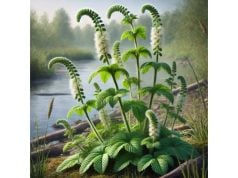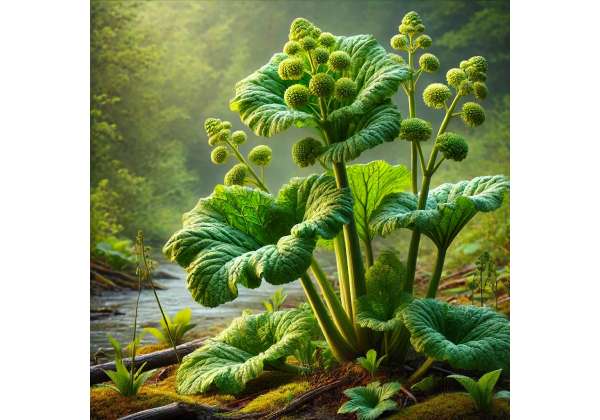
Giant butterbur, usually known in Japan as fuki, is a large-leaved perennial in the daisy family that has long lived in two worlds at once: spring food and traditional medicine. Its young flower buds and stalks are eaten after careful preparation, while its leaves, stems, and roots have been used in East Asian herbal practice for headache, spasms, cough, and inflammatory complaints. What makes this plant especially interesting is its chemistry. Giant butterbur contains sesquiterpenes such as petasin-related compounds and bakkenolides, along with caffeoylquinic acids, flavonoids, and the distinctive phenolic compound fukinolic acid.
Those ingredients give the plant a credible antioxidant, anti-inflammatory, and anti-allergic profile in laboratory and animal studies. But there is an equally important second story: safety. Petasites japonicus can contain toxic pyrrolizidine alkaloids, so raw use, casual supplement-style dosing, and species mix-ups are real concerns. The most useful modern view is balanced: giant butterbur is a fascinating traditional food-medicine with promising bioactivity, but it should be approached cautiously, prepared properly, and never treated as a proven, interchangeable butterbur supplement.
Key Facts
- Giant butterbur shows the most promise for anti-inflammatory, anti-allergic, and antioxidant effects, but most evidence is still preclinical.
- Its best-known compounds include petasin-related sesquiterpenes, bakkenolides, fukinolic acid, and caffeoylquinic acids.
- There is no established medicinal self-dose for Petasites japonicus, and doses used for other butterbur species should not be copied.
- Raw or poorly processed giant butterbur is not a safe shortcut because pyrrolizidine alkaloids can injure the liver.
- Pregnant or breastfeeding people, children, and anyone with liver disease should avoid internal use unless a qualified clinician specifically advises it.
Table of Contents
- What is giant butterbur
- Key ingredients in giant butterbur
- Does giant butterbur help
- How to use giant butterbur
- How much giant butterbur per day
- Giant butterbur side effects and interactions
- What the research really says
What is giant butterbur
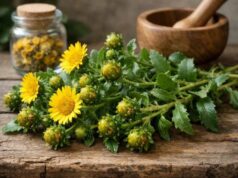
Giant butterbur is a moisture-loving perennial native to East Asia, especially Japan, Korea, China, and nearby regions. Botanically, it belongs to the Petasites genus within the Asteraceae family. The plant is best known for its broad leaves, thick hollow stalks, and early spring flower buds. In Japanese food culture, the young buds are called fukinoto, while the stalks are commonly called fuki. Some especially large forms are also associated with the “giant” name because their leaves and petioles become remarkably large.
What makes giant butterbur unusual is that people have valued it both as a seasonal vegetable and as a medicinal plant. The culinary side tends to focus on the young buds and peeled stalks, usually after boiling, soaking, or otherwise pre-treating them to soften bitterness and reduce unwanted compounds. The medicinal side is older and broader. Traditional uses in East Asia have included support for headache, cough, spasm-related discomfort, gastrointestinal cramping, and general inflammatory conditions.
This dual role matters because it changes how the plant should be interpreted today. A spring vegetable is not automatically a safe daily supplement, and a traditional remedy is not automatically a clinically proven drug. Giant butterbur sits in that middle ground where culture, food practice, and pharmacology overlap.
It is also important not to confuse giant butterbur with common butterbur products from Europe, especially Petasites hybridus extracts used in migraine research. They belong to the same genus, and they share some chemistry, but they are not interchangeable. Giant butterbur has its own traditional context, its own safety issues, and a much thinner human clinical literature.
In food terms, giant butterbur is often grouped with strongly flavored spring plants that need preparation and moderation. In that sense, it has more in common with other bitter spring greens that need sensible use than with mild salad leaves. In herbal terms, it is best approached as a specialized plant rather than a casual wellness staple.
Three features define giant butterbur most clearly:
- It is an edible traditional plant, but only after proper processing.
- It contains interesting anti-inflammatory and antioxidant compounds.
- It may also contain toxic pyrrolizidine alkaloids that sharply change the safety picture.
That last point is the reason this herb deserves more caution than its culinary history might suggest. Giant butterbur is not just “wild food with benefits.” It is a potent traditional plant whose value depends on preparation, context, and restraint.
Key ingredients in giant butterbur
The chemistry of giant butterbur is one reason it continues to attract research interest. Petasites japonicus contains a layered mixture of sesquiterpenes, phenolic acids, flavonoids, lignans, and other polyphenolic compounds. These groups do not all do the same thing, but together they help explain the plant’s long-standing reputation for inflammatory, allergic, and oxidative-stress support.
Among the most discussed constituents are petasin-related sesquiterpenes. Petasin is often treated as a signature compound across the Petasites genus, and giant butterbur also contains petasin-associated chemistry that may influence inflammatory signaling and smooth-muscle behavior. Related sesquiterpene families such as bakkenolides and petatewalides are also important. These are especially interesting because they appear repeatedly in anti-allergic and anti-inflammatory experiments.
The second major chemical group is phenolic antioxidants. Giant butterbur contains caffeic acid derivatives, chlorogenic acid, di-caffeoylquinic acids, and the unusually characteristic compound fukinolic acid. Fukinolic acid matters because it appears to be especially relevant to this plant and has been repeatedly linked to antioxidant and nitric-oxide-modulating effects in laboratory work.
Flavonoids and glycosides also contribute to the whole-herb picture. Compounds related to quercetin and kaempferol have been identified in leaves, roots, and buds. These molecules likely support the plant’s antioxidant profile and may partly explain why the water and alcohol extracts behave differently from purified sesquiterpene fractions.
From a practical viewpoint, the chemistry of giant butterbur can be grouped into four useful roles:
- Sesquiterpenes, which help explain anti-inflammatory and anti-allergic interest.
- Polyphenols, which support antioxidant and cell-protective activity.
- Specialized phenolics such as fukinolic acid, which give the plant some of its uniqueness.
- Pyrrolizidine alkaloids, which are the most important unwanted constituents from a safety standpoint.
That fourth group deserves special attention. The plant may contain toxic pyrrolizidine alkaloids such as petasitenine, neopetasitenine, and senkirukin-related compounds. These are not “active ingredients” in the health-promoting sense. They are the reason careful preparation and product quality matter so much.
This is also why the form of the plant makes a major difference. A whole cooked stalk, a hot-water extract, an alcohol extract, and a concentrated supplement do not deliver the same balance of compounds. The hoped-for effects come from some of the plant’s chemistry, while the risk comes from another part of that chemistry. That is exactly what makes giant butterbur interesting and difficult at the same time.
If you are used to reading about culinary anti-inflammatory herbs such as ginger and its multi-compound actions, giant butterbur follows a similar broad principle: no single molecule tells the whole story. The difference is that butterbur chemistry carries a much heavier safety burden.
Does giant butterbur help
Giant butterbur may help in a few specific ways, but the strength of the evidence depends heavily on what claim is being made. It is most accurate to say that Petasites japonicus has promising traditional and preclinical support, not strong modern clinical proof.
Where it looks most promising
The plant’s best experimental profile is anti-inflammatory and anti-allergic. Several compounds isolated from giant butterbur have reduced inflammatory signaling, nitric oxide production, mast-cell activity, or allergy-related responses in cell and animal models. This makes the herb a plausible candidate for airway irritation, inflammatory stress, and allergy-related discomfort. Traditional use also points in the same broad direction.
There is also a meaningful antioxidant story. Extracts from leaves, roots, and flower buds have shown free-radical scavenging activity and protective effects in oxidative-stress models. That matters because oxidative stress often overlaps with chronic inflammation.
Some metabolic and neuroprotective leads also exist. Petasin-related compounds have been studied for anti-adipogenic and glucose-regulating effects, and leaf extracts have shown neuroinflammatory and memory-related benefits in animal work. Still, these findings are early and should not be mistaken for established human outcomes.
What people often expect versus what is realistic
It is realistic to view giant butterbur as a plant with:
- anti-inflammatory potential
- anti-allergic potential
- antioxidant potential
- traditional antispasmodic and respiratory uses
It is not realistic to present it as a clinically validated herb for:
- migraine prevention in the way common butterbur extracts were studied
- weight loss in humans
- dementia prevention
- self-treatment of asthma or allergic disease
That difference is the heart of a responsible giant butterbur article. The plant probably does have biologically meaningful effects, but most of the impressive findings remain confined to laboratory systems or animal studies.
Most useful real-world interpretation
For modern readers, the most sensible benefits summary is narrow and practical. Giant butterbur may be a useful traditional food-medicine with anti-inflammatory and anti-allergic properties worth studying further. It may also have value as a seasonal functional food when properly prepared. But it should not be promoted as a proven supplement for major chronic conditions.
If your interest is respiratory soothing specifically, a more traditional airway-focused herb such as great mullein for cough support may fit consumer expectations more cleanly. Giant butterbur is more complex and far less straightforward.
The honest takeaway is that giant butterbur “helps” mostly at the level of plausible traditional use and encouraging preclinical evidence. That is meaningful, but it is not the same thing as dependable human clinical benefit.
How to use giant butterbur
How giant butterbur is used matters as much as why it is used. This is not a herb that rewards improvisation. The safest and most traditional forms are food-based and carefully pretreated, while concentrated internal products require far more caution.
Food use
The classic food uses focus on the young flower buds and petioles. In Japanese cooking, the buds are often used as a strongly flavored spring ingredient, while the stalks are peeled, blanched, simmered, or soaked before further cooking. These steps are not just culinary rituals. They help reduce bitterness and can also lower pyrrolizidine alkaloid content.
A practical food-first approach usually looks like this:
- Harvest or purchase the young edible part, usually buds or stalks.
- Peel or trim when appropriate.
- Boil or blanch first.
- Soak afterward, sometimes for an extended period.
- Use in a modest cooked dish rather than raw.
This process is central enough that skipping it changes the safety conversation. Giant butterbur is not a good raw-food herb.
Traditional medicinal use
Historically, roots, stems, and other parts have been used in East Asian herbal practice for headache, spasmodic discomfort, cough, and inflammatory conditions. Modern readers should treat those uses as ethnobotanical context rather than a do-it-yourself dosing invitation. Traditional use shows why the plant matters, but it does not remove the need for modern safety screening.
Extracts and supplements
This is where caution rises sharply. Extracts differ by solvent, plant part, and processing method. Some experimental extracts were designed specifically to reduce pyrrolizidine alkaloids. That does not mean random products on the market have done the same. A standardized, tested extract is very different from a homemade concentrate.
The best rules for internal modern use are simple:
- Prefer food use over self-designed medicinal use.
- Avoid raw or poorly processed material.
- Do not assume all “butterbur” products are comparable.
- Only consider a commercial extract if it is clearly identified as Petasites japonicus and specifically tested for pyrrolizidine alkaloids.
What giant butterbur is not ideal for
It is not a sensible everyday tea herb, and it is not a good beginner supplement. People looking for gentler daily digestive support usually do better with herbs that have a wider margin of safety, such as ginger for routine digestive use.
The best use case for giant butterbur is respectful, limited, and preparation-centered: a traditional seasonal plant used as food or as a carefully selected, clearly tested product. That is a much safer and more realistic framework than treating it like a generic anti-inflammatory capsule.
How much giant butterbur per day
This is the section where honesty matters most. There is no well-established, evidence-based self-dosing range for Giant Butterbur itself. That is because Petasites japonicus has very limited human clinical research, variable chemistry, and a real toxicology issue linked to pyrrolizidine alkaloids.
Because of that, dosage has to be separated into three different questions:
1. How much as food
When giant butterbur is eaten as a spring vegetable, the best approach is small, occasional, fully cooked portions rather than routine large servings. The exact amount depends on the recipe, the plant part, and the degree of pre-treatment, but food use should stay culinary, not medicinal. In practice, that means tasting portions in a meal rather than repeated large daily servings.
2. How much as an extract
There is no universally transferable oral dose for giant butterbur extracts. Different studies used different extracts, and some were prepared specifically to reduce pyrrolizidine alkaloids. That makes any simple “take X mg daily” advice misleading.
This is also where confusion with common butterbur becomes risky. Doses reported for PA-free migraine products made from other Petasites species should not be copied to Giant Butterbur. The species overlap does not make the products interchangeable.
3. How long to use it
Short, occasional use is easier to justify than chronic self-dosing. Giant butterbur is not the type of herb that should be taken casually for months without careful product testing and professional guidance. If you are seeking long-term anti-inflammatory support, choose something with a much clearer safety and clinical track record.
A practical decision rule looks like this:
- Food use: modest, occasional, and properly pretreated
- Extract use: only when the product is clearly identified and PA-tested
- Long-term use: generally not appropriate for unsupervised self-care
One more point is worth emphasizing: “more” is not safer because the plant is edible. With giant butterbur, bigger doses may simply raise exposure to the wrong compounds.
For readers who mainly want research-backed anti-inflammatory support, boswellia with a clearer clinical research base usually makes more sense than pushing Giant Butterbur beyond its evidence.
So the best dosage answer is not a neat number. It is a filter: food first, small amounts, proper preparation, and no copy-pasting of butterbur doses from other species or other products.
Giant butterbur side effects and interactions
Safety is the defining issue with giant butterbur. The plant may contain pyrrolizidine alkaloids, and these compounds are associated with hepatotoxicity, genotoxicity, and carcinogenic concern. That is why any discussion of benefits that ignores safety is incomplete.
Main safety concern
Pyrrolizidine alkaloids are the biggest reason to be cautious. They can damage the liver, and repeated exposure matters more than one dramatic taste. The risk is not only theoretical. It is the reason the butterbur genus has a complicated modern reputation.
Cooking and soaking can reduce pyrrolizidine alkaloid levels in buds and petioles, but reduction is not the same as guaranteed elimination. This is why proper preparation lowers risk without turning the plant into a free-use food.
Possible side effects
Depending on the form used, side effects may include:
- stomach upset
- nausea
- bitter aftertaste
- allergic reaction in people sensitive to Asteraceae plants
- liver stress from contaminated or poorly processed material
Concentrated extracts raise these concerns more than carefully prepared culinary use.
Who should avoid it
Internal use is best avoided in:
- pregnant or breastfeeding people
- children
- anyone with liver disease
- people using other hepatotoxic products
- those with known sensitivity to ragweed-family plants
- anyone unable to verify that a product has been tested for pyrrolizidine alkaloids
These are not minor exclusions. They reflect the basic risk profile of the plant.
Interactions
Specific drug-interaction data for Giant Butterbur are limited, but a few caution points are reasonable:
- avoid combining it with other potentially liver-stressing herbs or drugs
- avoid combining multiple uncertain botanicals in homemade formulas
- use extra caution with alcohol-heavy extracts if liver tolerance is already a concern
The lack of a long interaction list does not prove safety. It often just means the research is limited.
What about “safe” extracts
A tested low-PA or PA-reduced extract is a different category from raw or casually processed plant material. Even then, product quality matters more than label language. “Natural” is not the relevant standard here. Verified processing and testing are.
The most important safety rule is straightforward: giant butterbur should never be treated like a carefree supplement. Respecting the toxicology is not being overly cautious; it is the only responsible way to discuss this herb.
What the research really says
The research on giant butterbur is promising but incomplete. It shows that Petasites japonicus is pharmacologically active, yet it stops well short of proving broad human health claims.
What the research supports well
The chemistry is well described. Researchers have repeatedly identified sesquiterpenes, flavonoids, caffeoylquinic acids, lignans, and fukinolic acid in different plant parts. The experimental literature also consistently supports antioxidant, anti-inflammatory, and anti-allergic effects in cells and animal models.
There is also meaningful food-safety research showing that processing matters. Boiling and soaking can reduce pyrrolizidine alkaloids in edible parts, which supports the long culinary habit of pre-treatment.
What the research supports only partially
There is interesting work on neuroinflammation, metabolic regulation, adipogenesis, and airway inflammation. These studies are useful because they show mechanistic plausibility. But they mostly remain preclinical. They do not yet tell us that giant butterbur reliably improves memory, prevents obesity, or treats allergic disease in people.
This is the point where online herb writing often goes off course. A plant with many mechanisms can easily be described as if it already has many proven clinical uses. Giant butterbur is a good example of why that leap is too large.
What is missing
Human trials are the missing piece. In contrast to some common butterbur preparations, Giant Butterbur itself does not have a deep modern clinical record. That means the strongest claims should stay restrained. It is fair to say that:
- the plant has credible traditional use
- it contains biologically active compounds
- several extracts and isolated compounds look interesting in preclinical models
- safety concerns remain central
- routine supplement-style self-use is not well supported
It is not fair to say that Giant Butterbur has already earned the same place as a clinically established herbal medicine.
The most honest bottom line
Giant butterbur is best viewed as a traditional East Asian food-medicine with real bioactive potential and real toxicological limits. It may become more important in functional food or phytotherapy research, especially if low-PA processing can be standardized. For now, though, the research supports curiosity more than confidence.
That is not a dismissal. It is a useful boundary. Used as a carefully prepared seasonal food or a rigorously tested product, Giant Butterbur is a serious plant worth knowing. Used as a raw, generic, self-dosed anti-inflammatory herb, it is much harder to justify.
References
- Antioxidant compounds of Petasites japonicus and their preventive effects in chronic diseases: a review 2020 (Review)
- Single and Repeated Oral Dose Toxicity and Genotoxicity of the Leaves of Butterbur 2021 (Toxicology Study)
- Reduction of pyrrolizidine alkaloids by cooking pre-treatment for the petioles and the young spikes of Petasites japonicus 2022 (Food Safety Study)
- A review on the ethnobotany, phytochemistry, pharmacology and toxicology of butterbur species (Petasites L.) 2022 (Review)
- Pyrrolizidine Alkaloids as Hazardous Toxins in Natural Products: Current Analytical Methods and Latest Legal Regulations 2024 (Review)
Disclaimer
This article is for educational purposes only and is not a substitute for medical advice, diagnosis, or treatment. Giant Butterbur has a meaningful traditional history and promising laboratory research, but it also carries toxicology concerns related to pyrrolizidine alkaloids. Do not use it to self-treat chronic inflammation, allergy, migraine, liver conditions, or respiratory disease without qualified guidance, and do not assume that all butterbur species or products are interchangeable.
Please share this article on Facebook, X, or any other platform you prefer if you found it useful.