Giant papillary conjunctivitis (GPC) is one of the most frustrating reasons contact lens wearers lose comfort: the eyes itch, strings of mucus appear, and lenses that once felt “invisible” start to feel like sand. The encouraging news is that GPC is usually reversible when you reduce the triggers and calm the inflammation early. The best fixes are practical and specific: adjusting lens materials and replacement schedules, improving deposit control, treating the eyelid surface, and using targeted drops for a short, strategic window. When managed well, many people return to comfortable lens wear with fewer flare-ups and less reliance on “trial and error.”
This article explains why GPC happens, what symptoms truly point to it, how clinicians confirm the diagnosis, and a step-by-step plan to reduce itching and mucus and protect the cornea while you recover.
Key Takeaways for Contact Lens Wearers
- A short break from contact lenses, paired with deposit control and anti-inflammatory drops when needed, often improves symptoms within weeks.
- Switching to daily disposable lenses and avoiding overwear are two of the most reliable ways to prevent recurrence.
- Topical steroid drops can be highly effective for flares, but they should only be used under eye-care supervision to avoid masking infection and raising eye pressure.
- If you have a painful red eye, light sensitivity, or reduced vision, stop lenses immediately and get same-day evaluation to rule out corneal infection.
Table of Contents
- What GPC Is and Why Lenses Trigger It
- Symptoms That Suggest GPC
- Why Some Lens Wearers Get GPC
- How Eye Doctors Confirm the Diagnosis
- Step by Step Fixes That Work
- Recovery Timeline and Return to Lenses
- Red Flags and When to Seek Urgent Care
What GPC Is and Why Lenses Trigger It
GPC is an inflammatory reaction on the inside of the upper eyelid (the superior tarsal conjunctiva). The hallmark is a “cobblestone” pattern of enlarged papillae that can become big enough to rub against the contact lens surface. That friction creates a cycle: rubbing promotes inflammation, inflammation increases mucus and swelling, and the swollen lid surface becomes even rougher against the lens.
GPC is not simply “allergies,” and it is not the same as an infection. It sits in between: a combined mechanical and immune response. For many wearers, the initiating problem is physical irritation from a lens edge, lens movement, or a lens that rides high and repeatedly touches the upper lid. At the same time, the immune system reacts to deposits on the lens surface: proteins, lipids, environmental particles, and sometimes residue from solutions. Over time, the lid tissue becomes sensitized and more reactive, even to a lens that previously felt fine.
Several features make contact lenses a common trigger:
- They are a foreign surface that interacts with the tear film all day.
- They can accumulate deposits that change how the eyelid “feels” them.
- They alter oxygen delivery and tear exchange, which can aggravate the ocular surface.
- They can encourage rubbing and dryness, both of which inflame the lid and conjunctiva.
GPC can also occur with ocular prostheses, exposed sutures, or other long-term eye surface foreign bodies, but contact lenses are the most frequent modern scenario. For the typical lens wearer, the goal is not only to treat the current flare, but to identify which part of the cycle is dominant: mechanical irritation, deposits and hygiene, ocular surface dryness, or a high-allergy baseline. Fixing the main driver early usually shortens the recovery and lowers the chance that the problem becomes chronic.
Symptoms That Suggest GPC
GPC tends to announce itself in a specific, recognizable way: lenses become less tolerable long before the eye looks severely red. Many people describe a phase where the lens “feels dirty,” shifts more than usual, or becomes uncomfortable after a few hours even though the prescription is correct.
Common symptoms include:
- Itching, often prominent and worse after lens insertion or late in the day
- Ropy or stringy mucus, sometimes thick enough to blur vision or stick to the lens
- Foreign body sensation, especially under the upper lid
- Redness and watering
- Reduced wearing time, with a steady drop in how many hours lenses feel tolerable
- Lens awareness and movement, including the lens riding up, slipping, or feeling unstable
- Blur that clears after blinking or removing mucus, which can mimic dry eye
A practical clue is the “mucus moment”: you blink, the vision smears, and you see a strand or glob of mucus on the lens or in the corner of the eye. That is a classic complaint in GPC because inflammation increases mucus production, and the rough lid surface can mechanically “milk” mucus onto the ocular surface.
It helps to distinguish GPC from look-alikes:
- Seasonal allergy without GPC often causes intense itching and watery tearing, but it may not cause progressive lens intolerance or thick mucus strands. Both can coexist, and allergies can lower the threshold for GPC.
- Dry eye can cause burning, gritty sensation, and fluctuating vision, but the hallmark is often dryness and irritation rather than prominent mucus and upper-lid roughness. Dry eye can still contribute to GPC by increasing friction.
- Bacterial conjunctivitis tends to cause more continuous discharge and crusting, often with stickiness on waking. Itching is usually not the main symptom.
- Viral conjunctivitis often includes a watery discharge, swollen lymph nodes near the ear, and a contagious course. Contact lens wear should be stopped until cleared.
- Contact lens–related keratitis is the urgent one to rule out: pain, light sensitivity, and reduced vision are more concerning than itchiness alone.
If you wear contacts and your symptoms are mainly itch, mucus, and steadily worsening tolerance, GPC rises quickly on the list. The safest assumption is still to stop lens wear during active symptoms, because continuing to wear lenses during inflammation increases friction and makes it harder for the lid tissue to settle.
Why Some Lens Wearers Get GPC
Two people can wear the same brand of lenses and have completely different outcomes. GPC is more likely when multiple “small stresses” line up: mechanical rubbing, deposit load, a reactive immune system, and reduced tear film resilience.
Common risk factors include:
- Long replacement intervals (monthly or longer) and overwear, which increase deposit buildup and friction over time
- Sleeping in lenses or extended wear schedules, even occasionally
- High protein or lipid deposits, often seen when wear time is long or cleaning is inconsistent
- Inadequate cleaning technique, especially skipping rub and rinse steps or topping off solution
- Solution sensitivity or preservative intolerance, which can inflame the ocular surface and increase mucus
- Poor lens fit, including excessive movement, edge interaction, or a lens that rides high and contacts the upper lid repetitively
- Atopy and allergy tendency, such as eczema, asthma, seasonal allergies, or year-round allergic symptoms
- Eye rubbing, which mechanically irritates the lid and intensifies inflammation
- Blepharitis and meibomian gland dysfunction, which destabilize the tear film and increase friction
- Dry environments and heavy screen use, which reduce blink rate and worsen surface irritation
One underappreciated contributor is the biology of deposits. Deposits are not just “dirt.” Protein and lipid layers can change the lens surface wettability and increase the lid’s mechanical drag. They also act as a platform for allergens and irritants to bind. The longer a lens is used, the more likely it is to accumulate a film that your eyelid will react to, even if the lens looks clean.
Another common pattern is the “tolerance slide”: someone does well for months or years, then slowly loses wearing time. This can happen after a shift in environment, hormonal changes, a new job with long screen hours, a move to a drier climate, or an escalation of allergy season. The lens did not suddenly become “bad.” The threshold for irritation shifted.
The most effective prevention mindset is to treat GPC as a systems problem rather than a single drop fix. If you reduce friction (fit and dry eye), reduce deposits (replacement schedule and cleaning), and reduce inflammation (short-term medication when appropriate), the lid tissue usually calms and becomes less reactive. If you only treat symptoms but keep the triggers, GPC tends to recur.
How Eye Doctors Confirm the Diagnosis
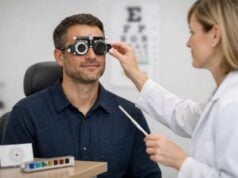
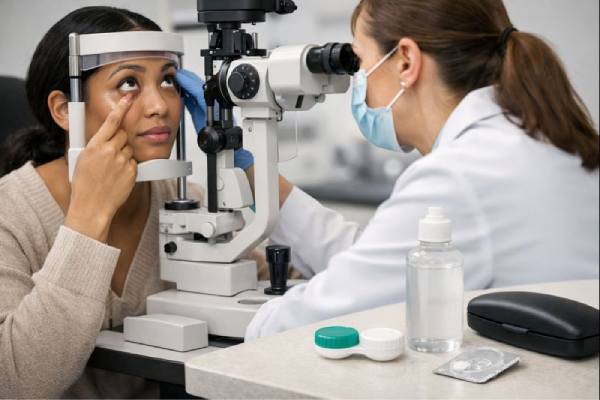
GPC is diagnosed clinically, meaning the diagnosis rests on your symptoms, your contact lens history, and what the clinician sees during an exam. The key step is everting the upper eyelid to inspect the tarsal conjunctiva. This is quick and usually comfortable, but it is essential because the defining changes are under the lid, not on the white of the eye.
During the evaluation, clinicians commonly focus on:
Upper lid findings
- Enlarged papillae with a cobblestone appearance
- Increased redness and swelling of the upper tarsal conjunctiva
- Mucus strands or debris in the superior fornix
- A grading of papillae size and extent, which helps guide treatment intensity and follow-up timing
Cornea and ocular surface assessment
Because contact lens wearers can develop corneal complications, clinicians also look carefully at the cornea using fluorescein dye and a slit lamp. They assess for:
- Corneal staining patterns that suggest surface irritation
- Signs of contact lens overwear and hypoxia
- Any focal infiltrate, ulcer, or epithelial defect that would shift the diagnosis toward microbial keratitis
- Tear film stability, because dryness and friction worsen GPC
Lens and hygiene review
A high-yield part of the visit is often the practical review: how long you wear lenses daily, whether you sleep in them, the replacement schedule, cleaning steps, and whether your case is replaced regularly. Clinicians may also check lens fit and movement, because a lens that rides high or interacts with the upper lid can perpetuate papillae even with good hygiene.
Ruling out conditions that change urgency
Most GPC is uncomfortable but not dangerous. What changes urgency is corneal involvement suggestive of infection or severe inflammation. If you have pain, light sensitivity, or reduced vision, clinicians take extra steps to evaluate for keratitis and may recommend a different treatment path and closer follow-up.
If you are preparing for an appointment, bring details that speed diagnosis:
- Lens brand, material type if known, and replacement schedule
- Exact daily wearing time and any naps or overnight wear
- Cleaning system and whether you rub and rinse
- Whether symptoms are worse in one eye, and whether mucus is prominent
The diagnosis becomes much clearer when symptoms (itch, mucus, lens intolerance) align with upper-lid papillae on exam and when the cornea looks safe. From there, treatment can be tailored to severity rather than guessing.
Step by Step Fixes That Work
GPC improves fastest when you treat it like a flare with a structured plan, not a vague “use drops and see.” The steps below are typical of what clinicians recommend, with adjustments based on severity and corneal findings.
Step 1: Stop lens wear during active symptoms
A lens holiday reduces friction immediately. For mild cases, a break of 1 to 2 weeks may be enough to noticeably reduce itching and mucus. More established cases may need longer. If you keep wearing lenses while inflamed, the lid continues to rub and the papillae stay activated.
Step 2: Calm the lid and conjunctiva
Common nonprescription supports:
- Cold compresses 5 to 10 minutes, 2 to 4 times daily for itch and swelling
- Preservative-free artificial tears 4 to 6 times daily to dilute allergens and reduce friction
Prescription drops may be used depending on severity:
- Dual-acting antihistamine and mast cell stabilizer drops are often first-line for itch and allergic inflammation.
- Short courses of topical steroid drops can be very effective for moderate to severe GPC, but they require clinician supervision due to infection risk and potential eye pressure elevation.
- If dry eye and eyelid margin disease contribute, clinicians may add lid-directed therapy and anti-inflammatory dry eye drops in selected cases.
Step 3: Fix deposit control and hygiene
If you return to the same cleaning and replacement habits, GPC often returns. High-impact changes include:
- Switching to daily disposable lenses when possible
- Avoiding “stretching” replacement schedules (a 2-week lens worn for 4 weeks behaves like a much older lens)
- Using a hydrogen peroxide disinfection system if appropriate for you and if you can follow the neutralization steps precisely
- Replacing your lens case regularly (a practical rule is every 1 to 3 months) and never topping off solution
- Rubbing and rinsing lenses even when a product is labeled “no rub,” unless your clinician advises otherwise
Step 4: Recheck lens fit and wearing schedule
Even a clean lens can irritate if it rides high or interacts with the upper lid. A refit can reduce mechanical rubbing. Wearing schedule matters too:
- Reduce wearing time during the reintroduction phase
- Avoid naps and overnight wear
- Build in lens-free hours on long days when possible
Step 5: Treat co-triggers
If you have blepharitis or meibomian gland dysfunction, daily eyelid hygiene and warm compress routines can improve tear film stability and reduce friction. If seasonal allergies are strong, controlling them systematically lowers the baseline inflammatory load, making the lid less reactive to lenses.
A simple way to measure progress is lens tolerance: if you are gaining hours of comfort each week after implementing these changes, you are likely moving in the right direction. If tolerance is not improving, the plan usually needs refinement, not just more time.
Recovery Timeline and Return to Lenses
Most people want the same clear answer: “When can I wear contacts again?” The realistic answer is that return-to-wear should be based on symptom control and lid healing, not a calendar date alone. Returning too early often restarts the cycle.
A typical recovery pattern looks like this:
Early improvement phase
- In mild cases, itching and mucus often decrease within several days to two weeks after stopping lenses and starting anti-inflammatory care.
- In moderate cases, improvement may be slower and more stepwise, especially if papillae are prominent and lens wear was continued for a long time before stopping.
- If steroid drops are used, people often feel relief quickly, but the long-term win depends on fixing the triggers, not just suppressing inflammation.
Reintroduction phase
Clinicians often recommend returning to lenses only when:
- Itching and mucus are minimal
- Lenses feel comfortable for short trials
- The ocular surface looks healthy on exam, with no concerning corneal staining patterns
- The upper lid papillae are improving or stable
When you restart, a conservative plan reduces relapse risk:
- Start with shorter wear time, such as 3 to 5 hours the first day, then increase gradually.
- Use the cleanest option available, often daily disposables, at least during the first month back.
- Keep lubricating drops available and avoid long stretches of screen time without breaks.
- Stop and reassess if itching and mucus return, rather than pushing through.
Preventing recurrence
GPC is prone to recurrence if the original drivers return. Prevention is usually a combination of:
- A shorter lens replacement cycle
- Consistent hygiene and case replacement habits
- Avoiding overwear and sleeping in lenses
- Managing allergies and eyelid margin inflammation
- Periodic follow-up if you have had more than one episode
If you need contacts for work or daily function, ask your clinician about alternatives that reduce friction and deposits. In some cases, switching lens modality, changing solution systems, or optimizing fit can make the difference between recurring flares and stable comfort. The most successful long-term wearers treat contact lenses as a medical device with a maintenance plan, not as a product you can “make work” indefinitely without adjustments.
Red Flags and When to Seek Urgent Care
GPC itself is usually not an emergency, but contact lens wear changes the risk profile of a red eye. The priority is to recognize symptoms that may indicate corneal infection or a more serious inflammatory problem.
Stop contact lens wear immediately and seek same-day evaluation if you have:
- Eye pain that is more than mild irritation, especially if it is increasing
- Light sensitivity (photophobia) that makes it hard to keep the eye open
- Reduced vision that does not clear with blinking or removing mucus
- A focal white spot on the cornea, or a visible corneal haze
- Marked redness in one eye, especially with watery tearing and pain
- Copious discharge with eyelid swelling and tenderness
- Symptoms after sleeping in lenses, even if it was “just a nap”
Seek urgent care sooner rather than later if you are immunocompromised, have had corneal surgery, or have a history of corneal ulcers, because complications can progress faster.
For non-urgent but important care, schedule a prompt eye visit if:
- Lens tolerance has declined steadily over weeks
- Itching and mucus persist despite a lens break and basic supportive care
- You have recurring episodes each allergy season or each time you restart lenses
- You suspect your lenses or solutions are irritating your eyes, but you are unsure what to change
A practical safety rule is simple: itching and mucus are uncomfortable, but pain, light sensitivity, and vision loss are warning signs. If those appear, do not try to “treat it at home” with leftover drops or by switching lens brands on your own. Getting the right diagnosis quickly protects the cornea and reduces the chance of long-term scarring that can affect vision.
References
- Conjunctivitis Preferred Practice Pattern 2024 (Guideline)
- Allergic Conjunctivitis: Review of Current Types, Treatments, and Trends 2024 (Review)
- A Review of Contact Lens-Related Risk Factors and Complications 2022 (Review)
- Giant papillary conjunctivitis: A review 2020 (Review)
Disclaimer
This article is for educational purposes and does not replace individualized medical advice, diagnosis, or treatment. Contact lens wearers with a new red eye should be cautious, because serious corneal infections can resemble routine irritation early on. Stop contact lens wear and seek urgent evaluation if you have eye pain, light sensitivity, reduced vision, a visible corneal spot, or rapidly worsening symptoms. Always use prescription eye drops, especially steroid drops, only under the guidance of a qualified eye-care professional.
If you found this helpful, please consider sharing it on Facebook, X (formerly Twitter), or any platform you prefer.