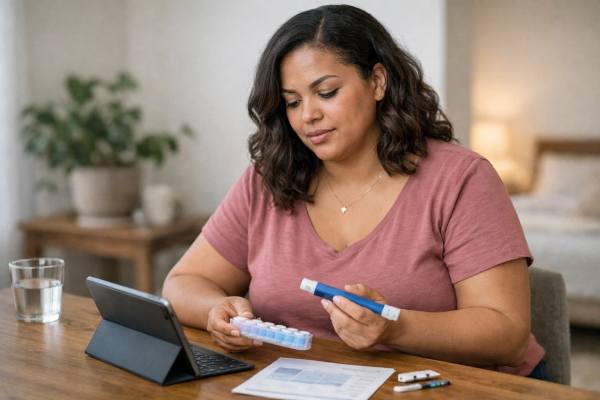
PCOS often affects more than one part of daily life at once. Weight may feel unusually hard to manage, hunger cues can seem out of proportion to what you eat, periods may come rarely or unpredictably, and fertility planning can become more stressful than expected. That is why GLP-1 medications such as semaglutide and tirzepatide have drawn so much interest in PCOS care. For some people, these medicines can support meaningful weight loss, improve appetite regulation, and ease some of the metabolic strain that contributes to irregular cycles. At the same time, they are not a cure for PCOS, and they are not a direct fertility treatment. The biggest and best-studied benefits are metabolic. Cycle changes and fertility effects can happen, but they are less predictable and need more careful planning. This article explains where GLP-1 medications fit in PCOS treatment, what results are realistic, why periods may shift, and what to think through before pregnancy is on the table.
Quick Overview
- GLP-1 medications can help some people with PCOS lose meaningful weight and improve appetite control.
- More regular periods may happen as insulin resistance and body weight improve, but cycle changes are not guaranteed.
- Fertility may improve indirectly if ovulation returns, but these drugs are not established fertility treatments.
- Pregnancy planning matters before treatment starts because these medicines are not used during pregnancy.
- The best results usually come from pairing medication with a realistic eating plan, movement, and follow-up goals.
Table of Contents
- Where GLP-1 Medications Fit
- How Much Weight Loss Is Realistic
- Why Periods and Ovulation May Shift
- Fertility and Trying to Conceive Planning
- Side Effects, Risks, and Who Should Pause
- Questions to Ask Before Starting
Where GLP-1 Medications Fit
GLP-1 medications can be useful in PCOS, but they work best when they are placed in the right role. They are not a cure, and they are not meant to replace nutrition, movement, sleep, or other treatments that may be needed for acne, excess hair growth, irregular bleeding, or infertility. Instead, they are better thought of as a metabolic tool that may help certain people with PCOS move the overall picture in a healthier direction.
This matters because many people with PCOS have some degree of insulin resistance, even when standard blood sugar tests still look normal. Higher insulin levels can push the ovaries to make more androgens, make hunger harder to control, and make weight loss more difficult to achieve or maintain. GLP-1 medications can reduce appetite, slow stomach emptying, improve glucose handling, and help create the calorie deficit needed for weight loss. In the right setting, that can lower some of the metabolic pressure that keeps PCOS symptoms going. If insulin resistance is a major part of your picture, it helps to understand the broader pattern behind insulin resistance symptoms and why they often overlap with PCOS concerns.
The strongest reason to use these medications in PCOS is usually weight and metabolic health. They are generally most relevant for adults with PCOS who also have overweight or obesity, appetite dysregulation, or signs of insulin-related metabolic dysfunction. They may be less useful when the main problems are acne, hirsutism, or irregular periods without a clear weight-related or metabolic target.
That does not mean they cannot help with menstrual patterns or fertility. They sometimes do. But those effects are usually indirect and less predictable. A medication that improves insulin function and supports weight loss may make ovulation more likely over time, which can then improve cycle regularity. Still, it helps to start with realistic expectations. The clearest benefits are usually weight loss, better appetite control, and improved metabolic markers.
Before starting, it is worth defining the real goal. Is the aim to lose 5% to 10% of body weight, reduce binge eating, improve fasting glucose, become more active, or prepare for future pregnancy? Clear goals make it easier to decide whether the medication is a good fit and whether it is truly helping once treatment begins.
How Much Weight Loss Is Realistic
Weight loss with GLP-1 medications in PCOS can be meaningful, but it is not identical for everyone. Some people respond quickly, some lose weight more gradually, and some find that appetite improves more than the scale changes. The most useful expectation is not dramatic transformation in a few weeks. It is steady, clinically meaningful progress over months.
In PCOS, even modest weight loss can matter. Losing about 5% to 10% of body weight may improve insulin resistance, reduce central fat accumulation, and support better hormonal signaling. For some people, that is enough to change cycle patterns, reduce cravings, and improve energy. For others, the benefits show up first in hunger control, less overeating, or better lab trends rather than in large changes on the scale. If your clinician is tracking metabolic progress, it can help to understand what fasting insulin may show and why it sometimes shifts before A1C does.
Several factors influence response:
- starting weight and degree of insulin resistance
- the specific medication used
- how slowly and successfully the dose is increased
- how well side effects are managed
- whether protein intake, sleep, and movement support the treatment
- whether the medication can be continued long enough to reach an effective dose
The first few weeks are often more about adaptation than about major weight loss. Nausea, early fullness, or changes in appetite may appear before the scale moves much. Some people plateau early and then lose more later. Others lose steadily from the beginning. What matters most is whether the medication is creating a pattern that is sustainable.
It is also important to separate healthy appetite reduction from under-fueling. A lower appetite can help you eat more intentionally, but it can also make it easy to miss protein, fiber, and regular meals. That may cause fatigue, constipation, muscle loss, or poor exercise recovery. Weight loss that leaves you weaker, undernourished, and miserable is not a success story in PCOS care.
Another reality is that stopping treatment often leads to some degree of weight regain. Appetite tends to rise again, and the body often pushes back against earlier weight loss. That does not mean the medication failed. It means long-term planning matters. A GLP-1 medication is often most helpful when it is part of a broader plan for eating habits, movement, and maintenance rather than a short burst of treatment with no next step.
Why Periods and Ovulation May Shift
When periods change on a GLP-1 medication, the medication is usually not acting directly on the cycle in the way hormonal contraception does. Instead, it may improve some of the conditions that interfere with ovulation in PCOS. That is an important distinction.
In many people with PCOS, higher insulin levels contribute to higher androgen production, and that combination can make regular ovulation less likely. When insulin resistance improves and body weight drops, the hormonal environment may become more favorable for ovulation. If ovulation returns more often, menstrual cycles may become shorter, more predictable, or more obviously cyclical. This is why some people notice that long gaps between periods start to narrow after weight loss or metabolic improvement.
Still, cycle changes are not guaranteed. A more regular bleed does not always mean ovulation is happening consistently. At the same time, a missed or late period after starting treatment is not always caused by the medication itself. Other factors can play a role, including stress, illness, low calorie intake, rapid weight loss, gastrointestinal side effects, and pregnancy.
A few points help keep expectations grounded:
- more regular periods may reflect better ovulation, but they do not prove it
- missed periods during treatment still need proper evaluation
- quick weight loss can temporarily disrupt cycles in some people
- fertility may return before cycle patterns feel fully predictable
This is one reason cycle tracking becomes more useful once treatment starts. Track cycle length, bleeding days, spotting, premenstrual symptoms, and any signs that suggest ovulation might be returning. If you want more insight into body clues, ovulation symptoms can offer useful context, though they are not perfect proof of ovulation on their own.
Patience also matters. Hormonal shifts in PCOS are rarely instant. Someone can lose a meaningful amount of weight and still need more time before cycles settle into a clearer pattern. Another person may ovulate sooner than expected. That unpredictability is exactly why pregnancy planning needs to be discussed early, even when the original reason for treatment was “just weight.”
Perhaps the most balanced view is this: GLP-1 medications may improve the odds of better cycle function in the right PCOS setting, but they do not guarantee regular periods, and they should not be used as the only explanation for every cycle change that happens once treatment begins.
Fertility and Trying to Conceive Planning
Fertility is where GLP-1 medications become more complicated. These drugs may help some people with PCOS move closer to ovulation by improving weight and metabolic health, but they are not fertility medications in the usual sense. They are not a substitute for ovulation induction, fertility evaluation, or a full trying-to-conceive plan.
The biggest practical point is that fertility can improve before someone expects it to. A person with very irregular cycles may assume pregnancy is unlikely, then start losing weight, notice better cycle function, and suddenly have a higher chance of conceiving. That can be encouraging if pregnancy is a future goal, but it also means contraception matters if pregnancy is not wanted right now. If birth control is part of your plan, it helps to review birth control and hormone changes alongside any discussion about a GLP-1 medication.
Pregnancy timing should be part of the first conversation, not an afterthought. These medicines are not used during pregnancy, and they should be stopped before trying to conceive. The exact washout period depends on the specific medication, which is why brand-specific instructions matter. A clinician can tell you how long to stop the medication before trying for pregnancy based on the product you are taking.
There is also an important contraception detail with tirzepatide. Because it can affect absorption in a way that may reduce the reliability of oral contraceptives around treatment initiation and dose increases, some people may need backup contraception or a non-oral method during those periods. That is especially relevant in PCOS, where the pill is often used for more than one reason.
For many people, the most sensible plan is sequential:
- improve metabolic health and weight if that is part of the problem
- stop the medication with enough time before conception attempts
- allow the recommended washout period
- then move into ovulation-focused or fertility-focused care if needed
This stepwise approach makes sense because the medication may help prepare the body for pregnancy without being something you continue into pregnancy itself. It can be part of a preconception strategy, but it is not the whole strategy. If infertility has already been present for a while, it is also worth looking beyond weight loss and considering whether a broader PCOS fertility evaluation is needed.
Side Effects, Risks, and Who Should Pause
The side effects most people notice first are gastrointestinal. Nausea, vomiting, diarrhea, constipation, reflux, burping, and early fullness are common, especially while the dose is being increased. For many people, these symptoms are mild and improve with time. For others, they are the main reason the medication becomes hard to continue.
The practical risk behind these symptoms is not just discomfort. It is dehydration, low food intake, and poor overall nutrition. Repeated vomiting or persistent diarrhea can leave someone weak, lightheaded, and unable to exercise or eat well. Even milder nausea can become a problem if it leads to chronically low protein intake, missed meals, or a pattern of eating too little for too long.
This matters in PCOS because the goal is not simply to shrink body weight. The goal is better metabolic health, better function, and in some cases a healthier setup for future fertility. A person who loses weight while becoming nutritionally depleted is not moving in the right direction overall.
A few signs suggest treatment may need to be slowed, paused, or rethought:
- severe or persistent vomiting
- trouble staying hydrated
- severe abdominal pain
- inability to maintain adequate food intake
- pregnancy or an active plan to conceive right away
- worsening weakness, dizziness, or poor daily functioning
GLP-1 medications also slow stomach emptying. That can worsen existing digestive problems in some people, and it matters before surgery or anesthesia. Anyone with significant gastrointestinal disease or symptoms suggestive of delayed stomach emptying needs a careful conversation before starting treatment.
There is also a less obvious problem: some people feel so little interest in food that nutrition quality starts to collapse. Meals become tiny but unbalanced. Protein intake drops. Fiber becomes inconsistent. Constipation worsens. Exercise performance falls off. In that situation, the medication may still be pushing the scale down, but the overall plan is not healthy or sustainable.
A slower dose increase, more deliberate hydration, smaller balanced meals, and clear stop rules often make a major difference. But if side effects are severe or persistent, it is reasonable to revisit whether the medication is worth continuing. Treatment only makes sense when the benefit clearly outweighs the burden.
Questions to Ask Before Starting
A GLP-1 medication is easier to use well when the decision is specific. Many disappointing experiences begin with a vague goal and no clear follow-up plan. Before starting, it helps to ask a few direct questions and get practical answers.
What is the main goal?
Is the goal weight loss, appetite control, fewer binge episodes, improved insulin markers, more regular cycles, or better preparation for pregnancy later? The clearer the target, the easier it is to judge whether treatment is doing what you hoped.
How will progress be measured?
Weight is only one marker. Ask whether progress will also be judged by waist size, hunger patterns, food intake, blood sugar markers, menstrual changes, or energy. A medication may be helping even if the scale is moving slowly, but that only becomes visible when more than one outcome is tracked.
What is the pregnancy plan?
This question belongs at the beginning. Ask what contraception is needed now, what to do if your cycles become more regular, and how long before trying to conceive the medication should be stopped. That timeline should be clear before the first prescription is filled.
How will side effects be handled?
You should know what to do about nausea, constipation, vomiting, reflux, travel, and missed doses. You should also know which symptoms are urgent enough to call right away.
What is the exit strategy?
Because weight regain after stopping is common, ask what happens if you discontinue the medication. Will the plan shift toward maintenance nutrition, exercise support, metformin, or another option? Knowing this early makes the whole approach more realistic. In more complex cases, especially when fertility, thyroid disease, diabetes, or unusual lab results are part of the picture, it helps to know when to see an endocrinologist rather than trying to manage everything in fragments.
The best bottom line is a balanced one. For the right person with PCOS, a GLP-1 medication can be a useful tool for weight loss, appetite regulation, and metabolic improvement. Sometimes cycles improve too. But the strongest results usually come when the medication is chosen for a clear reason, paired with a real lifestyle plan, and linked to thoughtful decisions about contraception, fertility timing, and long-term maintenance.
References
- Recommendations From the 2023 International Evidence-based Guideline for the Assessment and Management of Polycystic Ovary Syndrome 2023 (Guideline)
- Anti-obesity pharmacological agents for polycystic ovary syndrome: A systematic review and meta-analysis to inform the 2023 international evidence-based guideline 2024 (Systematic Review)
- Efficacy and safety of glucagon-like peptide-1 receptor agonists in the treatment of polycystic ovary syndrome-A systematic review and meta-analysis 2024 (Systematic Review)
- Semaglutide Treatment of Excessive Body Weight in Obese PCOS Patients Unresponsive to Lifestyle Programs 2023
- GLP-1 medicines for weight loss and diabetes: what you need to know 2026 (Official Guidance)
Disclaimer
This article is for educational purposes only and is not medical advice, diagnosis, or treatment. GLP-1 medications can affect appetite, digestion, contraception planning, and pregnancy timing, so treatment decisions should be made with a qualified clinician who knows your PCOS history, current medications, and fertility goals. Seek prompt medical care for severe abdominal pain, persistent vomiting, dehydration, or a suspected pregnancy while using these medicines.
If this article helped you, please share it on Facebook, X, or your preferred platform so others with PCOS can find reliable, practical guidance.