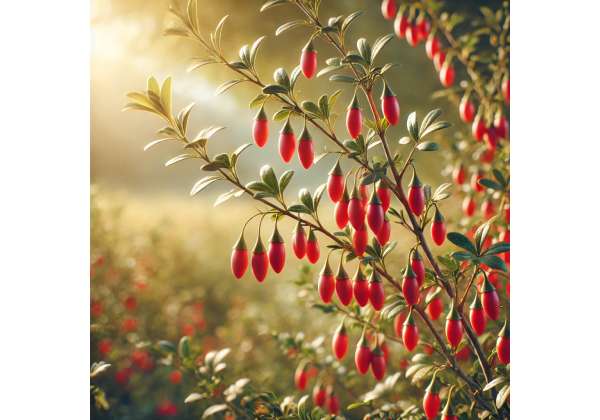
Goji berry, the bright orange-red fruit of Lycium barbarum, has moved from traditional Chinese medicine into the global spotlight as both a functional food and a modern wellness staple. It is often called wolfberry, and it stands out for a profile that blends culinary appeal with real biochemical interest. The berries contain Lycium barbarum polysaccharides, carotenoids such as zeaxanthin, polyphenols, flavonoids, betaine, vitamins, and trace minerals that help explain why they are studied for eye health, antioxidant protection, immune activity, metabolic balance, and healthy aging.
That said, goji berry is not a miracle fruit. The research is encouraging in some areas, especially macular health and selected lipid markers, but it is still mixed in others. Much depends on the form used, the dose, and the population studied. Whole dried fruit, juice, and purified polysaccharide extracts do not behave the same way. The most useful way to understand goji berry is as a promising food-first herb with measurable strengths, but also with real limits, interactions, and unanswered questions about long-term high-dose use.
Quick Summary
- Goji berry is most convincing for eye support, antioxidant activity, and modest support for triglycerides and HDL in some studies.
- Its best-known actives include Lycium barbarum polysaccharides, zeaxanthin-rich carotenoids, flavonoids, and betaine.
- Common dried-fruit use ranges from about 6 to 18 g per day, while modern studies often use 13.7 to 28 g per day or 120 mL per day of juice.
- Goji berry can interact with warfarin and may also need caution with diabetes or blood-pressure medicines.
- People taking anticoagulants, pregnant or breastfeeding people, and anyone with a history of food allergy should avoid self-prescribed medicinal doses.
Table of Contents
- What is goji berry
- Key ingredients and medicinal properties
- What benefits is goji berry known for
- How to use goji berry
- How much goji berry per day
- Side effects, interactions, and who should avoid it
- What the evidence actually says
What is goji berry
Goji berry is the fruit of Lycium barbarum, a shrub in the nightshade family, Solanaceae. It is closely related to other Lycium species, especially Lycium chinense, and both are often grouped under the common name wolfberry. In everyday health writing, however, “goji berry” usually points to Lycium barbarum, especially the dried red fruit sold in teas, trail mixes, porridges, soups, and supplements.
The plant has been used in Chinese food and medicine for well over a thousand years. In that traditional setting, goji berry is less of a trendy superfruit and more of a restorative ingredient associated with the eyes, liver, kidneys, vitality, and resilience during aging. It is commonly simmered into broths, steeped in hot water, or paired with other herbs in formulas rather than taken as a single modern capsule. That matters because many of the fruit’s traditional benefits came from repeated culinary-medicinal use, not from highly concentrated extracts.
What makes goji berry different from many berries is that it is both a food and a pharmacologically active herb. It is not just sweet and colorful. Its bright red-orange hue reflects a dense carotenoid profile, especially zeaxanthin esters, while its polysaccharides and phenolics add another layer of biological activity. This is one reason it is often discussed in the same broad “functional food” space as other antioxidant-rich fruits. But goji berry has its own profile, especially when eye health is part of the conversation, and in that sense it is often compared with other vision-focused botanicals such as bilberry.
Another useful distinction is form. Fresh goji berries are delicate and less widely available outside growing regions. Most consumers encounter the fruit dried, juiced, or powdered. Traditional formulas may use the whole dried fruit, while research may use juice, milk-based preparations, or purified Lycium barbarum polysaccharides. Those forms are related, but they are not interchangeable.
In practical terms, goji berry sits between fruit and herb. It belongs in the kitchen, but it also deserves the kind of label-reading and safety awareness people usually reserve for supplements. That mixed identity explains both its popularity and the confusion that surrounds it. The fruit is real, useful, and chemically rich, but it is not as simple as “a berry is just a berry.”
Key ingredients and medicinal properties
Goji berry’s medicinal profile begins with one compound group more than any other: Lycium barbarum polysaccharides, often shortened to LBPs. These complex carbohydrates are widely treated as the signature bioactives of the fruit and are studied for antioxidant, immune-modulating, neuroprotective, and metabolic effects. They are not the whole story, but they are central to why goji berry stands out from many other fruits.
The second major category is carotenoids, especially zeaxanthin and zeaxanthin esters. Goji berry is unusually rich in zeaxanthin, which helps explain its repeated appearance in research on macular pigment and age-related eye health. The carotenoid profile is one of the strongest reasons goji berry is discussed for ocular support. In that sense, it occupies a different niche from polyphenol-heavy botanicals such as grape seed, which are studied more for vascular and antioxidant signaling than for zeaxanthin delivery.
The fruit also contains flavonoids and phenolic acids, which add to its antioxidant and inflammation-modulating potential. Alongside these are betaine, vitamin C-related compounds, small amounts of amino acids, minerals, and other secondary metabolites. Reviews also discuss tropane alkaloid concerns, but current evidence suggests the fruit itself contains very low atropine levels compared with what people sometimes fear from its plant family.
From a practical standpoint, goji berry’s main medicinal properties can be grouped into five areas:
- Antioxidant activity. This comes from a combination of polysaccharides, carotenoids, polyphenols, and vitamins rather than from one single compound.
- Eye-supportive activity. Largely tied to zeaxanthin-rich carotenoids and their bioavailability.
- Immune modulation. Mostly associated with polysaccharides and seen in both experimental and small human studies.
- Metabolic support. Research suggests possible effects on triglycerides, HDL, glucose handling, and oxidative stress.
- Anti-inflammatory and neuroprotective signaling. These claims are more strongly supported in preclinical work than in routine human use.
It is also important to separate whole-fruit chemistry from extract chemistry. A bowl of dried goji berries gives fiber, sugars, carotenoids, and polyphenols in a food matrix. A polysaccharide extract isolates one part of the plant’s activity. A juice product may emphasize hydration and a specific soluble fraction. These differences affect both benefit and safety. Whole fruit may work best as a food-based support. Extracts may be more targeted but also more prone to being oversold.
In plain language, goji berry’s chemistry is impressive because it combines carotenoid-rich eye support with polysaccharide-driven metabolic and immune interest. That mix is one reason it has survived the jump from traditional herb to modern functional food. But the same chemical richness is also why careful dosing and medication awareness matter.
What benefits is goji berry known for
Goji berry is most often promoted for eye health, antioxidant protection, immune support, energy, blood sugar control, lipid balance, and healthy aging. The challenge is separating what the research actually supports from what marketing simply repeats. Among those claims, the most credible human evidence centers on macular health, plasma zeaxanthin, and possibly modest improvements in triglycerides and HDL cholesterol in selected adults.
Eye support is the clearest area. Goji berry contains large amounts of zeaxanthin, and small human trials suggest that regular intake can raise plasma zeaxanthin and increase macular pigment optical density. That does not prove it prevents blindness or cures age-related macular degeneration, but it does support a practical claim that it may help maintain macular protection in certain populations. This is one reason goji berry is often seen as a food-first counterpart to other eye-support options such as bilberry-based vision support.
Metabolic support is the next most plausible area, but it requires more restraint. A recent meta-analysis suggests that goji berry supplementation may lower triglycerides and raise HDL cholesterol, with whole fruit appearing more promising than extract in some subgroup findings. There are also older controlled studies suggesting possible benefits for glucose regulation, especially in people with type 2 diabetes not taking medication. Still, the evidence base is small, methods vary, and the clinical effect is not dramatic enough to replace standard treatment.
General well-being and immune support are often mentioned because some small trials using goji juice or milk-based wolfberry preparations reported improvements in subjective energy, immune markers, vaccine response, and antioxidant enzymes. These findings are interesting, but they are also vulnerable to bias, product-specific effects, and short study duration. Goji juice trials, in particular, have often been used in advertising in ways that go far beyond the actual strength of the evidence.
The fruit is also studied for liver support, neuroprotection, mood, and anti-aging effects. Those areas are best treated as emerging rather than established. They are supported mostly by animal, cell, or mechanistic work, not by large clinical trials in real patients.
A realistic expectations framework helps:
- Most credible: support for eye health markers and carotenoid status.
- Plausible but modest: lipid support and some metabolic effects.
- Promising but still early: immune modulation, mood support, neuroprotection, and healthy aging claims.
That middle-ground view is the most useful. Goji berry is more than a colorful garnish, but less than a proven therapeutic mainstay. Used thoughtfully, it can be a helpful fruit-herb hybrid, especially for people who want a food-based approach to antioxidant and eye support.
How to use goji berry
Goji berry is easy to use, but the best form depends on the goal. For general wellness, whole dried fruit is usually the most practical choice. It keeps the plant closer to its traditional identity and gives you a broader nutrient matrix than isolated extracts do. Dried berries can be eaten as a snack, stirred into oatmeal, added to yogurt, simmered in porridge, or steeped in hot water. This food-based route is also the least likely to encourage unrealistic “more is better” behavior.
Tea use is common and simple. A small handful of dried berries can be steeped on their own or added to a warm blend. This method is traditional, gentle, and easy to repeat. Many people pair goji with mild beverage herbs, and it fits naturally into formulas that include ingredients like green tea or chrysanthemum-style infusions. The main limitation is that tea-style use is less standardized than capsules or extracts.
Goji juice is another option, but it deserves more skepticism. Some clinical trials used 120 mL per day of standardized juice, and those products showed short-term changes in antioxidant and immune-related markers. Even so, commercial juices vary widely in sugar content, concentration, and authenticity. Juice can be useful, but it is not automatically superior to dried fruit.
Supplement forms include powders, capsules, and polysaccharide extracts. These are more convenient for people who want a specific dose, but they move the herb farther from its culinary context. Extracts may make sense when the goal is a defined amount of Lycium barbarum polysaccharides, but they also increase the need for careful labeling and medication review.
A practical way to choose a form is to match it to your purpose:
- Whole dried fruit for everyday use, food-based antioxidant support, and general nutrition.
- Tea or soaked berries for a more traditional, gentle medicinal style.
- Juice for short-term use when the product is reputable and clearly labeled.
- Standardized extract when you want targeted dosing and understand the product.
Another overlooked point is consistency. Goji berry is not a one-dose herb. Benefits in studies generally come from repeated use over weeks to months. That means a moderate, regular amount is usually more sensible than a large occasional serving.
The best use mindset is simple: think of goji berry first as a medicinal food and only second as a supplement. When it is used that way, the fruit tends to stay in its strongest zone—supportive, practical, and easier to tolerate.
How much goji berry per day
Goji berry does not have one universal dose because the fruit is used as food, traditional herb, juice, and extract. The most useful dosing advice is to separate traditional dried-fruit use, modern whole-fruit trials, juice products, and purified extracts rather than pretending they are interchangeable.
For traditional dried fruit, common pharmacopeia-style use falls around 6 to 12 g per day, with some reviews extending the range to 6 to 18 g per day when the fruit is consumed alone or steeped in hot water. That traditional range is helpful because it anchors goji berry as a food-herb, not as a high-dose isolate.
Modern whole-fruit studies often use somewhat higher food-style amounts. Examples include:
- 15 g per day in short eye-health studies.
- 13.7 g per day in lacto-wolfberry trials in older adults.
- 20 g per day in a general-health trial.
- 28 g, five times weekly for 90 days in a macular pigment study.
Those examples show that whole dried fruit is commonly studied at low-to-moderate food portions rather than megadoses. They also show that research doses are usually repeated for weeks or months, not taken once.
For juice, some older studies used 120 mL per day, while smaller crossover work used different single-bolus amounts. Juice can create a more concentrated-feeling intervention, but it also adds sugar and makes it harder to compare products.
For polysaccharide extracts, 300 mg per day appears in some studies, especially in metabolic or mood-related research. This is useful for understanding the extract literature, but it should not be confused with the dose of whole berries.
Timing matters somewhat. Goji berry can be taken with breakfast, as a daytime snack, or in divided servings. Because the fruit contains carbohydrate and can feel mildly energizing for some people, earlier use may be more natural than late-evening intake. When used for eye health or general support, steady daily intake is usually more sensible than cycling aggressively.
A practical dosing guide looks like this:
- Food-first use: start around 10 to 15 g per day of dried berries.
- Traditional herb-style use: 6 to 12 g per day, often steeped or simmered.
- Higher food-style clinical range: 13.7 to 28 g per day, depending on the study design.
- Juice: around 120 mL per day in selected short trials.
- Extracts: follow the studied or labeled standardized dose carefully.
The best rule is to start at the low end, stay consistent, and avoid stacking several goji products at once. With goji berry, sensible dosing is less about pushing higher and more about choosing the right form for the right purpose.
Side effects, interactions, and who should avoid it
For most healthy adults, moderate amounts of whole goji berry appear to be well tolerated. Many human studies report no serious adverse effects with dried fruit, juice, or milk-based preparations over short periods. That said, “generally well tolerated” is not the same as risk-free. The biggest real-world safety issue is not ordinary stomach upset. It is drug interaction, especially with warfarin.
Several case reports link goji berry tea, juice, or larger intakes with increased INR and bleeding risk in people taking warfarin. This interaction is strong enough that it should be treated as a real caution, not a theoretical one. Anyone taking warfarin or another narrow-therapeutic-index anticoagulant should avoid medicinal goji berry use unless a clinician specifically approves it.
Caution also makes sense with diabetes medicines and blood-pressure medicines. Goji berry may have mild glucose-lowering and lipid-related effects in some studies, which is one reason people with metabolic concerns are drawn to it. But that same profile means it should not be layered casually onto a medication plan without monitoring.
Other possible side effects are less dramatic but still worth noting:
- Mild stomach upset or loose stool in sensitive people.
- Allergy, especially in people with existing food-allergy patterns.
- Product-quality concerns, including contamination or variable standardization in supplements.
Pregnancy and breastfeeding deserve a conservative approach. Goji berry as a normal food ingredient is one question, but medicinal doses, concentrated extracts, or frequent supplementation are another. Because high-quality safety data are limited, it is better not to self-prescribe it during pregnancy or lactation.
People who should be especially cautious or avoid medicinal goji use include:
- Anyone taking warfarin or other anticoagulants.
- People on diabetes or blood-pressure medicines who are not monitoring closely.
- Pregnant or breastfeeding people.
- Children using concentrated extracts.
- Anyone with a history of food allergy or supplement sensitivity.
Another important point is product form. Whole dried berries are usually the easiest form to understand. Concentrated powders, “superfood” blends, and proprietary extracts can hide the actual amount used. That makes them harder to dose and harder to evaluate if something goes wrong.
A helpful mindset is to treat goji berry the way you would treat a food with genuine medicinal activity, not a harmless garnish. In moderate food amounts it is often fine. In concentrated or medication-overlapping use, it deserves the same caution you would give other active herbs such as ginseng.
What the evidence actually says
Goji berry has one of the stronger evidence profiles among fruit-based herbs, but it is still much less settled than marketing often implies. The research is best understood in layers: chemistry is strong, small human trials are encouraging, systematic reviews are cautiously positive, and definitive clinical proof is still limited.
The chemistry is not in doubt. Reviews consistently identify Lycium barbarum polysaccharides, carotenoids, zeaxanthin esters, polyphenols, flavonoids, and betaine as meaningful components. This supports the fruit’s reputation as both a nutrient-dense food and a pharmacologically interesting plant.
The human trial story is more selective. Eye-health data are the clearest. Small trials show improvements in plasma zeaxanthin and macular pigment optical density with regular goji berry intake. That does not prove it prevents age-related macular degeneration, but it does make eye support one of the more realistic reasons people might choose the fruit.
For lipids and metabolic health, the picture is promising but modest. A recent systematic review and meta-analysis suggests possible reductions in triglycerides and increases in HDL cholesterol. However, the number of trials remains small, methods vary, and effect sizes are not dramatic. The evidence is good enough to say “possible supportive role,” not good enough to say “treatment.”
Immune and well-being claims are harder to judge. Some juice and lacto-wolfberry studies found improvements in immune markers, antioxidant enzymes, vaccine response, or subjective well-being. These studies are interesting, but they also tend to be product-specific, short, and not always easy to generalize to ordinary dried berries sold in the market.
There are also important weaknesses in the literature:
- Small sample sizes.
- Short study duration.
- Different forms used across studies.
- Heavy reliance on biomarkers rather than hard clinical outcomes.
- A tendency for older positive studies to be repeated in promotional content.
This is why the most accurate bottom line is balanced. Goji berry is not a hype-only herb. It really does have credible human data, especially for eye-related markers and possibly lipid support. At the same time, it is not yet a broadly validated clinical therapy for aging, immunity, glucose control, depression, or cardiovascular prevention.
The most useful conclusion is practical. Goji berry works best when viewed as a nutrient-dense medicinal food with selected evidence-backed uses, especially for eye support, rather than as a cure-all. That is a more modest message than marketing slogans, but it is also much closer to what the evidence actually supports.
References
- From botany to bedside: a review of the health benefits of Lycium barbarum as a functional food 2025 (Review)
- Lycium barbarum Berries (Solanaceae) as Source of Bioactive Compounds for Healthy Purposes: A Review 2023 (Review)
- L. barbarum (Lycium barbarum L.) supplementation for lipid profiles in adults: A systematic review and meta-analysis of RCTs 2023 (Systematic Review)
- Goji Berry Intake Increases Macular Pigment Optical Density in Healthy Adults: A Randomized Pilot Trial 2021 (RCT)
- Possible interaction between warfarin and Lycium barbarum L 2001 (Case Report)
Disclaimer
This article is for educational purposes only and is not a substitute for medical advice, diagnosis, or treatment. Goji berry should not be used to self-treat macular degeneration, diabetes, high cholesterol, immune disorders, or any chronic medical condition. Because it may interact with anticoagulants and other medicines, speak with a qualified healthcare professional before using medicinal amounts, especially during pregnancy or breastfeeding, if you take prescription drugs, or if you have a bleeding disorder, food allergy, or ongoing metabolic illness.
If this article was useful, please share it on Facebook, X, or any other platform you prefer.