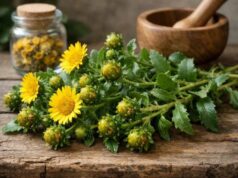
Golden bell, better known botanically as Forsythia suspensa, is the medicinal forsythia most often discussed in East Asian herbal practice. The part used is usually the dried fruit, known in traditional Chinese medicine as Forsythiae Fructus or lian qiao. Although the plant is famous in gardens for its bright yellow spring flowers, its medicinal story centers on the fruit rather than the blossoms. Traditionally, golden bell has been used for feverish illnesses, sore throat, skin eruptions, swollen glands, and other conditions described as “heat” or “toxicity” in classical herbal language.
Modern research has made the plant more interesting, not less. Golden bell contains phenylethanoid glycosides, lignans, flavonoids, and aromatic compounds with notable anti-inflammatory, antioxidant, antibacterial, and antiviral activity in laboratory and animal studies. Yet the jump from promising chemistry to proven clinical benefit is still incomplete. That is the central theme readers need to keep in mind. Golden bell is a respected traditional herb with real pharmacological potential, but it is not a fully validated stand-alone treatment. Its value today lies in the overlap between traditional use, active compounds, and cautious, evidence-aware application.
Key Takeaways
- Golden bell is best known for anti-inflammatory, antimicrobial, and antioxidant activity, especially in preclinical research.
- The dried fruit is traditionally used for feverish upper respiratory complaints, sore throat, skin eruptions, and swollen painful lesions.
- A traditional decoction range is often 6 to 15 g of dried fruit per day, but this is not the same as a standardized clinical dose.
- Human safety data are still limited, even though animal and early compound-level studies suggest relatively low toxicity.
- Pregnant or breastfeeding people, children, and anyone using multiple medicines should avoid self-prescribing concentrated extracts.
Table of Contents
- What is golden bell
- Key ingredients in golden bell
- What has golden bell been used for
- Does golden bell help infections and inflammation
- How golden bell is used
- How much golden bell per day
- Golden bell safety and evidence limits
What is golden bell
Golden bell refers here to Forsythia suspensa, a member of the olive family, Oleaceae. While many readers know forsythia as an ornamental shrub that blooms early in spring, the medicinal plant is valued for its fruit. In traditional Chinese medicine, the dried fruit is called Forsythiae Fructus or lian qiao. This distinction matters because the health discussion is about the fruiting medicinal material, not the showy flowers that make the shrub famous in landscaping.
The plant grows widely in China and nearby regions and has been used for centuries in East Asian herbal systems. Classical descriptions present it as bitter, slightly cold, and especially suited to clearing “heat,” reducing swelling, and helping with toxic or inflammatory states. In modern terms, that traditional pattern usually overlaps with feverish upper respiratory illness, sore throat, inflamed skin eruptions, boils, mastitis-like swelling, and certain early-stage infections. Golden bell is also commonly used in combination formulas rather than as a stand-alone herb, especially alongside honeysuckle in classic heat-clearing formulas.
A unique feature of the herb is that the fruit may be harvested at different stages. The greener, less mature fruit is often called qingqiao, while the fully ripened yellow fruit is called laoqiao. Traditional practice does not treat them as identical. Qingqiao is often considered somewhat better for strong heat-clearing and detoxifying action, while laoqiao may be seen as broader or milder depending on the context. Modern chemistry also suggests that harvest stage changes the balance of phenylethanoid glycosides, lignans, and other constituents.
This is an important theme with golden bell in general: the plant is not as uniform as the common name suggests. Species identity, fruit maturity, extraction method, and whether the material is a decoction, powder, or purified fraction all influence how it behaves.
For modern readers, the most useful definition is this: golden bell is a traditional medicinal fruit with a long history in respiratory, inflammatory, and skin-related herbal practice, backed by substantial phytochemical and preclinical research but only limited stand-alone clinical data. It is neither a simple folk remedy nor a universally standardized supplement. It sits in the middle, where tradition, laboratory science, and modern caution all need to be considered at the same time.
Key ingredients in golden bell
Golden bell is chemically rich, and that complexity is one reason it continues to attract research. The fruit contains several major classes of compounds, with phenylethanoid glycosides and lignans standing out as the most characteristic groups. These are the ingredients most often linked to the herb’s anti-inflammatory, antioxidant, antiviral, and antibacterial reputation.
Forsythiaside A is one of the best-known constituents and is often treated as a key marker compound. It belongs to the phenylethanoid glycoside group and appears repeatedly in pharmacology papers because it shows broad biological activity in models involving oxidative stress, inflammation, and infection. Forsythiaside B and related glycosides are also important. Together, these compounds help explain why golden bell is frequently studied in immune and inflammatory research.
Lignans form the second major pillar of the plant’s chemistry. Phillyrin, also called forsythin, and its aglycone phillygenin are among the most discussed. These molecules are often included in quality-control discussions because they are both characteristic and biologically active. In practical terms, lignans help distinguish golden bell from herbs whose activity depends mostly on flavonoids or essential oils alone.
Other constituents include:
- Flavonoids such as rutin and luteolin-related compounds.
- Terpenoids and triterpenoid-related molecules.
- Volatile aromatic compounds.
- Organic acids, including chlorogenic acid and related phenolics.
- Cyclohexyl ethanol derivatives and smaller supportive constituents.
This broad profile matters because it helps explain why golden bell is pharmacologically versatile. The herb is not built around one isolated substance acting on one single pathway. Instead, it appears to influence multiple signaling systems related to inflammation, oxidative stress, microbial defense, and tissue response. That makes it scientifically interesting, but it also makes it harder to reduce to simple marketing claims.
Another valuable point is that fruit maturity changes chemistry. Less mature qingqiao fruit tends to contain higher levels of certain active phenylethanoid glycosides and related compounds than fully ripened laoqiao. This gives a biochemical basis to traditional distinctions that might otherwise sound purely symbolic.
Compared with herbs better known in the West, golden bell is unusual because its main active groups are not the ones casual supplement users expect. It is not primarily an alkaloid herb, not mainly an essential-oil herb, and not just another generic antioxidant plant. Its chemistry is especially shaped by glycosides and lignans, which puts it in a somewhat different category from many everyday immune or respiratory botanicals.
So when readers ask what is “in” golden bell, the best answer is not just forsythiaside or phillyrin alone. It is a coordinated mix of phenylethanoid glycosides, lignans, flavonoids, and aromatic compounds that together create the herb’s medicinal signature.
What has golden bell been used for
Golden bell has been used historically in a pattern that is more coherent than it first appears. Traditional texts place it in the category of herbs that clear heat and detoxify, which sounds metaphorical until you look at the actual conditions it was applied to. These commonly included feverish colds, influenza-like illness, sore throat, swollen glands, painful skin eruptions, boils, carbuncles, ulcerative lesions, and other visibly inflamed or infected states. In modern language, the traditional use pattern strongly suggests a herb chosen for inflammatory, febrile, and microbial-type presentations.
The herb has also been used when illness appears to involve the upper respiratory tract early in its course. That includes situations resembling acute sore throat, early fever, red irritated throat, cough with heat signs, and generalized inflammatory discomfort. In traditional formula logic, golden bell was rarely used alone. It was more commonly paired with complementary herbs in combinations designed to address wind-heat, toxic heat, swollen throat, or eruptive skin conditions. One common theme is its role in formulas that also include Chinese licorice as a harmonizing companion herb.
There is also a long record of external or skin-oriented relevance. Traditional indications include sores, abscess-like lesions, tender nodules, and red swollen eruptions. That fits surprisingly well with modern research interest in anti-inflammatory, antibacterial, and tissue-supporting mechanisms, even though the clinical evidence remains limited.
A less obvious but important historical use involves “dispersing nodules” and helping reduce swelling. This language appears in traditional descriptions and suggests the herb was selected not only for feverish illness but also for localized inflammatory masses or painful swelling. Again, the language is traditional, but the pattern is consistent.
What golden bell has not historically been is a broad everyday tonic like ginseng, a digestive spice like ginger, or a calming bedtime herb. Its traditional identity is much more targeted. It is a problem-solving herb, usually brought in when heat, irritation, redness, swelling, or infection-like patterns are prominent.
That specificity makes it easier to understand both its strengths and its limits. Golden bell has been valued where visible inflammation or febrile toxicity dominates the picture. It has not traditionally been used as a long-term daily wellness supplement for the average healthy person. That old pattern still makes sense today. Even modern readers who do not use traditional Chinese medicine terminology can see the consistent clinical logic: this is a herb for hot, reactive, inflamed conditions, not a general background tonic.
Does golden bell help infections and inflammation
Golden bell appears promising for infections and inflammation, but the strongest evidence remains preclinical. This point needs to come first because the herb is often described too confidently online. The dried fruit and its major compounds show anti-inflammatory, antibacterial, antiviral, antioxidant, and immune-modulating activity in cell studies and animal models. That is a substantial scientific signal, but it is not the same as strong proof that the whole herb reliably treats human infection on its own.
The anti-inflammatory evidence is especially consistent. Forsythiae Fructus extracts and isolated constituents such as forsythiaside A, phillyrin, and phillygenin have been shown to affect pathways involving NF-kappa B, MAPK, oxidative stress signaling, cytokine release, and related inflammatory mechanisms. Animal-level meta-analysis also supports the idea that the herb can improve inflammatory markers across several experimental models. This does not mean it is a replacement for conventional anti-inflammatory care, but it does support why the plant has been used for sore throat, inflamed skin lesions, and feverish conditions.
Antiviral and antibacterial activity are also widely reported. The fruit and its constituents have been studied in relation to influenza models, bacterial growth inhibition, and infection-related signaling pathways. Forsythiaside A, in particular, has attracted attention because it appears to influence both inflammatory response and viral processes. That dual action is one reason golden bell is frequently included in East Asian formulas aimed at early respiratory infections.
Still, the human evidence is much thinner than the lab evidence. Much of the clinical use happens inside multi-herb formulas, which makes it difficult to isolate what golden bell itself contributes. This is a crucial limitation. A formula may help, but that does not prove the single herb would produce the same result alone.
For readers familiar with immune-support herbs such as andrographis, golden bell belongs in a similar evidence category: biologically active, traditionally valued, and plausible for early infection-related support, but still not supported by enough strong stand-alone human trials to justify broad therapeutic claims.
So does golden bell help infections and inflammation? Probably yes in a pharmacological sense, and likely yes in a supportive herbal sense, especially in formula-based traditional use. But the degree of benefit in real-world human illness is still less certain than its chemistry suggests. It is better described as a well-supported preclinical anti-inflammatory and antimicrobial herb than as a fully validated clinical single-agent remedy.
How golden bell is used
Golden bell is most often used as the dried fruit in decoctions, powders, extracts, and traditional compound formulas. In classic Chinese herbal practice, the fruit is typically simmered with water as part of a formula rather than swallowed casually in capsule form. This matters because the herb’s historical role is deeply tied to combination prescribing. It is often selected as one part of a broader strategy for sore throat, fever, skin eruptions, or inflammatory swelling, not as an isolated wellness supplement.
The two traditional forms, qingqiao and laoqiao, may be chosen slightly differently depending on the presentation and the practitioner’s preference. Qingqiao, the greener and less mature fruit, is often regarded as stronger for clearing heat and toxin patterns, while laoqiao may be used when a broader or slightly different action is wanted. In real-world practice, however, quality, origin, and formula context often matter as much as this distinction.
Common preparation styles include:
- Decoction of the dried fruit.
- Powdered herb used in traditional dispensing systems.
- Extract granules or concentrated liquids.
- Compound formulas for respiratory and febrile complaints.
- Research-grade fractions focused on compounds such as forsythiaside A or phillyrin.
One of the best-known traditional contexts is its use in formulas for early-stage upper respiratory illness, especially when sore throat, fever, and inflammatory signs are prominent. These formulas may also include herbs like honeysuckle, which helps explain why golden bell is more often discussed in clinical traditions than in mainstream supplement culture.
Modern supplement users should be careful here. A standardized extract, a raw herb packet, and a traditional formula are not interchangeable. A formula designed by an experienced practitioner can reflect constitution, pattern, timing, and symptom profile. A generic capsule bought online does not have that context.
Another important practical point is that golden bell is not generally treated as a culinary herb or tonic beverage. It is used medicinally, with a purpose. That is very different from drinking peppermint tea for comfort or adding ginger to food. Its bitterness, traditional indications, and pharmacology all point toward targeted use.
The most sensible modern approach is to match the form to the goal. If the aim is traditional herbal use, the dried fruit in decoction or granule form makes more sense than random standardized capsules. If the aim is pharmacological research, then purified fractions and extract-based products are more relevant. Confusing these two settings is one of the easiest ways to misunderstand what golden bell can realistically do.
How much golden bell per day
Golden bell dosage depends heavily on the form used, and this is where readers need the clearest distinction between traditional practice and modern evidence. In traditional Chinese herbal use, a common decoction range for Forsythiae Fructus is about 6 to 15 g of dried fruit per day. This is the range most often repeated in herbal teaching and pharmacopoeial-style practice. It is useful, but it should not be mistaken for a standardized evidence-based dose proven in large human trials.
That distinction matters because modern research often examines isolated compounds or extracts rather than the whole dried fruit. For example, phillyrin, also called forsythin, has been studied in healthy volunteers at much smaller milligram-based doses as an isolated compound, including single doses up to several hundred milligrams and short multiple-dose schedules. Those figures are not directly comparable to 6 to 15 g of whole fruit. They refer to a purified constituent, not to the crude herb in decoction form.
A practical way to think about dosage is this:
- Whole dried fruit in traditional practice often falls in the 6 to 15 g daily range.
- Formula-based use may shift the exact amount depending on the other herbs present.
- Extracts vary too much in concentration to compare meaningfully without standardization.
- Isolated compounds such as forsythin should be treated as separate interventions, not as direct equivalents of the herb.
Timing is also worth noting. Golden bell is not typically used as a long-term daily tonic. It is more often used for shorter periods when heat, inflammation, throat discomfort, or infection-like patterns are active. That targeted use pattern is consistent with both tradition and the current evidence base.
A cautious user should also remember that the “best dose” depends on context. A traditional practitioner working with a multi-herb formula may use the herb differently than a researcher studying a purified fraction. The number alone is never the whole story.
So, if someone asks how much golden bell per day, the most honest answer is two-part: traditional whole-herb dosing often sits around 6 to 15 g of dried fruit daily in decoction, but there is no universally accepted modern stand-alone dose supported by strong clinical trials for all health goals. That is why dosage should be treated as purpose-specific, form-specific, and ideally professionally guided rather than copied from a single label.
Golden bell safety and evidence limits
Golden bell appears relatively safe in preclinical toxicology and early human compound-level work, but that statement needs context. The whole herb does not have the kind of large, well-characterized long-term human safety database seen with the most widely used supplements. Much of the reassurance comes from long traditional use, animal studies, and limited modern safety research on purified constituents such as forsythin.
Preclinical toxicology has generally been reassuring. Reviews note that major toxicity reports for Forsythiae Fructus are limited, and dedicated toxicology studies on forsythin have found low probability of significant toxicity under the conditions tested. A recent phase I study in healthy subjects also reported that forsythin was safe and tolerable at the investigated doses. These are encouraging findings, but they do not remove the usual caution needed for concentrated herbal products.
Practical safety considerations include:
- Limited long-term human data for the crude fruit as a stand-alone supplement.
- Possible digestive upset with bitter or concentrated preparations.
- Unknown suitability in pregnancy and breastfeeding without professional guidance.
- Greater uncertainty in children and in medically complex adults.
- Potential for interactions whenever a herb is used alongside multiple medicines, even if specific interactions are not well characterized.
Because the evidence base is still developing, the safest “who should avoid it” group is fairly broad: pregnant or breastfeeding people, young children, anyone with a serious chronic illness, and anyone already taking several prescription drugs without clinical guidance. That does not mean the herb is known to be dangerous in these groups. It means the data are not strong enough to support casual self-use.
The evidence limits are just as important as the safety limits. Golden bell has a strong phytochemical case and a respectable preclinical profile, but much of the literature still sits at the laboratory, animal, or formula level. Stand-alone human trials of the crude fruit are scarce. That means benefits for sore throat, fever, influenza-like illness, skin inflammation, or neuroprotection remain more plausible than definitive.
Compared with more familiar polyphenol-rich plants such as green tea, golden bell is less established as an everyday self-directed herb and more rooted in traditional professional use and compound-focused research. That is a useful perspective. It is not a weak herb. It is a strong herb with incomplete clinical translation.
The most balanced conclusion is that golden bell is pharmacologically credible, probably reasonably safe when used appropriately, and still limited by the shortage of large stand-alone human trials. For most readers, that means it is better approached as a traditional medicinal fruit with promising evidence than as a casual all-purpose supplement.
References
- The phytochemistry, pharmacology, pharmacokinetics, quality control, and toxicity of Forsythiae Fructus: An updated systematic review 2024 (Systematic Review)
- Efficacy of Forsythia suspensa (Thunb.) Vahl on mouse and rat models of inflammation-related diseases: a meta-analysis 2024 (Meta-Analysis)
- Safety, tolerability and pharmacokinetics of forsythin in healthy subjects: a double-blinded, placebo-controlled single-dose and multiple-dose escalation and food effect study 2023 (RCT)
- Review of the therapeutic potential of Forsythiae Fructus on the central nervous system: Active ingredients and mechanisms of action 2023 (Review)
- A review of pharmacological and pharmacokinetic properties of Forsythiaside A 2021 (Review)
Disclaimer
This article is for educational purposes only and does not replace medical advice, diagnosis, or treatment. Golden bell is a traditional medicinal herb with promising laboratory and animal research, but it is not a proven substitute for antibiotics, antiviral drugs, or professional care for serious infections, breathing difficulty, high fever, or rapidly worsening skin conditions. Do not self-treat with concentrated extracts if you are pregnant, breastfeeding, taking prescription medicines, or managing a chronic illness without guidance from a qualified healthcare professional.
If you found this article useful, please share it on Facebook, X, or any other platform your readers prefer.