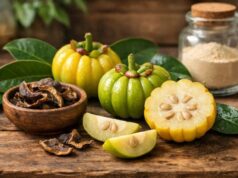
Goldenberry, the bright yellow-orange fruit of Physalis peruviana, is one of those plants that sits naturally between food and herbal medicine. It is also called cape gooseberry, uchuva, or aguaymanto, depending on region and tradition. Wrapped in its papery husk, the fruit looks delicate, but its chemistry is surprisingly complex. Goldenberry contains carotenoids, polyphenols, flavonoids, withanolides, vitamins, minerals, and other phytochemicals that have made it increasingly interesting to nutrition scientists and botanical researchers. Traditional use has linked it with throat comfort, digestion, urinary health, and general vitality, while modern studies focus more on antioxidant activity, inflammation, metabolic balance, and cell-protective effects.
That does not make goldenberry a cure-all. The most useful reading of the evidence is more measured: the ripe fruit is a nutrient-dense functional food with promising biological activity, but most of the stronger health claims still rest on laboratory or animal data rather than robust clinical trials. The fruit is worth knowing well, especially for its food-first benefits, but it also deserves careful attention to dose, preparation, and safety.
Fast Facts
- Goldenberry is most promising as an antioxidant-rich functional fruit with early support for metabolic and inflammation-related benefits.
- Its key compounds include carotenoids, flavonoids, phenolic acids, withanolides, and other steroidal metabolites.
- Human intervention studies have used about 150 g of fresh fruit daily for short periods, but no validated medicinal dose exists.
- Ripe fruit is the usual edible form; unripe fruit, leaves, and calyx preparations should not be treated as equivalent food.
- Pregnant or breastfeeding people, children, and anyone using concentrated extracts should avoid self-prescribed medicinal use.
Table of Contents
- What is goldenberry
- Key ingredients and medicinal properties
- What benefits is goldenberry known for
- How to use goldenberry
- How much goldenberry per day
- Side effects, interactions, and who should avoid it
- What the evidence actually says
What is goldenberry
Goldenberry is the ripe fruit of Physalis peruviana, a species in the nightshade family, Solanaceae. That botanical relationship is worth noticing, because it places goldenberry alongside tomatoes, peppers, eggplants, and several plants with stronger medicinal or toxic reputations. In practical terms, goldenberry is best known as a tart-sweet fruit enclosed in a papery lantern-like husk. Once ripe, it develops a bright golden color, a juicy texture, and a flavor that sits somewhere between pineapple, tomato, citrus, and dried fruit.
The plant is native to the Andean region of South America, but it is now cultivated widely in Latin America, Africa, Asia, and parts of Europe. In English it is often called cape gooseberry or goldenberry; in Spanish, uchuva or aguaymanto. Those different names can create confusion in health writing, because some articles treat them as separate fruits even though they usually point to the same species. For readers looking for medicinal or nutritional uses, the most important name is the botanical one: Physalis peruviana.
Goldenberry has long been used as both food and folk remedy. In traditional settings, the fruit has been consumed fresh, dried, juiced, or cooked into preserves. It has also been associated with support for throat irritation, mild urinary complaints, and recovery during weakness or inflammation. That traditional background matters, but it should not be exaggerated. Goldenberry is first a fruit with medicinal potential, not a classic high-potency herb like goji berry or a concentrated root medicine.
Another important distinction is between the ripe fruit and the rest of the plant. The fruit is the edible and most widely studied part. Leaves, calyxes, stems, and unripe material contain different proportions of withanolides and other steroidal compounds, which is one reason they should not be treated as interchangeable with the ripe berry. This is a recurring theme with goldenberry: the part used matters just as much as the species name.
The most accurate modern description is that goldenberry is a nutrient-rich fruit with emerging functional-food status. It belongs comfortably in the kitchen, but it also attracts serious interest from phytochemistry and pharmacology research. That combination gives it wide appeal, but it also means readers should avoid simplistic “superfruit” language and look instead at form, evidence, and context.
Key ingredients and medicinal properties
Goldenberry’s medicinal profile comes from a layered chemistry rather than from one standout nutrient. The fruit contains carotenoids, phenolic acids, flavonoids, tocopherols, phytosterols, dietary fiber, vitamin C, minerals, and a set of steroidal compounds that make Physalis species particularly interesting. Reviews and analytical studies also highlight sucrose esters, physalins, and withanolides, especially when researchers look beyond the ripe pulp and examine the calyx or other plant parts.
Among the most nutritionally important constituents are carotenoids, especially beta-carotene and related pigments, which help explain the fruit’s golden color. These compounds contribute to antioxidant action and may support healthy epithelial tissues and vision-related nutrition. The fruit also contains vitamin C, tocopherols, and polyphenols, which together support the fruit’s reputation as an oxidative-stress-modulating food.
The more herb-like side of goldenberry comes from its withanolides and related steroidal metabolites. These compounds are present across the plant and, in lower concentrations, in the fruit itself. They are one reason researchers study goldenberry for anti-inflammatory, antiproliferative, and metabolic effects rather than seeing it as just another berry. A 2025 composition study also showed that the fruit and calyx differ meaningfully in phytochemical profile, which reinforces the point that not every part of the plant should be used the same way.
Taken together, goldenberry’s main medicinal properties are usually described as follows:
- Antioxidant activity. This is supported by carotenoids, vitamin C, polyphenols, and tocopherols working as a broad protective network.
- Anti-inflammatory potential. Mostly shown in preclinical models and cell studies, especially when extracts or calyx fractions are used.
- Metabolic support. Research has explored effects on glucose handling, lipid metabolism, oxidative stress, and insulin-related pathways.
- Antimicrobial and cytotoxic activity. These findings are more pronounced in laboratory studies and certain concentrated extracts than in ordinary fruit use.
- Functional food value. The ripe fruit provides fiber, micronutrients, and phytochemicals in a form that is much easier to integrate into daily eating than many medicinal plants.
A practical nuance matters here. The whole fruit behaves differently from a concentrated extract. If you eat fresh or dried goldenberries, you are getting sugars, fiber, water, micronutrients, and a moderate amount of bioactives in a food matrix. If you use a calyx extract or a withanolide-rich fraction, you are moving into a much more medicinal and much less food-like category. That is why goldenberry can look mild in one context and potent in another.
This layered profile makes goldenberry interesting in the same broad space as acai and other antioxidant-rich fruits, but its steroidal metabolites give it a more distinctive pharmacologic edge than most common berries have. The fruit’s chemistry is not merely decorative nutrition. It is one of the reasons the plant continues to draw attention as both a food and a research candidate.
What benefits is goldenberry known for
Goldenberry is most often associated with antioxidant support, metabolic health, inflammation control, liver and kidney protection in experimental models, and general tissue-protective effects. The first thing to say clearly is that these benefits are not all supported equally. The fruit has real promise, but the strongest evidence is still preclinical.
The most believable benefit is its role as a nutrient-dense antioxidant fruit. Goldenberry provides vitamin C, carotenoids, polyphenols, and fiber in a compact serving. Human and mechanistic studies suggest that regular intake may improve biomarkers related to oxidative stress and possibly support redox balance. This is a useful and realistic claim because it matches both the nutritional composition of the fruit and the way it is actually eaten.
There is also growing interest in metabolic health. Animal studies suggest goldenberry may help improve insulin sensitivity, body-weight regulation, triglycerides, and liver-associated metabolic changes in obesity-related models. Human findings are much more limited, but one short intervention in healthy men suggested that goldenberry intake might reduce an oxidative stress marker and alter some permeability-related biomarkers without clearly changing inflammation status. These are intriguing results, but they are not the same as proving the fruit treats diabetes or metabolic syndrome.
Goldenberry is also discussed for anti-inflammatory and cell-protective effects. These findings come mainly from extract studies, including work on fruit and calyx fractions. The chemistry behind these effects is plausible, especially given the presence of withanolides, flavonoids, and phenolic acids. Even so, the stronger these claims become, the farther they usually move from ordinary fruit intake and the closer they come to specialized extracts.
Another frequently mentioned area is visual and tissue support, largely because the fruit is rich in carotenoids. While goldenberry is not as specifically studied for eye health as bilberry or zeaxanthin-focused botanicals, its carotenoid profile makes this line of interest understandable.
The realistic benefit hierarchy looks like this:
- Most credible: nutritional antioxidant support and functional-food value.
- Plausible but modest: support for oxidative stress balance and selected metabolic markers.
- Promising but still early: anti-inflammatory, anti-obesity, hepatoprotective, nephroprotective, and antiproliferative effects.
That order matters, because it keeps the fruit in the right context. Goldenberry is best understood as a food with medicinal potential, not as a stand-alone treatment. Its biggest strengths are likely to come from regular dietary use of ripe fruit rather than from exaggerated disease claims. That is less dramatic than “superfruit” marketing, but it is much closer to the evidence.
How to use goldenberry
Goldenberry is easiest to use as a whole fruit, and that is also the form that makes the most sense for most people. Ripe fruits can be eaten fresh, sliced into fruit salads, stirred into yogurt, cooked into sauces, or blended into smoothies. Their tart-sweet flavor also works well in relishes, compotes, jams, and baked dishes. This food-first approach keeps goldenberry in the zone where its safety and value are easiest to understand.
Dried goldenberries are another common form. Drying concentrates the flavor and makes the fruit easier to store, but it also concentrates sugars and changes texture. Dried fruit works well in snack mixes, porridge, granola, and infusions. In practical terms, it behaves more like a functional dried fruit than like a classic herb. People who already use goji berry in breakfast bowls or teas often find goldenberry easy to integrate in a similar way.
Juice is less common but important in the research literature. Some studies use lyophilized juice or fresh fruit-based interventions to test oxidative stress and metabolic markers. From a consumer perspective, juice is convenient, but it also strips away some of the fruit’s fiber and can make serving size less obvious. If the goal is everyday use, whole fruit usually provides a clearer nutritional package.
More specialized preparations include extracts made from the fruit or calyx. These forms are mainly relevant in research or in supplement-style use. They are much more concentrated than the ripe fruit and often focus on withanolides, polyphenols, or other fractions. This matters because concentrated preparations are not simply “stronger fruit.” They can shift the balance of compounds enough to change both effect and safety.
A practical form guide looks like this:
- Fresh ripe fruit for everyday functional-food use.
- Dried fruit for convenience and mild concentration.
- Juice or puree for culinary use or selected short-term interventions.
- Extracts for specialized use, with more caution and less room for guesswork.
One important rule is to use ripe fruit, not immature material. The rest of the plant has a different phytochemical character, and goldenberry should not be approached the way one might approach a mild kitchen fruit from stem to leaf.
If the goal is general wellness, the simplest use is often the best. Eat ripe goldenberries with other foods, not as an isolated miracle ingredient. That approach matches both tradition and modern evidence much better than chasing concentrated products with vague claims.
How much goldenberry per day
Goldenberry does not have a well-established medicinal dose in the same way that some traditional herbs do. The most meaningful dosing guidance comes from human nutrition studies and practical food use, not from a formal herbal monograph.
In human intervention research, one useful benchmark comes from a 2021 metabolomics study in healthy adults. In that trial, participants consumed 250 g of fresh goldenberry as an acute intake and then 150 g daily for 19 days as a medium-term intervention. That does not create a universal daily recommendation, but it gives a realistic example of how the fruit has been used in a monitored human setting.
A 2022 quasi-experimental intervention in adult men also used regular goldenberry intake over three weeks and reported changes in oxidative stress and gut-permeability-related biomarkers. While the abstract does not provide a simple kitchen-style dose summary, it reinforces the broader point that goldenberry research treats the fruit as a repeated dietary exposure rather than as a one-time supplement.
For ordinary use, a sensible daily range is more practical than a hard rule. A moderate food serving might look like:
- Fresh fruit: about 75 to 150 g per day.
- Dried fruit: about 20 to 40 g per day, depending on concentration and tolerance.
- Juice or puree: an amount roughly equivalent to a moderate fruit serving, not a highly concentrated “shot.”
That framework is intentionally conservative. Goldenberry is still a fruit, and the goal is usually regular functional-food intake rather than aggressive dosing. Larger amounts may be tolerated, but once intake becomes very high or very concentrated, the fruit starts to move out of the food-first category and into an area where safety is less clear.
For extracts, the picture is different. There is no broadly validated human dosing standard for calyx extracts, withanolide-rich products, or other concentrated preparations. Because those forms are not the same as eating the ripe berry, they should not be dosed by “fruit equivalent” assumptions.
Timing is flexible. Goldenberry can be eaten with breakfast, as a snack, or alongside meals. Since it is a tart fruit with natural sugars and acids, it is usually more comfortable with food than on an empty stomach for people with sensitive digestion. It also makes sense to start lower and increase gradually if you are not used to the fruit.
The most useful dosing principle is simple: treat goldenberry as a functional fruit first. Moderate, regular intake of ripe fruit is the most evidence-aligned way to use it. Concentrated products should be approached as a different category altogether.
Side effects, interactions, and who should avoid it
Ripe goldenberry fruit appears to be fairly well tolerated by most healthy adults when eaten in moderate food amounts. That is one of its advantages over stronger medicinal plants. Still, “generally tolerated” is not the same as “risk-free,” especially when people move beyond the ripe fruit and into extracts, leaves, calyx preparations, or very high intakes.
The most likely mild adverse effects are digestive. These can include stomach upset, loose stool, or discomfort from the fruit’s acidity and fiber, especially if someone eats a large serving suddenly. Dried fruit may be easier for some people and more irritating for others, depending on concentration and chewing tolerance.
The bigger safety question is not ordinary ripe fruit. It is plant-part confusion and concentration. Goldenberry belongs to a family that contains steroidal metabolites and alkaloid-like compounds, and the literature repeatedly notes withanolides and related chemicals in different plant parts. That is one reason unripe fruit, leaves, and calyx extracts should not be treated like snack fruit. A concentrated calyx preparation is a different intervention from eating ripe goldenberries.
Another important issue is the difference between food and supplement-style use. A moderate serving of ripe fruit is one thing. A withanolide-rich extract or calyx fraction is another. This is where caution starts to look more like it would with a genuine herbal product than with ordinary produce.
People who should avoid self-prescribed medicinal use include:
- Pregnant or breastfeeding people.
- Children using anything more concentrated than normal food.
- Anyone with a history of nightshade sensitivity or fruit allergy.
- Anyone planning to use calyx, leaf, or extract products without professional guidance.
- Anyone taking multiple medicines and hoping to use concentrated preparations for metabolic or inflammatory conditions.
Interaction data are not strong enough to claim a specific, common drug interaction pattern for ripe fruit in ordinary amounts. However, research interest in glucose regulation, lipid metabolism, and inflammatory pathways means it is sensible to be cautious if you are already taking medicines for diabetes, obesity, or cardiovascular risk. A fruit that is biologically active enough to be studied for these targets should not automatically be treated as inert when concentrated.
The safest comparison is to think of goldenberry as a functional fruit with a narrower margin of uncertainty than everyday berries. It is less interaction-famous than something like goji berry, but it is also less standardized in real-world supplement use. When in doubt, stay with ripe fruit, moderate servings, and known food preparations.
What the evidence actually says
The evidence on goldenberry is encouraging, but it is not evenly strong across all claims. The clearest support lies in composition, functional-food value, and preclinical biological activity. Human clinical evidence exists, but it is still relatively small and not strong enough to justify sweeping therapeutic claims.
On the strong side, the chemistry is well described. Modern studies confirm that goldenberry fruit contains carotenoids, vitamin C, tocopherols, phenolic compounds, flavonoids, fiber, minerals, and low concentrations of withanolides alongside other steroidal metabolites. This is enough to justify its reputation as a nutrient-dense fruit with genuine functional-food potential.
Preclinical work is also fairly consistent. Animal and cell studies suggest goldenberry or its fractions may modulate oxidative stress, inflammation, glucose handling, lipid balance, insulin-associated pathways, and organ protection in selected models. This is where many of the fruit’s boldest claims begin, especially around obesity, liver protection, nephroprotection, and anti-inflammatory activity.
Human evidence is more limited and should be read carefully. Small intervention studies suggest that goldenberry intake may influence oxidative stress markers, gut-permeability-related biomarkers, and metabolomic signatures tied to insulin-associated pathways. These are meaningful findings, but they are still early. They do not prove goldenberry prevents diabetes, treats metabolic syndrome, or replaces dietary and medical care.
Safety evidence is also mixed but useful. A toxicology study on lyophilized fruit juice found no major hepatic, renal, hematological, or genotoxic effects in rats at lower doses, but it also suggested potential myocardial damage signals at very high doses in male animals. This is not a reason to fear ripe fruit in normal servings. It is a reason not to treat concentrated goldenberry products as if more is always better.
The most honest evidence summary looks like this:
- Nutritional value: strong.
- Phytochemical richness: strong.
- Preclinical antioxidant, anti-inflammatory, and metabolic activity: promising.
- Human clinical confirmation: limited.
- Concentrated-product certainty: still incomplete.
That balance leads to a practical conclusion. Goldenberry is best treated as a functional fruit with interesting medicinal potential, not as a fully validated therapeutic herb. It is worth eating, worth studying, and worth respecting. The fruit earns real interest, but the evidence still favors moderate use and careful expectations over hype.
References
- Physalis peruwiana Fruits and Their Food Products as New Important Components of Functional Foods 2025 (Review)
- Nutrients, Phytochemicals, and In Vitro Biological Activities of Goldenberry (Physalis peruviana L.) Fruit and Calyx 2025
- Consumption of golden berries (Physalis peruviana L.) might reduce biomarkers of oxidative stress and alter gut permeability in men without changing inflammation status or the gut microbiota 2022
- Plasma Metabolome Profiling by High-Performance Chemical Isotope-Labelling LC-MS after Acute and Medium-Term Intervention with Golden Berry Fruit (Physalis peruviana L.), Confirming Its Impact on Insulin-Associated Signaling Pathways 2021
- Acute and Subchronic Toxic Effects of the Fruits of Physalis peruviana L 2013 (Safety Study)
Disclaimer
This article is for educational purposes only and is not a substitute for medical advice, diagnosis, or treatment. Goldenberry should not be used to self-treat diabetes, metabolic syndrome, liver disease, kidney disease, inflammation, or any chronic health condition. Because different parts of the plant have different phytochemical profiles, only ripe fruit should be approached as a food. Speak with a qualified healthcare professional before using concentrated preparations, especially during pregnancy or breastfeeding, if you take prescription medicines, or if you have a chronic medical condition or known food allergy.
If this article was useful, please share it on Facebook, X, or any other platform you prefer.