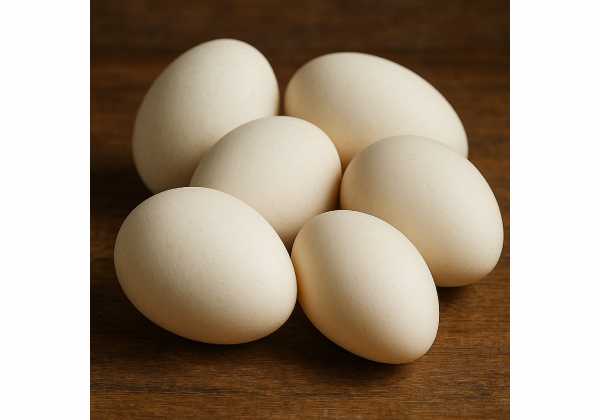
Goose eggs are a seasonal treat with a rich flavor, thick shells, and a yolk-to-white ratio that tilts toward indulgence. Compared with chicken eggs, they are considerably larger and denser, which means more high-quality protein, more vitamins and minerals per serving, and a distinctive, custard-like texture in baking. A typical goose egg weighs about 140–200 g, so one egg can stand in for roughly 2–3 large chicken eggs in recipes. Nutritionally, goose eggs are notable for vitamin B12, choline, selenium, and riboflavin, alongside complete protein and a modest amount of omega-3 fatty acids. They also contain very little carbohydrate. Since they are richer overall, they come with a higher cholesterol and energy load, so sensible portions matter—especially if you’re watching LDL cholesterol or caloric intake. In the kitchen, treat goose eggs like a deluxe ingredient: they shine in custards, fresh pasta, gnocchi, and baked goods where their large yolks add color and structure. With proper handling and thorough cooking, they can be a safe, nutrient-dense addition to a varied diet.
Quick Overview
- Provides ~13.9 g protein and ~263 mg choline per 100 g, with very high vitamin B12.
- Cook to 71°C/160°F; avoid raw whites long-term due to avidin’s effect on biotin.
- Typical serving: 100 g (about half a goose egg), enjoyed 1–3 times per week as part of a balanced diet.
- People with egg allergy, and anyone immunocompromised or pregnant, should avoid raw or undercooked eggs.
Table of Contents
- Detailed Overview
- Nutrition Profile
- Evidence-Based Health Benefits
- Risks, Allergies and Interactions
- Selecting, Quality, Sustainability and Storage
- Preparation, Cooking and Nutrient Retention
- Portions, Comparisons and FAQs
Detailed Overview
Goose eggs are among the largest commonly available eggs for the kitchen. A single egg typically weighs about 140–200 g (shell included), with a thick, porcelain-like shell and a large, deep-yellow yolk. That hefty size translates to concentrated nutrition: more protein per egg, more fat-soluble vitamins from the yolk, and standout amounts of vitamin B12 and choline compared with chicken or quail eggs.
Flavor and texture set goose eggs apart. The yolk is proportionally larger than in chicken eggs, lending a richer taste and more emulsifying power. Cooks prize goose eggs for custards, curds, and fresh egg pasta, where yolk solids bring color, structure, and silkiness. In baking, a single goose egg can replace roughly 2–3 large chicken eggs by weight; the higher yolk content intensifies hue and tenderness in cakes and brioche, while the firmer white whips well for meringues when handled patiently.
Seasonality matters. Most domestic geese lay in spring and early summer, so availability is often limited to farmers’ markets, specialty grocers, and small producers. Because lay frequency is low—many geese produce several dozen eggs in a season—prices tend to be higher than chicken eggs. That scarcity, plus their sturdiness and size, gives goose eggs a “special-occasion” reputation in home kitchens.
From a nutrition standpoint, the picture is nuanced. Per 100 g (about half a goose egg), you get complete protein (~13.9 g), ample choline (~263 mg), generous vitamin B12 (~5.1 µg), and useful amounts of selenium, riboflavin, folate, and phosphorus. Fats land around ~13.3 g per 100 g with a mix of monounsaturated, saturated, and polyunsaturated fatty acids, including a modest omega-3 contribution. Cholesterol is high relative to chicken eggs on a per-gram basis, so serving size and dietary pattern (what you pair eggs with and what they replace) become important for heart-conscious eaters.
Food safety is the other pillar. As with all shell eggs, proper refrigeration, careful handling, and thorough cooking sharply reduce risk from Salmonella. People who are pregnant, immunocompromised, very young, or older should avoid raw or lightly cooked eggs. For everyone else, cooking until both white and yolk are set offers a smart safety-first practice without sacrificing versatility.
Nutrition Profile
Reference serving for tables: raw goose egg, per 100 g (≈ half a typical goose egg). %DV uses adult Daily Values.
Macros and Electrolytes
| Nutrient | Amount (per 100 g) | %DV |
|---|---|---|
| Energy | 185 kcal | — |
| Protein | 13.9 g | 28% |
| Total Fat | 13.3 g | 17% |
| Saturated Fat | 3.6 g | 18% |
| Carbohydrate | 1.3 g | <1% |
| Sugars | 1.0 g | — |
| Sodium | 138 mg | 6% |
| Potassium | 210 mg | 5% |
| Water | ~70 g | — |
Fats and Fatty Acids
| Nutrient | Amount | %DV/Notes |
|---|---|---|
| Monounsaturated fatty acids | 5.75 g | — |
| Polyunsaturated fatty acids | 1.67 g | — |
| Omega-3 (total) | 0.55 g | — |
| Omega-6 (total) | 0.68 g | — |
| Arachidonic acid (20:4 n-6) | 0.28 g | — |
| Cholesterol | 852 mg | DV not established |
Protein and Amino Acids (selected)
| Amino Acid | Amount (per 100 g) |
|---|---|
| Leucine | 1,188 mg |
| Lysine | 1,030 mg |
| Methionine | 624 mg |
| Tryptophan | 282 mg |
| Valine | 958 mg |
| Threonine | 797 mg |
| Histidine | 346 mg |
| Phenylalanine | 910 mg |
| Isoleucine | 647 mg |
Vitamins and Related Compounds
| Nutrient | Amount (per 100 g) | %DV |
|---|---|---|
| Vitamin B12 (cobalamin) | 5.07 µg | 211% |
| Choline | 263 mg | 48% |
| Riboflavin (B2) | 0.382 mg | 29% |
| Folate (DFE) | 76 µg | 19% |
| Pantothenic acid (B5) | 1.74 mg | 35% |
| Vitamin A (RAE) | 187 µg | 21% |
| Vitamin E (alpha-tocopherol) | 1.32 mg | 9% |
| Vitamin B6 | 0.24 mg | 14% |
| Thiamin (B1) | 0.146 mg | 12% |
| Niacin (B3) | 0.188 mg | 1% |
| Vitamin D | 1.67 µg | 8% |
| Vitamin K | 0.40 µg | <1% |
Minerals
| Mineral | Amount (per 100 g) | %DV |
|---|---|---|
| Selenium | 36.9 µg | 67% |
| Iron | 3.61 mg | 20% |
| Phosphorus | 208 mg | 17% |
| Zinc | 1.32 mg | 12% |
| Calcium | 60 mg | 5% |
| Magnesium | 16 mg | 4% |
Bioactives and Other Metrics
| Item | Amount/Note |
|---|---|
| Lutein + Zeaxanthin | ~442 µg per 100 g |
| Glycemic impact | Negligible (very low carbohydrate) |
| PRAL (acid load) | ~+8.9 per 100 g (moderately acid-forming) |
Notes: Values reflect raw goose eggs. Cooking causes minor differences. Cholesterol has no current FDA %DV. Nutrient density can vary by breed, feed, and season.
Evidence-Based Health Benefits
High-quality protein to support muscles and satiety. Goose eggs provide complete protein with all essential amino acids, delivering about 13.9 g per 100 g. That profile supports muscle maintenance and repair, especially useful for active adults and older individuals aiming to preserve lean mass. The amino acids leucine and lysine are prominent, aiding muscle protein synthesis and recovery when eaten with carbohydrate-containing foods after activity.
Choline for brain, liver, and pregnancy. Choline is essential for cell membranes and neurotransmitter synthesis (acetylcholine). Many people do not consistently meet choline targets from food alone. Goose eggs contribute about 263 mg per 100 g—nearly half the adult Daily Value—making them an efficient, food-first way to close the gap. In pregnancy, adequate choline supports fetal brain development and helps prevent fatty liver changes; for those who eat eggs, including modest portions of goose egg can be a practical strategy to raise intake.
Vitamin B12 and folate for blood and nerves. A 100 g serving supplies more than double the Daily Value for vitamin B12. That’s meaningful for people with low B12 intake from other animal products. Folate (about 19% DV per 100 g) complements B12 in red blood cell formation and homocysteine metabolism.
Selenium and riboflavin for antioxidant defenses and energy metabolism. Selenium (≈67% DV per 100 g) is integral to glutathione peroxidases, key enzymes that limit oxidative stress. Riboflavin (≈29% DV) supports energy production and cellular repair through its role in FAD and FMN coenzymes.
Eye-friendly carotenoids. The yolk’s lutein and zeaxanthin—around 442 µg per 100 g—are xanthophylls that accumulate in the macula. While goose eggs are not the richest source compared to leafy greens, the fat matrix of yolk may aid absorption, making egg-based carotenoids especially bioavailable.
Cardiometabolic context and substitution effects. Large cohort studies and meta-analyses indicate that moderate egg intake (about one egg per day in standard, chicken-egg portions) is not associated with higher cardiovascular disease risk in general populations, and may be neutral or even favorable for stroke risk in some groups. The dietary context matters: choosing eggs in place of refined carbohydrates or processed meats tends to align with better overall nutrient density. Because one goose egg is roughly equivalent to 2–3 chicken eggs by weight, portion awareness is the practical lever: using half a goose egg to replace less nutritious protein at a meal can improve choline and B12 intake without exceeding your calorie goals.
Low carbohydrate, flexible for many patterns. With ~1.3 g carbohydrate per 100 g, goose eggs fit low-carb or gluten-free approaches while offering a dense package of vitamins and minerals. Pair them with fiber-rich vegetables and whole grains to round out meals and support glycemic balance.
Bottom line: when enjoyed in reasonable portions and within an eating pattern rich in vegetables, whole grains, legumes, and healthy fats, goose eggs can raise choline and B12 intake, deliver high-quality protein, and contribute beneficial micronutrients—all with excellent culinary versatility.
Risks, Allergies and Interactions
Foodborne illness risk and safe handling. Like all shell eggs, goose eggs can harbor Salmonella on the shell or internally. Reduce risk by buying clean, uncracked eggs; refrigerating promptly at ≤4°C (≤40°F); and cooking until both white and yolk are firm (or until mixed dishes reach 71°C/160°F). Avoid recipes that leave eggs raw or undercooked (e.g., traditional eggnog or Caesar dressing) unless you use pasteurized eggs.
Allergy considerations. Egg allergy—usually to proteins like ovalbumin or ovomucoid—most often affects young children but can persist into adulthood. Symptoms can include hives, wheezing, vomiting, or anaphylaxis. People with known egg allergy should avoid goose eggs entirely unless they are under the care of an allergy specialist performing supervised oral challenges. For public health context, current vaccination guidance allows people with egg allergy to receive influenza vaccines with standard precautions; however, that pertains to vaccination, not dietary tolerance, and does not change the need to avoid eggs if you are food-allergic.
Cholesterol and lipids. Goose eggs contain a large amount of cholesterol per gram. For most healthy people, dietary cholesterol has a smaller effect on LDL than saturated fats and overall dietary pattern. Still, individuals with familial hypercholesterolemia, insulin resistance, type 2 diabetes with elevated LDL, or those specifically advised to limit dietary cholesterol should keep portions modest (e.g., 50–100 g at a meal) and focus on cooking methods that minimize added saturated fat. Pairing eggs with fiber-rich sides (vegetables, whole grains, legumes) is a heart-smarter way to enjoy them.
Raw egg whites and biotin. Avidin, a protein in raw egg whites, binds tightly to biotin and can impair its absorption if raw whites are consumed frequently over time. Cooking denatures avidin, removing this concern. The take-home: avoid habitual intake of raw egg whites; cook eggs through.
Medication and lab interactions. No direct drug–nutrient interactions are typical for eggs themselves. However, high-dose biotin supplements (not eggs) can interfere with certain lab tests (for example, thyroid function tests). If you take biotin supplements, let your clinician know before bloodwork.
Other cautions. People who are pregnant, very young, older, or immunocompromised face higher risks from foodborne pathogens. For these groups, stick to thoroughly cooked eggs, store them properly, and follow strict kitchen hygiene.
If any symptom of food allergy occurs after eating eggs (rash, swelling, breathing difficulty, vomiting), seek medical care immediately. For lipid concerns, work with your clinician or dietitian to decide on portions that suit your cholesterol goals.
Selecting, Quality, Sustainability and Storage
How to choose.
- Source: Buy from reputable farms or markets with rapid turnover. Because goose eggs are seasonal and less common, freshness varies more than with chicken eggs.
- Visual checks: Open the carton. Choose eggs with clean shells, no cracks, and a matte finish (excess shine can indicate washing that thinned the cuticle).
- Heft: A fresh goose egg should feel heavy for its size.
- Label cues: If available, check the pack date or lay date. Shorter time from lay to purchase usually equals better quality.
Sustainability notes. Domestic geese are grazers and can be integrated into small, mixed farms with modest feed needs, sometimes lowering reliance on soy-heavy rations. Because birds lay seasonally and at low volume, most goose eggs come from smallholders rather than intensive systems. Ask producers about pasture access, supplemental feed, and animal welfare standards. Where wild bird protections apply, never harvest wild goose eggs; follow local laws and conservation guidance.
Storage and shelf life.
- Refrigeration: Store promptly at ≤4°C (≤40°F). Keep eggs in their carton to limit odor absorption and moisture loss.
- Shelf life: For best quality, use within 3 weeks of purchase when kept refrigerated.
- After cooking: Hard-cooked goose eggs (peeled or in shell) keep up to 1 week in the refrigerator.
- Leftovers and mixed dishes: Refrigerate within 2 hours (or 1 hour if ambient temperature is above 32°C/90°F). Reheat egg dishes to 74°C/165°F.
- Freezing: Do not freeze whole eggs in the shell. To freeze, beat the egg until uniform and freeze in a labeled container; whites can be frozen on their own. Use within 1 year for best quality.
Detecting freshness at home. The “float test” (placing an egg in water) is a rough indicator: very fresh eggs sink and lay flat; older eggs stand upright or float as the air cell enlarges. Use judgment with appearance and odor after cracking—any off smell means discard.
Food safety routine. Wash hands, tools, and surfaces after contact with raw egg. Avoid cross-contamination: keep raw egg separate from ready-to-eat foods. Clean spills promptly, especially from thick goose egg whites that can stick to surfaces.
Preparation, Cooking and Nutrient Retention
Portioning and recipe math. Because a goose egg is big, think in halves. For most uses, 100 g (about half an egg) equals roughly 2 large chicken egg yolks plus a white by functional effect. As a rule of thumb, 1 goose egg ≈ 2–3 large chicken eggs by weight. When baking, weigh eggs for accuracy and adjust liquids slightly if batters look too tight (goose yolks are thicker).
Cooking methods and doneness.
- Boiled (in shell): Start in simmering water. For a set white and gelled yolk, plan 13–15 minutes; for a firmer yolk, 16–18 minutes. Shock in ice water to stop carryover.
- Poached: Crack into a ramekin. Poach in barely simmering water with a small vinegar splash for 5–7 minutes, rotating gently with a spoon; cook until the yolk visibly thickens.
- Fried/over-easy: Use moderate heat; cover the pan to set the top. Aim for 71°C/160°F at the yolk for a safer “jammy” center.
- Scrambled/omelet: Cook over low-medium heat with continuous stirring; remove while still glossy to prevent toughness and reduce oxidation.
Nutrient retention tips.
- Cook through for safety, but avoid excessive browning. Longer exposure to high heat can increase cholesterol oxidation products; gentle heat and shorter cook times help.
- Mind the fat. Goose eggs are richer to start; use a teaspoon or two of oil or butter rather than a heavy pour.
- Boost the plate. Pair with vegetables (spinach, peppers, tomatoes) and whole-grain toast or beans for fiber, folate, vitamin C, and potassium.
- Leverage the yolk. For sauces (hollandaise, lemon curd) and fresh pasta, yolk’s emulsifiers (lecithins) create stable textures and enhance absorption of fat-soluble nutrients like carotenoids and vitamin A.
Culinary applications that shine.
- Custards and flans: One goose egg yields lush texture; temper carefully and bake in a water bath to avoid curdling.
- Fresh egg pasta and gnocchi: The yolk’s richness adds color and elasticity. Start by replacing 3 chicken eggs with 1 goose egg in a 300 g flour dough, then adjust hydration.
- Baking swaps: In pound cake, brioche, or enriched doughs, substitute 1 goose egg for 2–3 chicken eggs, then monitor batter viscosity; you may need 1–2 tablespoons more milk or water.
- Savory mains: Frittatas and shakshuka scale well with goose eggs—use half an egg per serving for balanced portions.
Food safety in the kitchen. Always wash hands and tools after handling raw egg. Keep cooked egg dishes hot (≥60°C/140°F) or cool (≤4°C/≤40°F); discard any egg dish left out more than 2 hours.
Portions, Comparisons and FAQs
Right-sized portions. For everyday meals, 100 g (about half a goose egg) is a practical serving. It provides ~185 kcal, ~14 g protein, and substantial B12 and choline. Active individuals with higher energy needs might use up to a full egg divided across a recipe serving 2–3 people.
How goose eggs compare to other eggs (per 100 g).
- Chicken egg: Slightly lower in fat and cholesterol per 100 g, with good protein and less choline than goose eggs.
- Duck egg: Nutrient density per 100 g resembles goose more than chicken, with high fat and cholesterol; goose eggs typically offer more B12 and choline per 100 g.
- Quail egg: Tiny but concentrated; on a per-gram basis, less B12 and choline than goose eggs, though a serving of several quail eggs can close the gap.
Who benefits most?
- People seeking high-quality protein in fewer bites.
- Those needing more choline (e.g., during pregnancy and lactation, per clinician guidance).
- Anyone with low B12 intake who eats eggs but minimal meat.
Who should limit or avoid?
- Individuals with egg allergy.
- People advised to limit dietary cholesterol or who have specific lipid targets—stick to smaller portions and emphasize vegetables and whole grains at the same meal.
- Pregnant, very young, older, or immunocompromised people should avoid raw or undercooked eggs.
FAQs
Are goose eggs safe runny? For higher-risk groups, no—cook until yolks are set. Others who choose softer yolks accept higher risk; using pasteurized eggs lowers it.
Do goose eggs taste gamey? They taste richer and more “eggy,” mainly due to larger yolks. Freshness and feed influence flavor; very fresh, well-handled eggs taste clean.
How many chicken eggs equals one goose egg? By weight, about 2–3 large chicken eggs. For precision baking, weigh the eggs and match the target grams.
Are goose eggs good for keto or low-carb? Yes; they’re naturally low in carbohydrate. Balance the plate with non-starchy vegetables and unsaturated fats.
How long do hard-cooked goose eggs keep? Up to 1 week refrigerated, peeled or in shell.
Can I freeze goose eggs? Not in the shell. Beat to combine yolk and white and freeze; label quantity for recipe use.
References
- Nutrition Facts for Egg, goose, whole, fresh, raw 2024.
- What You Need to Know About Egg Safety | FDA 2024.
- Flu Vaccines and People with Egg Allergies | Influenza (Flu) | CDC 2024.
- Biotin – Health Professional Fact Sheet 2022.
- Egg consumption and risk of cardiovascular disease: three large prospective US cohort studies, systematic review, and updated meta-analysis – PubMed 2020.
Disclaimer
This information is for educational purposes only and is not a substitute for personalized medical advice, diagnosis, or treatment. Always consult your healthcare professional or a registered dietitian about dietary choices, food allergies, and portion sizes that fit your health status, medications, and lab goals. If you suspect a foodborne illness or an allergic reaction after eating eggs, seek medical care promptly.
If you found this guide helpful, please consider sharing it with friends or colleagues on Facebook, X (formerly Twitter), or any platform you prefer. Your support helps us continue creating clear, trustworthy resources.