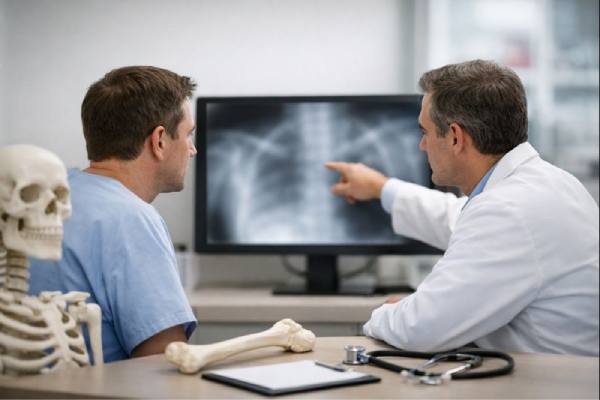
Gorham-Stout disease is a rare disorder in which bone gradually dissolves and may be replaced by abnormal lymphatic tissue. Many people first encounter it through a puzzling X-ray: an area of bone looks “moth-eaten,” thinner than expected, or partly missing—often after pain, swelling, or a fracture that seems out of proportion to the injury. Because the condition can involve the ribs, spine, shoulder, jaw, pelvis, or long bones, symptoms vary widely, and the path to diagnosis can be slow.
What makes Gorham-Stout disease especially challenging is uncertainty: how fast will it progress, which treatments help most, and how to prevent serious complications such as chylothorax (chyle leaking into the chest). A thoughtful plan—built around careful imaging, targeted medical therapy, and coordinated specialty care—can stabilize disease in many patients and improve daily function.
Table of Contents
- What it is and how it affects bone
- What causes Gorham-Stout disease?
- Symptoms and high-risk complications
- How it’s diagnosed and what to rule out
- Treatments that can slow osteolysis
- Management, living with GSD, and when to seek help
What it is and how it affects bone
Gorham-Stout disease (often called GSD or “vanishing bone disease”) is a rare condition characterized by progressive osteolysis—ongoing loss of bone. Instead of healing with normal bone remodeling, the affected area develops an overgrowth of abnormal lymphatic or vascular channels within and around bone. Over time, this altered tissue environment can tip the balance toward bone breakdown, leaving the bone fragile, deformed, or partially absent.
Where it can occur
GSD can affect almost any bone, but certain locations are especially important because of the risks they carry:
- Ribs, sternum, and thoracic spine: can be linked with pleural complications, including chylothorax.
- Spine: raises concerns about instability, deformity, and neurologic compression.
- Jaw (mandible/maxilla): can affect chewing, dental stability, speech clarity, and facial structure.
- Shoulder girdle, pelvis, and long bones: may cause pain, fractures, limb dysfunction, and mobility limits.
Disease may involve a single bone (monoostotic) or multiple sites (polyostotic). Multi-site disease often increases the need for whole-body evaluation and longer-term monitoring.
What’s happening inside the bone
Most explanations of GSD focus on three interacting processes:
- Lymphatic/vascular proliferation: abnormal channels expand within bone and adjacent soft tissue.
- Increased bone resorption: osteoclast activity (cells that break down bone) may be upregulated locally.
- Impaired bone formation: even when the body “tries” to repair, new bone formation may not keep pace.
The result is not just thinner bone. It can be architectural disruption—loss of normal scaffolding—making the area prone to microfractures, collapse, or progressive deformity.
Why it can be hard to predict
GSD does not follow a single course. Some patients experience active progression for months to years and then stabilize. Others have recurrent flare-like periods. A subset develops aggressive disease with chest involvement or spinal complications. Because of this variability, clinicians often focus on two practical goals early on:
- Define the footprint: exactly which bones and nearby tissues are involved.
- Define the risk: whether the pattern suggests higher risk for chest, spine, or major functional compromise.
This “map-and-risk” approach helps determine how intensive monitoring should be and how quickly treatment should begin.
What causes Gorham-Stout disease?
In most people, the cause of Gorham-Stout disease remains uncertain. It is generally considered a rare form of complex lymphatic anomaly—an abnormal development and growth pattern of lymphatic vessels. Unlike many inherited bone disorders, GSD is usually sporadic, meaning it occurs without a clear family history.
Leading theories: what might trigger osteolysis
Researchers and specialty centers often discuss several overlapping mechanisms:
- Abnormal lymphatic signaling: Lymphatic vessels are not just “drainage pipes.” They respond to growth signals that can become overactive. When those signals persist, lymphatic channels may expand into tissues where they are not normally prominent, including bone.
- Local bone resorption signals: The tissue environment around abnormal lymphatic channels may promote osteoclast activation. In practical terms, the “bone breakdown” side of remodeling dominates the “bone building” side.
- Inflammation and microenvironment effects: Chronic local inflammation, tissue pressure changes, and altered oxygenation may worsen imbalance in bone remodeling.
- Somatic (non-inherited) mutations: Some complex vascular and lymphatic anomalies are linked to acquired mutations in growth pathways (for example, PI3K/AKT/mTOR-related signaling). In GSD, genetics is still being clarified, but this framework helps explain why targeted medications may work in some cases.
These theories are not mutually exclusive. For many patients, the most useful takeaway is that GSD behaves more like a dysregulated growth/remodeling condition than a classic infection or cancer.
Risk factors and patterns clinicians look for
There are no lifestyle “risk factors” that reliably predict who will develop GSD. However, certain patterns show up often enough to influence clinical suspicion:
- Age: Many cases present in childhood or young adulthood, though it can occur at any age.
- History of minor trauma: Some patients report symptoms beginning after an injury. Trauma is not considered a proven cause, but it may draw attention to an area already starting to change or may act as a trigger in a vulnerable region.
- Anatomic location: Rib, spine, and shoulder involvement is common in reported series and carries higher complication concerns.
Is it hereditary?
Most cases are not inherited. That said, families often ask about recurrence risk, especially when diagnosis occurs in a child. Because a clear inherited pattern is uncommon, the chance of a sibling developing GSD is generally thought to be low. When the clinical picture is unusual, broad, or overlaps with other syndromes, a genetics consultation can be helpful—often to rule out other conditions that mimic GSD rather than to “confirm” GSD itself.
A practical way to think about causation
Instead of focusing on one trigger, many clinicians treat GSD as a condition with a “final common pathway”:
- Abnormal lymphatic growth in or near bone
- A local shift toward bone breakdown
- Progressive osteolysis unless the process is interrupted
This model aligns with modern treatment strategies that target both the lymphatic component and the bone-resorption component.
Symptoms and high-risk complications
Gorham-Stout disease can begin quietly—an ache, swelling, or a fracture that seems to come out of nowhere. Symptoms depend heavily on which bone is involved and whether nearby soft tissues, the chest cavity, or the spine are affected. The condition can be painful, but pain severity does not always match disease activity on imaging, which is one reason careful follow-up matters.
Common symptoms
People with GSD may experience:
- Localized pain (dull ache, deep bone pain, or pain with movement)
- Swelling or a soft-tissue mass near the affected bone
- Reduced range of motion when joints or supporting bones are involved
- Pathologic fractures (fractures after minor impact or normal activity)
- Progressive deformity (limb length issues, postural changes, jaw asymmetry)
In jaw involvement, symptoms can include loose teeth, bite changes, facial asymmetry, and difficulty chewing.
Chest involvement: the complication that changes urgency
When GSD affects the ribs, sternum, thoracic spine, or nearby lymphatic channels, it can lead to chylothorax—a leak of chyle (fat-rich lymphatic fluid) into the pleural space around the lungs. This is a high-risk complication because it can cause:
- Shortness of breath and reduced oxygen levels
- Rapid fatigue and chest heaviness
- Infection risk
- Protein loss, immune dysfunction, and nutritional depletion if prolonged
Some patients also develop pleural effusions that are not chylous, but any recurrent or large effusion in GSD deserves prompt evaluation.
Spine involvement: stability and neurologic risk
Spinal GSD can lead to:
- Vertebral collapse or progressive curvature
- Instability requiring bracing or surgical stabilization
- Nerve or spinal cord compression, which may present as numbness, weakness, gait changes, or bladder/bowel symptoms
Because neurologic outcomes depend on timing, new neurologic symptoms should be treated as urgent.
Other significant complications
Depending on disease location and extent:
- Chronic functional limitation: reduced ability to walk, lift, chew, or perform daily tasks
- Repeated procedures and pain sensitization: long treatment courses can worsen sleep and mood
- Infection risk after surgery or drainage procedures
- Osteopenia from immobility or long-term illness, which can increase fracture risk beyond the primary lesion
When symptoms should be treated as urgent
Seek immediate care for any of the following:
- Sudden or worsening shortness of breath, chest pain, or rapid breathing
- New weakness, numbness, trouble walking, or loss of bladder/bowel control
- Severe, rapidly escalating pain in an affected bone
- Fever with redness, drainage, or severe tenderness near a surgical site
- A fracture with deformity, loss of function, or uncontrolled pain
A helpful rule is to treat GSD like a condition with “quiet phases and critical zones.” Many days are manageable. But chest symptoms and neurologic symptoms should always move to the front of the line.
How it’s diagnosed and what to rule out
Diagnosing Gorham-Stout disease typically requires assembling several pieces: clinical history, imaging patterns, and often tissue evaluation—while systematically excluding more common causes of bone loss. Because GSD is rare and imaging can look alarming, the diagnostic process also aims to prevent unnecessary delays and reduce misdiagnosis.
Step 1: History and exam
Clinicians usually start by clarifying:
- Onset and progression of pain, swelling, or fractures
- Any chest symptoms (shortness of breath, recurrent effusions)
- Neurologic symptoms if the spine is involved
- Prior injuries or surgeries near the site
- Systemic symptoms (fever, weight loss), which may point away from GSD and toward infection or malignancy
Physical exam focuses on tenderness, swelling, range of motion, limb alignment, and—when relevant—neurologic function.
Step 2: Imaging that defines the pattern
Imaging often unfolds in layers:
- X-ray: may show progressive “disappearing” bone, thinning, or fragmented osteolysis.
- CT: defines bone architecture and is useful for surgical planning, especially in spine and chest wall involvement.
- MRI: helps assess soft tissue, marrow changes, and adjacent lymphatic/vascular components.
- Whole-body evaluation: in suspected multi-site disease, clinicians may use bone scintigraphy or PET/CT selectively to map involved areas and to help rule out cancer. (Findings must be interpreted carefully; inflammation and remodeling can confuse PET signals.)
If there is chest involvement, imaging may also include pleural assessment and specialized lymphatic imaging in some centers.
Step 3: Lab testing to exclude mimics
There is no single blood test that confirms GSD. Labs are often used to rule out:
- Infection (especially chronic osteomyelitis)
- Metabolic bone disease (severe vitamin D deficiency, hyperparathyroidism)
- Inflammatory or rheumatologic causes
- Malignancy-related bone destruction
Clinicians may also evaluate nutrition markers and immune-related effects if chylothorax or chronic effusions are present.
Step 4: Biopsy when needed
A biopsy is often considered when imaging is not definitive or when malignancy must be excluded. Pathology may show proliferation of lymphatic/vascular channels with fibrous tissue replacing normal bone. Importantly, biopsy is not always straightforward—sampling error can occur, and procedure planning must consider bleeding risk and fracture risk.
Key conditions to rule out
Because treatment differs, clinicians usually work to exclude:
- Primary bone tumors and metastatic cancer
- Chronic osteomyelitis
- Langerhans cell histiocytosis
- Inflammatory osteolysis from autoimmune disease
- Other complex lymphatic anomalies that resemble GSD
A confident diagnosis is valuable not only for treatment selection, but also for setting realistic expectations and choosing the right monitoring intensity—especially when the chest or spine is involved.
Treatments that can slow osteolysis
There is no single standard therapy for Gorham-Stout disease, but many patients benefit from a combined strategy that targets (1) abnormal lymphatic growth and (2) excessive bone resorption—while also addressing structural complications such as fractures, deformity, and pleural leaks. Treatment is typically individualized based on location (spine vs limb vs jaw), disease extent, and whether life-threatening complications are present.
Medical therapies: commonly used options
Specialty teams may use one or more of the following, often in combination:
- mTOR inhibitors (such as sirolimus): These medications aim to slow abnormal lymphatic growth signaling. They are commonly used across complex lymphatic anomalies and may improve symptoms and imaging stability in selected patients. Because they can affect immune function and wound healing, monitoring is essential (blood counts, lipids, liver/kidney function, drug levels when indicated).
- Antiresorptive therapy (bisphosphonates): These drugs help reduce osteoclast-driven bone breakdown. They are often used to stabilize bone loss and reduce fracture risk. Clinicians monitor kidney function, calcium/vitamin D status, and jaw-related risks, especially in patients with dental procedures.
- Other systemic therapies in selected cases: Depending on center experience and individual response, clinicians may consider additional agents aimed at vascular/lymphatic pathways or bone turnover. Use is typically off-label and guided by multidisciplinary discussion.
A practical expectation is that medical therapy often works best as “disease control,” not instant reversal. Pain and function can improve before imaging changes become obvious.
Radiation therapy: a focused tool with tradeoffs
Radiation has been used to control local disease activity, particularly when the process is confined and progressive. The goal is to induce sclerosis and reduce activity in abnormal tissue. Because radiation carries long-term risks—especially in younger patients—teams weigh benefits carefully and typically reserve it for situations where other measures are insufficient or where local control is critical.
Surgery and procedures: stabilization, reconstruction, and complication control
Surgery can play several roles:
- Stabilization: internal fixation, fusion, or reconstruction when structural integrity is compromised, especially in the spine.
- Fracture management: when bones fracture repeatedly or deformity progresses.
- Resection and reconstruction: occasionally used in localized disease, though recurrence risk can complicate grafting.
- Pleural interventions: drainage, pleurodesis, thoracic duct interventions, or other procedures may be required for recurrent effusions or chylothorax.
Procedural decisions are often timing-dependent: surgery may be safer and more durable when medical therapy has reduced disease activity.
Managing chylothorax and nutritional loss
When chylothorax occurs, care may include:
- Drainage to relieve breathing compromise
- Nutritional strategies to reduce chyle production (often involving specialized diets directed by clinicians)
- Medications that target lymphatic activity
- Interventional radiology or surgical approaches when conservative measures fail
Because prolonged chyle loss can cause immune and protein depletion, clinicians monitor albumin, electrolytes, lymphocyte counts, and overall nutritional status.
The most effective treatment plan usually combines disease control, complication prevention, and functional rehabilitation—rather than relying on one single “silver bullet.”
Management, living with GSD, and when to seek help
Long-term management focuses on maintaining stability, protecting function, and catching complications early—especially in the chest and spine. Because GSD can evolve over months to years, the best plans are structured but flexible: they specify what to monitor, when to repeat imaging, how to manage pain safely, and what symptoms should trigger urgent evaluation.
Building a practical monitoring plan
Many specialty centers use a “high-risk vs lower-risk” approach:
- Higher-risk patterns (rib/spine involvement, prior chylothorax, progressive neurologic symptoms) often warrant more frequent imaging and closer clinical follow-up.
- Lower-risk patterns (stable single-site limb involvement without chest or spine findings) may follow a less intensive schedule once disease appears controlled.
Common follow-up elements include:
- Periodic imaging to document stability (often MRI/CT tailored to location)
- Regular functional assessment (range of motion, gait, jaw function)
- Monitoring medication safety labs when on systemic therapy
- Chest symptom screening at every visit if thoracic bones are involved
Keeping copies of key imaging reports and a concise treatment summary can make emergency care safer and faster.
Protecting bone and preventing secondary loss
Beyond treating the active lesion, patients often benefit from addressing “secondary bone loss” risks:
- Maintain adequate calcium and vitamin D under clinician guidance
- Avoid prolonged immobilization when possible; use targeted physical therapy
- Fall prevention strategies if balance is affected
- Thoughtful activity planning: favor low-impact strengthening and conditioning over high-impact collision sports, especially when structural integrity is compromised
For jaw involvement, coordinated dental care is essential. If antiresorptive therapy is part of the plan, dental teams should be involved early so extractions and implants are planned carefully.
Pain, function, and quality of life
Pain in GSD can be mechanical (from fractures or instability), inflammatory, or neuropathic (from nerve compression). A helpful pain plan often includes:
- Clear guidance for safe analgesics and when to avoid certain medications
- Physical therapy focused on stability and gentle strengthening
- Bracing or assistive devices when they reduce risk and improve function
- Mental health support when chronic illness, uncertainty, or repeated procedures affect sleep and mood
Many patients do best when goals are framed in concrete terms: “walk 20 minutes most days,” “sleep through the night,” “return to school/work consistently,” rather than focusing only on imaging.
When to seek urgent care
Go to urgent or emergency care for:
- Shortness of breath, rapid breathing, chest pain, or sudden inability to lie flat comfortably
- New weakness, numbness, trouble walking, or bowel/bladder changes
- A new fracture, especially with deformity, inability to bear weight, or uncontrolled pain
- Fever or signs of infection after surgery, drainage, or implanted hardware
- Rapidly worsening swelling near the chest wall or spine
Looking ahead: prognosis in real-life terms
Outcomes depend on location, extent, and complications—not just the name of the disease. Many patients achieve partial or long-term stability with modern multidisciplinary care. Prognosis is more guarded when there is recurrent chylothorax or extensive spinal involvement, which is why early recognition of those patterns matters. A useful way to think about prognosis is not “Will it disappear?” but “Can we keep it stable, keep you breathing well, protect the spine, and preserve function?” In many cases, the answer can be yes.
References
- Clinical features and current management experience in Gorham-Stout disease: a systematic review 2025 (Systematic Review)
- Sirolimus treatment for intractable lymphatic anomalies: an open-label, single-arm, multicenter, prospective trial 2024 (Prospective Trial)
- A new therapeutic approach in Gorham–Stout disease 2023 (Clinical Report/Review)
- Updates to the Management of Gorham-Stout Disease and Osseous Vascular Lesions in the Head and Neck 2024 (Review)
Disclaimer
This article is for educational purposes only and does not provide medical advice, diagnosis, or treatment. Gorham-Stout disease is a rare condition that can involve serious complications—especially in the chest and spine—and care should be individualized by qualified clinicians, often within a multidisciplinary team. If you have sudden shortness of breath, chest pain, new neurologic symptoms (weakness, numbness, trouble walking), or a suspected fracture, seek urgent medical care. For personalized decisions about imaging, medications (including off-label therapies), procedures, and long-term monitoring, consult your healthcare team.
If you found this article helpful, please share it on Facebook, X (formerly Twitter), or any platform you prefer, and follow us on social media. Your support through sharing helps our team continue producing quality content.