Grains of Selim are an aromatic West and Central African spice made from the dried fruits of the tree Xylopia aethiopica. Sometimes called African pepper, uda pods, or Ethiopian pepper, they add a smoky, resinous heat to soups, stews, and herbal drinks. Beyond flavor, they have a long history in traditional medicine for digestive, respiratory, and postpartum care, and are now attracting scientific interest for their bioactive compounds.
This article takes a practical, evidence-aware look at grains of Selim: what they are, their nutritional and phytochemical profile, where research actually stands on potential health benefits, and what to know about risks and safe use. You will also find guidance on how to buy high-quality pods, store them for maximum aroma, and incorporate them into everyday cooking without overdoing it. The goal is to help you enjoy this distinctive spice confidently and responsibly.
Fast Facts on Grains of Selim
- Typical culinary use is about 1–2 small pods (around 1–2 g) per pot of soup or stew, a few times per week for most healthy adults.
- The spice is low in calories but rich in aromatic oils and plant compounds with antimicrobial and anti-inflammatory activity in laboratory studies.
- Concentrated extracts and essential oils have shown dose-dependent toxicity and effects on reproductive organs in animal studies, so medicinal or high-dose use should be approached cautiously.
- People who are pregnant, trying to conceive, taking multiple prescription medicines, or with a history of spice allergy should limit or avoid grains of Selim beyond small culinary amounts.
Table of Contents
- What Are Grains of Selim
- Grains of Selim Nutrition Profile
- Science on Grains of Selim Benefits
- Potential Risks and Allergic Reactions
- Buying, Quality, Sustainability and Storage
- How to Use and Cook Grains of Selim
- Portion Guidance, Comparisons and FAQs
What Are Grains of Selim
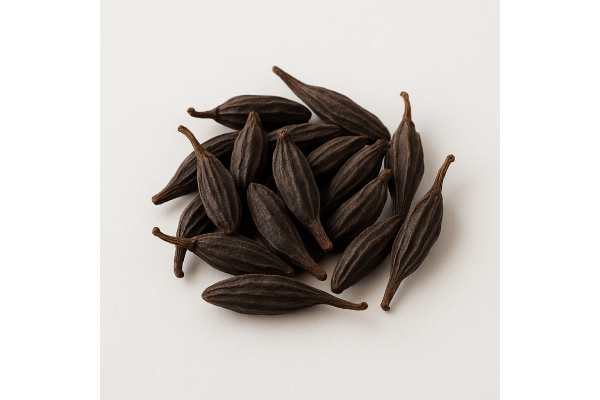
Grains of Selim are the dried, often lightly smoked fruits of Xylopia aethiopica, a tall evergreen tree in the custard apple family (Annonaceae). The fruits are long, slender pods that turn dark brown or black when dried. Inside each pod are small seeds embedded in a resinous, aromatic matrix. In markets, you will usually see the whole pods sold in bundles rather than the separated seeds.
The spice is native to the humid forests and savannah transitions of West and Central Africa, where it goes by many local names (for example, uda in parts of Nigeria, hwentia in Ghana). It is traditionally used in pepper soups, stews, porridges, and herbal decoctions, especially around childbirth, convalescence, and cold seasons. Many recipes use the pods whole, cracked, or lightly crushed, then simmered and sometimes removed before serving, similar to a bay leaf.
In terms of flavor, grains of Selim are pungent and complex. The aroma combines notes of black pepper, eucalyptus, smoke, and a faint bitterness. The heat is not as sharp as chili; instead, it is warming and lingering. This makes the spice useful in dishes where you want depth and warmth rather than intense burn. It pairs well with ginger, garlic, chili, and other African peppers, and can also enhance slow-cooked beans, lentils, and tomato-based sauces.
Grains of Selim are sometimes confused with grains of paradise (Aframomum melegueta), another West African spice. While both are called “pepper” and used in similar dishes, they come from entirely different plants. Grains of paradise are small seeds from a ginger relative; grains of Selim are woody pods from a tree. They are not interchangeable in flavor, though some cooks will substitute one for the other when needed.
Culturally, grains of Selim stand at the intersection of food, medicine, and ritual. Traditional uses include support for digestion, respiratory comfort, postpartum cleansing, and general strengthening tonics. Modern laboratory work has begun to explore these uses, but most data still come from cell and animal studies rather than well-controlled human trials. For everyday purposes, it is best approached as a traditional culinary spice with interesting, but still emerging, health science.
Grains of Selim Nutrition Profile
Unlike staple foods such as rice or beans, grains of Selim are used in small amounts, so they make only a modest contribution to calories, protein, or fat in a typical meal. Their main value lies in flavor, aromatic oils, and a variety of phytochemicals.
Analyses of the dried fruits suggest that, per 100 g, grains of Selim contain roughly single-digit percentages of protein and fat, a substantial fraction of carbohydrate, and notable amounts of crude fiber and ash (a marker of mineral content). In practical terms, a typical culinary portion of 1–2 g contributes only a few kilocalories, less than 1 g of carbohydrate, and negligible amounts of protein and fat. This means grains of Selim are best thought of as a seasoning rather than a macronutrient source.
Mineral data from agricultural and animal-nutrition studies indicate that the dried fruits contain measurable levels of potassium, phosphorus, calcium, and other minerals, although values vary with soil, growing conditions, and post-harvest handling. At culinary doses, these minerals are too low to cover a significant share of daily requirements, but they do support the overall nutrient density of a meal.
Where grains of Selim stand out is their composition of bioactive plant compounds:
- Essential oils and volatile terpenes. The aroma is driven by a complex essential oil rich in monoterpenes and related molecules such as β-pinene, 1,8-cineole (eucalyptol), α-pinene, myrcene, limonene, and terpinen-4-ol. These compounds are known from other spices for antimicrobial, bronchodilatory, and sensory effects.
- Diterpenes, notably xylopic acid. Xylopic acid is a characteristic diterpene isolated from Xylopia fruits. Experimental work links it to analgesic, anti-inflammatory, and nervous-system effects in animals.
- Polyphenols and flavonoids. Extracts from the fruits contain polyphenols, including flavonoid-type compounds with antioxidant and enzyme-modulating properties.
- Alkaloids, tannins, and saponins. These secondary metabolites contribute to the bitter, astringent, and foaming characteristics of decoctions and may influence digestive and antimicrobial activity.
Laboratory studies have shown that essential oils from the seeds can inhibit growth of various bacteria and yeasts while demonstrating modest to low direct free-radical scavenging in standard antioxidant assays. This suggests that, for grains of Selim, antimicrobial and signaling effects may be more relevant than simple antioxidant capacity.
It is also important to distinguish between forms. Whole pods simmered briefly in food will release a limited amount of these compounds. Concentrated extracts and essential oils, used in scientific experiments, may deliver hundreds of times more active molecules per kilogram of body weight than any normal diet. When interpreting “active ingredient” data, it is therefore useful to keep culinary reality in mind.
Science on Grains of Selim Benefits
Traditional knowledge attributes a wide range of benefits to grains of Selim, from easing digestive discomfort to supporting postpartum recovery. Modern research has begun to examine these claims, but most evidence still comes from preclinical studies with extracts or isolated compounds rather than clinical trials.
1. Antimicrobial and food-protective effects
Essential oils distilled from Xylopia aethiopica seeds and fruits have repeatedly shown activity against common bacteria and fungi in laboratory tests. Strains affected include Staphylococcus aureus, Enterococcus faecalis, Pseudomonas aeruginosa, Escherichia coli, and Candida albicans. In some experiments, the zones of inhibition produced by the oils are comparable to standard antimicrobials, although at higher concentrations.
For everyday cooking, this does not turn grains of Selim into a sterilizing agent. However, it suggests that adding the spice to soups, stews, and herbal drinks may contribute modestly to limiting microbial growth, especially when combined with heat and good food hygiene. This is one reason the spice has been widely used in dishes for convalescence and in environments where refrigeration is limited.
2. Anti-inflammatory and pain-modulating potential
Extracts from the fruits and the isolated compound xylopic acid have shown anti-inflammatory and analgesic activity in animal models. These include reductions in experimentally induced paw swelling, decreased inflammatory mediators, and lowered pain-like behaviors in rodents. Mechanisms proposed involve inhibition of cyclooxygenase pathways, modulation of inflammatory cytokines, and effects on neuronal signaling.
These findings support traditional use for muscular aches, headaches, and postpartum discomfort. Still, the doses used in animal studies are usually much higher than dietary intakes, and human data are lacking. At present, grains of Selim can be seen as a warming, comforting spice that may contribute to a general sense of relief, but it should not replace evidence-based pain or anti-inflammatory medications.
3. Digestive and metabolic effects
In many communities, grains of Selim are chewed or brewed to relieve indigestion, gas, and stomach cramps. Experimental work with fruit extracts indicates spasmolytic (smooth muscle relaxing) effects on intestinal tissue and possible modulation of gut motility. The bitter notes and aromatic oils may also stimulate saliva and digestive secretions, much like other bitter and pungent spices.
Animal and cellular studies suggest that extracts from the fruits may influence blood glucose, lipid profiles, and weight gain, often in the direction of improvement. Early work also explores potential effects on insulin sensitivity and lipid metabolism. However, most of these studies use concentrated extracts or combinations with other spices, and human data are minimal. It is therefore premature to claim that grains of Selim “lower blood sugar” or “treat obesity,” although including them as part of a flavor-rich, plant-forward eating pattern seems reasonable.
4. Antioxidant and cellular-protective roles
While essential oils from grains of Selim can show relatively low direct antioxidant scores in standard assays, other fractions richer in polyphenols and flavonoids demonstrate stronger radical-scavenging and metal-chelating activity. Experimental models have explored protective effects against chemically induced oxidative stress in organs such as the liver and kidneys. Again, these results are promising but preliminary.
5. Other emerging areas
Research has examined xylopic acid and related compounds for potential anticancer, neuroprotective, antimalarial, and anti-allergic properties in cell and animal models. These are scientifically interesting but far removed from dietary use. The practical takeaway for home cooks is that grains of Selim contain a diverse pharmacological toolkit, but the safe and evidence-based way to use it today is still as a culinary spice, not as a standalone treatment.
Overall, the most realistic, evidence-aware benefits of grains of Selim at culinary intakes include enhanced flavor and enjoyment of food, mild support for digestion and respiratory comfort, and potentially small contributions to antimicrobial protection and inflammation balance within a varied diet.
Potential Risks and Allergic Reactions
For most healthy adults, small culinary amounts of grains of Selim used occasionally in cooking appear to be well tolerated. However, concentrated extracts, essential oils, and high-frequency traditional decoctions raise legitimate safety questions. Understanding these helps you enjoy the spice while minimizing risk.
1. General tolerance and digestive upset
When introduced gradually, the main side effects reported anecdotally are digestive: burning sensation in the mouth, stomach discomfort, or loose stools if large amounts are consumed. The smoky bitterness and pungency can also be overwhelming if a dish is heavily spiced. People with sensitive stomachs, reflux, or active gastritis may find that very spicy or aromatic foods aggravate their symptoms, and grains of Selim are no exception.
2. Allergic and hypersensitivity reactions
Allergies specifically documented for grains of Selim are rare, likely because it remains a niche ingredient outside its native regions. That does not mean they cannot occur. As with other spices, possible reactions include itching in the mouth, hives, swelling, or breathing difficulty. Cross-reactivity is theoretically possible in individuals with established allergies to related Annonaceae plants or multiple spice sensitivities.
Anyone who has experienced spice-related reactions (for example, to cinnamon, pepper, or cardamom) should approach grains of Selim cautiously. The first exposure should be in a very small amount, ideally at home rather than in a restaurant, so any symptoms can be noticed early.
3. Reproductive and pregnancy concerns
Animal studies with xylopic acid and various Xylopia extracts have reported effects on fertility parameters and reproductive organs, particularly in male rodents, at high doses and with repeated exposure. Separate experimental work has investigated uterine-contracting (oxytocic) effects of fruit extracts, echoing traditional postpartum uses.
These findings do not prove harm at culinary levels, but they do justify caution for certain groups:
- People who are pregnant or trying to conceive should avoid medicinal or concentrated preparations and limit intake to modest amounts in food, or avoid the spice entirely if unsure.
- Until more is known, regular high-dose use is not advisable in people undergoing fertility treatments.
4. Organ toxicity and essential oil safety
Acute and subacute toxicity studies in rodents suggest that hydroethanolic fruit extracts can have relatively high median lethal doses, indicating a wide margin of safety at moderate doses. At the same time, essential oil preparations have shown dose-dependent toxicity, with very high doses causing mortality and biochemical changes, while subacute doses below certain thresholds appear better tolerated.
These data underline a key point: culinary aromatic use is not the same as ingesting essential oil by the spoonful. Essential oils should never be taken orally without qualified supervision. Even topical use should be diluted in a carrier oil and patch-tested, since the same compounds that disrupt microbial membranes can irritate human skin.
5. Potential drug interactions
Because grains of Selim and their constituents can modulate inflammation, smooth muscle tone, and nervous-system activity in experimental models, there is a theoretical risk of interaction with:
- Blood pressure or heart medications.
- Anticoagulant or antiplatelet drugs.
- Diabetes medications.
- Sedatives, strong painkillers, or centrally acting drugs.
No large human interaction studies exist, so most concerns are precautionary rather than proven. Still, people on multiple medications or with chronic conditions should discuss frequent use of strong herbal decoctions or supplements containing Xylopia aethiopica with a clinician.
Who should limit or avoid grains of Selim beyond small culinary amounts
- People who are pregnant, breastfeeding, or planning pregnancy.
- Individuals with known spice allergies or unexplained anaphylaxis.
- Those with significant liver, kidney, or bleeding disorders.
- Anyone taking multiple prescription medicines, especially for blood pressure, clotting, or blood sugar, without medical supervision.
Buying, Quality, Sustainability and Storage
Good-quality grains of Selim can transform a dish; poor-quality pods can leave it flat or unpleasantly bitter. Because this spice is still mainly traded through regional and specialty channels, quality can vary widely.
1. Where to find grains of Selim
Outside West and Central Africa, grains of Selim are most commonly available in:
- African and Caribbean grocery stores or markets.
- Specialty spice shops focused on global ingredients.
- Online retailers that source directly from African producers or diaspora wholesalers.
They may be labeled as “grains of Selim,” “uda pods,” “African pepper,” or “Xylopia aethiopica.” If you are buying online, product photos should show intact pods, and reputable sellers will specify the botanical name.
2. How to choose high-quality pods
Look for these features when selecting grains of Selim:
- Appearance: Pods should be long, slender, and mostly intact, with a deep brown to black color. Excessive breakage, pale patches, or visible mold are red flags.
- Aroma: Crush a small piece, if possible. The scent should be strongly aromatic, with smoky, resinous, and peppery notes. A weak, dusty, or musty smell suggests old or poorly stored stock.
- Texture: Quality pods feel dry but not brittle. If they crumble into powder, they may be stale. If they are soft or sticky, they may not have fully dried or may have absorbed moisture.
Ground grains of Selim are convenient but lose aroma more quickly and make it harder to assess freshness. Whole pods are usually a better choice for both quality control and shelf life.
3. Sustainability and ethical sourcing
Xylopia aethiopica trees are native to African forests and fallow lands, and the fruits are often collected from wild or semi-wild trees. This can provide important income for rural communities but also raises issues of:
- Overharvesting in areas where demand has increased.
- Habitat loss due to deforestation, agriculture, or logging.
- Uneven benefits for harvesters compared with downstream traders.
As a buyer, you can support better practices by:
- Choosing suppliers that highlight direct relationships with small farmers or co-operatives.
- Buying only what you will use, rather than large quantities that might go stale.
- Exploring local or regional spice companies that invest in traceability and fair payment.
The spice is not currently among the most heavily traded global commodities, so detailed sustainability certifications may be uncommon; nonetheless, conscious purchasing helps support more resilient supply chains.
4. Storage for flavor and safety
Proper storage protects both aroma and safety:
- Keep whole pods in an airtight container in a cool, dry, dark place, away from heat sources and direct sunlight.
- Avoid storing them near very fragrant items like coffee or strong cleaning products, which can alter their smell.
- For household use, a jar that you can finish within 6–12 months is ideal; very old pods may become woody and dull.
- Ground grains of Selim should be stored in small containers and used within a few months for best flavor.
Because the pods contain concentrated essential oils, keep them out of reach of children and pets. While chewing a single pod is unlikely to cause major harm in a healthy adult, accidental overconsumption or misuse of extracts should be prevented.
How to Use and Cook Grains of Selim
Cooking with grains of Selim is about balance: enough spice to bring warmth and depth, but not so much that the dish becomes harsh or overpowering. Fortunately, a few simple techniques go a long way.
1. Basic preparation
Most cooks use grains of Selim in one of three forms:
- Whole pods: Added directly to soups, stews, and broths, then removed before serving.
- Cracked pods: Lightly crushed with a mortar, rolling pin, or knife handle to expose the interior and release more aroma.
- Ground spice: Finely powdered pods (with or without seeds), used in rubs or added near the end of cooking.
Lightly toasting the pods in a dry pan for 1–2 minutes over medium heat, until fragrant, can intensify the smoky notes. They should not be burned, as this creates bitterness and reduces the nuance of the flavor.
2. Flavor pairings and classic uses
Traditional and modern uses of grains of Selim include:
- Pepper soups with fish, goat, or chicken, often alongside chili, ginger, and other peppers.
- Rich stews with palm oil, tomato, onions, and leafy greens.
- Rice and grain dishes, where a few pods simmered in the cooking liquid perfume the whole pot.
- Herbal infusions, where cracked pods are simmered with ginger, cloves, or cinnamon and sweetened lightly with honey.
The spice works particularly well in slow-cooked dishes, where time allows the aromatic oils to infuse. It can also add an interesting twist to lentil soups, bean stews, and even some smoked or grilled vegetable recipes.
3. Practical dosage for home cooking
Because pods vary in size and potency, it is useful to start conservatively and adjust:
- For a family-sized pot of soup or stew (serving 4–6 people), use 1–3 small pods, lightly cracked.
- For a one-litre batch of herbal infusion, 1–2 pods are usually sufficient.
- If using ground grains of Selim, start with ¼ teaspoon for 4 servings and increase gradually if desired.
You can always add more in future batches once you know how strong your particular supply is. This cautious approach also reduces the risk of digestive upset for those new to the spice.
4. Nutrient and aroma retention
Many of the key aromatic compounds in grains of Selim are volatile and sensitive to long, vigorous boiling. To preserve flavor and potential benefits:
- Avoid prolonged, high-heat frying of the pods; brief toasting is fine.
- Add whole or cracked pods early in a slow simmer to integrate flavor into the dish.
- If using ground spice, consider adding part of it near the end of cooking to refresh the aroma.
Decoctions used traditionally for medicinal purposes often involve strong, prolonged boiling. While this extracts more constituents, it also concentrates them. For culinary use, moderate simmering is usually enough to achieve a satisfying infusion without turning the drink or dish excessively bitter.
5. Introducing grains of Selim safely
If you are new to the spice:
- Try it first in a simple soup or broth, where its flavor can stand out without being masked.
- Introduce it on days when you do not have important obligations, in case you notice any unexpected digestive response.
- If you are pregnant, breastfeeding, or on medications, keep use to occasional small amounts in food and discuss any plan for regular medicinal decoctions with a healthcare professional.
Portion Guidance, Comparisons and FAQs
Because there are no official intake recommendations or regulatory health claims for grains of Selim, portion guidance relies on traditional culinary practice combined with available safety data.
1. Reasonable portion guidelines
For healthy adults:
- Per meal: About 0.5–1 g of grains of Selim per person (roughly 1 small pod or less, shared across a pot) is a common culinary range.
- Per week: Using the spice several times per week in cooking is likely acceptable for most people, assuming an otherwise balanced diet and no contraindications.
For children, smaller amounts are prudent. Many families introduce spicy and aromatic foods gradually after early childhood; a small taste of a dish flavored with grains of Selim is usually safer than giving a child a concentrated herbal drink.
At present, there is no evidence to support taking capsules, tinctures, or large daily decoctions of grains of Selim as a long-term supplement, especially without medical supervision.
2. How grains of Selim compare to other spices
- Versus black pepper: Black pepper is widely used and has a well-characterized safety profile at common doses. Grains of Selim offer a smokier, more complex flavor with additional terpenes and diterpenes. They may have somewhat different antimicrobial and anti-inflammatory patterns, but both function primarily as culinary spices, not medicines.
- Versus grains of paradise: Grains of paradise have a bright, peppery heat with citrusy notes, while grains of Selim are darker, smokier, and resinous. Research on grains of paradise is slightly more advanced in the context of metabolic effects, but both remain under active investigation.
- Versus alligator pepper and other African peppers: Each of these spices has its own botanical origin and chemical profile. Mixing small amounts of several spices often creates more interesting flavors and a broader spectrum of plant compounds than relying heavily on one.
From a health perspective, the most important comparison is not between individual spices but between a diet rich in varied herbs and spices versus one with little flavor diversity. A wide range of aromatic plants tends to support lower salt use and increased enjoyment of plant-based foods.
3. Common questions about grains of Selim
Are grains of Selim safe to eat every day?
Occasional use several times per week in food is likely safe for most healthy adults. Daily, high-dose medicinal use, especially as strong decoctions or extracts, has not been well studied. When in doubt, rotate with other spices and avoid very large, sustained intakes.
Can grains of Selim help with weight loss or blood sugar control?
Preclinical studies suggest possible effects on metabolic markers, but robust human data are lacking. Grains of Selim should be seen as a flavorful part of a balanced diet, not as a primary strategy for weight or blood sugar management.
Do grains of Selim replace conventional medicine?
No. While laboratory work supports several pharmacological actions, the spice does not replace prescribed medications for infections, pain, inflammation, diabetes, or cardiovascular disease. Any attempt to adjust medication should be done under professional guidance, not based on spice intake.
Are grains of Selim safe in pregnancy and breastfeeding?
Because extracts from the plant can affect uterine contractions and reproductive parameters in animals, and traditional use involves strong preparations around childbirth, caution is warranted. Pregnant and breastfeeding individuals are usually advised to limit or avoid grains of Selim beyond modest amounts in food, and to avoid concentrated remedies unless supervised.
How long do grains of Selim keep?
Properly stored whole pods can retain good flavor for up to a year, sometimes longer. Ground forms lose freshness more quickly and are best used within a few months.
References
- Chemical Constituents and Antimicrobial and Antioxidant Activities of Essential Oil from Dried Seeds of Xylopia aethiopica 2024 (Experimental Study)
- Phytochemical and Pharmacological Evaluation of Xylopia aethiopica (African Pepper): A Comprehensive Review 2025 (Systematic Review)
- Safety Assessment of Essential Oils from Xylopia aethiopica (Dunal) Fruit from Nigeria 2020 (Toxicological Study)
- Evaluation of Acute Toxicity and Phytochemical Analysis of Gliricidia sepium and Xylopia aethiopica Extracts 2023 (Toxicological Study)
- A Review of Pharmacological Effects of Xylopic Acid 2020 (Review)
Medical Disclaimer
The information in this article is intended for general educational purposes only. It does not provide medical advice and is not a substitute for consultation with a qualified healthcare professional. Never disregard professional medical guidance or delay seeking it because of something you have read here. Decisions about diagnosis, treatment, or changes to prescribed medication should always be made in partnership with a licensed clinician familiar with your individual medical history and circumstances.
If you found this guide helpful, consider sharing it with others on Facebook, X (formerly Twitter), or any platform you prefer. Thoughtful sharing helps more readers discover balanced, evidence-aware information and supports the ongoing work required to create it.