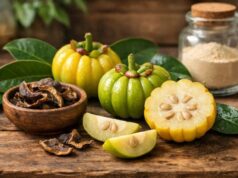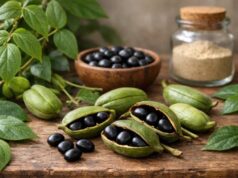
Grains of paradise is a peppery, aromatic seed from a West African plant in the ginger family. It has long been used as both a culinary spice and a traditional remedy, and it is now drawing modern interest for its warming compounds, especially 6-paradol, 6-gingerol, and 6-shogaol. These constituents help explain why the spice is often discussed in connection with thermogenesis, digestion, inflammation, and metabolic health.
What makes grains of paradise especially interesting is the gap between tradition and modern evidence. It is flavorful enough to belong in everyday cooking, yet concentrated extracts are being studied more like supplements. Early human research suggests it may increase energy expenditure and modestly influence body-fat distribution in some people. At the same time, many broader claims still rely on laboratory and animal data rather than strong long-term clinical proof.
That means this herb is best approached with curiosity and realism. Used well, it can be a distinctive spice and a potentially useful adjunct. Used carelessly, especially in concentrated extract form, it deserves the same respect as any bioactive supplement.
Essential Insights
- Grains of paradise is most promising for thermogenesis and modest metabolic support, not dramatic weight loss.
- Its best-known active compounds are 6-paradol, 6-gingerol, and 6-shogaol, which may affect inflammatory and metabolic pathways.
- Human studies have used roughly 30 to 500 mg per day of extract, depending on standardization and study design.
- Concentrated extracts may irritate the stomach or interact with medicines, especially in sensitive users.
- Pregnant or breastfeeding people, children, and anyone using anticoagulants or glucose-lowering drugs should avoid self-prescribing concentrated extracts.
Table of Contents
- What is grains of paradise
- Key compounds and medicinal properties
- What benefits are most plausible
- How is grains of paradise used
- How much should you take
- Side effects and who should avoid it
- What the evidence actually shows
What is grains of paradise
Grains of paradise comes from Aframomum melegueta, a flowering plant native to West Africa and part of the Zingiberaceae family. That places it in the same botanical group as ginger, turmeric, and galangal, which helps explain its fragrant heat and its long-standing use in both food and traditional healing systems.
The part people use is the seed. The reddish-brown seeds are small, hard, and highly aromatic, with a flavor that combines peppery warmth, citrus, resin, and a faint cardamom-like sweetness. Unlike black pepper, which hits sharply and quickly, grains of paradise tends to taste more layered and perfumed. That makes it attractive to cooks, herbalists, and supplement formulators alike.
Historically, it was used in West African cuisine and medicine for digestive complaints, pain, infections, and general vitality. It also became known in medieval Europe as a spice substitute when black pepper was expensive or scarce. Today, it appears in spice blends, bitters, cordials, wellness products, and standardized botanical extracts.
From a practical standpoint, grains of paradise sits at the border between food and supplement. In the kitchen, it is mainly a flavoring agent. In the supplement world, it is marketed for fat burning, body composition, and sometimes mood support. Those are very different use cases, and they should not be treated as interchangeable. A pinch in food is not the same as a concentrated capsule standardized for vanilloid compounds.
The seeds are usually sold in four forms:
- Whole dried seeds
- Freshly ground powder
- Alcohol or hydroalcoholic extracts
- Standardized capsules, often labeled by paradol or total vanilloid content
This distinction matters because potency can vary widely. Whole seeds deliver flavor and a modest amount of active compounds. Standardized extracts can deliver much more concentrated doses, which changes both the likely effect and the safety profile.
If you are evaluating grains of paradise for health purposes, it helps to think of it as a bioactive spice rather than a miracle herb. Its best-supported modern use is not broad disease treatment. It is a pungent seed with interesting metabolic and anti-inflammatory chemistry, meaningful culinary value, and a still-developing evidence base.
Key compounds and medicinal properties
The medicinal interest in grains of paradise centers on a group of pungent phenolic compounds called vanilloids. The best known are 6-paradol, 6-gingerol, and 6-shogaol. These are structurally related to the compounds found in ginger’s gingerol-rich profile, but grains of paradise has its own balance of intensity and bioactivity.
Here is what these compounds are most often associated with:
- 6-Paradol: Often highlighted as the signature compound in standardized grains of paradise extracts. It is the main compound linked to thermogenic and anti-obesity interest.
- 6-Gingerol: Also found in ginger, it is associated with antioxidant and anti-inflammatory actions.
- 6-Shogaol: Usually considered a more pungent, more reactive relative of gingerol, with strong interest in inflammation and cell-signaling pathways.
Together, these compounds help explain the herb’s core medicinal properties:
- Thermogenic activity: It may stimulate heat production and energy expenditure, likely through effects on brown adipose tissue and sensory receptors involved in heat signaling.
- Anti-inflammatory potential: Laboratory work suggests these compounds may influence enzymes and signaling pathways tied to inflammation.
- Antioxidant effects: Seed extracts contain phenolics that may help reduce oxidative stress in experimental settings.
- Digestive stimulation: Like many warming spices, it may increase salivation, gastric activity, and a sense of digestive warmth.
- Sensory and circulatory warmth: Its pungency creates a warming experience that may support appetite, digestion, and perceived circulation.
It is important, though, to separate mechanism from outcome. A compound can look impressive in a test tube and still have modest real-world benefits in humans. With grains of paradise, the chemistry is compelling, but only some outcomes have been tested in small clinical trials.
The seed also contains volatile oils and minor phytochemicals that contribute to aroma and flavor, but the vanilloid fraction is what most supplement makers focus on. Standardized products often advertise total vanilloids or 6-paradol content because that makes dosing more reproducible than using raw powder alone.
This is also why labels matter. Two products can both say “grains of paradise,” yet one may be a culinary powder and the other a concentrated extract designed for metabolic effects. Their strength, timing, and tolerability can be very different.
From a medicinal perspective, grains of paradise is best understood as a warming, pungent botanical with plausible metabolic, inflammatory, and antioxidant activity. Its active compounds give it genuine pharmacological interest, but the most useful question is not whether the seed is active. It is. The better question is which actions matter enough in humans to produce reliable, worthwhile benefits.
What benefits are most plausible
The most plausible benefits of grains of paradise are not all equal. Some are supported by early human trials, while others remain largely preclinical. The strongest way to read the evidence is to rank the likely benefits from most credible to most tentative.
1. Metabolic and thermogenic support
This is the most convincing area. Grains of paradise extract has been studied for its ability to increase energy expenditure and activate brown adipose tissue, the type of fat involved in heat generation. In practical terms, that means it may slightly raise calorie burning and, in some users, support reductions in visceral fat over time.
That does not make it a stand-alone weight-loss tool. The likely effect is modest, and it appears to work best as an adjunct to a well-managed diet, movement plan, and sleep routine.
2. Digestive warmth and post-meal comfort
Traditional use strongly points toward digestive support. Many people find pungent spices useful for sluggish digestion, cold-sensitive stomach discomfort, and bland meals that feel heavy. Grains of paradise may stimulate digestive secretions and improve the sensory experience of eating, which can be helpful in small culinary amounts.
This benefit is plausible and practical, though it has not been tested as rigorously as its metabolic effects.
3. Anti-inflammatory support
Lab and animal studies suggest grains of paradise compounds may influence inflammatory markers and pathways. That makes it reasonable to describe the herb as having anti-inflammatory potential. Still, this is not the same as saying it treats inflammatory disease. Human evidence is not strong enough to justify that claim.
4. Antioxidant and cell-protective activity
Seed extracts show antioxidant behavior in experimental models, and that aligns well with the chemistry of the plant. But antioxidant activity in a laboratory setting does not always translate into clear clinical outcomes. It is better to view this as supportive background biology, not a headline promise.
5. Emerging mood and stress support
A recent pilot trial suggests a standardized extract may reduce anxiety, tension, and sleep disturbance over a very short period. This is intriguing, but it is still early evidence. It is far too soon to position grains of paradise as a primary herb for mood disorders.
What grains of paradise does not seem to support is exaggerated wellness marketing. It is unlikely to melt fat rapidly, replace exercise, cure chronic inflammation, or function as a universal tonic. Its realistic role is narrower and more useful:
- A warming spice with digestive value
- A bioactive extract with early metabolic promise
- A possible adjunct for selected wellness goals
- A poor substitute for proven treatment when a medical condition is present
That middle ground matters. Herbs are often undersold as mere folklore or oversold as miracle solutions. Grains of paradise fits neither extreme. It has meaningful potential, especially around metabolism, but the practical benefit is most likely to be steady and subtle rather than dramatic.
How is grains of paradise used
Grains of paradise is unusually versatile because it works in both culinary and supplement contexts. The best way to use it depends on your goal: flavor, digestive support, or a more targeted wellness routine.
For cooking, whole seeds are usually the best starting point. They keep their aroma longer than pre-ground powder, and the flavor is brighter when freshly crushed. A mortar and pestle, spice grinder, or pepper mill works well. The taste is warming, citrusy, and peppery, but more aromatic than black pepper’s sharper heat.
It works especially well in:
- Roasted vegetables
- Lentil and bean dishes
- Meat rubs and marinades
- Broths and stews
- Cocoa and coffee drinks
- Citrus-based sauces
- Fermented beverages and bitters
A useful culinary rule is to start low. A little goes a long way. Too much can dominate a dish and leave an almost medicinal heat.
For wellness use, the main forms are capsules and standardized extracts. These are more predictable than culinary powder, which matters if someone is trying to match a studied dose. Many commercial products are marketed around body composition or “fat burning,” though label quality varies.
A practical way to think about form selection is this:
- Whole seeds: Best for flavor, traditional use, and mild everyday exposure
- Powder: Convenient for cooking and homemade blends
- Standardized extract: Best when trying to approximate research doses
- Liquid extract: Fast to take, but quality and concentration vary
Timing may matter. Because grains of paradise is warming and often used for metabolic support, some people prefer it in the morning or before a meal. Others find it better tolerated with food. Taking it late in the evening is not ideal for everyone, especially if it feels stimulating or causes reflux.
For food-based use, these steps help:
- Buy whole seeds if possible.
- Grind only what you need.
- Pair it with fat or warm liquids to mellow the pungency.
- Use it in savory foods first before trying it in drinks or desserts.
For supplement use, choose products that clearly state:
- Extract dose per capsule
- Standardization, if any
- Full ingredient list
- Serving frequency
- Third-party quality testing, if available
Used thoughtfully, grains of paradise can be either an elegant spice or a focused supplement. The key is not to blur those roles. Cooking with it is about flavor and gentle support. Supplementing with it is about measured exposure to more concentrated active compounds.
How much should you take
There is no single universal dose for grains of paradise because the form matters so much. A pinch of the spice in food, a loose powder in a tea, and a standardized capsule are not equivalent. The most honest dosing advice comes from looking at human studies and then translating them cautiously into practice.
Human trials have used several different approaches:
- About 30 mg per day of extract for several weeks in one body-composition study
- A single 40 mg dose of extract in an acute thermogenesis study
- 250 mg twice daily of a standardized extract, for a total of 500 mg per day, in a 12-week trial in overweight adults
- 50 to 150 mg per day of a standardized extract in a short pilot study on anxiety, stress, mood, and sleep
That range is broad because extracts differ. One capsule may be rich in 6-paradol, while another may be a simple seed powder. This is why copying a dose without knowing the standardization can be misleading.
A practical dosing framework looks like this:
- Culinary use: Start with about 1/8 teaspoon freshly ground seeds in a recipe or per serving and adjust slowly.
- General supplemental use: Start at the low end of the product’s labeled serving size.
- Standardized extract use: Stay close to the manufacturer’s instructions unless a clinician advises otherwise.
- Sensitive users: Begin every-other-day rather than daily if stomach tolerance is uncertain.
Timing can also change the experience. Many users do best with grains of paradise:
- With breakfast or lunch
- Before meals if digestion is the main goal
- Earlier in the day if the warming effect feels stimulating
- With food if it causes stomach discomfort on an empty stomach
Duration is another overlooked variable. A culinary spice can be used as desired. A concentrated extract is different. It makes sense to reassess after 4 to 12 weeks rather than taking it indefinitely without a reason. That is especially true if the goal is body composition, where results should be evaluated with realistic expectations.
Avoid two common mistakes:
- Increasing the dose too quickly because the spice feels “natural”
- Confusing stronger body heat or sweating with meaningful fat loss
The best dose is the lowest one that fits the form, the goal, and the person’s tolerance. For most people, that means beginning modestly, using a clearly labeled product if supplementing, and treating grains of paradise as one supportive tool rather than the center of a health plan.
Side effects and who should avoid it
Grains of paradise is usually tolerated well in normal culinary amounts, but concentrated extracts deserve more caution. Its pungent compounds are biologically active, which is exactly why they attract interest. The same activity can also create side effects or amplify risk in the wrong context.
The most likely side effects are digestive:
- Stomach burning or warmth
- Reflux or heartburn
- Nausea
- Abdominal discomfort
- Mouth or throat irritation
These are more likely with extracts than with small food amounts. People with gastritis, peptic ulcer disease, uncontrolled reflux, or a very sensitive stomach may find it irritating even at modest doses.
Another important point is that safety data in humans are still limited. Short-term studies are encouraging, but they do not answer every question about long-term, high-dose, or multi-supplement use. Older animal work also suggests that high doses may stress the liver, even though not all later preclinical studies show the same concern. That is a good reason to avoid megadosing and to be skeptical of aggressive “fat-burner” stacks.
Potential interactions are not fully mapped, but caution is sensible with:
- Anticoagulant or antiplatelet drugs: Because pungent botanicals can sometimes influence bleeding tendency
- Glucose-lowering medicines: Because preclinical data suggest possible effects on glucose regulation
- Blood-pressure medicines: Because warming spices may shift cardiovascular responses in sensitive users
- Other stimulant or thermogenic supplements: Because stacking can increase side effects without adding much benefit
People who should avoid concentrated grains of paradise extracts unless a clinician specifically approves them include:
- Pregnant people
- Breastfeeding people
- Children and adolescents
- People with active ulcers or severe reflux
- People with significant liver disease
- People preparing for surgery
- Anyone with a history of strong reactions to pungent spices in the ginger family
It is also worth pausing if you notice:
- Persistent stomach pain
- New reflux after starting use
- Unusual flushing or dizziness
- Palpitations
- Any symptom that improves when the supplement is stopped
For supplement users, a few practical safety rules go a long way:
- Do not combine it casually with multiple “fat burners.”
- Use only clearly labeled products.
- Start with the lowest effective dose.
- Reassess after a defined trial period.
- Stop and seek guidance if symptoms feel more than mild.
In short, grains of paradise is probably low risk as a spice and more uncertain as a concentrated long-term supplement. Respecting that distinction is the simplest way to use it more safely.
What the evidence actually shows
The research on grains of paradise is promising, but it is not broad or definitive. The strongest evidence comes from a handful of human trials, mostly focused on thermogenesis, brown fat activity, energy expenditure, and body-fat distribution. Those studies suggest the herb can do something measurable. The question is how much that matters in ordinary life.
Here is the clearest reading of the evidence:
- Best-supported use: metabolic support, especially energy expenditure and visceral-fat outcomes
- Moderately supported: short-term thermogenic effects after acute dosing
- Early but interesting: mood, stress, and sleep support with a standardized extract
- Mostly preclinical: anti-inflammatory, antioxidant, immune, glucose, and broader disease-related claims
This means grains of paradise is not a fully validated therapeutic herb in the way some marketing suggests. It is better described as an emerging botanical with one relatively coherent research lane and several weaker ones.
The major limitations of the evidence are also important:
- Sample sizes are often small
- Study durations are short
- Extracts are not standardized the same way across trials
- Study populations are narrow, such as young adults or overweight but otherwise healthy volunteers
- Some newer studies involve commercial ingredients, which increases the need for independent replication
In practical terms, that means the following claims are reasonable:
- It may modestly increase energy expenditure
- It may help reduce visceral fat in some settings
- It may have anti-inflammatory and antioxidant effects
- It may have additional benefits that are still being explored
These claims are not yet well supported:
- It reliably causes major weight loss
- It treats obesity on its own
- It reverses metabolic disease
- It should be used as a primary therapy for anxiety, depression, or insomnia
- It is proven safe for long-term, high-dose use in all adults
A balanced conclusion is that grains of paradise has moved beyond folklore but has not reached the level of a thoroughly proven clinical botanical. Its metabolic story is the most credible. Its broader medicinal story is still under construction.
For readers making decisions, that leads to a clear takeaway. Grains of paradise makes sense as:
- A distinctive culinary spice
- A carefully chosen adjunct supplement
- A reasonable option for people curious about mild metabolic support
It does not make sense as:
- A replacement for diet, movement, or sleep fundamentals
- A substitute for prescribed care
- A reason to ignore side effects because something is “natural”
The evidence is good enough to justify interest, but not strong enough to justify hype. That is often where the most useful herbs live: not in fantasy, but in measured, practical use with expectations kept firmly in check.
References
- Prolonged Treatment with Grains of Paradise (Aframomum melegueta) Extract Recruits Adaptive Thermogenesis and Reduces Body Fat in Humans with Low Brown Fat Activity 2021 (Clinical Study)
- Aframomum melegueta Seed Extract with Standardized Content of 6-Paradol Reduces Visceral Fat and Enhances Energy Expenditure in Overweight Adults – A Randomized Double-Blind, Placebo-Controlled Clinical Study 2022 (RCT)
- Aframomum melegueta Seed Extract’s Effects on Anxiety, Stress, Mood, and Sleep: A Randomized, Double-Blind, Pilot Clinical Trial 2025 (Pilot Clinical Trial)
- Phytochemical analysis and immunomodulatory activities in vitro and in vivo of Aframomum melegueta K Schum seed extracts 2024 (Preclinical Study)
- Toxicological evaluation of grains of paradise (Aframomum melegueta) [Roscoe] K. Schum 2010 (Toxicology Study)
Disclaimer
This article is for educational purposes only and is not medical advice. Grains of paradise may act differently depending on whether it is used as a culinary spice, a raw powder, or a standardized extract. Because research is still limited, especially for long-term supplement use, anyone who is pregnant, breastfeeding, managing a medical condition, or taking prescription medicines should speak with a qualified clinician before using concentrated products. Do not use this herb to diagnose, treat, or replace care for obesity, digestive disease, anxiety, or any other health condition.
If this guide was useful, consider sharing it on Facebook, X, or your preferred platform so others can find it.