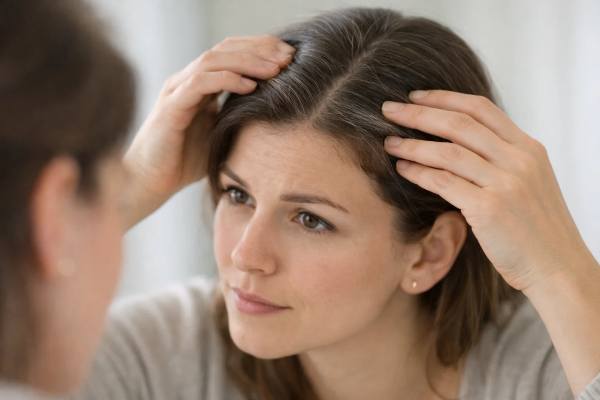
Gray hair often arrives quietly: one silver strand at the temple, a pale line at the part, a patch that seems to appear between haircuts. For some people it starts close to the expected age range. For others it shows up years earlier and raises a more personal question: is this simply genetics, or is something off?
Understanding gray hair helps in two ways. It removes a great deal of unnecessary worry, and it makes it easier to spot the situations that do deserve attention. Hair does not turn gray because it is “dead,” dirty, or poorly washed. It changes color because the follicle’s pigment system changes over time. Genetics plays a major role, but smoking, oxidative stress, some medical conditions, and a few nutrient-related issues can influence timing. The hard part is that myths travel faster than nuance. Stress is blamed for everything, supplements are oversold, and people are told either that gray hair is always harmless or that it always signals deficiency. The truth sits in the middle, and that middle is where better decisions start.
Essential Insights
- Gray hair happens when follicles produce less pigment, not because hair suddenly becomes unhealthy.
- Early graying is often strongly genetic, but smoking, thyroid problems, low iron stores, and some nutrient issues can contribute.
- Most established gray hair does not reliably turn back to its original color, though limited repigmentation can happen in select situations.
- Supplements are not a proven cure for gray hair and can create new problems when used without a clear deficiency.
- If graying starts unusually young or comes with fatigue, shedding, thyroid symptoms, or eyebrow changes, a medical review is reasonable.
Table of Contents
- What Actually Turns Hair Gray
- When Gray Hair Counts as Early
- Why Some People Gray Sooner
- Myth vs Reality on Common Claims
- When Early Graying Deserves a Checkup
- How to Care for Gray Hair Well
What Actually Turns Hair Gray
Hair turns gray when the follicle gradually stops delivering enough pigment into the growing hair shaft. That pigment comes from melanin, produced by specialized cells called melanocytes. Inside a healthy pigmented follicle, melanocytes transfer melanin into the hair fiber during the active growth phase. When that system slows, misfires, or loses the cells needed to keep it going, the new hair that emerges looks gray, silver, or white.
That process is more complicated than many people realize. A gray hair is not simply “bleached” by time. It reflects changes inside the hair follicle pigmentary unit, the tiny structure that coordinates pigment production during growth. Follicles also depend on melanocyte stem cells, which help replenish pigment-producing cells over repeated growth cycles. As those cells become depleted, less flexible, or less able to move into the right place at the right time, pigment fades. That is one reason graying is so closely linked to aging biology even in otherwise healthy people.
Oxidative stress appears to matter too. Hair follicles are metabolically active, and pigment production is chemically demanding. Over time, reactive oxygen species, DNA damage, mitochondrial strain, and local cellular aging can all interfere with the pigment system. Current thinking no longer treats gray hair as a single-cause event. It is better understood as a layered process involving pigment loss, stem-cell dysfunction, and age-related changes in the follicle environment.
The hair cycle also matters. Pigment is tied to the growth phase, which is why color changes are usually seen in newly emerging hair rather than suddenly appearing in the length of old hair. If you want the broader framework behind that timing, the phases of the hair growth cycle help explain why follicles can look stable for months and then seem to change at once.
Texture often shifts along with color. Many people notice that gray hairs feel stiffer, drier, coarser, or more wiry. That is not just imagination. Gray hair can reflect structural changes in the fiber as well as loss of pigment. It may scatter light differently, resist artificial color more stubbornly, and show yellowing from smoke, pollution, hard water, or heat styling more easily than darker hair.
The most important practical point is this: gray hair starts at the follicle, not on the surface. That is why shampoos, miracle rinses, and scalp gadgets rarely do what they promise. Once a hair has grown out gray, the meaningful question is what is happening inside the follicle, not what is sitting on the shaft.
When Gray Hair Counts as Early
Not all early gray hair is medically significant, but timing does matter. Dermatology literature commonly uses the term premature graying, or premature canities, when graying begins well before the expected age range for a person’s background. Commonly cited cutoffs are before age 20 in White populations, before 25 in many Asian populations, and before 30 in Black populations. These are clinical rules of thumb, not perfect biological boundaries, but they are still useful.
The first thing to notice is pattern. A few isolated silver hairs in the early thirties are different from rapidly increasing gray at age 16, a visible temple patch at 19, or diffuse graying in the early twenties with no family history. Pattern also helps separate true graying from color illusion. Bleached, sun-damaged, or heavily heat-styled hair can look lighter or faded without being genuinely gray from the root. The distinction matters because pigment loss starts at the follicle and is visible at the base of the hair, not just along the weathered lengths.
Family history carries a lot of weight. If a parent or grandparent grayed young, that usually moves genetics to the front of the list. It does not prove that nothing else is contributing, but it makes isolated early graying less mysterious. By contrast, when graying starts unusually young in someone with no family history and comes with other symptoms, the threshold for asking questions should be lower.
What does not automatically count as a problem is a small number of visible gray strands. Hair is not perfectly synchronized. Follicles age at different rates, and one area can change earlier than another. Temples often gray before the crown, and beard hair can gray on a different timeline than scalp hair. Some people also notice intermittent color variation in individual hairs, especially during periods of illness or high stress, though that is not the same thing as reliable full reversal.
The bigger concern is when early graying arrives with other clues:
- Diffuse hair shedding or clear thinning
- Eyebrow or eyelash changes
- Fatigue, cold intolerance, or weight shifts
- Very restrictive dieting
- Smoking
- Autoimmune symptoms
- Sudden changes after illness or medication shifts
Those features do not mean the gray hair is dangerous. They mean it may be part of a broader picture rather than a stand-alone cosmetic trait.
It also helps to keep expectations realistic. Early graying is often emotionally loaded because it shows on the surface, but it does not usually predict how healthy the rest of the hair is. Someone can have early gray hair and excellent density, strong strands, and a calm scalp. Someone else can have richly pigmented hair and still be dealing with significant shedding, breakage, or inflammation. Timing matters, but context matters more.
Why Some People Gray Sooner
The biggest driver of early graying is genetics. That is the least glamorous answer and the most common one. Some follicles are simply programmed to lose pigment sooner, and that tendency often runs strongly in families. When a person says, “My father was salt-and-pepper at 25 and so am I,” that family pattern often tells more than any single supplement ad ever will.
Still, genes are not the whole story. Several modifiable and medical factors are linked with earlier or more noticeable graying. Smoking is one of the most consistent lifestyle associations. It appears to increase oxidative stress and may amplify aging signals within the follicle. If early graying and tobacco exposure overlap, it helps to think about the broader biology of smoking and hair changes rather than treating gray strands as an isolated cosmetic issue.
Nutritional problems are discussed constantly online, but they need more careful framing. Low iron stores, low vitamin B12, folate issues, low calcium in some studies, and broader malnutrition have all been associated with premature graying in parts of the literature. That does not mean every young person with gray hair is deficient, and it does not mean supplements will fix the problem. It means deficiencies are part of the differential, especially when graying appears alongside fatigue, brittle nails, low-energy eating patterns, gut symptoms, or other hair complaints.
Thyroid disease is another condition worth keeping on the radar. Thyroid hormones influence skin and follicle biology, and some studies have linked early graying with thyroid-related abnormalities. When gray hair is paired with thinning eyebrows, shedding, dry skin, constipation, cold intolerance, or menstrual change, it becomes easier to justify a closer look at thyroid-related hair and skin clues.
Autoimmune conditions can matter too, though less commonly. Vitiligo, alopecia areata, and some autoimmune thyroid patterns may overlap with pigment changes. Stress is more complex. It likely influences follicle biology and may help push already vulnerable hairs toward pigment loss, but it is rarely the whole explanation on its own. Chronic psychoemotional stress, poor sleep, illness, inflammatory load, and metabolic strain can all interact with follicles in ways that are biologically plausible without being simple or predictable.
Then there are medications, smoking-related vascular effects, and environmental wear. None of these explains most gray hair by itself, but they can shape timing and visibility. The practical lesson is not that every early gray hair means disease. It is that early graying sits at the intersection of genetics, cell aging, and whole-body context. Some people are mostly genetic. Some have a meaningful secondary factor. A few have both.
Myth vs Reality on Common Claims
Gray hair attracts myths because it is visible, emotional, and easy to oversimplify. A few claims come up so often that they are worth clearing out directly.
Myth: Pull one gray hair and several more will grow back.
Reality: One follicle grows one hair at a time. Pulling a gray hair does not turn neighboring follicles gray. What it can do is irritate the follicle, increase breakage around the area, and create a habit of repeated plucking that is harder on the scalp than people assume.
Myth: Stress is the sole reason hair turns gray.
Reality: Stress likely plays a biological role, and there is human evidence that pigment patterns can shift with life stress in select hairs. But established graying is not simply a mood problem in disguise. Stress can be part of the story without being the whole story, and stress reduction is not a dependable cure for already widespread gray hair.
Myth: If you take the right supplement, gray hair will reverse.
Reality: This is where marketing outruns evidence. If a person truly has low B12, low iron stores, or another correctable deficiency, treating that problem may help the broader follicle environment and, in select cases, influence progression. But most supplements sold for gray hair are not backed by strong evidence. Some people spend months taking large doses of “hair vitamins” when what they really need is better nutrition, better sleep, smoking cessation, or a proper workup. It is wise to know the difference between careful replacement and supplement red flags.
Myth: Hair dye causes hair to go gray faster.
Reality: Dye changes the shaft, not the follicle’s pigment program. Frequent coloring can dry the hair fiber and make texture changes more obvious, but it does not instruct the follicle to stop making melanin. What it can do is make regrowth lines more visible, which creates the impression that graying suddenly sped up.
Myth: Gray hair is always coarser because it is damaged.
Reality: Gray hair often does feel coarser, but that is not the same as damage. Structural changes in the fiber and changes in surface behavior can make it seem rougher or more resistant. Damage from heat, bleach, and UV can worsen that feeling, but the texture shift is not purely cosmetic neglect.
Myth: Nothing ever turns gray hair darker again.
Reality: Most established gray hair is not predictably reversible, and anyone promising a reliable reversal should be viewed carefully. Still, limited repigmentation has been documented in certain settings. That does not mean a shampoo or tonic can recreate it on demand. It means the biology is more nuanced than an all-or-nothing internet slogan.
The best way to handle gray-hair myths is to ask a simple question: does this claim explain follicle biology, or does it mainly sell anxiety relief? That one question filters out a surprising amount of noise.
When Early Graying Deserves a Checkup
Most gray hair does not require a medical visit. But some early graying patterns are worth checking, especially when they appear unusually young, progress quickly, or arrive with other symptoms. The goal of a checkup is not to promise reversal. It is to rule out contributors that are easy to miss and sometimes worth treating.
A medical review makes the most sense when graying starts well before the common age cutoffs, when there is no clear family history, or when other signs point beyond simple genetics. The strongest clues are fatigue, hair shedding, thinning eyebrows, brittle nails, restrictive eating, gut symptoms, menstrual changes, thyroid symptoms, autoimmune disease, or significant smoking exposure. Gray hair by itself is often cosmetic. Gray hair with a pattern like that becomes more clinically interesting.
The evaluation usually starts with history, not labs. Timing matters. Did the graying appear gradually over years or suddenly over months? Is it mostly at the temples, diffusely scattered, or clustered in patches? Has the person had weight loss, severe stress, recent illness, or medication changes? Are there diet changes, vegan restriction without supplementation, heavy periods, or symptoms that raise suspicion for low iron or low B12? Those answers help decide whether testing is reasonable or excessive.
When testing is chosen, clinicians often think about iron stores, thyroid function, and sometimes B12 or folate, depending on the rest of the history. Gray hair is not the same thing as hair loss, but there is overlap in the kinds of screening questions that matter, and the logic behind common ferritin and thyroid testing can still be useful when early graying is part of a broader symptom pattern.
A checkup is also useful when early graying overlaps with autoimmune clues such as vitiligo, alopecia areata, or thyroid disease in the patient or family. The same goes for teenagers and very young adults with progressive graying. In that age group, a quick dismissal can miss a correctable issue, while overtesting can create unnecessary worry. The best middle path is targeted evaluation.
What a checkup usually does not change is the basic truth that genetics remains the dominant driver for many people. That matters because unrealistic expectations can lead to more disappointment than the gray hair itself. A good appointment should clarify whether there is a medical contributor worth addressing, whether the graying is likely mostly inherited, and whether any broader hair or scalp issues need attention. Sometimes the most valuable outcome is not a cure. It is confidence that the situation has been interpreted correctly.
How to Care for Gray Hair Well
Gray hair often needs a different care strategy, not because it is weak by definition, but because it behaves differently. Many people notice more dryness, more frizz, more dullness, and a rougher feel once a larger percentage of hair has turned gray. The response should focus on fiber care, scalp comfort, and realistic cosmetic support rather than miracle claims about reversing pigment.
Hydration becomes more important. That usually means a conditioner with enough slip, regular use of a gentle leave-in when needed, and less reliance on high-heat styling. Gray hair can reflect light beautifully when the cuticle is smooth, but it can also look wiry or yellowed when the surface becomes dry or weathered. Heat tools exaggerate that quickly, especially on already coarse strands.
Environmental exposure matters too. White and silver hair can pick up yellow tones from smoke, mineral-heavy water, pollution, and UV exposure more easily than darker hair. That is one reason gray hair often benefits from the same protective logic used in sun protection for the scalp and hair part, especially when the hair is thinner or more sparse around the crown. A hat is often doing double duty: protecting scalp skin and helping keep bright gray from looking dull.
A few practical habits make a real difference:
- Use moderate heat, not the highest setting by default.
- Choose moisturizing products before reaching for protein-heavy stylers.
- Use purple shampoo only as needed, not as every-wash maintenance if it leaves the hair dry.
- Clarify buildup occasionally if hard water or styling residue is making gray hair look flat.
- Color carefully if covering gray, since repeated bleaching and high-lift formulas can roughen the shaft.
Coloring is a cosmetic choice, not a medical one. Some people prefer blended highlights, glosses, or low-contrast root softening rather than full opaque coverage. Others decide that silver suits them better than constant upkeep. There is no biologically correct choice. The best method is the one that fits the person’s tolerance for maintenance and damage.
What usually fails is chasing reversal through aggressive serums, supplement stacks, or repeated salon processing. Gray hair tends to look best when the routine is simple, protective, and consistent. In other words, the healthiest-looking gray hair usually comes not from fighting its existence at all costs, but from understanding what the fiber now needs and giving it exactly that.
References
- Premature Graying of Hair: A Comprehensive Review and Recent Insights 2024 (Review)
- Human Hair Graying Revisited: Principles, Misconceptions, and Key Research Frontiers 2024 (Review)
- Quantitative mapping of human hair greying and reversal in relation to life stress 2021 (Human Study)
- Premature graying of hair: Risk factors, co-morbid conditions, pharmacotherapy and reversal-A systematic review and meta-analysis 2020 (Systematic Review and Meta-Analysis)
- A Clinical Study of Premature Canities and Its Association with Hemoglobin, Ferritin and Calcium Levels 2022 (Clinical Study)
Disclaimer
This article is for educational purposes and does not replace medical advice, diagnosis, or treatment. Gray hair is often a normal, inherited part of aging, but unusually early graying can occasionally overlap with thyroid disease, nutritional deficiency, autoimmune conditions, or other health issues. Seek medical care if gray hair appears very young, progresses rapidly, or is accompanied by fatigue, hair shedding, eyebrow changes, skin depigmentation, or other new symptoms.
If this article helped you separate myth from reality, please share it on Facebook, X, or another platform you use so others can approach early gray hair with better information and less guesswork.