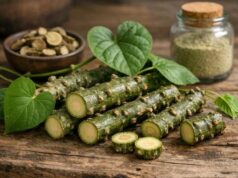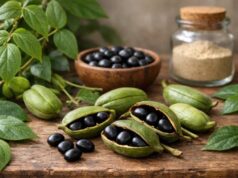
Guar gum is a soluble fiber made from the endosperm of the guar bean, Cyamopsis tetragonoloba, a drought-tolerant legume grown widely in India and Pakistan. Most people know it as a thickener in foods, but it also has a long history as a bulk-forming fiber ingredient in digestive and metabolic health products. What makes guar gum distinctive is its galactomannan structure, which absorbs water, forms a viscous gel, slows digestion, and changes how nutrients move through the gut.
That combination helps explain its main uses. Guar gum may modestly improve LDL cholesterol, blunt post-meal glucose spikes, and support bowel regularity. A related form, partially hydrolyzed guar gum, often called PHGG, is less thick and sometimes easier to tolerate, especially for constipation-prone or sensitive users. At the same time, this is not a casual supplement. Taken without enough water, guar gum can swell too early and create choking or obstruction risks. Older weight-loss claims are also much stronger than the evidence supports.
Used properly, guar gum is best understood as a functional soluble fiber, not a miracle remedy.
Core Points
- Guar gum is best supported for modest LDL lowering, post-meal glucose control, and fiber-based digestive support.
- Partially hydrolyzed guar gum is often easier to tolerate than standard guar gum because it is less viscous.
- Common supplemental ranges are about 5 to 15 g per day, usually split with meals and taken with at least 240 to 300 mL of water per dose.
- Avoid dry swallowing, because guar gum can expand before reaching the stomach and raise choking or blockage risk.
- People with swallowing problems, bowel narrowing, or a history of obstruction should avoid it unless specifically guided by a clinician.
Table of Contents
- What is guar gum
- Key ingredients and active compounds
- Does guar gum help cholesterol and blood sugar
- How to use guar gum
- How much guar gum per day
- Safety side effects and interactions
- What the research really shows
What is guar gum
Guar gum is a plant-derived soluble fiber extracted from the seeds of Cyamopsis tetragonoloba, also called cluster bean or guar bean. The plant itself is a legume, but the gum used in foods and supplements does not come from the edible pod in the same way that lentils or chickpeas are eaten. It comes from the seed endosperm, which is milled and refined into a powder rich in galactomannan, a water-loving carbohydrate that swells and thickens rapidly.
That thickening behavior explains why guar gum appears in so many different settings. In the food industry it helps stabilize sauces, frozen desserts, dairy alternatives, gluten-free baking mixes, and processed foods. In nutrition and digestive care, it is used as a fiber ingredient because its viscosity can slow stomach emptying, soften stools, and change the absorption pattern of carbohydrates and cholesterol-related compounds in the gut.
It is also useful to separate three forms that readers often confuse:
- Standard guar gum: highly viscous and strongly gel-forming
- Partially hydrolyzed guar gum, or PHGG: broken down into shorter chains, lower in viscosity, and usually easier to mix and tolerate
- Food-additive guar gum: used in tiny to moderate amounts in packaged foods mainly for texture, not as a therapeutic dose
This distinction matters. A person eating guar gum in a carton of ice cream is not getting the same exposure as someone mixing several grams of a fiber powder into water for bowel regularity or cholesterol support. Supplement-style intakes are much larger, and they behave differently.
Guar gum also sits in an unusual middle ground. It is not a classic herb in the aromatic or tincture sense, yet it is still plant-based and physiologically active enough to be used like a functional remedy. It belongs more in the soluble-fiber family than in the stimulant, sedative, or antimicrobial herb family. That is why it makes more sense to compare it with psyllium husk soluble fiber than with strongly pharmacologic botanicals.
Another important point is that guar gum is not absorbed intact. It acts mostly inside the digestive tract. Some of it forms a gel in the upper gut, while some reaches the colon and is fermented by bacteria. That local, mechanical, and metabolic action is the foundation of nearly all its benefits. It does not work because it enters the bloodstream as an active drug. It works because it changes the physical environment of digestion.
That makes guar gum practical, but it also sets limits. It can support digestion and metabolism from within the gut, yet it is not the kind of ingredient that should be expected to “detox,” melt fat, or treat disease on its own. Its best role is functional and supportive.
Key ingredients and active compounds
The central active component in guar gum is galactomannan, a long-chain polysaccharide built mainly from mannose with galactose side branches. This may sound technical, but the practical meaning is simple: galactomannan binds water aggressively and becomes thick. That physical property is more important than any exotic phytochemical story. Guar gum does not rely on alkaloids, volatile oils, or flavonoids in the way many herbs do. Its effects come mostly from fiber chemistry.
Galactomannan helps guar gum do four major things:
- Increase viscosity in the stomach and small intestine
- Slow the movement of nutrients toward absorption
- Change bile acid handling and cholesterol metabolism
- Provide fermentable substrate for some colonic bacteria
This is why standard guar gum can influence both bowel habits and metabolic markers. The gel formed by the fiber can delay carbohydrate absorption, which may reduce the sharpness of a post-meal glucose rise. It can also bind water and increase stool softness or bulk. At the same time, the thickness that creates benefit is also the main reason some users find standard guar gum hard to tolerate. It can feel gummy, heavy, or overly filling if taken in large amounts.
That is where partially hydrolyzed guar gum becomes important. PHGG is made by enzymatically cutting the original galactomannan into shorter segments. The result is still a soluble fiber, but one with much lower viscosity. It mixes more easily, feels lighter in the gut, and is often preferred in products aimed at constipation, gut comfort, or prebiotic support. Readers who compare fibers often notice that PHGG sits functionally somewhere between classic gel-forming fibers and more fermentable fibers such as inulin as a prebiotic supplement. It is not identical to either, but it helps explain why PHGG is often marketed for tolerance and stool normalization rather than for thickening foods.
Guar gum also contains trace protein fractions, and those matter for a different reason: allergy. The fiber itself is not a typical allergen in the way peanuts are, but residual proteinaceous compounds can trigger reactions in susceptible people. Clarified preparations may reduce that risk, though not eliminate it completely.
Unlike many plant products, guar gum’s “active ingredients” are not best understood as a list of many tiny compounds. The real active story is structural:
- molecular size
- degree of hydrolysis
- viscosity
- fermentability
- dose
- water exposure
That is why two guar products can behave very differently. A thick food-grade powder and a low-viscosity PHGG supplement may share the same plant origin, yet the user experience can be almost opposite. One thickens quickly and strongly. The other behaves more gently and predictably.
For readers, the key insight is that guar gum’s medicinal behavior is mostly physical and prebiotic, not stimulant or drug-like. Once you understand that, the benefits and the risks both make more sense.
Does guar gum help cholesterol and blood sugar
This is the most important benefits question, and the answer is a qualified yes. Guar gum can help, but its effects are usually modest, and the strongest outcomes are on LDL cholesterol and some aspects of glycemic control, not on weight loss or dramatic disease reversal.
For cholesterol, guar gum has some of its best evidence. Meta-analytic work suggests that supplementation can lower total cholesterol and LDL cholesterol in adults. The mechanism is plausible and fairly consistent: the viscous gel can interfere with bile acid reabsorption, which encourages the body to use more cholesterol to make new bile acids. Over time, that can lead to a meaningful but not medication-level improvement in lipid markers. The effect seems stronger when the fiber is used regularly and in doses high enough to matter, rather than as a trace additive in processed foods.
For blood sugar, the picture is a bit more mixed, but still encouraging. Guar gum can slow carbohydrate absorption and reduce the speed of the post-meal glucose rise. In people with type 2 diabetes, some studies suggest modest improvements in HbA1c, and higher intakes appear more likely to influence fasting glucose than very small doses. That said, results are not uniform, and the evidence is not strong enough to treat guar gum as a stand-alone glucose therapy. It is better viewed as a fiber tool that can support meal structure, especially when used with carbohydrate-containing meals.
Digestive benefits are also real, especially with PHGG:
- support for stool normalization
- reduced laxative use in some older adults
- improved bowel comfort in some constipation-prone users
- prebiotic shifts in gut bacteria and stool characteristics
These effects are often more relevant in daily life than the metabolic headlines. A product that makes bowel habits more predictable may do more for a person’s quality of life than a tiny change in lab values.
Satiety is another common selling point. Guar gum can increase fullness, partly because viscous fibers slow gastric emptying and create a more sustained sense of volume after eating. But fullness is not the same thing as clinically meaningful weight loss. In fact, the classic weight-loss evidence for guar gum is underwhelming. It may help some people feel less hungry, yet that has not translated into a dependable body-weight treatment. This is one reason it makes sense to compare guar gum with other fiber strategies, including flax fiber for daily digestive support, rather than with aggressive weight-loss products.
The realistic benefit list therefore looks like this:
- modest LDL reduction
- some smoothing of post-meal glucose response
- bowel regularity support, especially with PHGG
- possible satiety support
- prebiotic effects that may improve gut ecology
What it does not reliably do is produce major weight loss, replace diabetes treatment, or work quickly enough to justify exaggerated “results in days” claims. Guar gum helps most when it is used as a repeatable fiber intervention within a broader dietary pattern.
How to use guar gum
How guar gum should be used depends on the form. Standard guar gum and PHGG are not interchangeable in day-to-day handling. Standard guar gum thickens quickly, which can make it useful in cooking but awkward in a supplement routine. PHGG is less viscous and usually easier to mix into water, yogurt, soups, or smoothies without turning the drink into gel.
For ordinary wellness use, most people do better with PHGG because it is simpler to tolerate and easier to dose consistently. Standard guar gum may still be used, but it demands more attention to fluid and texture. A practical rule is to start with the gentlest form that matches the goal.
Common ways to use guar gum include:
- mixed into water and consumed promptly
- stirred into yogurt or kefir
- blended into smoothies
- added to soups or porridges
- incorporated into baked goods or gluten-free doughs
- taken as a measured supplement powder or sachet
If the goal is cholesterol or post-meal glucose support, taking the fiber with or shortly before meals often makes the most sense. If the goal is bowel regularity, consistent daily use matters more than exact meal timing. For constipation-prone users, PHGG is often easier to sustain than thick guar gum because it creates less heaviness in the glass and less abrupt fullness in the stomach.
A simple starter approach looks like this:
- Begin with a small amount once daily.
- Mix it into enough fluid so it does not become clumpy.
- Drink or eat it immediately after mixing.
- Increase gradually every few days if tolerated.
- Keep the rest of the day’s fluid intake adequate.
That last point is non-negotiable. Guar gum is not a dry powder to swallow casually. It needs water to move safely through the esophagus and stomach. People get into trouble when they treat it like a small capsule-style supplement instead of a swelling fiber.
It also helps to match the fiber to the use case. Someone seeking strong gel formation for a recipe may choose standard guar gum. Someone wanting daily gut support may prefer PHGG. Someone whose main goal is broader fiber diversity may do better rotating it with other fibers, much as they might rotate fenugreek seed-based digestive supports or food-based sources rather than relying on one supplement forever.
A few practical mistakes are worth avoiding:
- swallowing powder dry
- adding too much too fast
- taking it right before lying down
- using it as a substitute for evaluating real digestive symptoms
- assuming a food-thickening amount equals a therapeutic dose
The best use pattern is boring in the best sense of the word: measured, hydrated, gradual, and regular. Guar gum works when it becomes part of a system, not when it is taken impulsively as a quick fix.
How much guar gum per day
There is no single perfect daily dose, because the useful range depends on the form, the goal, and the person’s tolerance. Standard guar gum is more viscous and often harder to take in large amounts, while PHGG is easier to tolerate and may be used at lower-feeling but still effective doses.
For adults, practical supplemental ranges often look like this:
- Standard guar gum: about 5 to 15 g per day, usually divided into 2 or 3 doses
- PHGG: often about 3 to 6 g per day for gut comfort or bowel support, though some studies use 5 g daily and others use higher amounts
- Meal-based glycemic support: often smaller divided doses with carbohydrate-containing meals
- Lipid support: often toward the middle to upper part of the range, provided it is tolerated
A cautious starting pattern is usually better than chasing a target dose on day one. Many people start around 2 to 3 g once daily, then increase every few days. That is especially true for standard guar gum, which can cause gas, cramping, or an unpleasantly thick texture if started too aggressively.
Here is a workable escalation pattern:
- Start with 2 to 3 g once daily.
- Hold for 3 to 4 days and assess tolerance.
- Increase to twice daily if needed.
- Add a third divided dose only if there is a clear reason.
- Keep each dose paired with at least 240 to 300 mL of water.
For PHGG, the dosing feel is often simpler. In one randomized trial in long-term care residents, 5 g daily mixed with 200 mL water was used for four weeks and reduced laxative reliance. In a 2023 study in constipation-prone healthy adults, 3 g/day and 5 g/day were both investigated over eight weeks, with the 5 g/day group showing clearer improvement in some outcomes. These are useful reference points because they suggest that more is not always necessary, especially for bowel-focused goals.
Timing also matters:
- take with meals for cholesterol or glucose goals
- take at the same time each day for bowel regularity
- separate it from important oral medications by about 2 hours when possible
- avoid taking a thick fiber dose immediately before bed
One more caution: marketing often makes guar gum look like a weight-loss tool. That can push people toward oversized doses. The better reading of the evidence is that higher doses increase the chance of GI side effects faster than they increase the odds of meaningful fat loss.
So the best dosage advice is not “take as much as you can tolerate.” It is “use the lowest dose that achieves the specific goal, increase slowly, and respect the role of water.” That is how guar gum stays useful instead of becoming a problem.
Safety side effects and interactions
Guar gum is generally safe for many adults when it is used correctly, but the mistakes matter. Most side effects are digestive and dose-related. The most common are:
- gas
- bloating
- abdominal cramps
- loose stools or diarrhea
- a heavy feeling in the stomach
- reduced appetite that feels unpleasant rather than helpful
These symptoms usually reflect one of three things: too much too soon, too little water, or the wrong form for the person. Standard guar gum is much more likely than PHGG to feel uncomfortably thick or overly filling.
The most important serious risk is choking or gastrointestinal obstruction. Guar gum swells in contact with water. If it is swallowed dry, taken with too little fluid, or used by someone with swallowing difficulty or an esophageal narrowing, it can expand before reaching the stomach safely. Historical high-dose weight-loss products containing guar gum were particularly problematic for this reason, and guar gum is not considered a sound weight-loss treatment.
People who should avoid guar gum unless specifically cleared include:
- those with swallowing disorders
- people with esophageal narrowing
- anyone with bowel obstruction, stricture, or severe dysmotility
- individuals recovering from certain bowel surgeries
- people who cannot reliably take extra fluid with fiber
- those with a known guar or related gum allergy
Interactions are mostly mechanical rather than biochemical. Because guar gum forms a gel and slows absorption, it can interfere with how some oral medicines are absorbed. Metformin is the best-known example from older research, but the broader lesson is that other important oral medications may also be affected. A cautious general rule is to separate guar gum from prescription drugs by about 2 hours before or after, unless a clinician or pharmacist gives more specific instructions.
Special populations need extra care:
- Pregnancy: not automatically unsafe, but supplementation should still be discussed if symptoms or other medicines are involved
- Older adults: constipation benefits can be real, but so can dehydration and swallowing risks
- Children: food-level exposure is different from deliberate supplementation; unsupervised use is a poor idea
- Infants and young children on special medical foods: safety data are less reassuring than for the general population in food-additive assessments
It is also worth being honest about the safety divide between food use and supplement use. Safety reviews found no general safety concern for guar gum as a food additive in the usual population, but that does not mean every supplement pattern is safe or smart. Food-level exposure is not the same as bolus dosing with a fiber powder.
Warning signs that should stop use and prompt medical attention include:
- difficulty swallowing
- chest pain after a dose
- vomiting
- severe abdominal pain
- inability to pass stool or gas
- signs of allergy such as wheeze, swelling, or rash
Used with patience and enough fluid, guar gum can be a sensible fiber tool. Used hastily or in the wrong person, it becomes a classic example of why “natural” does not mean low-risk.
What the research really shows
The guar gum evidence base is better than many niche supplement ingredients, but it is still highly dependent on form, dose, and outcome. The strongest conclusions are not flashy.
What looks most credible
- modest lowering of total cholesterol and LDL cholesterol
- modest help with HbA1c and some glycemic outcomes in type 2 diabetes, especially at higher doses
- bowel support and lower laxative need in some constipation-focused settings
- better stool form and some prebiotic effects with PHGG
What looks plausible but not settled
- broader microbiome benefits that translate into lasting clinical gains
- routine use for IBS across all subtypes
- meaningful long-term appetite control
What looks overstated
- major weight-loss effects
- “detox” claims
- disease treatment outside the context of diet and medical care
- the idea that thicker or higher-dose guar gum is automatically better
One reason the literature can be confusing is that studies often pool together standard guar gum and PHGG even though they behave differently. Standard guar gum is more viscous and often more difficult to tolerate. PHGG is lower in viscosity, often easier to take, and more frequently used in constipation and gut-health studies. When readers see a benefit headline, they should always ask which form was used.
Another challenge is that supplement trials usually test guar gum in grams per day, whereas ordinary food exposure is much lower. That means positive supplement outcomes do not prove that trace guar gum in packaged foods will create the same effect. It also means safety at food-additive exposure cannot simply be mapped onto large deliberate doses.
The research also supports an important negative conclusion: guar gum is not a dependable weight-loss therapy. That is valuable because weight-loss marketing has historically pushed the ingredient far beyond what its risk-benefit profile can justify.
The most balanced summary is this:
- Guar gum is a legitimate soluble-fiber intervention.
- Its best supported benefits are metabolic and digestive, not dramatic.
- PHGG often has the practical advantage for tolerance and bowel use.
- Proper dosing and water intake are essential parts of safety.
- The evidence supports adjunctive use, not miracle-use.
That is a good place to land. Guar gum does not need to be extraordinary to be useful. As a carefully used fiber, it can support cholesterol management, post-meal glucose control, and bowel regularity. But it works best when it is matched to the right person, the right form, and the right expectations.
References
- The effects of guar gum supplementation on lipid profile in adults: a GRADE-assessed systematic review, meta-regression and dose-response meta-analysis of randomised placebo-controlled trials 2023 (Systematic Review and Meta-Analysis)
- The effects of guar gum supplementation on glycemic control, body mass and blood pressure in adults: A GRADE-assessed systematic review and meta-analysis of randomized clinical trials 2023 (Systematic Review and Meta-Analysis)
- Effectiveness of Partially Hydrolyzed Guar Gum in Reducing Constipation in Long Term Care Facility Residents: A Randomized Single-Blinded Placebo-Controlled Trial 2022 (RCT)
- Re‐evaluation of guar gum (E 412) as a food additive 2017 (Safety Opinion)
- Guar gum for body weight reduction: meta-analysis of randomized trials 2001 (Meta-Analysis)
Disclaimer
This article is for educational purposes only and does not replace personalized medical advice, diagnosis, or treatment. Guar gum and partially hydrolyzed guar gum can affect digestion, medication absorption, and hydration needs, and they may be unsafe for people with swallowing disorders, bowel narrowing, or certain gastrointestinal conditions. Anyone considering therapeutic use, especially for diabetes, constipation, cholesterol management, pregnancy, or use alongside prescription medicines, should consult a qualified clinician or pharmacist first.
If this article was useful, please share it on Facebook, X, or any platform you prefer so more readers can find practical, evidence-aware health information.