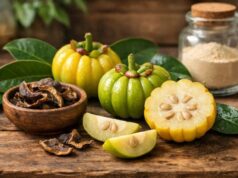
Guava, Psidium guajava, is a tropical fruit tree valued not only for its fragrant fruit but also for its leaves, which have a long place in traditional medicine. The ripe fruit is sweet-tart, aromatic, and unusually rich in vitamin C, fiber, and carotenoids. The leaves, by contrast, are more often prepared as tea or decoction and are studied for their polyphenols, especially quercetin-rich compounds that may help explain guava’s reputation in digestive and metabolic support.
That dual identity makes guava more interesting than many fruit-based remedies. It is both a practical food and a medicinal plant. The fruit fits easily into daily meals for immune support, digestion, and general nutrient density, while the leaves are more often discussed for diarrhea, post-meal glucose control, and gentle antimicrobial activity. At the same time, the evidence is uneven. Guava fruit is easy to recommend as food, but guava leaf extracts and teas need more careful interpretation, especially when used for a health condition.
Used well, guava is best approached as a nutrient-rich fruit first and a promising but still selective herbal remedy second.
Quick Overview
- Guava fruit is rich in vitamin C, fiber, and plant antioxidants that support everyday nutrition and digestive health.
- Guava leaves are traditionally used for diarrhea and are being studied for glucose and lipid support.
- A practical food-first range is about 1 to 2 fresh guavas daily, or roughly 100 to 250 g of fruit.
- Guava leaf tea or extract may affect blood sugar, so people using diabetes medicines should be careful.
- People who are pregnant, breastfeeding, or treating significant diarrhea in a child should avoid self-prescribing concentrated guava leaf remedies.
Table of Contents
- What is guava
- Key ingredients and active compounds
- Guava benefits and uses
- How to use guava
- How much guava per day
- Safety side effects and interactions
- What the research really shows
What is guava
Guava is the fruit of Psidium guajava, a small evergreen tree in the myrtle family. It grows widely in tropical and subtropical regions and is prized for its adaptability, fragrant fruit, and medicinal leaves. Depending on the variety, the fruit may have white, pink, yellow, or red flesh, and the flavor can range from softly sweet to sharply aromatic. Some cultivars are eaten fresh, while others are better for juice, jam, stewed fruit, or savory sauces.
What makes guava unusual is that several parts of the plant are used in different ways. The fruit is treated mostly as food. The leaves are used more like a household medicinal herb, especially in teas and decoctions for digestive complaints. The bark and roots also appear in traditional systems, but the fruit and leaves are the parts most relevant for modern readers.
This difference matters. When someone says “guava is good for health,” they may be referring to two very different things:
- ripe fruit used as a high-nutrient food
- guava leaf tea or extract used for digestive or metabolic support
The fruit is easy to understand from a nutrition perspective. It provides fiber, vitamin C, folate, potassium, and several antioxidant pigments. The leaves belong more to the herbal-medicine side of the plant. They contain flavonoids, tannins, phenolic acids, and other compounds linked with astringent, antimicrobial, and enzyme-inhibiting effects.
Guava also has a strong traditional reputation. In many regions, the fruit is seen as strengthening and restorative, while the leaves are used for diarrhea, stomach upset, oral rinses, and mild inflammatory complaints. Those traditional uses help guide research, but they are not all equally well proven. Some have limited human support, while others still rely mainly on laboratory or animal findings.
As a food plant, guava fits into the same broad conversation as other vitamin C-rich tropical fruits. The difference is that guava also brings a substantial herbal tradition through its leaves. That makes it more versatile than many fruits, but it also makes the evidence harder to summarize neatly. Readers need to know which part of the plant is being discussed before deciding whether guava is being used as food, tea, supplement, or remedy.
In everyday life, that is the simplest way to approach it: fruit for nutrition, leaves for selected traditional and experimental uses. Once that distinction is clear, the benefits, limitations, and safety questions become much easier to judge.
Key ingredients and active compounds
Guava’s active profile changes depending on whether you are eating the fruit or using the leaves. The fruit is nutritionally rich and works mainly as a functional food. The leaves are more concentrated in medicinal-style phytochemicals and are the main source of the plant’s antidiarrheal and glucose-related reputation.
In the fruit, the most important components include:
- Vitamin C, which is one of guava’s nutritional signatures
- Dietary fiber, especially pectin and other soluble fibers that support bowel regularity and may help smooth post-meal glucose response
- Carotenoids, which contribute to color and antioxidant activity
- Potassium and folate, which add to the fruit’s general nutrient density
- Polyphenols, which support its antioxidant profile
These compounds help explain why guava is often described as immune-supportive, digestive-friendly, and useful in everyday cardiometabolic eating patterns. Still, the fruit behaves more like a nutritious whole food than a concentrated botanical medicine. Its effects are likely to build gradually through regular intake.
The leaves are chemically more complex in a medicinal sense. Research repeatedly highlights:
- Quercetin and related flavonoids
- Guaijaverin
- Avicularin
- Catechin and epicatechin
- Gallic acid and chlorogenic acid
- Tannins and phenolic acids
These compounds are thought to contribute to guava leaf’s astringent, antimicrobial, antioxidant, enzyme-inhibiting, and antispasmodic effects. Quercetin is especially important because it appears repeatedly in guava leaf chemistry and is often connected to the leaf’s traditional digestive uses. Readers interested in quercetin’s broader supplement profile will recognize why guava leaves attract interest in metabolic and inflammatory research.
Tannins deserve special attention too. They help explain why leaf preparations are so often associated with diarrhea relief. Astringent compounds can reduce intestinal secretions and may help calm irritated mucosal surfaces. That does not mean guava leaf tea is a universal cure for infectious diarrhea, but it does give a plausible basis for one of its oldest uses.
There is also an important difference in how the plant parts act. Fruit compounds are delivered in a food matrix that includes water, fiber, sugars, and minerals. Leaf extracts are usually more pharmacologically pointed. They are also more variable. A tea, decoction, capsule, or ethanol extract can differ sharply in potency and in the exact compounds emphasized.
So the “key ingredients” in guava are really two stories:
- the fruit’s vitamins, fiber, and antioxidant pigments
- the leaves’ flavonoids, tannins, and phenolic compounds
That is why guava can appear in both a nutrition conversation and an herbal medicine conversation without fully behaving like either one alone. It is a food plant with a medicinal leaf, and the chemistry reflects that split.
Guava benefits and uses
The most reliable benefits of guava depend on the plant part. Guava fruit is most useful as a nutrient-dense food, while guava leaves show more targeted promise for digestive and metabolic uses. Keeping those roles separate helps avoid exaggerated claims.
The fruit’s strongest practical benefits include general nutrition, digestive support, and antioxidant intake. Its fiber helps support bowel regularity and satiety, while its vitamin C and polyphenols make it a useful fruit for people trying to improve overall diet quality. This is especially meaningful in diets that need more fruit diversity or more fiber-rich snacks in place of processed sweets.
Guava fruit may also have modest cardiometabolic value. Small human studies suggest possible benefits for lipid markers, blood pressure, and post-meal glucose handling, particularly when guava replaces less favorable foods. But this should be understood as dietary support, not as treatment. A fruit-based habit can help a healthy eating pattern, yet it does not behave like a prescription therapy.
The leaves are different. Their most established traditional use is for diarrhea and digestive upset. This is the guava benefit with the clearest historical continuity and some meaningful human research behind it. Guava leaf preparations have been studied for antibacterial, antispasmodic, and anti-secretory effects, which helps explain why they are so often used in acute diarrhea settings.
Leaf preparations are also studied for:
- post-meal glucose control
- mild lipid support
- antioxidant and anti-inflammatory effects
- oral care applications, especially where an astringent or antimicrobial rinse is helpful
These are promising areas, but they are not equally strong. The glucose and lipid findings are interesting, especially in mild metabolic dysfunction, yet the human studies are still relatively small. That means guava leaf tea may be worth considering as supportive care, but not as a replacement for diabetes treatment or cholesterol therapy.
One of guava’s most realistic strengths is how flexible it is in daily use:
- fresh fruit for snacks and breakfast
- blended fruit in smoothies
- stewed or poached fruit in savory or sweet dishes
- leaf tea for selected digestive uses
- leaf-based rinses in traditional oral care
This mix of food and remedy gives guava an unusual practical range. For people interested in plant-based wellness, it offers more than a single narrow use. At the same time, the breadth of uses can make the plant sound more proven than it is. A wide traditional reputation does not guarantee equally strong modern evidence for every claim.
The best summary is that guava helps most in two lanes. First, the fruit supports health as part of a nutrient-rich diet. Second, the leaves may offer selective support for diarrhea and some metabolic markers. That balanced view is more useful than calling guava a cure-all.
How to use guava
Guava is easy to use, but the method should match the goal. If the aim is better nutrition, the fruit is the best place to start. If the aim is a more traditional digestive remedy, the leaves are usually the relevant part.
For the fruit, common uses include:
- eating it fresh, with or without the peel
- slicing it into fruit bowls or salads
- blending it into smoothies
- simmering it into sauces, jams, or chutneys
- adding it to yogurt, oats, or cottage cheese
- combining it with lime, chili, or herbs in savory dishes
The fruit’s seeds are usually edible, though some people with sensitive digestion prefer to strain them out in juices or purees. Ripeness matters. Firmer fruit has a more astringent taste and may work better in cooked uses, while softer fruit is sweeter and easier to eat raw.
Guava leaves are typically used in one of three ways:
- tea or infusion
- decoction, which is stronger and usually simmered
- traditional rinse or gargle
For a basic home tea, dried or fresh leaves are steeped in hot water and used for short-term digestive support. A decoction is stronger, usually made by boiling the leaves rather than simply steeping them. In clinical work on acute diarrhea, a measured guava leaf decoction was used rather than casual tea, which is one reason homemade preparations should not be treated as identical to study doses.
A practical home approach often looks like this:
- Wash fresh leaves well, or use clean dried leaves from a reliable source.
- Use a mild tea for ordinary digestive experimentation.
- Reserve stronger decoctions for short-term use, not indefinite daily intake.
- Stop if the preparation causes nausea, cramping, or unusual symptoms.
- Seek medical care rather than escalating home use if diarrhea is severe or prolonged.
Guava also combines well with other kitchen botanicals. For example, a mild leaf tea may be paired with ginger in digestive tea blends when the goal is warmth and stomach comfort, though the blend should still be kept gentle.
One important caution is that guava leaf preparations should not replace oral rehydration or medical evaluation when someone has fever, bloody stool, signs of dehydration, or persistent diarrhea. A fruit or leaf remedy may support comfort, but it is not a substitute for proper care in a significant illness.
The most effective use pattern is therefore very simple: fruit for regular diet quality, leaves for selective short-term herbal use. Guava works best when it stays close to those roles instead of being stretched into a universal remedy for every complaint.
How much guava per day
There is no single official medicinal dose for guava because the plant is used in several forms. The fruit is eaten as food, while the leaves are taken more like a tea or herbal preparation. The right amount depends on which part is being used and why.
For the fruit, a practical adult range is:
- 1 to 2 fresh guavas daily
- roughly 100 to 250 g of fruit per day
- or a similar amount divided across meals and snacks
That amount is enough to make guava meaningful in a diet without turning it into an excessive or unrealistic staple. Most healthy adults tolerate this range easily. For people increasing fruit fiber intake for the first time, starting with half a fruit to one fruit per day may be more comfortable.
For leaf tea, there is less standardization. Traditional home use often falls into a mild range such as:
- 1 cup of tea made from about 1 to 2 g dried leaves
- or several fresh leaves steeped in hot water
- used 1 to 3 times daily for short-term purposes
This kind of use is common, but it should still be seen as traditional rather than precisely evidence-based.
For acute diarrhea, clinical research used a more specific decoction approach. In one adult trial, the most effective group used a decoction prepared from about 7.4 g leaf powder daily, divided into 3 doses, over a short course. That is helpful as a research reference, but it should not be copied casually for children, for severe diarrhea, or for long unsupervised use.
A useful way to think about guava dosage is by category:
- Food use: fruit several times per week or daily in moderate servings
- Gentle herbal use: leaf tea for short-term digestive support
- Research-style therapeutic use: measured leaf decoction under structured conditions
Timing also matters. Fruit can be eaten at any time, though some people find it more comfortable with meals rather than on an empty stomach. Leaf tea is usually taken after meals or between meals, depending on the reason for use. For diarrhea-focused use, short repeated doses are more traditional than a single large serving.
People using guava for glucose support should be extra cautious with concentrated leaf preparations, especially if they already take medicine that lowers blood sugar. Even when a plant seems mild, repeating it around every meal can make the effect more noticeable than expected.
The safest rule is straightforward: use food-level amounts freely if tolerated, and use leaf preparations more deliberately, in shorter windows, and with a clearer reason. Guava is most helpful when dosage matches the form.
Safety side effects and interactions
Guava fruit is generally safe for most people when eaten as food. Side effects are usually mild and mostly related to fiber or individual tolerance. Large amounts may cause bloating, fullness, or looser stools in some people, especially if the diet is usually low in fruit and fiber.
Guava leaf preparations deserve more caution than the fruit. That does not mean they are unsafe by default, but they are more pharmacologically active and more likely to matter if someone is taking medicine or using them for a health condition.
Possible side effects can include:
- mild stomach upset
- nausea from strong tea or decoction
- constipation or stool changes if fluid intake is poor
- low blood sugar symptoms in susceptible users
- rare allergic or sensitivity reactions
The main groups who should be more careful include:
- people using diabetes medicines or insulin
- those with recurrent low blood sugar
- pregnant or breastfeeding individuals, because strong safety data for leaf preparations are limited
- children with diarrhea, because self-treatment can delay proper rehydration and care
- anyone with a history of plant allergies to guava or related preparations
Interaction risk is most relevant with guava leaves, not the fruit. Leaf extracts and guava leaf tea may affect carbohydrate absorption and glucose handling, so combining them with glucose-lowering drugs can create an additive effect. The available data suggest guava leaf tea may have lower interaction potential than grapefruit juice for some metabolic pathways, but “lower” does not mean “none.” That is especially important for people taking several medicines.
A practical concern is also overconfidence. Because guava is both familiar and edible, some readers assume its leaf remedies are automatically gentle. But a concentrated decoction taken three times daily is not the same thing as eating fruit after lunch. The more it is used like medicine, the more it should be treated like medicine.
There are also situation-based red flags. Do not rely on guava leaf tea alone when diarrhea comes with:
- fever
- blood in the stool
- vomiting that prevents hydration
- signs of dehydration
- significant abdominal pain
- symptoms lasting more than a few days
People exploring guava for blood sugar support should also remember that it belongs in the same caution zone as other glucose-aware botanicals, such as bitter melon for glycemic support. The goal is support, not medication substitution.
In short, guava fruit is a low-risk food for most adults. Guava leaves are more selective. They may be helpful, but they ask for more attention to dose, purpose, and the person using them.
What the research really shows
The guava evidence base is promising, but it is not uniform. The fruit and the leaves are often discussed together, even though the research quality and practical uses differ. That can make guava sound more established than it really is.
The fruit side of the evidence is easier to interpret. Guava is clearly a nutrient-dense fruit with useful levels of vitamin C, fiber, and antioxidant compounds. It belongs comfortably in a healthy diet, and small human studies suggest possible benefits for lipid markers, blood pressure, and glucose handling. Still, those studies are not strong enough to turn guava fruit into a therapeutic recommendation for diabetes or dyslipidemia. The best evidence supports it as a healthful food, not as treatment.
The leaf side is more medicinal and more complicated. Laboratory studies and animal models are abundant. They suggest antimicrobial, antidiarrheal, enzyme-inhibiting, antioxidant, and anti-inflammatory actions. Human evidence exists, but it is much smaller. The most believable clinical uses are:
- short-term support in uncomplicated acute diarrhea
- mild support for post-meal glucose control
- possible benefit in borderline lipid abnormalities
Even there, the language should stay modest. The diarrhea findings are encouraging, especially because one adult trial used a defined decoction and reported a shorter return to normal stool patterns. But that does not automatically establish guava leaf decoction as a universal first-line treatment in every setting. The metabolic findings are also encouraging, but they are not large enough or consistent enough to replace standard care.
Another important limitation is product variability. A fresh leaf tea, dried leaf infusion, ethanolic extract, and commercial capsule are not the same exposure. Studies using one preparation do not necessarily validate another. This is a common problem in herbal research, and guava is no exception.
The strongest evidence-based summary looks like this:
- The fruit is well supported as a nutritious functional food.
- The leaves have credible traditional use and emerging clinical support for diarrhea and some metabolic applications.
- Most of the dramatic claims still rely on preclinical research.
- More standardized human trials are needed before guava leaf products can be discussed with high confidence.
That is actually a useful conclusion. It means guava does not need hype to matter. The fruit already deserves a place in a healthy diet, and the leaves may offer selected short-term benefits when used thoughtfully. The plant is promising, but the honest version of the story is more practical than miraculous.
References
- Guava (Psidium guajava): A brief overview of its therapeutic and health potential 2025 (Review)
- Guava (Psidium guajava L.) Leaves: Nutritional Composition, Phytochemical Profile, and Health-Promoting Bioactivities 2021 (Review)
- Antidiarrheal effect of Psidium guajava L. extract in acute diarrhea: a systematic review 2024 (Systematic Review)
- A randomized open label efficacy clinical trial of oral guava leaf decoction in patients with acute infectious diarrhoea 2020 (Clinical Trial)
- Effect of Guava in Blood Glucose and Lipid Profile in Healthy Human Subjects: A Randomized Controlled Study 2016 (RCT)
Disclaimer
This article is for educational purposes only and is not a substitute for medical advice, diagnosis, or treatment. Guava fruit is generally safe as food, but guava leaf tea, decoctions, and extracts may affect blood sugar and should not be used as a replacement for proper care in diabetes, severe diarrhea, or other medical conditions. Anyone who is pregnant, breastfeeding, giving herbal remedies to a child, or taking prescription medicines should speak with a qualified clinician before using concentrated guava leaf products.
If this article was helpful, please share it on Facebook, X, or your preferred platform so more readers can find balanced, useful plant-health information.