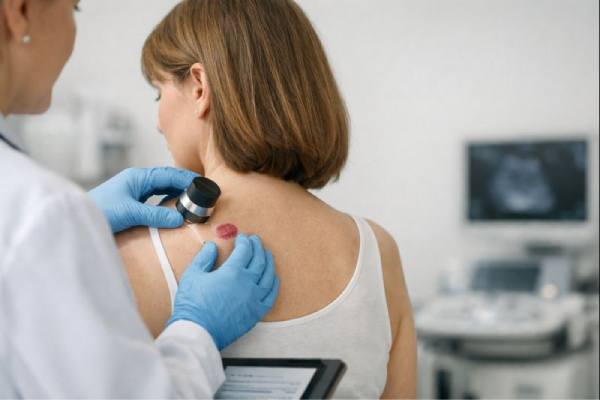
A haemangioma is a common growth made up of extra blood vessels. Many people first hear the word when a bright red “strawberry mark” appears on a baby’s skin, but haemangiomas can also be deeper, bluish, or (more rarely) occur inside the body. The most important thing to know is that most infant haemangiomas follow a predictable timeline: they grow fastest early in life, then gradually shrink over years. A smaller number need treatment—usually because of location (near the eye, nose, lip, or airway), ulceration, rapid expansion, or the risk of permanent skin change. This guide explains what haemangiomas are, why they happen, what symptoms to watch for, how clinicians confirm the diagnosis, which treatments work best today, and how to care for a haemangioma day to day with confidence.
Table of Contents
- What is a haemangioma and why it grows?
- What causes haemangiomas and who gets them?
- First symptoms, warning signs, and complications
- How doctors diagnose haemangioma
- Treatments that work and what to expect
- Day-to-day care, follow-up, and when to seek help
What is a haemangioma and why it grows?
“Haemangioma” is a broad term for a benign (non-cancerous) overgrowth of blood vessels. In everyday clinical use, many people mean an infantile haemangioma—the most common vascular tumour of infancy. These often show up in the first weeks of life, expand for a period, then slowly shrink. That natural pattern is one reason clinicians may recommend watchful waiting for small, low-risk lesions.
Haemangiomas are usually described by depth and pattern:
- Superficial (capillary) haemangiomas: bright red, raised, and often called “strawberry” haemangiomas.
- Deep haemangiomas: sit under the skin, appearing bluish or like a soft lump.
- Mixed haemangiomas: have both superficial and deep parts.
- Focal vs segmental: focal lesions are more localized; segmental lesions cover a broader region and are more likely to be linked with complications or associated findings.
It helps to separate haemangiomas from vascular malformations (abnormal vessels present from birth that grow in proportion with the child and do not follow the same “grow-then-shrink” course). This distinction matters because the evaluation and treatment plan can be different.
A typical infantile haemangioma has three phases:
- Early growth (proliferation): fastest growth is usually in the first 1–3 months of life, and many finish most growth by about 5 months. Some deeper lesions keep changing longer.
- Plateau: growth slows and stabilizes.
- Involution (shrinkage): the lesion gradually softens and fades over several years.
Even after a haemangioma shrinks, it may leave residual skin changes such as tiny visible vessels (telangiectasia), extra loose skin, or a “puffy” fatty feel. That is why, for certain locations (especially the face), early treatment can be less about urgency and more about preventing a long-term mark that is harder to reverse later.
Haemangiomas can also occur internally. A key example in infants is hepatic haemangioma (in the liver), which may be discovered because of multiple skin haemangiomas, a large abdominal mass, or symptoms related to heart strain or thyroid hormone changes. Internal haemangiomas require tailored monitoring, and sometimes a multidisciplinary team.
What causes haemangiomas and who gets them?
No single cause explains every haemangioma. Most infantile haemangiomas appear sporadically, meaning there is not a clear inherited pattern in most families. Current understanding points to a combination of developmental signals, local tissue factors, and blood-vessel growth pathways that become “too active” in a specific area.
Several risk factors show up repeatedly in clinical studies and practice. The strongest and most practical ones to know are:
- Female sex: infantile haemangiomas are more common in girls than boys.
- Prematurity: babies born early have a higher risk.
- Low birth weight: risk rises as birth weight drops.
- Multiple gestation: twins and triplets have higher rates than singletons.
- Placental and pregnancy factors: certain placental abnormalities and pregnancy complications are associated with a higher chance, although these links do not mean the parent “caused” the haemangioma.
Why would prematurity and low birth weight matter? One leading idea is that tissues that experienced relative low-oxygen stress during development may send stronger “grow more vessels here” signals after birth. That does not mean a parent can prevent a haemangioma by changing routine behaviours during pregnancy. In most cases, there is nothing a family could have done differently.
It is also important to clarify what does not typically cause a haemangioma:
- Routine vaccinations do not cause haemangiomas.
- Minor bumps or pressure on the skin do not create them.
- Most haemangiomas are not linked to anything a parent ate, touched, or used during pregnancy.
Some haemangiomas are part of broader patterns that deserve a closer look. For example:
- Large segmental haemangiomas on the face/scalp can be associated with a group of findings known as PHACE (a pattern that can involve brain, arterial, heart, and eye differences).
- Large segmental haemangiomas of the lower body can be linked with spinal or urogenital anomalies in certain syndromic patterns.
These are not common outcomes, but they are the reason clinicians take location and distribution seriously. A small focal haemangioma on the trunk is usually straightforward. A broad plaque-like haemangioma in a specific distribution may prompt targeted screening—not because it is dangerous by itself, but because it can be a visible clue to something else worth checking.
Finally, some lesions that look like “haemangiomas” are actually different entities (other vascular tumours or malformations). If a lesion behaves unusually—present fully formed at birth and rapidly shrinking, not growing at all, or enlarging aggressively—clinicians may use imaging or specialist input to make sure the label is correct.
First symptoms, warning signs, and complications
Many haemangiomas start subtly. Parents often notice a pale patch, a faint pink spot, or a small bruise-like area that becomes more obvious over days to weeks. As growth speeds up, superficial lesions turn brighter red and more raised. Deep lesions may look like a bluish swelling or a soft lump under normal-looking skin.
Common features you might see include:
- Color change: pink to bright red (superficial) or bluish (deep).
- Texture change: a flat spot becomes raised, firmer, or “fuller.”
- Size change: fastest growth usually happens early in infancy.
- Warmth: some lesions feel slightly warmer than surrounding skin.
Most haemangiomas are harmless, but certain locations and behaviours deserve prompt medical review because they can affect function or leave more lasting change.
Warning signs that should trigger an earlier visit:
- Near the eye: risk to vision if the lid is pushed down or the eye is distorted.
- On the lip, nose, or ear: higher chance of ulceration, bleeding, and long-term shape changes.
- In a “beard” distribution (chin/neck area): raises concern for possible airway involvement.
- Rapid expansion or a very large lesion: especially in the first months of life.
- Ulceration: an open sore on the haemangioma—often painful, prone to infection, and more likely to scar.
- More than five skin haemangiomas: can be a clue to possible internal haemangiomas (often the liver), which may warrant screening.
Potential complications vary by type and location:
- Ulceration: most common complication; can cause significant pain and may leave scarring.
- Bleeding: usually minor and controllable with pressure, but ulcerated lesions can ooze or bleed with friction.
- Infection: an ulcer can become infected, especially in diaper or skin-fold areas.
- Functional impairment: vision issues near the eye, feeding problems on the lip, hearing issues near the ear canal, or breathing problems if the airway is involved.
- Cosmetic and psychosocial impact: a visible facial lesion can affect social interactions and family stress, even when medically safe.
For internal haemangiomas (especially hepatic haemangiomas in infants), complications can include:
- High-output heart strain: very vascular lesions can increase blood flow demands on the heart.
- Hypothyroidism in some cases: certain hepatic haemangiomas can affect thyroid hormone balance, which is why clinicians sometimes monitor thyroid function in complex cases.
- Abdominal fullness or poor feeding: if the liver is enlarged.
One nuance that matters: a rare clotting complication called Kasabach–Merritt phenomenon is typically linked to specific vascular tumours (not the usual infantile haemangioma). That is why accurate diagnosis is important when a lesion is unusually firm, painful, or associated with low platelets or bruising.
How doctors diagnose haemangioma
Most haemangiomas—especially common infantile skin haemangiomas—are diagnosed clinically, meaning a clinician can identify them by history and examination without tests. The “story” is often the biggest clue: a lesion that appears in early weeks, grows quickly for a few months, then stabilizes fits the classic pattern.
A focused evaluation usually includes:
- Age at appearance: present at birth versus appearing weeks later.
- Speed of change: rapid early growth is typical for infantile haemangioma.
- Location and distribution: face, airway risk zones, diaper area, and segmental patterns get extra attention.
- Depth: superficial, deep, or mixed.
- Complications: ulceration, bleeding, pain, or functional effects (vision, feeding, breathing).
- Photographs over time: serial photos taken in similar lighting can be surprisingly useful for tracking growth.
When imaging is used, clinicians typically choose based on the question they are trying to answer:
- Ultrasound (often with Doppler): common first test for deeper lumps, uncertain diagnosis, or to assess blood flow. It is painless and does not use radiation.
- MRI: used when the lesion is deep, extensive, near critical structures, or when the diagnosis is uncertain. MRI helps map the size and relationships to nerves, muscles, and airway structures.
- Other tests: selected blood work may be used for internal haemangiomas (for example, monitoring anemia, heart strain indicators, or thyroid function in certain hepatic cases).
Specific scenarios that often prompt targeted screening:
- Large segmental facial haemangioma: clinicians may consider evaluation for associated brain, arterial, heart, or eye findings depending on the pattern and exam.
- Suspected airway involvement: symptoms like noisy breathing (stridor), persistent cough, or feeding-related breathing difficulty may lead to airway evaluation by specialists.
- Multiple cutaneous haemangiomas: may prompt an abdominal ultrasound to look for liver involvement, especially in young infants.
Biopsy (removing a small sample) is rarely needed for a typical haemangioma. It is generally reserved for lesions that do not behave as expected, have unusual firmness, cause unexplained pain, or raise concern for a different vascular tumour.
A practical way to think about diagnosis is that it is not only about naming the lesion—it is also about risk stratification. Two haemangiomas with the same diagnosis can have very different care plans depending on:
- location (eye versus back),
- growth trend (stable versus rapidly expanding),
- skin integrity (intact versus ulcerated), and
- whether there are signs of internal involvement.
That is why early assessment—often within the first month for higher-risk patterns—can meaningfully change outcomes.
Treatments that work and what to expect
Treatment depends on risk, location, symptoms, and the likelihood of lasting skin changes. Many haemangiomas are best managed with observation, especially if they are small, not ulcerated, and not on high-impact areas of the face.
When treatment is needed, modern care most often centers on beta-blockers, medicines that reduce the signals that support haemangioma growth.
Common treatment approaches include:
- Watchful waiting (active observation): appropriate for many low-risk lesions. This is not “do nothing.” It includes scheduled follow-ups during the growth window, tracking photos, and clear instructions on when to return sooner.
- Topical timolol: a beta-blocker applied to the skin, often used for small, thin, superficial haemangiomas. It may be applied once or twice daily depending on the clinician’s plan. Because it can absorb through skin (especially broken skin), it should be used exactly as prescribed.
- Oral propranolol: first-line systemic treatment for higher-risk haemangiomas. Dosing is commonly in the range of 2–3 mg/kg/day divided into doses, with many clinicians starting lower and increasing gradually. Propranolol often produces visible softening and color change within days to weeks, but treatment typically continues for months to reduce rebound growth.
Safety matters with beta-blockers, especially in infants. Clinicians usually review:
- Heart rate and blood pressure (especially at initiation and dose changes)
- Breathing history (wheezing/reactive airway disease can be relevant)
- Feeding patterns (because low blood sugar is a key avoidable risk)
Practical safety habits families are often taught include giving propranolol with or right after feeding, and holding doses during significant vomiting, poor intake, or illness—because low blood sugar risk rises when a baby is not feeding normally. Your clinician will give specific instructions tailored to your child.
Other treatments may be used in selected situations:
- Laser therapy (often pulsed-dye laser): can help with superficial redness, ulcer pain, or residual tiny vessels after involution.
- Surgery: more often used for residual loose skin or deformity after a haemangioma has involuted, or earlier when a lesion is causing structural distortion and is not responding adequately to medication.
- Corticosteroids: used less often now than before propranolol, but may be considered when beta-blockers are not suitable.
- Specialty therapies for complex cases: certain severe internal haemangiomas or unusual vascular tumours may require additional medications and subspecialist care.
What to expect emotionally is also important. Treatment success is not always “complete disappearance.” A realistic goal is:
- protect function (vision, breathing, feeding),
- prevent ulceration and scarring when possible, and
- reduce long-term contour changes.
Even when a haemangioma shrinks substantially, minor residual changes can remain. The good news is that there are options—medical, laser, and surgical—to address many of those changes later if they matter to the patient.
Day-to-day care, follow-up, and when to seek help
Daily care is about protecting skin, managing symptoms, and spotting changes early—especially during the first months when growth is fastest.
Home care basics that help in many cases:
- Take consistent photos: once weekly in the same lighting and distance. Include a coin or ruler nearby for scale.
- Protect from friction: soft clothing, avoiding rough straps, and careful positioning can reduce irritation.
- Sun protection: for exposed lesions, protect the surrounding skin with shade and age-appropriate sunscreen guidance from your clinician. Sunburn can worsen redness and irritation.
- Moisturize gently if skin is dry: a bland, fragrance-free emollient can reduce cracking around (not over open sores unless directed).
If ulceration occurs, care becomes more specific and often needs clinician input. Typical elements may include:
- Pain control: ulcer pain can be significant and deserves proper management.
- Non-stick dressings: to protect the wound and reduce trauma during diaper changes or clothing friction.
- Infection watch: increasing redness around the sore, warmth, swelling, pus, fever, or a sudden jump in pain should be evaluated promptly.
Follow-up timing is not one-size-fits-all. Many clinicians schedule closer follow-up during the growth window—for example every 2–4 weeks for a higher-risk lesion early on—then space visits out once the haemangioma is clearly stable or improving. If a child is on oral propranolol, follow-ups may coincide with dose adjustments based on weight and response.
When to seek urgent or same-day care:
- Breathing symptoms: noisy breathing, stridor, chest retractions, bluish lips, or trouble feeding because of breathing effort.
- Eye involvement: the eyelid is drooping, the eye looks pushed forward, or the child cannot open the eye normally.
- Bleeding that does not stop: if firm pressure for 10–15 minutes does not control bleeding.
- Signs of infection in an ulcer: spreading redness, pus, fever, or rapidly worsening pain.
- Very rapid growth or sudden change: especially in the first months of life.
- Poor feeding, lethargy, or unusual sleepiness while on beta-blockers: these symptoms should be assessed promptly, especially if paired with illness or decreased intake.
What about prevention? There is no proven way to prevent an infantile haemangioma from developing. The most effective “preventive” strategy is early recognition and risk-based referral—particularly for lesions near the eye, airway risk zones, or those that look segmental. Early treatment, when needed, often means better functional outcomes and fewer permanent skin changes.
Finally, it can help to plan for the social side. If a haemangioma is visible, prepare a simple one-line explanation for strangers, childcare staff, or relatives. Reducing repeated stressful conversations can make a real difference in family well-being.
References
- Efficacy and safety of oral propranolol and topical timolol in the treatment of infantile hemangioma: a meta-analysis and systematic review – PMC 2024 (Systematic Review)
- The Evaluation, Diagnosis, and Management of Infantile Hemangiomas-A Comprehensive Review – PubMed 2025 (Review)
- Management of Neonatal Hepatic Hemangiomas: A Single-Center Experience Focused on Challenging Cases – PubMed 2024 (Clinical Study)
- Classification | International Society for the Study of Vascular Anomalies 2025 (Classification/Position)
- Clinical Practice Guideline for the Management of Infantile Hemangiomas – PubMed 2019 (Guideline)
Disclaimer
This article is for general education and cannot diagnose or treat any condition. Haemangiomas vary widely by type, location, depth, and age, and management should be individualized by a qualified clinician. If a haemangioma is near the eye, mouth, airway, or diaper area, is rapidly growing, ulcerated, bleeding, painful, or associated with breathing/feeding difficulty, seek medical care promptly. Never start, stop, or change prescription treatments (including beta-blockers) without professional guidance, especially in infants and young children.
If you found this article helpful, please share it on Facebook, X (formerly Twitter), or any platform you prefer, and follow us on social media. Your support through sharing helps our team keep producing reliable, high-quality health content.