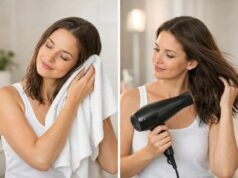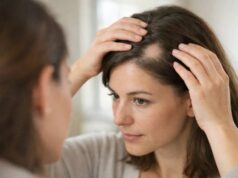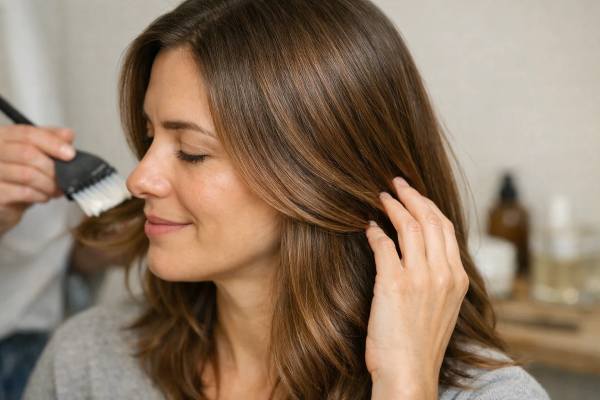
Hair botox sounds clinical, but it is really a cosmetic smoothing treatment designed to make hair look softer, shinier, fuller, and less frizzy. There are no injections, and there is no botulinum toxin involved. Instead, salons use the term for a category of deep-conditioning and resurfacing services that coat rough, porous, or overworked strands with a blend of conditioning agents, proteins, amino acids, lipids, and film-forming ingredients.
That sounds simple, yet the treatment is often misunderstood. Some versions are closer to a rich repair mask. Others behave more like a heat-sealed smoothing service. Results can look dramatic on dry, frayed, high-porosity hair, but the change is cosmetic and temporary. Hair may feel healthier because the cuticle is smoother and gaps along the fiber are better coated, not because the strand has been rebuilt from the inside out.
For anyone considering the service, the useful questions are practical ones: what it can actually improve, how long that smoother finish usually lasts, and when the formula or application method starts to raise safety concerns.
Key Insights
- Hair botox can make rough, dull, frizzy hair look smoother, shinier, and more manageable after one session.
- The best results usually show up on porous, dry, or chemically stressed hair rather than already healthy, low-porosity strands.
- The finish is temporary and fades with washing, heat styling, and daily wear, so it is best treated as maintenance rather than repair.
- Some salon smoothing products can irritate the scalp, eyes, or lungs, especially when heat is used on formulas that release harsh fumes.
- Ask exactly what ingredients are in the product and whether the service relies on high heat before booking.
Table of Contents
- What hair botox actually is
- Results you can realistically expect
- How long the finish lasts
- Hair botox versus keratin treatments
- Risks and red flags
- Best candidates and aftercare
What hair botox actually is
Hair botox is best understood as a marketing label, not a single standardized formula. In most salons, it refers to a deep-conditioning and smoothing treatment applied to the hair shaft, usually from mid-lengths to ends and sometimes closer to the roots depending on the product. The goal is to make damaged or frizz-prone hair feel silkier, look glossier, and behave in a more controlled way after blow-drying or heat styling.
What is usually inside the formula depends on the brand. Many treatments combine conditioning agents, hydrolyzed proteins, amino acids, lipids, silicones, plant oils, ceramides, collagen-related ingredients, or humectants. Some lean heavily on surface-coating ingredients that reduce friction and fill irregularities along the cuticle. Others add acids or heat-reactive components that behave more like a semi-smoothing service. That is why two people can both say they had “hair botox” and mean very different treatments.
The process usually follows four broad steps:
- The hair is cleansed, often with a stronger shampoo to remove residue.
- The treatment is applied section by section and left on for a set period.
- The hair may be blow-dried and, in some salons, sealed with a flat iron.
- The final look is styled smooth so the shine and softness are obvious right away.
That last step matters. A fresh blowout can make almost any treatment seem more transformative than it really is. This is why hair botox should be judged after the first wash and over the next few weeks, not only in the salon chair.
It also helps to separate hair botox from true structural repair. Damaged hair can be made to feel dramatically better, but once the strand emerges from the scalp, it is not living tissue. A treatment can reduce friction, coat rough edges, improve slip, and lower the visible signs of weathering. It cannot permanently reverse every form of internal fiber damage. That is the same reason many people pair smoothing services with bond-repair treatments rather than expecting one mask-like service to do every job.
The most accurate way to think about hair botox is this: it is a cosmetic resurfacing treatment for the hair fiber. It is designed to improve feel, finish, and manageability. It is not a scalp therapy, not a hair-loss treatment, and not a medical procedure. The better your expectations match that reality, the more likely you are to feel satisfied with the result.
Results you can realistically expect
The best hair botox results are visible and tactile. Hair often feels softer the same day, looks shinier under light, and sits with less puffiness or flyaway texture. On dry or porous lengths, the change can be striking because the treatment smooths the cuticle enough to make the fiber reflect light more evenly. Ends may look thicker, split areas may look less obvious, and blow-drying can feel easier because the hair offers less resistance to the brush.
What many people describe as “healthier hair” after hair botox is usually a mix of four effects:
- better surface lubrication,
- temporary filling of rough or porous areas,
- lower friction between strands,
- a smoother finish after heat styling.
That combination can make hair look fuller and more polished, especially when it was dull, rough, color-processed, or heavily heat-styled to begin with. Coarse, frizz-prone, and high-porosity hair usually shows the biggest visual change. Fine hair can also look shinier, but if the formula is too heavy, it may feel coated or flatter than expected.
There are limits, though. Hair botox does not reliably straighten very curly or tightly coiled hair the way stronger smoothing or relaxing services can. Some treatments soften the pattern and reduce bulk, but others leave natural texture mostly intact while lowering frizz. That is often a good thing. Many people want easier styling without sacrificing all body or bend.
It also does not permanently “heal” split ends, rebuild severely compromised strands, or stop future damage if the daily routine stays harsh. The result is more like resurfacing a weathered table than replacing the wood. The finish improves, the surface behaves better, and the overall appearance is more refined, but the underlying wear still matters.
That is why hair botox tends to work best when the hair already has enough integrity to hold the benefit. If the lengths are chronically scorched, over-bleached, or crumbling at the ends, the treatment may offer a brief cosmetic lift but not a durable one. In those cases, haircutting, gentler styling habits, and a stronger routine for dry and frizzy hair usually matter more than one salon service.
A realistic result after hair botox is smoother texture, more shine, easier detangling, less visible frizz, and a polished blowout that lasts better than usual. An unrealistic result is expecting virgin-hair strength, permanent straightness, or a cure for breakage caused by ongoing chemical or heat stress. Hair botox can improve how hair behaves. It cannot erase every reason the hair became difficult in the first place.
How long the finish lasts
This is the most common question, and the honest answer is that duration varies more than salons often admit. Hair botox is not one standardized treatment, so it does not have one predictable lifespan. Some formulas behave like an intensive conditioning mask whose benefits fade over several washes. Others leave a stronger film on the hair shaft and may hold a smoother finish much longer, especially when heat is used to seal the result.
In real life, how long it lasts depends on five main factors:
- the exact formula and whether it is purely conditioning or more heat-activated,
- the starting condition and porosity of the hair,
- how often the hair is washed,
- how much heat styling and sun exposure follows,
- whether the hair is exposed to salt water, chlorine, or harsh cleansers.
That is why one person says the treatment vanished after a week while another says it looked good for two months. Both may be telling the truth.
A useful way to frame expectations is this: the strongest visual effect is usually front-loaded. Hair often looks its glossiest in the first one to two weeks because the cuticle coating is freshest and the salon blowout is still influencing how the result is judged. After that, the finish typically softens gradually. The hair may still feel more manageable than before, but the mirror-level shine and ultra-sleek feel rarely stay at day-one intensity.
If a salon promises that every hair botox treatment lasts three or four months, treat that as an upper-end sales line rather than a universal truth. The result may last that long on some hair types with some formulas and careful aftercare. But lower-porosity hair, frequent washing, daily heat styling, and hard water can shorten the window. Heavier products can also make the hair look smoother at first and then duller later because residue builds up unevenly.
The easiest way to extend the result is to reduce everything that strips the surface too quickly. That means washing only as often as your scalp truly needs, using gentler cleansers, cutting back on very hot tools, and minimizing pool and salt-water exposure when possible. Matching wash frequency to scalp oil levels matters more than people think, and a guide on how often to wash based on scalp type can help keep the hair cleaner without over-cleansing the lengths.
One more nuance matters: longer-lasting is not always better. A finish that clings too aggressively can leave hair feeling coated, heavy, or stiff as it wears off. The best result is not the one that lasts forever. It is the one that fades evenly while leaving the hair manageable instead of rougher than before.
Hair botox versus keratin treatments
Hair botox and keratin treatments are often grouped together because both promise smoother, shinier, less frizzy hair. But they are not identical, and the differences matter if you are trying to choose the right service.
Hair botox usually sits on the softer end of the spectrum. It is generally marketed as a conditioning and resurfacing treatment that improves feel and shine while preserving more of the natural pattern. Keratin-style services are often sold as stronger smoothing systems. Depending on the formula, they may reduce curl more aggressively, speed up styling, and create a flatter, sleeker finish.
The practical differences usually look like this:
- Hair botox tends to focus on softness, gloss, reduced frizz, and a healthier-looking surface.
- Keratin treatments often focus more on straightening, humidity resistance, and shortening blow-dry time.
- Hair botox may be more appealing to people who want control without losing all movement.
- Keratin-style services may suit people who prioritize sleekness over volume or texture retention.
The overlap comes from how salons market them. Some services labeled hair botox still use heat-sealing methods and ingredients that push them closer to the smoothing-treatment category. That is why the service name alone is not enough. You need to know the actual ingredients and the application method. A true comparison starts with the question, “What is in this product, and what does the flat iron step do?”
Another major difference is risk profile. Some keratin and smoothing treatments have been tied to formaldehyde or ingredients that can release formaldehyde when heated. Others use acidic chemistry such as glyoxylic-acid-related systems that may still create irritation or other concerns even when marketed as formaldehyde-free. Hair botox is often advertised as gentler, but that depends entirely on what is being used. A salon can call something hair botox and still be using a formula that deserves careful scrutiny.
Texture outcome is another deciding factor. If you want your hair to feel softer, photograph shinier, and resist puffiness while keeping some natural bend, hair botox often fits that goal better. If you want maximum straightness and the least possible volume, a stronger smoothing service may produce more of the look you want, though sometimes at a higher safety and damage cost.
For readers comparing categories, this breakdown of keratin, Brazilian blowout, and similar smoothing treatments is useful because it shows how much the chemistry, heat, and promised end result can differ under salon language that sounds almost interchangeable.
The short version is that hair botox is usually the more cosmetic, conditioning, and texture-friendly option. Keratin treatments are often the more forceful smoothing option. But labels can blur, so choose by ingredient list and method, not by branding alone.
Risks and red flags
Hair botox is often marketed as gentle, nourishing, and almost foolproof. That can be true for some formulas, but the category is too loosely defined to deserve automatic trust. The biggest mistake is assuming that a soft-sounding salon name guarantees a soft safety profile.
The first red flag is ingredient vagueness. A reputable salon should be able to tell you exactly what product is being used, what its main smoothing agents are, whether heat is required, and whether the formula contains formaldehyde, methylene glycol, glyoxylic acid, or related compounds. If the answer is a vague reassurance instead of a specific explanation, pause there.
The next risk is irritation. Even when a treatment improves the feel of the hair shaft, it can still cause trouble for the scalp, skin, eyes, nose, or throat. Fragrance, preservatives, acids, protein blends, and heat-activated fumes can all provoke problems in the wrong person. Some reactions are classic irritation. Others are allergic. If you are not sure how to tell the difference, understanding product allergy versus irritation can help you take early warning signs more seriously.
Heat itself is another issue. Flat irons and blow-dry tension can make almost any treatment look better in the short term while quietly stressing the fiber. This matters most for bleached, highlighted, and already fragile hair. A service that leaves the hair glossy on day one may still contribute to brittleness later if the strand cannot tolerate the heat load used to seal the result.
Then there is the formaldehyde problem. Some smoothing products release formaldehyde when heated, even if the label language sounds softer than that. These fumes can irritate eyes and airways, and they matter not only for clients but also for salon workers exposed repeatedly. Recently, concern has also grown around glyoxylic-acid-containing straightening products because some reports have linked them to serious systemic effects, including acute kidney injury. That does not mean every hair botox service carries the same level of risk. It does mean “formaldehyde-free” should not be treated as the end of the safety conversation.
Watch for these red flags before booking:
- no clear ingredient disclosure,
- a strong chemical smell dismissed as normal,
- eye, throat, or chest irritation during service,
- flat-ironing on visibly compromised hair,
- promises that the treatment is completely risk-free,
- a salon that cannot explain aftercare or ingredient warnings.
The safest mindset is to treat hair botox as a cosmetic service that still deserves the same caution you would use with any chemical or heat-based salon procedure.
Best candidates and aftercare
Hair botox usually makes the most sense for people whose main complaint is cosmetic texture, not scalp disease or true hair loss. The best candidates are often those with dry, frizzy, porous, color-treated, or moderately heat-damaged hair that still has enough strength to benefit from smoothing. If your strands snag easily, puff in humidity, or look rougher than they feel, this kind of service may give you the polished reset you are looking for.
It tends to be less satisfying for three groups. The first is people with already healthy, low-porosity hair, who may see only a small change or feel weighed down. The second is people with severely overprocessed hair, where the result can be brief because the strand is too compromised to hold it well. The third is people dealing with active shedding, patchy thinning, scalp inflammation, or hairline loss, because hair botox does not treat those conditions. It may even distract from the real diagnosis. If you are not sure whether your problem is fragile ends or actual shedding from the root, learning the difference between breakage and hair loss is more valuable than booking a cosmetic service first.
Good aftercare is simple but matters:
- Use a gentle shampoo rather than harsh clarifying formulas unless you truly need buildup removal.
- Wash the lengths only as much as your scalp requires.
- Keep hot tools lower and less frequent after the treatment.
- Protect hair from pool water, salt water, and repeated sun exposure when possible.
- Use conditioner consistently so the finish wears off evenly rather than abruptly.
It is also smart to ask one question before every appointment: what is the goal this time, smoother hair or healthier-feeling hair? Those are related but not identical. Chasing the glassiest possible finish often pushes the routine toward more heat, heavier formulas, and shorter intervals between services. Chasing healthier-feeling hair usually leads to gentler maintenance and better long-term results.
A well-done hair botox treatment can be worth it when the goal is manageability, shine, and a more refined texture for a limited period. It is less worth it when it is sold as permanent repair, a hair-growth solution, or a harmless substitute for asking harder questions about ingredients and heat. The service works best when used selectively, on the right hair, for the right reason.
References
- Straight to the Point: What Do We Know So Far on Hair Straightening? 2021 (Review)
- Effects of chemical straighteners on the hair shaft and scalp 2022 (Review)
- Hair Smoothing Products That Release Formaldehyde When Heated 2024 (FDA Safety Guidance)
- Hair-straightening cosmetics containing glyoxylic acid induce crystalline nephropathy 2024
- Hair Cosmetics: An Overview 2015 (Review)
Disclaimer
This article is for educational purposes only and is not medical advice, diagnosis, or treatment. Hair botox is a cosmetic salon service, not a therapy for alopecia, scalp disease, or medically significant hair shedding. Product formulas and application methods vary widely, and some smoothing products can irritate the scalp, eyes, skin, or airways, especially when heated. If you have active scalp symptoms, sudden hair loss, significant breakage, pregnancy-related concerns, or a history of reactions to hair products, seek individualized advice from a qualified clinician before booking treatment.
If you found this article helpful, please share it on Facebook, X, or your preferred platform to help more readers choose smoothing treatments with clearer expectations and safer questions.