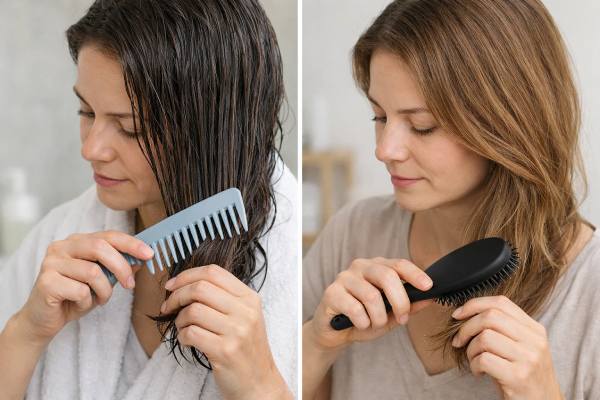
Detangling seems simple until it starts costing you length. A few rushed passes with the wrong brush can turn wash day into a pile of snapped ends, halo frizz, and short broken pieces that never make it past your shoulders. The reason is not just “bad luck” or “naturally fragile hair.” Hair becomes harder to manage when the cuticle is raised, the ends are weathered, and friction builds faster than slip. That is why detangling is less about force and more about timing, moisture level, product choice, and technique.
The good news is that most detangling damage is preventable. A gentler method can reduce breakage, preserve curl definition, and make hair feel smoother without changing your whole routine. The right answer is also more nuanced than “always detangle wet” or “never brush dry.” Straight, fine, curly, coily, bleached, and high-porosity hair do not all behave the same way. Once you understand when hair is most vulnerable and which tools lower tension instead of adding it, detangling becomes faster, safer, and far less frustrating.
Key Insights
- Gentle detangling lowers friction and tension, which helps preserve length and reduce mid-shaft breakage.
- Slightly damp detangling often suits straight and fine hair better than soaking-wet brushing.
- Curls and coils usually detangle best on wet or very damp hair with conditioner or leave-in slip.
- Wide-spaced, smooth, flexible tools reduce snagging better than stiff brushes or fine-tooth combs.
- If tangles suddenly worsen or come with scalp symptoms, technique alone may not be the issue.
Table of Contents
- Why detangling can damage hair
- Wet vs dry: which is better?
- Best tools for different hair types
- A low-breakage detangling routine
- Mistakes that turn knots into breakage
- When tangles mean something else
Why detangling can damage hair
Detangling is really a friction problem. Hair fibers are covered by overlapping cuticle layers, and those layers are meant to lie relatively flat. When they become lifted by weathering, bleach, repeated heat, rough towel drying, or aggressive styling, neighboring strands catch on one another more easily. The snag you feel is not just a “knot.” It is often several hairs wrapping, crossing, and gripping each other while you pull against them. The harder you pull, the more stress concentrates at weak points along the shaft, especially near older ends.
That explains why breakage is usually worst at the bottom third of the hair. The ends are the oldest part, so they have faced the most washing, UV exposure, brushing, sleep friction, and heat. If you are seeing short pieces on your sink, uneven fullness through the lengths, or a fuzzy cloud around the crown and top layer, you may be dealing with breakage rather than increased shedding. A useful comparison is breakage versus true hair loss: broken hairs are usually shorter and blunt or frayed, while shed hairs are closer to full length and often have a tiny bulb on one end.
Water changes the picture, but not always in the same direction. Wet hair becomes more elastic, yet that does not mean it can tolerate rough handling. A soaked strand stretches more easily, and when tension is high, that stretch can become damage. At the same time, water and conditioner can help some hair types slide apart with less friction. This is why detangling advice seems contradictory online: both “wet hair is fragile” and “wet detangling is safer for curls” can be true depending on the hair type and method.
Another overlooked factor is product residue. When hair is coated with hard-water minerals, heavy styling polymers, or dried salt from sweat, the surface feels rougher and neighboring fibers grip more tightly. Likewise, hair that is very dry tends to tangle because the cuticle is less smooth and the lengths rub against each other more. Even perfectly healthy hair will knot more when it is rubbed by scarves, high collars, rough pillowcases, or windy movement through the day.
The goal, then, is not to “get through the knot at all costs.” It is to lower friction, reduce force, and spread stress over a larger area. Once you think about detangling that way, the best choices become clearer: start low, work in sections, add slip before force, and stop when the hair feels resistant rather than forcing another pass.
Wet vs dry: which is better?
There is no universal winner. The safer choice depends on your hair pattern, density, damage level, and how much slip you can add before you start combing. For many people, the real answer is neither fully wet nor fully dry, but controlled dampness with a product that reduces drag.
For straight or slightly wavy hair, especially if it is fine, low density, or color-damaged, detangling when the hair is only partly dry is often the gentlest option. Hair in this group can become overly stretchy when soaking wet, and a brush can pull that stretched fiber past its comfort zone. Letting it air-dry until it is damp, then using a wide-tooth comb or a very flexible brush, often gives better control. If tangles are light, dry detangling before washing can also work well because you can feel resistance more clearly and stop before a knot tightens.
Curly and coily hair behaves differently. The strands loop around themselves, so dry brushing often creates expansion, snagging, and snapping rather than smooth separation. For these textures, damp or wet detangling with conditioner is usually safer because the curl clusters can separate with less drag. The product matters here as much as the water. Hair that is wet but not lubricated can still catch badly. Many people with curls get the best results during the conditioning stage, using fingers first and a comb only after the largest knots have already loosened. If you follow a dedicated curly-hair routine, detangling usually works best when it is built into wash day rather than forced between washes.
Highly processed hair needs extra caution regardless of texture. Bleached, highlighted, relaxed, or repeatedly heat-styled strands may feel mushy when very wet and brittle when very dry. In that situation, slightly damp hair with a leave-in conditioner or detangling spray is often the best compromise. It gives some slip without leaving the shaft at its weakest, most swollen state.
A practical way to decide is to test three windows on different wash days:
- Dry or nearly dry, before shampoo, for light tangles.
- Damp, after blotting with a soft towel or T-shirt.
- Wet with conditioner, in sections, for dense curls or heavy knotting.
Choose the option that gives you the fewest broken hairs, the least pulling at the scalp, and the smoothest finish after drying. That is more useful than following a rule made for someone else’s texture. For some people, the best answer changes by season. Humid weather, heating indoors, swimming, and heavier styling products can all shift how much water and slip your hair needs.
The simplest summary is this: straighter hair usually prefers less water, curlier hair usually prefers more slip, and damaged hair prefers as little tension as possible no matter when you detangle.
Best tools for different hair types
A good detangling tool does two things at once: it separates strands efficiently and limits the force placed on any single weak point. The best tool is not always the most expensive one. It is the one whose spacing, flexibility, and surface finish match your hair’s pattern and condition.
For most wet detangling, a wide-tooth comb remains the safest starting point. Wide spacing means fewer strands are forced through the teeth at once, which lowers snagging. Look for smooth, rounded teeth rather than sharp seams or rough molding lines. A poorly finished comb can act like sandpaper on the cuticle. Wide-tooth combs are especially useful for wavy, curly, and coily hair when paired with conditioner.
Flexible detangling brushes are helpful for medium to high density hair because the teeth move with resistance instead of fighting it. That flexibility spreads tension across a section rather than yanking one knot. They work well on damp or conditioned hair, especially when the hair is sectioned first. For straight hair that tangles mostly at the ends, a cushion brush or paddle brush can be fine once the major knots are already gone and the hair is mostly dry.
Finger detangling is slow, but it is unmatched for dense curls, fragile ends, and shed-hair tangles that need teasing apart rather than brute force. Fingers can feel exactly where the knot sits and isolate it before a comb worsens it. Many people do best with a two-step approach: fingers first, tool second.
A few tools are frequently overused. Fine-tooth combs are good for parting and styling, not for knot removal. Boar-bristle brushes can smooth the surface of straight hair and distribute oils, but they are not true detanglers. On textured or damaged hair, they often polish the top while hiding tangles underneath.
Product choice also affects how well a tool performs. A lightweight conditioner may be enough for fine hair, while curls and coils often need more slip from a richer rinse-out or leave-in. Some people notice better glide from formulas designed to coat and smooth the shaft; if you are comparing options, a guide to protective silicones in hair products can help explain why certain products make combing easier without automatically being “bad” for hair.
Tool hygiene matters too. Hair, lint, dried conditioner, and styling residue can turn a decent brush into a rougher one over time. Clean tools regularly, replace cracked combs, and retire brushes with bent or missing pins. A detangling tool should feel smooth and predictable in the hair, not scratchy, sticky, or noisy.
As a quick matching guide:
- Fine or straight hair: wide-tooth comb on damp hair, then paddle brush when nearly dry.
- Wavy hair: wide-tooth comb or flexible brush, depending on density.
- Curly hair: fingers plus wide-tooth comb on conditioned hair.
- Coily or very dense hair: fingers first, then a flexible detangling brush in small sections.
- Bleached or fragile hair: the gentlest option available, on damp hair with high slip.
The right tool should make the section feel progressively easier, not tighter, with each pass. If the hair sounds loud, catches repeatedly, or leaves many short broken pieces behind, the tool is not the right match.
A low-breakage detangling routine
A safe routine is less about speed than sequence. When the order is right, you spend less time fighting the hair and more time guiding it. The following method works for most hair types and can be adjusted by changing the moisture level and product weight.
First, divide the hair into manageable sections. Two sections may be enough for fine hair, but thick, curly, or coily hair often needs four to eight. Smaller sections prevent a hidden knot from borrowing tension from the rest of the head. Clip or loosely twist each section so it stays separate.
Next, add slip before you add a tool. That may be a rinse-out conditioner in the shower, a leave-in on damp hair, or a detangling mist on nearly dry lengths. Spread the product through the mid-lengths and ends, then give it a minute to soften the fibers. If the ends are especially rough, smooth a little extra product there first.
Now start with your fingers. Hold the section above the knot so the scalp and roots are not taking the pull. Open obvious snarls with your fingertips, especially at the nape and ends where shed hairs tend to collect. Once the largest tangles are loosened, bring in a wide-tooth comb or flexible brush.
Work from the ends upward in short passes. Clear the bottom inch or two, then move slightly higher. This matters because combing from the roots down pushes every knot into the densest, tightest point. Moving upward gradually keeps each snag small and manageable. If the tool catches more than once in the same spot, stop and add more slip rather than forcing another pass.
When the section is smooth, either braid, twist, or clip it away before moving on. That one step prevents re-tangling while you finish the rest of the head. After all sections are done, rinse carefully or let the leave-in remain, depending on the product. If your hair re-tangles quickly, finish by sealing the routine with a light serum, cream, or other smoothing product that matches your texture rather than overloading the hair.
For ongoing prevention, build detangling into your broader repair plan. If the hair feels increasingly rough no matter how gentle you are, the issue may be cumulative cuticle damage rather than technique alone. In that case, a routine focused on bond repair for damaged hair can improve manageability by reducing the roughness and fragility that make knots cling together.
A few finishing details make a real difference:
- Blot with a soft towel or cotton T-shirt instead of rubbing.
- Sleep on a low-friction surface and secure long hair loosely at night.
- Trim visibly split or frayed ends before they turn into repeated knots.
- Do not keep detangling for “one more pass” once the section is already smooth.
A good detangling session should leave the hair calmer, not puffier, louder, or more elastic. If it takes force, the setup needs changing.
Mistakes that turn knots into breakage
Most detangling damage comes from a handful of repeat mistakes. They are easy to normalize because the hair may still look fine at first, but over a few weeks they show up as thinning ends, rough texture, and stalled length retention.
The first mistake is detangling one large section at once. Large sections hide compact knots, so the tool catches suddenly and you react by pulling harder. Small sections may feel slower, but they almost always reduce breakage.
The second is using the wrong starting point. Root-to-end brushing compresses every tangle into one tight mass. End-first detangling is not just a trick; it is basic force control. It reduces the size of each knot before the upper hair enters the same path.
Another common problem is trying to brush through hair that has no slip. This happens after rough towel drying, at the end of a long day when sweat has dried into the hair, or after using styling products that leave a stiff cast. If the hair feels squeaky, grabby, or rough between the fingers, it needs moisture, conditioner, or a reset wash before serious detangling.
Heat layering is another silent contributor. Hair that is already stressed from blow-drying, curling, or flat ironing tangles more because the cuticle becomes rougher and the ends weaken. If you use hot tools, learning how heat protectant spray works can help reduce one of the biggest sources of cumulative combing damage.
Dry brushing curls is a classic mistake, but over-manipulating straight hair can be just as harmful. Constant brushing “to keep it neat” creates repeated abrasion, especially on fragile highlighted hair. Detangle with purpose, not out of habit. Another common error is detangling after a very tight ponytail, bun, or clip style without first loosening the compressed areas by hand. That concentrated tension can make a small tangle behave like a knot.
Two more issues are often missed:
- Broken tools: cracked brush heads, bent pins, and rough comb seams can scrape the shaft every time you use them.
- False repair claims: smoothing products can improve glide, but they do not permanently fuse severe splits. When ends are fraying, a trim is more effective than another serum.
Watch for these early signs that your method is too harsh:
- Lots of short hairs on your shirt, sink, or styling surface.
- An expanding halo of frizz even right after detangling.
- Ends that look see-through or catch on fabric.
- More knots after styling than before.
- A sudden feeling that the hair “will not grow,” even though the roots are coming in.
The biggest mindset shift is this: detangling should not feel like a battle you win by strength. It should feel like a setup problem you solve by reducing friction. Once that clicks, the hair usually becomes far more manageable.
When tangles mean something else
Sometimes the technique is not the main issue. Hair that knots unusually fast, breaks at many different lengths, or feels dramatically rougher than usual may be telling you that the shaft itself has changed. That can happen after bleaching, relaxing, frequent high heat, or a period of heavy sun and pool exposure. It can also happen with hair-shaft disorders, scalp inflammation, and some nutrient or hormonal problems that change how new hair grows in.
One clue is a mismatch between effort and result. If you have already switched to sectioning, added enough slip, changed tools, and stopped rough brushing, but the hair still forms tiny white dots, brush-like splits, or weak spots that snap as you handle them, the shaft may be too weathered for routine detangling advice to solve. In that situation, trimming off the worst damage is often more effective than endlessly trying to rescue it.
Scalp signs matter too. See a dermatologist if breakage comes with redness, burning, itching, scaling, tenderness, patchy thinning, or a rapid increase in shedding. Detangling cannot fix inflammation, fungal infection, contact irritation, or traction injury. If you are unsure when breakage crosses into a medical issue, this guide on when to see a dermatologist for hair loss can help you judge the threshold.
It is also worth paying attention to where the tangles collect. Repeated knotting at the nape may point to scarf, collar, or sleep friction. Breakage around the hairline can come from tension styles or over-brushing baby hairs. Crown roughness after highlighting often signals processing damage. Pattern gives clues.
Another sign that something bigger is going on is sudden texture change. Hair that once detangled easily may become rough, wiry, limp, or unusually matted after a harsh chemical service, a scalp flare, or a period of poor overall health. In those situations, a gentler brush alone rarely fixes the problem because the new issue is structural or inflammatory, not just mechanical. The same is true when you notice fragile regrowth that seems finer than usual and tangles into the surrounding hair.
Children and adults can both develop structural hair-shaft problems, but persistent fragility should not be dismissed as purely cosmetic if it is new, severe, or accompanied by other symptoms. A clinician may ask about heat tools, bleach, relaxers, hair habits, scalp symptoms, recent illness, iron status, or thyroid issues depending on the full picture. Bringing photos of the breakage pattern and the products or tools you use can make that visit more useful.
The important point is that gentle detangling works best on hair that still has enough structural integrity to respond to it. If the hair is breaking despite careful handling, step back and look upstream: chemical exposure, repeated heat, harsh products, scalp disease, or internal health factors may be driving the problem.
Healthy detangling is preventive care, not just styling. It protects hair that is still recoverable and helps reveal when something deeper needs attention.
References
- Tips for healthy hair 2024 (Dermatology guidance)
- On Hair Care Physicochemistry: From Structure and Degradation to Novel Biobased Conditioning Agents 2023 (Review)
- The exposome impact on hair health: etiology, pathogenesis and clinical features ‒ Part I 2024 (Review)
- The biomechanics of splitting hairs 2024 (Review)
- Hair Shaft Disorders in Children – An Update 2023 (Review)
Disclaimer
This article is for educational purposes and does not diagnose, treat, or replace medical care. Hair breakage is often cosmetic, but sudden fragility, patchy loss, scalp pain, itching, scaling, or breakage that persists despite gentler care should be assessed by a qualified clinician or board-certified dermatologist. Product tolerance also varies by hair type, scalp sensitivity, and chemical history, so patch test new products and stop any routine that causes burning, marked shedding, or worsening breakage.
If this article helped, please consider sharing it on Facebook, X, or your preferred platform.