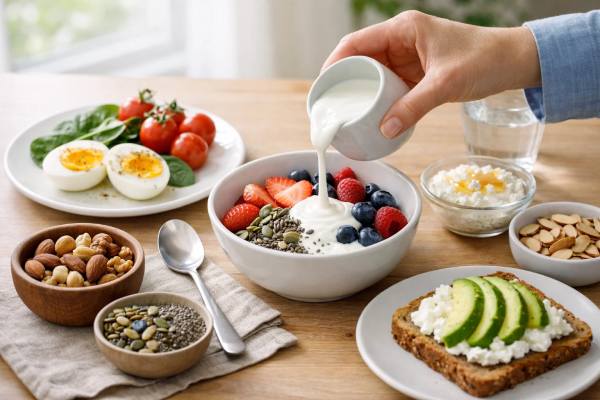
Hair health rarely turns on one food, one smoothie, or one supplement. It reflects the steady work of a metabolically active follicle that needs protein, calories, iron, zinc, B vitamins, and a generally balanced diet to keep producing strong strands. Breakfast is not magic, but it is often the easiest place to improve that input. Many people under-eat protein in the morning, then try to make up for it late in the day. For hair, that pattern is not ideal, especially during periods of shedding, stress, dieting, postpartum recovery, or busy schedules that crowd out real meals.
A hair-friendly breakfast does two useful things at once. It raises the odds that you hit your daily protein target, and it gives you an early chance to pair that protein with nutrients that matter for scalp and follicle health. The best options are not complicated. They are repeatable, satisfying, and fast enough to survive a weekday morning. That is what makes them work in real life.
Core Points
- A higher-protein breakfast can make it easier to reach the daily intake that supports normal hair growth and reduces the risk of low-protein shedding.
- Meals that combine protein with iron, zinc, vitamin B12, vitamin C, and healthy fats offer broader support than protein alone.
- Breakfast helps most when it is consistent; one “perfect” meal cannot offset a chronically restrictive diet.
- Collagen powders and hair gummies do not replace a balanced breakfast built from complete protein and regular food.
- For many adults, a practical starting point is a breakfast with about 20 to 30 grams of protein that you can repeat several times a week.
Table of Contents
- Why Breakfast Matters for Hair
- How Much Protein to Aim For
- Breakfast Building Blocks That Support Growth
- Quick High-Protein Breakfast Ideas
- Breakfast Mistakes That Undercut Progress
- How to Adapt Breakfast for Real Life
Why Breakfast Matters for Hair
Hair is made largely of keratin, a structural protein, but that fact alone can make breakfast advice sound simpler than it really is. Hair growth is not driven by protein alone. Follicles also depend on adequate total calorie intake, iron delivery, normal cell turnover, and a stable nutritional environment over time. That is why breakfast matters less as a “hair hack” and more as a daily opportunity to stop the nutritional drift that often shows up in people with thinning, chronic shedding, or slow regrowth.
The morning meal is especially useful because it is where many diets fall short. A common pattern is coffee, a pastry, or nothing at all, followed by a heavier dinner. That may be workable for convenience, but it often leaves protein clustered late in the day and turns breakfast into a missed chance for foods that support scalp and follicle health. Starting earlier with protein can help smooth intake across the day instead of forcing dinner to do all the work.
There is also a practical behavior effect. A protein-rich breakfast tends to be more satisfying than a low-protein one, which can make the rest of the day easier to manage. That matters when someone is recovering from stress shedding, eating less while on a weight-loss plan, or trying to avoid the cycle of under-eating early and raiding the pantry later. In other words, breakfast supports hair partly because it supports a steadier overall diet.
It is also important to set the right expectation. A good breakfast does not reverse androgenetic hair loss on its own, and it will not make hair grow dramatically faster in a week. What it can do is reduce one modifiable pressure on the follicle. That is valuable, especially in situations where hair is already vulnerable:
- After illness, surgery, or major stress.
- During restrictive dieting or rapid weight loss.
- In postpartum shedding.
- In people with low iron intake or low overall protein intake.
- In busy schedules that lead to skipped meals.
This is why the conversation around breakfast is really a conversation about consistency. A single “superfood” bowl does much less than a simple, protein-anchored breakfast you actually eat four or five times a week. That steady pattern gives the follicle a better nutritional backdrop for the normal cycle of growth, rest, and shedding. A refresher on the hair growth cycle can help explain why these benefits show up slowly rather than overnight.
How Much Protein to Aim For
For most readers, the useful question is not “What is the perfect breakfast?” but “How much protein makes breakfast worth the effort?” A practical answer is that many adults do well aiming for roughly 20 to 30 grams of protein at breakfast. That range is not a hard rule, and it does not replace total daily protein needs, but it is a realistic target that is high enough to be meaningful and still easy to reach with ordinary foods.
That number matters because breakfast is often the weakest protein meal of the day. Someone may eat only 5 to 10 grams in the morning, then try to compensate with a large dinner. From a hair perspective, that is less helpful than spreading protein more evenly. Hair follicles do not care that dinner was huge if the rest of the day was nutritionally thin. Total daily intake still matters most, but breakfast is often where the correction starts. A broader guide to daily protein needs for hair support can help put that breakfast target into context.
A few examples make the target easier to see:
- 1 cup Greek yogurt plus 2 tablespoons pumpkin seeds and berries can land around 20 grams.
- 3 eggs plus a side of cottage cheese can reach 25 to 30 grams.
- A smoothie with milk or soy milk, Greek yogurt, and protein powder can reach 25 grams without much volume.
- Tofu scramble with edamame and whole-grain toast can move into the same range.
Quality matters too. Breakfast protein should ideally come from complete or near-complete sources with enough essential amino acids. Eggs, dairy, fish, soy foods, poultry, and mixed meals that combine legumes with grains all work well. Seeds and nut butters add useful nutrients, but they are usually supporting players, not the main protein source. A tablespoon of chia seeds or almond butter helps, yet it does not turn a low-protein breakfast into a high-protein one.
There is another nuance worth keeping in view: more is not always better. A 45-gram breakfast is not automatically superior to a 25-gram one if the rest of the diet is already balanced. The goal is to move breakfast out of the underpowered range, not to force down an oversized meal that is hard to sustain.
Protein is also only part of the breakfast equation. If someone is trying to support hair during active shedding, meals that also contribute iron, zinc, B12, omega-3 fats, vitamin C, or folate are even more useful. That does not mean every breakfast must contain every nutrient. It means your weekly pattern should cover them regularly.
The best target, then, is not the most extreme one. It is the one you can repeat calmly, without turning breakfast into another wellness chore.
Breakfast Building Blocks That Support Growth
Once protein is in place, the next step is to build breakfasts that do more than just hit a gram count. Hair-friendly meals work best when they combine a solid protein source with a few strategic nutrients that show up again and again in conversations about shedding and hair quality: iron, zinc, vitamin B12, folate, vitamin C, and healthy fats.
The simplest way to do that is to think in layers.
Start with a protein anchor.
Choose one reliable base:
- Greek yogurt or skyr.
- Eggs.
- Cottage cheese or ricotta.
- Tofu or tempeh.
- Smoked salmon, sardines, or leftover chicken.
- Milk or fortified soy milk.
- A protein powder when food-only options are not practical.
Add a nutrient booster.
This is where breakfast starts supporting hair more broadly. Good options include:
- Pumpkin seeds for zinc and extra protein.
- Spinach or sautéed greens for folate and iron.
- Beans or lentils if savory breakfasts work for you.
- Eggs, dairy, or fish for vitamin B12.
- Oats and berries for fiber and steady energy.
Pair iron with vitamin C when you can.
This matters most when breakfast includes plant iron, such as oats, seeds, spinach, or legumes. Vitamin C helps improve non-heme iron absorption, so small additions can be useful:
- Kiwi with yogurt.
- Strawberries over oats.
- Bell peppers in a tofu scramble.
- Citrus on the side of a savory breakfast.
That pairing is especially helpful for people who eat little red meat or who are actively trying to include more iron-rich foods. A focused list of iron-supportive foods for hair can make meal planning easier if low ferritin is part of the picture.
Do not forget healthy fats.
Breakfast does not need to be high fat, but some fat improves meal staying power and helps with satisfaction. Foods such as salmon, walnuts, chia, hemp, avocado, and eggs also bring nutrients that support scalp health and reduce the “all sugar, no substance” feeling of many typical breakfasts.
A few smart combinations look like this:
- Greek yogurt + berries + pumpkin seeds.
- Eggs + spinach + whole-grain toast.
- Tofu scramble + peppers + avocado.
- Oats made with milk or soy milk + protein powder + fruit.
- Cottage cheese toast + tomatoes + seeds.
This layered approach is more useful than chasing single ingredients. It also prevents the classic breakfast mistake of mistaking “healthy-looking” for nutritionally strong. A bowl of fruit alone, a plain bagel, or a coffee with collagen may look tidy, but it often lacks the protein density needed to support the follicle well. Hair-friendly breakfasts are not built around one hero food. They are built around combinations that repeatedly meet the body’s actual demands.
Quick High-Protein Breakfast Ideas
The best breakfast ideas are the ones you can make when you are rushed, not just when you are motivated. These meals are quick, realistic, and easy to repeat. Protein counts are approximate because brands and portions vary, but each option is built to land in a useful range.
- Greek yogurt bowl with berries and pumpkin seeds
About 20 to 25 grams of protein. Use plain Greek yogurt or skyr, add berries, pumpkin seeds, and a few walnuts. This is one of the easiest no-cook options and works well for busy mornings. - Egg and cottage cheese scramble
About 25 to 30 grams. Scramble 2 or 3 eggs and fold in cottage cheese near the end. Add spinach or chopped peppers for more folate and vitamin C. - Protein overnight oats
About 20 to 30 grams. Make oats with milk or fortified soy milk, stir in Greek yogurt or protein powder, and top with chia seeds and fruit. This is especially helpful for people who do better with breakfast already made. - Smoked salmon toast with eggs
About 25 to 30 grams. Pair whole-grain toast with smoked salmon, a boiled or poached egg, and sliced tomato or cucumber. This adds omega-3 fats, protein, and vitamin B12. If you want more food-based ways to build that pattern, this guide to omega-3-rich foods for scalp health is worth saving. - Tofu scramble wrap
About 22 to 28 grams. Crumble firm tofu with turmeric, black pepper, and vegetables, then wrap it in a whole-grain tortilla. Add avocado if you want more staying power. - Cottage cheese toast with seeds and fruit
About 20 to 25 grams. Spread cottage cheese on toast, top with sliced tomatoes or cucumber, and sprinkle with hemp or pumpkin seeds. Add a kiwi or orange on the side. - High-protein smoothie
About 25 to 35 grams. Blend milk or soy milk, Greek yogurt or protein powder, berries, spinach, and a spoonful of nut butter. This is often the easiest option for low appetite mornings. - Savory yogurt bowl
About 20 grams. Use strained yogurt with chopped cucumber, herbs, olive oil, and seeds, plus a boiled egg or two on the side. - Leftover chicken breakfast bowl
About 25 to 30 grams. Warm leftover chicken or turkey with scrambled eggs and greens. It is unconventional, but it is fast, protein-rich, and often more balanced than sweet breakfast foods. - Edamame and egg grain bowl
About 22 to 30 grams. Use leftover rice or quinoa, shelled edamame, a fried or boiled egg, and sautéed greens. This works well for people who prefer savory breakfasts.
The main lesson from these ideas is that speed does not require nutritional compromise. Once you identify three breakfasts you genuinely like, repetition becomes an advantage rather than a sign of boredom.
Breakfast Mistakes That Undercut Progress
Many breakfasts that look healthy on the surface are not strong enough to support hair well when they stand alone. The problem is usually not that the food is “bad.” It is that the meal is too low in protein, too light overall, or too dependent on supplements and marketing language instead of actual nutrient density.
The most common mistake is the all-carbohydrate breakfast. Toast, cereal, granola, muffins, fruit, or a smoothie made mostly from juice can be perfectly fine foods, but they do not do much for hair if protein stays minimal. A person may feel virtuous eating a clean breakfast and still end up with only 6 or 8 grams of protein. Repeat that pattern for months, especially during stress or dieting, and the follicle may not get what it needs.
Another common miss is overestimating “healthy extras.” Chia seeds, nut butters, collagen, greens powder, and hair supplements can all have a place, but they are often treated like a substitute for a real meal. They are not. A tablespoon or two of seeds adds value, but it does not replace eggs, yogurt, tofu, fish, or dairy. Collagen is especially easy to overrate. It can fit into a routine, but it should not be your only meaningful breakfast protein.
Other breakfast mistakes include:
- Coffee as breakfast
This is common during busy mornings, but it leaves the day nutritionally delayed from the start. - Restrictive breakfast during weight loss
A tiny breakfast may help calorie control in the short term, but if it drives protein too low, hair can pay the price later. - Skipping iron and B12-rich foods entirely
This matters most for people who eat little animal protein, menstruate heavily, or already have a history of low ferritin. - Assuming any protein bar is enough
Some bars are essentially candy with added protein. Others are useful. The label matters. - Drinking tea or coffee right with an iron-focused plant breakfast
If iron status is a concern, spacing these beverages away from that meal can be sensible.
A broader warning sign is when breakfast stays light not because of preference but because the whole day is underfed. In that setting, the problem is not breakfast alone. It is the cumulative pattern of insufficient intake. A deeper look at low-protein hair shedding risk can help connect those dots.
Hair-friendly eating is rarely about finding a more expensive product. It is about noticing where a routine is thin, repetitive, or overly dependent on powders and packaging, then making the meal more substantial in a sustainable way.
How to Adapt Breakfast for Real Life
The smartest breakfast is the one that fits your appetite, schedule, culture, and budget. A good plan should survive real mornings, not just ideal ones. That is why adaptation matters as much as food choice.
If you have low appetite in the morning, use volume-efficient options. A smoothie with Greek yogurt or protein powder, milk or soy milk, berries, and nut butter is often easier than chewing a large meal. Drink half early and half later if needed. This is especially helpful for people on GLP-1 medications, during stress, or after illness.
If you eat vegetarian or vegan, breakfast can still be highly supportive. Tofu scramble, soy yogurt, fortified soy milk, edamame, high-protein overnight oats, and grain-legume combinations all work. The main point is to avoid relying only on fruit, toast, and nut butter. Vegan readers should pay special attention to vitamin B12 intake, because breakfast can be one of the easiest places to build that in through fortified foods or a clinician-guided supplement plan. This guide to vitamin B12 and hair loss clues is useful if fatigue or diffuse shedding is also part of the story.
If you are trying to lose weight, breakfast should still protect protein intake. That usually means keeping the meal compact but substantial: yogurt bowl, eggs and vegetables, or a smoothie that reaches the 20 to 30 gram range without turning into a dessert.
If you are short on time, use a three-option rotation:
- One no-cook breakfast.
- One make-ahead breakfast.
- One hot breakfast that takes under 10 minutes.
That alone solves more consistency problems than endlessly saving recipes.
If you are dealing with active shedding, think beyond breakfast while still using breakfast as your anchor. A strong morning meal works best when the rest of the day does not collapse into snacking and under-eating. Hair support is a full-day pattern, not a single meal event.
If your stomach is sensitive, keep it simple:
- Use plain yogurt or kefir instead of very sweet breakfast foods.
- Choose soft textures such as oats, eggs, or smoothies.
- Avoid piling strong coffee onto an empty stomach if it worsens nausea or appetite suppression.
- Build slowly rather than forcing a large meal right away.
The final goal is not variety for its own sake. It is repeatable adequacy. When breakfast becomes a reliable place for protein and a few strategic nutrients, it stops being a guessing game and starts doing what it should: quietly supporting healthy hair over time.
References
- “Let Food be Thy Medicine”: Value of Nutritional Treatment for Hair Loss 2021 (Review)
- A comprehensive investigation of biochemical status in patients with telogen effluvium: Analysis of Hb, ferritin, vitamin B12, vitamin D, thyroid function tests, zinc, copper, biotin, and selenium levels 2024
- Impacts of protein quantity and distribution on body composition 2024 (Review)
- A dairy-based, protein-rich breakfast enhances satiety and cognitive concentration before lunch in overweight to obese young females: A randomized controlled crossover study 2024 (RCT)
- Hair Longevity—Evidence for a Multifactorial Holistic Approach to Managing Hair Aging Changes 2025 (Review)
Disclaimer
This article is for educational purposes and is not a substitute for personal medical advice, diagnosis, or treatment. Hair thinning and shedding can reflect many causes, including genetics, iron deficiency, thyroid disease, postpartum changes, illness, medication effects, inflammatory scalp conditions, and inadequate overall intake. A higher-protein breakfast can support a healthier nutrition pattern, but it is not a stand-alone treatment for medical hair loss. If you have persistent shedding, sudden thinning, scalp symptoms, or suspected nutrient deficiency, seek evaluation from a qualified clinician.
If this article was helpful, please share it on Facebook, X, or any platform where it may help someone build a more hair-supportive routine.