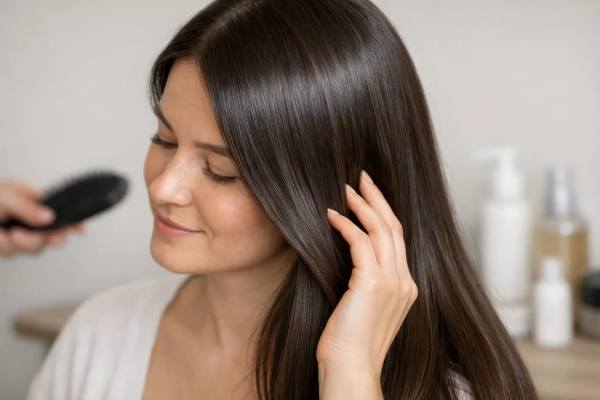
Hair lamination is one of those salon services that sounds more dramatic than it usually is. In most cases, it is a cosmetic smoothing treatment designed to coat the hair shaft, boost shine, soften roughness, and make frizz less obvious. The effect can look impressive right away because smoother strands reflect light better and catch less humidity. That is why laminated hair often photographs so well: it looks sleeker, glossier, and more uniform from root to tip.
What makes the treatment appealing is also what makes it easy to misunderstand. Hair lamination is usually temporary, and it does not rebuild deeply damaged fiber in the way the name may suggest. It sits closer to the world of conditioning topcoats, shine seals, and smoothing finishes than to true restructuring. It can be a smart choice for dull, porous, or color-treated hair that needs a polished surface. It can also disappoint people who expect permanent straightening, major repair, or months of wear. The key is knowing what the service actually does, how it differs from gloss and glaze, and which version your salon is offering before it touches your hair.
Quick Overview
- Hair lamination creates a smooth, light-reflective coating that can make hair look shinier, softer, and less frizzy after one service.
- It tends to look best on dull, porous, color-treated, or weathered hair lengths that need surface smoothing more than deep repair.
- The result is temporary and mainly cosmetic; it does not reverse split ends, rebuild broken internal bonds, or treat shedding.
- Most results last about 3 to 6 weeks, and gentle washing, lower heat, and less buildup-removing shampoo usually help them last longer.
Table of Contents
- What Hair Lamination Actually Does
- Gloss vs Glaze vs Lamination
- What Happens During the Treatment
- How Long Results Last
- Benefits, Limitations, and Best Candidates
- Risks, Ingredient Flags, and Aftercare
What Hair Lamination Actually Does
Hair lamination is best understood as a surface-finishing treatment. The goal is not to change the way hair grows or permanently alter its internal structure. Instead, the treatment lays a thin film over the outer cuticle so strands feel smoother, reflect more light, and catch less moisture from the air. That is why the immediate payoff is usually visual and tactile: more gloss, less fuzz, better slip, and a neater outline through the mid-lengths and ends.
A healthy hair shaft already has a relatively smooth cuticle. When the cuticle becomes lifted or uneven from heat styling, color processing, sun exposure, friction, hard water, or simple wear, light scatters instead of bouncing cleanly. Hair then looks dull, dry, and rough even if it is not technically breaking off in large amounts. Lamination helps by filling in that rough surface temporarily and sealing it under conditioning ingredients. Many formulas rely on film-formers, cationic conditioners, amino acid blends, hydrolyzed proteins, lightweight oils, and ingredients related to the shine and slip benefits people often associate with protective silicone-based hair products.
This matters because the word lamination can sound more permanent than the treatment really is. In most salons, the result is a cosmetic coating that sits on and around the fiber rather than a deep internal repair. It may make damaged hair look dramatically healthier for a while, but it does not undo chemical weathering inside the strand. Split ends can look flatter, not healed. Frizz can look controlled, not cured. Curls can look looser for a short time if the formula is rich or heat-sealed, but hair lamination is not the same thing as a permanent relaxer or true straightening service.
Another source of confusion is that different salons use the same label for slightly different systems. One salon may offer a clear shine mask plus heat and call it lamination. Another may use a more technical acidic smoothing product and use the same name. A third may offer a lamination add-on after color. Because of that, two services with the same menu name can behave very differently in your hair and last for different lengths of time.
A useful way to think about lamination is this: it is a polish for the hair shaft. It can make hair look more finished, more reflective, and easier to style, but it works best when your main goal is appearance and manageability, not structural repair or long-term texture change.
Gloss vs Glaze vs Lamination
These terms are often used as if they mean the same thing, but in practice they point to different kinds of salon outcomes. The overlap is real: all three are usually shine-focused services. The differences show up in formula, color effect, weight, and staying power.
Hair lamination is usually the most coating-oriented of the three. It is designed to smooth the outer surface, reduce flyaways, and give hair a sleek, polished finish. Many versions are clear or nearly clear, and many are paired with blow-drying or heat to help the formula settle evenly over the fiber. It is often chosen by people whose hair feels rough, looks puffy in humidity, or lacks mirror-like shine.
Hair gloss usually sits closer to a shine treatment with a color dimension. A gloss may be clear, but it is commonly used to refine tone, add reflect, soften brassiness, deepen richness, or freshen color between larger appointments. It can make hair look smoother too, but its signature advantage is often optical color enhancement. Gloss is a strong choice when the question is not just “How do I get shine?” but “How do I get shine and cleaner-looking color?”
Hair glaze is the loosest and least standardized label. On many salon menus, glaze means a lighter, more temporary shine sealer. It may sit more superficially on the hair, fade faster, and involve less color shift than a gloss. Some glazes wash away after several shampoos; others behave almost like clear glosses. That is why glaze is the term most likely to vary from brand to brand.
The fastest way to compare them is by purpose:
- Choose lamination when you want sleekness, surface smoothness, and visible frizz control.
- Choose gloss when you want shine plus tonal refinement for colored or faded hair.
- Choose glaze when you want a lighter, shorter-lived shine refresh.
This is also where confusion with smoothing services starts. Some salons blur the line between lamination and stronger anti-frizz systems. If the service uses high heat and promises a much straighter result for much longer, ask whether it is really a lamination treatment or whether it belongs more in the family of keratin and other smoothing systems. The answer affects not just your result but also the ingredient profile, maintenance routine, and risk level.
A good salon consultation should explain four points clearly: whether the service deposits color, whether it uses heat, whether it meaningfully straightens texture, and how many washes the result usually survives. If that part stays vague, the service name alone is not enough to tell you what you are buying.
What Happens During the Treatment
Most hair lamination appointments follow a simple sequence, though the exact steps depend on the brand and whether the service is purely conditioning or includes a stronger smoothing phase. The appointment often takes between 45 minutes and 90 minutes, with longer times for thick, long, or highly textured hair.
A typical service looks like this:
- Clarifying or prep wash. The stylist removes oil, residue, and styling buildup so the coating can attach evenly. Hair that is too coated with leave-ins or dry shampoo usually will not laminate well.
- Moisture and porosity check. The stylist feels the hair, notes how processed it is, and decides how rich the formula should be. Porous ends often need a different approach from newer growth near the scalp.
- Application of the treatment. The lamination formula is applied section by section, usually from mid-lengths to ends first, then adjusted as needed. Some stylists keep the product off the scalp to avoid heaviness or irritation.
- Processing time. The treatment sits for a set period, often around 10 to 30 minutes. This is where the conditioning and film-forming ingredients settle onto the cuticle.
- Rinse, partial rinse, or seal. Some systems are fully rinsed out. Others are lightly rinsed. Some are sealed in with blow-drying and, in certain systems, flat ironing.
- Finishing style. The final blowout matters because smooth styling is part of the immediate result. Hair often looks its glossiest on day one because the surface has just been freshly coated and heat-polished.
Home lamination products also exist, but they are usually milder and less predictable than salon versions. They may give a nice short-term shine boost before an event, but the effect often fades faster because the formula is lighter, the application is less precise, and the sealing step is less controlled.
Two practical details make a big difference. First, heavily damaged hair can absorb product unevenly. That means the finish may look amazing in some sections and only modestly improved in others. Second, hair type changes the visual payoff. Fine straight hair may look glassy very quickly but can also feel weighed down if too much product is used. Coarse or dense hair may need a richer formula and more tension during styling to show the full effect.
If you have a sensitive scalp, eczema, or a history of reacting to salon products, do not treat the appointment as routine. Ask where the product will be applied, whether heat is involved, and whether the salon recommends a patch test in advance. The prettier the finish, the more important it is that the process fits your hair and scalp rather than just the trend.
How Long Results Last
For most people, hair lamination lasts about 3 to 6 weeks. That is the practical answer, but it helps to understand why the range is so wide. The treatment sits on the hair shaft, and everything that strips, swells, abrades, or overheats the cuticle makes that coating disappear faster.
The best results are usually most visible in the first several washes. Hair often feels silkier, looks flatter in humid air, and reflects light more evenly right after the service. Then the finish gradually softens rather than vanishing all at once. Many people notice a pattern like this:
- Days 1 to 7: peak shine and the strongest anti-frizz effect
- Weeks 2 to 3: smoother feel remains, but the “freshly laminated” glassy look starts easing
- Weeks 4 to 6: the result becomes subtle and patchier, especially at the ends
Several factors decide where you land in that range.
Hair porosity matters. High-porosity hair can look dramatically better after lamination because it needs surface smoothing badly. But it can also lose the finish faster because water moves in and out of the fiber more easily. Low-porosity hair often holds the surface feel longer, though the transformation may look less dramatic.
Wash frequency matters. Shampooing every day usually shortens wear more than washing two or three times a week. Clarifying formulas shorten it even faster because they are designed to remove residue. If you already use a strong cleanser often, it helps to understand when and how clarifying shampoo fits into a routine before you book a treatment built around a temporary coating.
Heat and friction matter. High flat-iron temperatures, rough towel drying, tight ponytails, and constant brushing all wear down the polished surface. So do chlorinated pools, salt water, and long sun exposure.
Product choice matters. Some salon laminations are feather-light shine veils. Others are richer and more durable. Two services sold under the same name can last very differently.
A useful reality check: longer-lasting does not always mean better. A heavy formula that hangs on for weeks may leave fine hair limp, while a softer formula that fades sooner may look more natural. The right question is not only “How long does it last?” but “How long does it keep looking good on my specific hair?”
Most people who love the result settle into maintenance every 4 to 6 weeks rather than stacking treatments too close together.
Benefits, Limitations, and Best Candidates
Hair lamination works best when expectations are matched to the treatment’s real strengths. Its strongest benefits are visual polish and easier day-to-day styling. People often book it because their hair feels rough after coloring, looks puffy in humidity, or has lost the smooth shine it used to catch naturally.
The most common benefits include:
- noticeably higher shine
- softer feel through the lengths
- reduced static and flyaways
- easier detangling and brushing
- less visible frizz in damp weather
- a smoother blowout that holds its shape better
Those gains can be very satisfying, especially if your hair is medium to long, color-treated, heat-styled, or naturally prone to surface roughness. On this kind of hair, lamination can act like a cosmetic reset button. It does not turn damaged hair into untouched hair, but it can make tired lengths look much more finished.
At the same time, the treatment has clear limits. It does not regrow hair, stop shedding, or fix thinning. It does not truly seal split ends in a lasting way. It does not rebuild broken internal bonds the way a targeted restructuring approach aims to do. If your main problem is breakage from bleaching or repeated heat, you may need a plan that focuses more directly on bond repair for damaged hair than on a shine-first topcoat.
It is also not universally flattering. Fine, low-density hair can look glossy after lamination but may lose body if the formula is too rich. Very oily scalps may dislike the feel if product is applied too close to the roots. Tight curls and coils can enjoy added shine, but the user should not expect a true texture change unless the service crosses into stronger smoothing territory.
In general, the best candidates are people who want:
- a temporary salon-polished finish
- lower-frizz blowouts
- better light reflection on dull or faded lengths
- a special-event shine boost
- help masking weathered ends between trims
The least ideal candidates are people expecting medical repair, major straightening, or long wear with minimal maintenance. It can also be a poor fit if you already struggle with buildup, scalp sensitivity, or hair that goes limp easily under rich products.
The simplest test is this: if you want your hair to look smoother and shinier right away, lamination can be excellent. If you want your hair to become stronger, thicker, healthier at the root, or permanently straighter, this is not the treatment to lean on.
Risks, Ingredient Flags, and Aftercare
Hair lamination is often marketed as gentle, and many versions are relatively low drama. Still, “shine treatment” does not automatically mean risk-free. The main issues are scalp irritation, heaviness, buildup, and confusion about what kind of smoothing chemistry is actually being used.
The first risk is simple overload. Because lamination works by coating the fiber, too much product can leave hair flat, sticky, or oddly dirty-feeling a few days later. This is especially common on fine hair, low-porosity hair, or hair that already carries layers of leave-in cream, oil, dry shampoo, and heat protectant.
The second risk is sensitivity. Fragrance, preservatives, proteins, botanical extracts, and acids can all bother a reactive scalp. If you have a history of stinging, rash, or post-salon itching, ask for the full product name and ingredient list before the appointment so you can better distinguish a likely product allergy from simple irritation if something goes wrong.
The third risk is the most important one: some services sold with soft words like lamination, glossy smoothing, or anti-frizz shine may actually use stronger chemistry and heat. Ask these questions clearly:
- Is this a pure conditioning lamination or a smoothing treatment?
- Will flat ironing be used?
- Is the formula meant to straighten texture or only polish the surface?
- Does it contain formaldehyde, methylene glycol, formalin, glyoxylic acid, or similar smoothing acids?
- Should the product stay off the scalp?
That conversation matters because stronger smoothing systems can carry very different safety and ventilation concerns from a straightforward shine coat.
Aftercare is what separates a one-week result from a month-long one. The basics are practical:
- Wash less often when possible.
- Use a gentle shampoo and a light conditioner rather than harsh cleansers.
- Keep very hot tools to a minimum.
- Always use heat protectant when blow-drying or ironing.
- Avoid aggressive clarifying, especially right after the service.
- Limit chlorinated pool exposure or wet hair thoroughly before swimming.
It also helps to wait for your stylist’s timing instructions before your first wash if the brand calls for it. Some treatments can be washed sooner, while others need a settling period.
Stop chasing shine if your hair starts feeling coated, brittle, or difficult to style. A good lamination should make hair feel smoother, not trapped under residue. When the finish starts turning waxy or limp, the answer is usually a reset, not another layer.
References
- On Hair Care Physicochemistry: From Structure and Degradation to Novel Biobased Conditioning Agents 2023 (Review). ([PMC][1])
- With or without Silicones? A Comprehensive Review of Their Role in Hair Care 2025 (Review). ([PMC][2])
- Hair Smoothing Products That Release Formaldehyde When Heated 2024 (Government Safety Guidance). ([U.S. Food and Drug Administration][3])
- Acute Kidney Injury and Hair-Straightening Products: A Case Series 2023 (Case Series). ([PubMed][4])
- Warning on the risks of hair straightening products containing glyoxylic acid 2024 (Official Safety Notice). ([Anses][5])
Disclaimer
This article is for educational purposes only and does not replace medical advice, diagnosis, or treatment. Hair lamination is a cosmetic service, not a treatment for hair loss, scalp disease, or structural hair disorders. If you have scalp burning, rash, marked breakage, sudden shedding, breathing symptoms during a salon service, or a history of reactions to cosmetic products, seek advice from a qualified clinician or dermatologist before repeating the treatment.
If this guide helped, share it on Facebook, X, or your preferred platform so others can find it too.