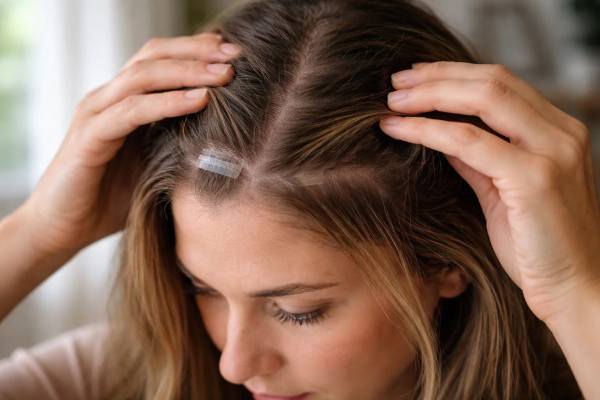
Extensions can add length, fullness, color variation, and styling flexibility in a way that feels transformative almost overnight. That is part of their appeal. They can also hide thinning, bridge a bad haircut, and reduce the need for daily heat styling when they are chosen and maintained well. But the same features that make extensions so effective can stress the scalp if the load is too heavy, the install is too tight, or the style stays in place long after the hair beneath it has shifted. Hair loss from extensions is usually not random. It tends to follow a pattern: constant tension, repeated friction, added weight, or inflammation at the attachment site. The good news is that early damage is often reversible. The harder truth is that chronic traction can lead to permanent loss if warning signs are ignored. The most helpful way to approach this topic is not to ask whether extensions are “good” or “bad,” but to understand which methods are higher risk, how to catch problems early, and what prevention habits protect follicles before a cosmetic choice becomes a medical one.
Quick Overview
- Extensions can add fullness and versatility, but they increase risk when tension, weight, and wear time build up together.
- Early traction-related thinning is often reversible if the style is loosened or removed quickly.
- Pain, bumps, burning, or a tightening sensation after installation are warning signs, not normal adjustment.
- Choose lighter installations, avoid edge placement on fragile hair, and remove or adjust the style promptly if symptoms appear.
Table of Contents
- How Extensions Trigger Traction
- Tape-Ins, Weaves, and Other Methods
- Early Signs You Should Not Ignore
- Prevention Before and During Installation
- What to Do If Thinning Starts
- Recovery Timelines and When to Seek Care
How Extensions Trigger Traction
Hair loss from extensions most often falls under traction alopecia, a form of hair loss caused by repeated pulling on the follicle. The concept sounds simple, but the biology is more layered than “tight hair equals bad outcome.” Follicles respond to three main forces at once: tension, weight, and time. One day of a firm style may cause soreness but not meaningful damage. A mildly tight style worn continuously for weeks, repeatedly reinstalled in the same area, is far more likely to create trouble. That is why extensions can seem harmless at first and then gradually produce edge thinning, part widening, or short broken hairs around attachment points.
The highest-risk areas are usually the hairline, temples, above the ears, and any part line that repeatedly bears the same pull. These are places where the natural density may already be lower and the individual hairs finer. Add a heavy extension, a tight braid base, or an attachment set too close to the scalp, and the follicle sits under constant mechanical stress. Early on, the damage may be inflammatory rather than permanent. You may see perifollicular redness, tiny bumps, tenderness, or hair casts clinging to the shafts. If the force continues, the follicle can miniaturize and eventually scar.
Not all “extension damage” is true follicle loss. Some people are dealing with shaft breakage instead. That distinction matters because snapped hairs need a different solution from root-level shedding. Breakage often appears as shorter uneven hairs near the bonds, tapes, or braid tracks, especially if the natural hair was already fragile from bleach, heat, or repeated brushing. If you are unsure which pattern you are seeing, comparing it with breakage versus true hair loss can help.
Extensions can also create secondary problems that worsen loss indirectly. A scalp that is hard to cleanse because the install is dense may develop buildup, itching, or folliculitis. Adhesives and synthetic fibers can irritate susceptible scalps. Nighttime friction, especially when heavy lengths pull while you turn in sleep, adds another small but repeated burden. None of these factors alone guarantees hair loss. The issue is cumulative load.
A useful mental model is this: the follicle does not care that the result looks beautiful. It responds to mechanics. That makes prevention more predictable than many people think. When you reduce weight, spread load wisely, respect fragile zones, and shorten the duration of tension, you lower risk. When you ignore pain because the style “just needs settling,” you usually move in the other direction. The earlier that pattern is recognized, the more likely it is that the hair can recover without lasting density loss.
Tape-Ins, Weaves, and Other Methods
No extension method is automatically safe or automatically damaging. The same technique can be well tolerated in one person and harmful in another depending on hair density, scalp sensitivity, installation skill, section size, and aftercare. Still, different methods tend to stress the scalp in different ways, and understanding those mechanics helps you choose more intelligently.
Tape-ins distribute weight across a wider attachment area, which can make them feel gentler than methods that hang from a tiny anchor point. That broader footprint can be an advantage, especially on medium-density hair, but it is not a guarantee of safety. Tape-ins become risky when the sections are too large, too heavy for the natural hair, placed too close to the hairline, or left to grow out too long. As the natural hair lengthens away from the scalp, the leverage on the tape point increases. Tangles and matting can then turn moderate tension into real breakage.
Sew-in weaves add a different kind of stress. Much of the risk comes from the braid foundation rather than the stitched weft alone. If the cornrow base is too tight, the follicles are under traction from day one. Then the added weight of bundles increases the pull over time, especially when the hair is worn long or dense. Weaves can also hide early warning signs because the scalp beneath them is harder to inspect. This is one reason edge thinning and thinning along braid tracks may progress quietly.
Keratin bonds, fusion tips, and similar individual attachments concentrate weight on smaller sections of hair. That precision can look very natural, but it also means a mismatch between bond weight and natural strand strength shows up quickly. If the donor hair is too heavy or the wearer naturally has fine, low-density hair, the attachment can behave like a small constant tugging force at many points across the scalp.
Clip-ins are different because they are usually not worn around the clock. Used occasionally and removed daily, they tend to carry less chronic traction risk than permanent or semipermanent methods. But “lower risk” is not the same as risk-free. Repeatedly clipping into the exact same spot can cause focal breakage or thinning, especially at the temples and crown. This is one reason many stylists rotate placement.
A practical way to compare methods is to ask four questions:
- How much weight is each section carrying?
- How concentrated is the pull at the attachment point?
- How many hours per day is that force present?
- Can the scalp be cleaned and monitored easily?
That framework often matters more than brand names. Some people looking for a lower-tension alternative do better with loose, removable camouflage rather than attached extensions. In that situation, a broader discussion of protective styles and traction risk can be more helpful than searching for a “safe” install that does not truly exist. The safest method is the one your own follicles can actually support.
Early Signs You Should Not Ignore
The earliest signs of extension-related damage are often easy to dismiss because they appear before obvious thinning. Many people assume discomfort after installation is normal, especially if the style looks neat and secure. In reality, pain is one of the clearest warnings that the tension is excessive. A style that causes persistent scalp soreness, temple tenderness, a pulling headache, or a need to avoid touching certain areas is not “settling in.” It is declaring stress.
Other early clues can be more visual than painful. You may notice small broken hairs around the perimeter, short flyaways that do not match the rest of the style, or tiny white sleeves known as hair casts clinging to strands near the base. Perifollicular redness, bumps, or acne-like lesions can mean traction folliculitis or irritation at the attachment site. Some people describe burning, itching, or stinging rather than pain. If the scalp starts to feel cleaner and calmer only after the extensions are removed, that is useful information.
The hairline deserves special attention. Traction often shows up first at the temples and frontal margins because those hairs are finer and more vulnerable. One classic clue is the “fringe sign,” where a thin row of retained hairs remains at the very front while density recedes just behind it. That pattern is worth taking seriously, because it often reflects ongoing traction rather than a random shed.
Watch for these warning signs:
- Pain or tenderness that lasts beyond the first day.
- Bumps, pustules, or redness along the hairline or tracks.
- A tightening sensation when moving the scalp or raising the eyebrows.
- Short snapped hairs near clips, tapes, or bonds.
- Thinning focused at the edges, temples, or part.
- More visible scalp after reinstalling the same style repeatedly.
It is also important to separate traction from inflammation. If you see scaling, marked redness, burning, or widespread itch, the issue may not be mechanical tension alone. Contact dermatitis, seborrheic dermatitis, or another inflammatory scalp problem may be part of the picture. A guide to scalp inflammation signs can help you think through when the scalp itself is asking for treatment, not just a different style.
A useful rule is this: hair loss from extensions rarely appears out of nowhere. The scalp usually gives notice first. People miss those notices because the style is expensive, time-consuming, or emotionally important, and removing it feels inconvenient. But early traction is exactly the stage where the problem is most reversible. Once thinning is obvious in photographs, you are already later in the process than you want to be. The best prevention tool is not a miracle serum. It is taking the scalp’s first complaints seriously enough to act on them.
Prevention Before and During Installation
Prevention starts before the first tape tab, braid, or bond is ever placed. The biggest mistake is choosing extensions based only on the finished look instead of the load your natural hair can actually bear. Fine, low-density, chemically lightened, postpartum, or actively shedding hair cannot support the same weight and tension as dense, untreated hair. When the mismatch is ignored, the install may look beautiful for a week and then begin to fail biologically.
A good prevention strategy begins with honest scalp triage. Delay extensions if you already have active shedding, scalp pain, psoriasis, folliculitis, or visible thinning at the edges. Adding traction to a vulnerable scalp is like building on unstable ground. If you still want coverage, temporary options that do not anchor heavily to the hair may be safer.
During consultation and installation, several principles matter:
- Choose the lightest hair that still gives the effect you want.
- Keep attachments away from the fragile perimeter and thinning zones.
- Match the extension weight to the density of the section holding it.
- Avoid installing onto inflamed, tender, or visibly weakened areas.
- Stop immediately if the style causes sharp pain or intense tightness.
For sew-ins, the braid base should feel secure but not rigid. For tape-ins, placement and section size matter more than many people realize. For bonds, the anchor should not feel like a pebble tugging at the scalp every time the hair moves. And for clip-ins, daily removal and rotation reduce the chance of focal stress.
Maintenance choices are part of prevention too. A technically good install can become a problem if it is worn far past its maintenance window, brushed aggressively at the root, or slept on without support. Heavier extension lengths pull more when wet, so rough towel-wrapping and sleeping with damp extensions can add avoidable stress. A softer sleep setup and less root-level tugging during detangling help more than people expect. Readers who wear tension-heavy styles regularly may also benefit from a broader look at traction alopecia from hairstyles, because the pattern is often cumulative across years, not tied to one single install.
A simple prevention checklist is worth saving:
- Assess whether your natural hair is strong enough right now.
- Choose a method that fits your density, not just your aesthetic goal.
- Avoid edge placement and fragile zones.
- Treat pain, bumps, and persistent tightness as failure signals.
- Keep up with maintenance before slippage and matting increase traction.
- Build in breaks if your scalp feels tender, itchy, or fatigued.
The most useful mindset is not “How long can I make this last?” but “How lightly can I wear this without asking too much of the follicle?” Extensions usually become safer when the goal shifts from maximum hold to minimum strain.
What to Do If Thinning Starts
The first priority is to reduce the source of traction quickly. That may mean loosening, repositioning, or fully removing the extensions depending on how severe the symptoms are. If you are seeing pain, bumps, or thinning along the edges, this is not the moment to squeeze a few more weeks out of an expensive style. Time matters. Follicles tolerate early injury much better than prolonged injury.
Once the style is removed, document what you see. Take clear photos of the temples, sideburn area, part line, and any affected tracks or attachment zones. That record is helpful because improvement from traction can be gradual, and memory tends to exaggerate both progress and decline. Then look closely at the pattern. Is the issue confined to attachment sites? Are there broken hairs, smooth patches, or signs of inflammation? Does the scalp burn, itch, or scale?
In the first phase, scalp rest is usually more important than active treatment. Avoid reinstalling extensions immediately into the same regions. Reduce heat, skip tight buns, and be gentle with brushing and washing. If there is visible inflammation, pustules, or marked tenderness, an evaluation is worth getting sooner rather than later. Early traction with folliculitis or scalp inflammation can sometimes be treated more effectively when addressed promptly.
What not to do is almost as important:
- Do not reinstall the same method on the same weakened areas.
- Do not conceal progressive edge loss with even tighter styling.
- Do not assume every short hair is new growth; many are broken hairs.
- Do not self-treat severe pain or pustules as a minor cosmetic issue.
If the thinning is mild and clearly linked to the style, conservative care and time may be enough. But if density keeps dropping after removal, if the scalp remains sore, or if you already had fragile edges before the extensions, professional evaluation becomes more valuable. This is especially true when the problem overlaps with other styling stressors such as braids, wigs with adhesive, chemical processing, or frequent slick styles. In uncertain cases, knowing when to see a dermatologist can prevent a preventable problem from becoming a chronic one.
There is also an emotional layer here. Extensions are often used because the person wants to feel more confident, more polished, or less self-conscious about thinning. Removing them can feel like losing a coping tool. That makes it tempting to replace one risky style with another immediately. But a scalp in recovery usually needs less concealment pressure and more biological quiet. Sometimes the smartest temporary solution is a lower-tension cosmetic alternative while the follicles reset. That is not giving up on style. It is choosing a strategy that keeps appearance goals from worsening the underlying loss.
Recovery Timelines and When to Seek Care
Recovery from extension-related hair loss depends on what was damaged. If the main issue is breakage, improvement may begin as soon as the mechanical stress stops, but the broken hair still needs time to grow out. If the main issue is early traction alopecia, regrowth can happen, but it is gradual. Follicles need time to cycle, and the visible gain usually lags behind the moment the damaging style is removed. If scarring has developed, however, complete regrowth may not occur.
That is why the timeline matters so much. Mild early traction may start to look better over several months, often with less tenderness first, then short regrowth hairs at the margins, and later more visible density. But if the area has been stressed repeatedly over years, especially with recurring edge pain or progressive temple thinning, the recovery ceiling becomes lower. Chronic traction is more likely to leave behind permanent reduction in density.
Signs that deserve medical review include:
- Hair loss that continues after extensions are removed.
- Smooth shiny areas with little visible regrowth.
- Persistent bumps, pustules, crusting, or scalp pain.
- Marked thinning at the frontal hairline or temples.
- A pattern that looks patchy rather than purely tension-based.
- Worsening despite rest and gentler styling.
A dermatologist may use examination, dermoscopy, or sometimes biopsy in unclear cases, especially if the loss could reflect scarring alopecia rather than simple traction. Treatment depends on stage. Early inflammatory cases may benefit from anti-inflammatory treatment and growth-supportive therapy. Later, more scarred cases may shift the conversation toward camouflage or transplant options rather than full reversal.
For some people, the safest cosmetic bridge during recovery is to move away from anchored extensions entirely. Lower-tension coverage from wigs and toppers may be easier on compromised follicles than trying to hide thinning with another install attached to already weakened hair. That is often an emotionally easier transition once people realize the goal is not just to look better next weekend, but to preserve enough viable hair for the next several years.
The central lesson is straightforward: extension-related hair loss is often preventable, often recognizable early, and sometimes reversible. But it stops being a small beauty issue once the scalp is repeatedly asked to tolerate pain, inflammation, and traction as the price of a style. If a look requires the follicle to stay under chronic strain, the follicle eventually files its complaint. The earlier you listen, the more options you keep.
References
- Traction alopecia: assessing the presentation, management and outcomes in a diverse urban population 2023
- The art of prevention: It’s too tight—Loosen up and let your hair down 2021 (Review)
- Traction Alopecia 2025 (Clinical Review)
- Considerations and recommendations on camouflage in alopecia in Black women 2023 (Review)
- Contact Sensitization to Allergens in Synthetic Hair and Related Hair Practices: A Review 2025 (Review)
Disclaimer
This article is for educational purposes only and is not a substitute for medical care or a professional scalp evaluation. Hair loss from extensions can overlap with breakage, contact dermatitis, folliculitis, and other forms of alopecia, including scarring conditions that need prompt diagnosis. Seek medical care for persistent pain, bumps, redness, crusting, patchy loss, or thinning that does not improve after the style is removed.
If this article helped, please share it on Facebook, X, or your preferred platform.