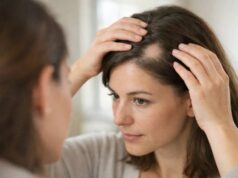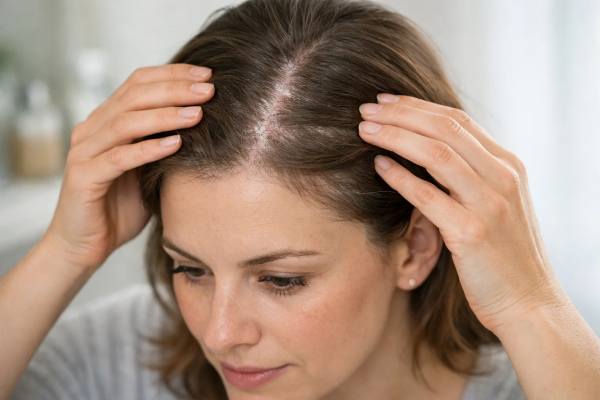
Scalp psoriasis can do more than cause flaking and itch. It can also change how your hair looks and feels, sometimes fast enough to be genuinely alarming. People often notice more strands on the pillow, a thinner-looking part, or short broken hairs around areas with thick scale. The fear, understandably, is that the follicles are being permanently damaged.
Most of the time, that is not what is happening. Hair loss from scalp psoriasis is usually a secondary effect of inflammation, scratching, heavy scale, and stress on the hair cycle rather than immediate destruction of the follicle itself. That difference matters, because it means regrowth is often possible once the scalp is calmer and the shedding trigger is removed. The harder part is that recovery can be slow, and several forms of hair loss can overlap at once.
A clear plan helps. When you understand what type of shedding psoriasis tends to cause, what makes it worse, and which treatments are most likely to restore the scalp environment, the path forward becomes much less confusing.
Essential Insights
- Hair loss from scalp psoriasis is usually non-scarring and often improves once inflammation, scale, and scratching are brought under control.
- Thick plaques can cause both true shedding and breakage, so the hair may look thinner even when the follicles are still active.
- Regrowth is possible in many cases, but visible recovery often trails behind symptom control by several months.
- Treat the scalp first, loosen scale gently, and escalate treatment early if plaques, pain, or shedding remain active despite good topical care.
Table of Contents
- How scalp psoriasis causes hair loss
- What psoriasis-related thinning looks like
- Can the hair grow back
- Treatments that support regrowth
- Daily care that protects follicles
- When hair loss needs a workup
How scalp psoriasis causes hair loss
Hair loss from scalp psoriasis is usually a chain reaction, not a single event. The plaques themselves are inflammatory. They create a scalp environment with redness, scale, itch, and repeated friction. Over time, that combination can push more hairs into a resting and shedding phase, weaken the hair shaft, and make the scalp less hospitable for normal growth.
The most common mechanism is localized telogen effluvium. In plain language, inflammation and stress around active plaques can shift more follicles than usual out of the growth phase and into the resting phase. Those hairs do not fall immediately. They shed later, which is why people sometimes notice sudden loss after a flare rather than during the very first days of it. This pattern can be unsettling because it feels abrupt, but it is often reversible.
Scratching is another major factor. Scalp psoriasis can itch intensely, and repeated scratching creates mechanical trauma on top of inflammation. Even when it does not pull hairs out from the root, it can roughen the cuticle and snap the shaft. That means some apparent “hair loss” is actually breakage. Thick adherent scale adds another layer of stress, because lifting or picking plaques can tug on attached hairs and remove them prematurely.
There is also a follicle-level effect. Psoriasis is centered in the skin, but severe or longstanding scalp involvement can spill over into the area around follicles. That perifollicular inflammation helps explain why some people shed directly from lesional skin. In most cases, the follicle survives. In a small minority of severe, chronic cases, especially when inflammation is poorly controlled for a long time, scarring change can occur. That is the exception, not the rule, but it is one reason persistent scalp psoriasis should never be treated as merely cosmetic.
A useful way to think about it is that the hair follicle often suffers from the combination of plaque, itch, and trauma more than from the visible scale alone. The thick white or silvery flake gets the attention, but the deeper problem is the inflammatory environment underneath it. That is why the most effective regrowth strategy is rarely a standalone “hair growth” product. It is control of the psoriasis itself.
If you want one framework to remember, it is this: inflammation slows the cycle, scratching adds trauma, and scale interferes with both comfort and treatment penetration. Recognizing these overlapping triggers makes the pattern much easier to distinguish from other forms of inflammation-related shedding.
What psoriasis-related thinning looks like
Hair loss from scalp psoriasis does not always look the way people expect. Many assume it will create a sharply defined bald patch inside each plaque. Sometimes it does create thinning that matches the active areas, but more often the picture is mixed. There may be diffuse shedding, local breakage, patchy reduced density, or all three at once.
One common pattern is thinning around the crown, part line, or areas with the thickest scale. The hair can seem flatter and less dense because the strands are coated, roughened, or broken in addition to being shed. On wash day, people may notice more hairs coming away with scale. That can look dramatic, but it does not automatically mean the follicle is scarred. Very often, the strand was loosely retained and released when scale softened or loosened.
Another clue is texture. Psoriatic scalp skin can make the hair feel coarse, dry, stiff, or difficult to separate. Tangling increases. Combing becomes more forceful. That friction leads to short broken hairs, especially near the temples, crown, or wherever plaques are thickest. This is one reason scalp psoriasis can create a misleading impression of rapid balding. The hair may be both shedding from the root and snapping along the shaft.
What does psoriasis-related loss usually not look like? It usually does not begin as a perfectly smooth round bald patch with normal skin. That type of presentation fits alopecia areata more closely. It also does not typically cause immediate permanent recession of the hairline in the classic male-pattern or female-pattern distribution. Psoriasis can coexist with those problems, but it does not usually mimic them exactly.
A few signs suggest the loss is still likely non-scarring:
- The scalp is inflamed and scaly rather than shiny and scar-like.
- Short regrowing hairs are visible once plaques improve.
- Hair density improves when the flare settles.
- The main problem is itch, scale, and shedding rather than steady expansion of bare skin.
A few signs raise more concern:
- Persistent shiny areas where follicles seem absent.
- Increasing pain or tenderness rather than simple itch.
- Pus, crusting, or bleeding from repeated trauma.
- Progressive loss despite good psoriasis control.
Another practical distinction is whether the hair coming out has a bulb at the end. If it does, that suggests true shedding. If many strands are shorter and uneven, breakage is probably adding to the picture. That difference matters because regrowth plans work better when you know whether you are treating follicle cycling, shaft fragility, or both. If you are unsure, it helps to compare what you are seeing with the clues in hair breakage versus true shedding.
Can the hair grow back
In most cases, yes. Hair affected by scalp psoriasis can often regrow, especially when the loss is driven by telogen shedding, scratching, or breakage rather than true scarring. That is the most reassuring and most important fact for readers who feel panicked when a flare starts to affect their hairline or part.
The catch is that recovery has its own timeline. Once the inflammation is controlled, the scalp does not instantly return to full density. Hair grows slowly, and visible improvement lags behind biological improvement. It is common for the itching and scale to improve first, then the shedding to slow, and only later for the mirror to show fuller coverage.
A realistic recovery sequence often looks like this:
- Active itch and redness calm down.
- Thick scale becomes less adherent.
- Hair shedding decreases over several weeks.
- Fine regrowth becomes visible.
- Overall fullness returns gradually over months.
That timeline varies with severity. Someone with mild plaques and mostly breakage may see a cosmetic difference fairly quickly once the scalp is treated and styling damage stops. Someone with months of heavy inflammation, large plaques, or diffuse telogen shedding may need much longer. It is not unusual for the scalp to feel better before the density looks better.
The key question is whether the follicle remained intact. In non-scarring psoriasis-related hair loss, it usually did. In rare longstanding severe cases, perifollicular fibrosis and follicle destruction can reduce the chance of full regrowth. This is why delayed treatment matters. The earlier inflammation is interrupted, the better the odds that the follicles return to normal cycling rather than staying in a chronically hostile environment.
Readers often ask whether they need a dedicated regrowth product immediately. Sometimes no. If the main driver is active scalp psoriasis, the first step is to control the disease. Hair often begins to recover once the plaque burden, itch, and repeated trauma are reduced. Trying to force growth on an inflamed scalp can miss the underlying problem.
Patience helps, but so does perspective. Recovery is not only about new growth. It also includes preserving the hair you still have. The less you scratch, pick, over-wash harshly, or tug through scale, the more intact the existing density remains while the follicles reset. That combination of better retention and gradual regrowth is what usually creates visible improvement.
If you want a practical benchmark, think in seasons rather than days. A scalp that is calmer this month may not look fuller until several months later. That is frustrating, but normal. The expected pace makes more sense when you understand how slowly scalp hair gains visible length after a shedding event.
Treatments that support regrowth
The best way to regrow hair lost from scalp psoriasis is to treat the scalp psoriasis effectively enough that the follicle can return to normal function. That means reducing inflammation, softening and clearing scale, controlling itch, and choosing vehicles that can actually get through hair and onto the skin.
For limited scalp disease, topical corticosteroids remain a core first step. On the scalp, the vehicle matters as much as the ingredient. Foams, solutions, gels, sprays, and medicated shampoos are often easier to use than thick ointments because they part through the hair more effectively and are more acceptable cosmetically. Adherence improves when treatment does not make the hair feel greasy or unmanageable.
Combination therapy is often even better than steroid alone for ongoing control. Topical vitamin D analog and corticosteroid combinations can help reduce inflammation while supporting longer-term management. In practice, many people do well with a stronger anti-inflammatory phase to calm the flare, followed by a maintenance approach that lowers the chance of rebound. That is especially important on the scalp, where people often stop treatment too soon because the routine feels inconvenient.
When plaques are thick, keratolytics can play an important supporting role. Agents that loosen scale make it easier for prescription treatment to reach the inflamed skin underneath. Without that step, medication may sit on top of plaque rather than penetrating where it is needed. This is one reason gentle, deliberate descaling can matter so much for regrowth: it is not just cosmetic, it improves treatment delivery.
For stubborn localized plaques, some clinicians use intralesional corticosteroids or phototherapy. For more extensive scalp involvement, psoriasis elsewhere on the body, or cases that do not respond adequately to topical treatment, systemic therapy may be the right move. That can include traditional oral agents or biologic therapy. The modern view is important here: scalp involvement is considered a special area, so severe scalp disease can justify escalation even when total body surface area looks modest.
A practical treatment ladder often looks like this:
- Calm the flare with scalp-friendly topical anti-inflammatory treatment.
- Add scale-softening support if plaques are thick.
- Reassess after a consistent trial rather than frequent switching.
- Escalate early if itch, bleeding, or shedding remain active.
- Consider systemic treatment when scalp disease is persistent or high burden.
Regrowth products come later, if at all. On an actively inflamed scalp, the priority is not stimulation but normalization. Once the psoriasis is controlled, the follicles are far more likely to resume their usual cycle. If scale is a major barrier, a thoughtful routine for removing buildup without extra irritation can be the difference between treatment that merely touches the hair and treatment that reaches the skin.
Daily care that protects follicles
Home care does not replace prescription treatment, but it can strongly influence whether a scalp flare causes a short-lived shed or a prolonged cycle of trauma. The guiding principle is simple: make the scalp easier to treat and harder to injure.
The first rule is do not pry off plaques. Picking can feel satisfying for a moment, but it often removes attached hairs, creates pinpoint injury, and leaves the scalp more inflamed than before. A better approach is to soften scale first, then wash or loosen it gently. That preserves more of the existing hair and reduces the urge to scratch.
Washing matters too. Many people start washing less because they see hairs come out in the shower. That can backfire. Infrequent washing allows more scale, product residue, and trapped shed hairs to accumulate, which makes the next wash look worse and can reduce medication penetration. Most people do better with a regular routine that matches how oily, scaly, or medicated the scalp is rather than avoiding shampoo out of fear. A useful starting point is a routine built around washing frequency for your scalp type rather than guesswork.
A protective daily routine often includes:
- Keeping nails short to limit scratch damage.
- Softening thick scale before washing instead of lifting it dry.
- Using prescribed scalp medication consistently, not only during bad days.
- Conditioning the hair lengths if strands feel dry from medicated products.
- Reducing hot tools, bleach, tight styles, and aggressive detangling.
The hair shaft deserves attention as well. Psoriasis is a scalp disease, but the hair pays for it when grooming becomes rough. Blow-drying on high heat, stiff brushes, strong fragrances, and frequent recoloring can magnify the appearance of loss by adding breakage. Even the most effective medical plan looks slower when the strands keep snapping.
It also helps to separate scalp care from hair-growth marketing. Many “regrowth” serums are poorly suited to a flaky, irritated scalp. They may sting, add fragrance, or create a second source of irritation. During an active flare, simplicity usually wins. A clear medicated plan, gentle cleansing, and less friction often do more than a crowded shelf of products.
One overlooked detail is consistency during improvement. As the itch settles, people often stop early and let inflammation smolder. That low-grade persistence can keep follicles in a poor environment even if the scalp looks somewhat better. Daily care works best when it is boring and repeatable. In scalp psoriasis, that steadiness often protects more hair than any dramatic one-off fix.
When hair loss needs a workup
Not every case of hair loss in someone with scalp psoriasis is caused by psoriasis alone. That distinction matters because the right treatment depends on the diagnosis, and several hair disorders can overlap on the same scalp.
A closer workup is especially important when the pattern looks atypical. Smooth round bald patches suggest alopecia areata more than psoriasis-related shedding. A receding frontal hairline or progressive crown miniaturization may indicate androgenetic hair loss. Heavy crusting, drainage, or tender pustules raise concern for infection or another inflammatory scalp disorder. If the scalp is very painful, shiny, or scar-like, a clinician may need to consider a scarring alopecia rather than simple psoriatic shedding.
You should also seek evaluation if the shedding continues after the psoriasis itself seems controlled. Once plaques, itch, and scratching have meaningfully improved, the amount of hair fall should usually begin to settle. If it does not, another trigger may be involved. Common contributors include iron deficiency, thyroid disease, recent illness, medication changes, rapid weight loss, low protein intake, and stress-related telogen effluvium.
A dermatologist may use several tools to sort this out:
- A scalp exam and dermoscopy to look at follicles and scale pattern.
- A hair-pull test to gauge active shedding.
- A review of timing, medications, and recent triggers.
- Blood tests when iron, thyroid, or nutrition questions come up.
- Occasionally, a scalp biopsy if scarring disease is a concern.
The timing of referral matters. The longer severe inflammation is left active, the harder it becomes to distinguish reversible shedding from evolving follicle damage. This does not mean every flare is urgent, but it does mean persistent loss deserves more than watchful waiting.
Book sooner rather than later if you notice:
- Bare areas that look smooth or scarred.
- Persistent shedding for months despite treatment.
- Marked scalp pain, bleeding, crusting, or pus.
- Loss of eyebrows or lashes.
- Fever, swollen lymph nodes, or signs of infection.
- Hair loss that is much more patchy than the plaques themselves.
One of the most useful clinical questions is whether the scalp looks inflamed and scaly or whether it looks smooth and empty. The first picture usually supports treatable, often reversible disease. The second deserves prompt expert evaluation. If you are uncertain whether psoriasis is the whole story, use that uncertainty as a reason to get help rather than wait. A focused visit about when thinning warrants specialist assessment can prevent months of avoidable trial and error.
References
- Psoriasis and Alopecia: Unveiling the Links 2025 (Review)
- Updates on Psoriasis in Special Areas 2024 (Review)
- Scalp Psoriasis: A Literature Review of Effective Therapies and Updated Recommendations for Practical Management 2021 (Review)
- Criteria for Identifying Candidates for Systemic Psoriasis Treatment in the Real World: Application of the International Psoriasis Council Guidelines in Patients in North America 2024
- Calcipotriol/Betamethasone Dipropionate for the Treatment of Psoriasis: Mechanism of Action and Evidence of Efficacy and Safety versus Topical Corticosteroids 2024 (Review)
Disclaimer
This article is for educational purposes only and is not a substitute for medical advice, diagnosis, or treatment. Hair loss with scalp psoriasis can overlap with alopecia areata, fungal infection, nutritional deficiency, androgenetic thinning, and scarring inflammatory disorders. Seek medical care for severe pain, bleeding, drainage, rapidly worsening loss, or any scalp area that appears smooth, shiny, or permanently thinned.
If this article helped, please share it on Facebook, X, or another platform you prefer so more people dealing with scalp psoriasis and hair loss can find clear, practical guidance.