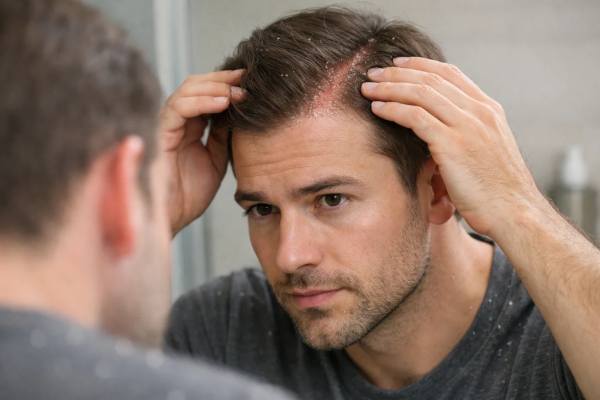
Hair shedding can be unsettling on its own. When it appears alongside itch, flakes, scalp tenderness, or greasy buildup, the question becomes more specific: can seborrheic dermatitis actually make hair fall out? In many cases, yes—but usually not in the way people fear. Seborrheic dermatitis is a chronic inflammatory scalp condition that can increase shedding, worsen breakage, and make thinning look more dramatic. What it usually does not do is permanently destroy follicles by itself.
That distinction matters. A flaky scalp is often treatable, and hair affected by seborrheic dermatitis commonly improves once inflammation is controlled. The challenge is that many people focus only on the visible dandruff and miss the deeper problem: an irritated scalp environment that keeps the shedding cycle going. Understanding the link between dandruff, inflammation, and hair loss helps you choose better treatment, avoid common mistakes, and spot the signs that suggest a different diagnosis. This guide breaks down what seborrheic dermatitis looks like, why it can trigger shedding, how long recovery takes, and when the scalp needs more than an anti-dandruff shampoo.
Core Points
- Seborrheic dermatitis can increase hair shedding, but the loss is usually temporary and improves when inflammation is brought under control.
- Itch, scratching, thick scale, and an irritated scalp barrier can all make thinning look worse even when follicles are still alive.
- Hair loss that is patchy, painful, or associated with pustules or shiny skin needs a closer medical evaluation.
- Overusing oils, harsh scrubs, or multiple medicated products at once can worsen irritation instead of calming it.
- A practical starting plan is to use a medicated shampoo 2 to 3 times weekly during a flare, leave it on for about 5 minutes, and track symptoms for 3 to 4 weeks.
Table of Contents
- How seborrheic dermatitis leads to shedding
- What seborrheic dermatitis looks like on the scalp
- When dandruff becomes a hair loss problem
- Treatment that calms the scalp and protects hair
- How long recovery takes and what to expect
- When to think beyond seborrheic dermatitis
How seborrheic dermatitis leads to shedding
Seborrheic dermatitis sits on the border between what many people call dandruff and what a clinician recognizes as a chronic inflammatory skin disorder. Dandruff is often the milder end of the same process. Once inflammation becomes more active, the scalp may itch, sting, scale, or feel tender—and the hair can start responding too.
The condition is thought to arise from several overlapping factors: excess oil production, an altered skin barrier, an inflammatory reaction, and the presence of Malassezia yeast on the scalp. Malassezia is part of the normal scalp ecosystem, but in susceptible people it seems to trigger more irritation and visible scaling. The result is not simply “dry scalp.” It is a more reactive scalp environment.
Hair shedding can happen for a few reasons.
- Inflammation can push more hairs into the resting phase, so they shed a few weeks later.
- Frequent scratching loosens hairs that were already near the end of their cycle.
- Thick scale and buildup can increase friction around the follicle opening.
- A sore, inflamed scalp often leads to harsher washing, more rubbing, and more breakage.
This is why seborrheic dermatitis can make hair feel thinner without behaving like a classic scarring alopecia. In most cases, the follicles are still there. The issue is that they are operating in a stressed environment. Once the scalp calms down, the excess shedding often eases as well.
A useful distinction is between shedding and permanent loss. Seborrheic dermatitis usually causes diffuse thinning or a temporary increase in daily fall, not smooth bald patches or scar-like shiny areas. The hair may seem to thin most where scaling is heaviest—often the crown, part line, temples, or hairline—but the follicles themselves are usually not destroyed by ordinary seborrheic dermatitis.
People are often surprised by how much scratching matters. Even low-grade itching repeated every day can keep the scalp inflamed. Some patients do not realize how often they rub or pick at scale until they are asked directly. That mechanical stress can magnify the appearance of hair loss, especially in longer hair where any reduction in density becomes more visible.
Another reason seborrheic dermatitis seems to “cause” hair loss is that it can uncover other thinning already in progress. If someone has early pattern thinning, the added inflammation and shedding from seborrheic dermatitis can make the hair suddenly look much sparser. The scalp then gets blamed as the whole problem when it is sometimes part of a layered picture.
If you are trying to decode whether the issue is mainly flakes, oil, or barrier imbalance, a guide to scalp pH, flakes, oil, and itch can help connect those symptoms more clearly.
What seborrheic dermatitis looks like on the scalp
Seborrheic dermatitis does not always look dramatic, especially early on. Many people expect bright red skin and obvious plaques, but the more common pattern is subtle: ongoing itch, flakes that reappear quickly after washing, a scalp that feels greasy and irritated at the same time, or scale that clings around the part and crown.
Typical scalp signs include:
- fine or greasy flaking
- yellowish or off-white scale
- itching that returns within a day or two of washing
- redness, or a darker inflamed tone on deeper skin tones
- tenderness or a stinging feeling when products are applied
- a scalp that seems oily at the roots but still feels uncomfortable
The distribution also matters. Seborrheic dermatitis often favors oil-rich zones. On the scalp, that commonly means the crown, frontal hairline, behind the ears, and the back of the scalp. Outside the scalp, people may also have scale in the eyebrows, around the nose, in the beard area, or in the ears. That wider pattern is a clue that the flakes are not just from weather, product residue, or infrequent washing.
The scale texture can help distinguish it from other conditions. Seborrheic dermatitis often produces softer, greasier flakes rather than the thick, silvery, sharply bordered plaques more typical of psoriasis. The scalp can look shiny from oil but still be inflamed underneath. Some people also notice increased odor, because oil, yeast, and retained scale can alter the scalp environment.
There is a common misconception that seborrheic dermatitis always looks “dirty.” In reality, many people wash often and still have symptoms. The problem is not poor hygiene. It is a chronic, relapsing inflammatory response in a scalp that tends to flare under certain conditions.
Common triggers include:
- stress
- sweating and heat
- long gaps between washes in people prone to oil buildup
- harsh hair products or fragranced leave-ins
- cold, dry weather in some individuals
- periods of illness or disrupted sleep
One detail that often helps with recognition is timing. If the scalp improves briefly after washing but symptoms rebound fast, seborrheic dermatitis rises on the list. Dry scalp tends to feel persistently tight and flaky, while seborrheic dermatitis often cycles between temporary relief and rapid return.
Itch is especially important. A scalp that is only mildly flaky but intensely itchy may be more inflamed than it looks. For some people, the sensory symptoms come first, and the visible scale becomes heavier later. That pattern is easy to dismiss until shedding begins.
If you are unsure whether the main problem is seborrheic dermatitis or another cause of itch, these comparisons with common itchy scalp causes can help you read the pattern more accurately.
When dandruff becomes a hair loss problem
Not every flaky scalp leads to noticeable hair thinning. The point where seborrheic dermatitis starts behaving like a hair problem is usually the point where inflammation becomes more persistent, scratching becomes habitual, or the condition overlaps with another cause of shedding.
Several signs suggest the scalp issue is no longer just cosmetic.
- You are seeing a clear jump in hairs on the pillow, in the shower, or on your brush.
- The ponytail feels smaller or the part line looks wider.
- Shedding is worse during active flares of itch and scale.
- The scalp feels sore, hot, or irritated when you move your hair.
- Hair looks thinnest in the same areas where scale is heaviest.
A useful clinical insight is that seborrheic dermatitis usually causes diffuse shedding, not sharply defined bald spots. The hair becomes less dense overall or in inflamed zones, but the scalp still has visible follicles. That is why treatment often helps recovery. The follicles are stressed, not gone.
The heavier the scale, the more likely it is that the scalp environment is contributing to shedding. Thick scale can trap oil, hold onto irritants, and tempt people to scrub aggressively. That creates a cycle: more inflammation, more scratching, more shedding, more anxiety, and then even more product use. In some patients, the mechanical damage from picking scale is almost as important as the inflammation itself.
There is also a lag effect. Hair does not respond to scalp inflammation instantly. Someone may have weeks of uncontrolled seborrheic dermatitis and only notice the shedding later. This makes it easy to miss the connection. By the time the hair fall becomes obvious, the flare that triggered it may already feel “better,” even though the follicles are still catching up.
Another reason dandruff becomes a hair issue is buildup. Heavy use of dry shampoo, thick oils, leave-in products, and infrequent cleansing can intensify scale and discomfort in susceptible scalps. That does not mean washing more harshly is the answer. It means the scalp needs targeted cleansing rather than random layering.
A simple way to assess severity is to ask three questions:
- Is the scalp itchy most days of the week?
- Does scale return quickly after washing?
- Has the amount of shedding increased during the same period?
If the answer is yes to all three, the scalp likely needs active treatment, not just a cosmetic routine change.
It is also worth remembering that breakage can mimic shedding. Hairs snapped by scratching, rough detangling, or rubbing off thick plaques may look like “hair loss” in the sink. If buildup is part of the problem, a gentle approach to removing scalp buildup without extra irritation is far more helpful than aggressive scrubbing.
Treatment that calms the scalp and protects hair
The treatment goal is not only to reduce flakes. It is to lower inflammation, reduce yeast overgrowth where relevant, stop the itch-scratch cycle, and create a scalp environment where hair can stay anchored more normally.
For many people, first-line treatment starts with a medicated shampoo. Common active ingredients include ketoconazole, selenium sulfide, zinc pyrithione where available, ciclopirox, salicylic acid, or coal tar, depending on the scalp pattern and product access. During active flares, these shampoos are often used 2 to 3 times per week. The contact time matters. Letting the lather sit on the scalp for about 5 minutes usually works better than rinsing immediately.
A practical wash strategy often looks like this:
- Wet the scalp thoroughly.
- Apply the medicated shampoo to the scalp, not mainly to the hair lengths.
- Leave it on for several minutes.
- Rinse well.
- Use a gentle conditioner on the mid-lengths and ends if needed, avoiding heavy application directly on the scalp.
If itch, redness, or soreness is more intense, a clinician may add a short course of a topical anti-inflammatory treatment. That is often the step that breaks a flare when shampoo alone is not enough. It matters because a scalp that still burns or itches after washing is often too inflamed to recover on cleansing alone.
Maintenance is just as important as flare control. Once symptoms settle, many people do well using a medicated shampoo once weekly or every 1 to 2 weeks, with a gentle non-medicated cleanser in between. Stopping treatment the moment the flakes disappear can lead to quick relapse, especially in oil-prone scalps.
Things that often make seborrheic dermatitis worse include:
- thick oiling of the scalp
- frequent scratching or scale picking
- harsh physical scrubs
- fragranced or alcohol-heavy scalp products
- rotating too many active products at once
- delaying washes for too long when the scalp is very oily
One common mistake is using soothing oils to “moisturize” a flaky scalp without asking whether the flakes are inflammatory. In seborrheic dermatitis, oil is not always the friend it seems. For some people, it traps scale, worsens buildup, and prolongs the flare.
Another mistake is assuming every flare needs stronger exfoliation. If the scalp barrier is already inflamed, acids and scrubs can backfire. That is especially true when the scalp stings on contact or when product use has become more complicated than the diagnosis.
If your symptoms started after coloring, bleaching, or a new leave-in, it is worth checking whether scalp contact dermatitis from hair products is overlapping with seborrheic dermatitis. That overlap is common and often missed.
How long recovery takes and what to expect
Hair recovery from seborrheic dermatitis is often slower than scalp symptom relief. That difference matters because many people stop treatment too early or assume it is not working when the itch improves but the hair still looks thin.
The scalp usually responds first. Flaking, irritation, and grease-related discomfort can start improving within 2 to 4 weeks of a consistent treatment routine. Some people feel less itch even sooner. Visible shedding, however, often lags behind. The follicle needs time to settle back into a more stable rhythm, and hair density in the mirror improves later than scalp comfort.
A realistic recovery sequence often looks like this:
- First 2 weeks: less itch, less stinging, and easier washing.
- Weeks 3 to 6: scale becomes lighter, flare frequency drops, and scratching decreases.
- Weeks 6 to 12: excess shedding often starts to slow.
- Months 3 to 6: new short regrowth may become easier to notice if the main trigger was seborrheic dermatitis alone.
This timeline is not fixed. Recovery can be slower when several factors are stacked together. Common reasons include pattern hair loss, recent illness, nutritional deficiencies, harsh styling, or an underlying inflammatory condition that was mistaken for seborrheic dermatitis.
It also helps to understand what “better” looks like. Improvement is not only fewer flakes. The most useful signs are:
- the scalp feels calmer between wash days
- you scratch less without thinking about it
- scale lifts more easily and returns more slowly
- shedding during washing begins to fall back toward your usual baseline
- the scalp looks less angry in the areas that were previously active
Photographs help more than memory. A weekly photo of the part line, crown, and hairline in the same lighting can show whether the scalp is calming and whether density is stabilizing. Day-to-day mirror checking often makes people feel worse because normal fluctuations seem larger than they are.
The biggest reason recovery stalls is inconsistency. A medicated shampoo used once, then forgotten for ten days, does not give the scalp a stable chance to reset. Another reason is undertreatment. Some scalps need more than antifungal cleansing and may require prescription anti-inflammatory therapy to end the flare properly.
If the scalp symptoms improve but hair density still seems unchanged after several months, think about overlap rather than failure. Seborrheic dermatitis may have been one contributor, but not the only one. Conditions such as scalp psoriasis can mimic or coexist with it, and a comparison with scalp psoriasis patterns and treatments can help clarify why some “dandruff” cases do not behave like routine seborrheic dermatitis.
When to think beyond seborrheic dermatitis
Seborrheic dermatitis is common, but it should not become a catch-all explanation for every itchy scalp with hair loss. Some signs point toward a different diagnosis, and those clues matter because the treatment and long-term risk can be very different.
The first major clue is pain. Seborrheic dermatitis can sting or feel irritated, but marked pain, deep tenderness, or burning out of proportion to the visible scale deserves closer evaluation. The second clue is the pattern of hair loss. Diffuse shedding fits seborrheic dermatitis more than sharply outlined patches, shiny bald areas, or loss centered around pustules and crusts.
Look beyond seborrheic dermatitis when you notice:
- patchy hair loss rather than general thinning
- pustules, boils, or crusted bumps
- scale that is very thick and tightly adherent
- plaques extending beyond the hairline
- smooth or shiny areas where follicles seem absent
- no meaningful response after 3 to 4 weeks of consistent treatment
- major flares tied to hair dye, fragrance-heavy products, or adhesives
A few common lookalikes deserve special mention.
Scalp psoriasis often produces thicker, more sharply bordered plaques and may extend beyond the hairline.
Contact dermatitis can cause burning, patchy scale, and run-off rash on the ears, neck, or forehead.
Folliculitis is more likely when bumps or pustules are prominent.
Tinea capitis should be considered when there are scaly patches with broken hairs, especially if tenderness or lymph node swelling is present.
Scarring alopecias raise concern when there is perifollicular scale, persistent pain, or loss of follicle openings.
One practical way to think about it is this: ordinary seborrheic dermatitis is messy and uncomfortable, but usually reversible. Conditions that scar are quieter in a more dangerous way. They may not produce dramatic flakes, yet they can keep advancing while being treated as simple dandruff.
This is why the dermatologist visit matters when the pattern is off. A clinician may use scalp examination, dermoscopy, patch testing, cultures, or occasionally biopsy to separate seborrheic dermatitis from a more specific inflammatory disorder.
If bumps, pustules, or painful crusting are part of the picture, it helps to compare your symptoms with common patterns of scalp folliculitis. That is especially useful when the scalp feels sore rather than simply itchy.
The bottom line is reassuring but important: seborrheic dermatitis can cause shedding, but hair loss that is severe, patchy, painful, or slow to recover should not be written off as dandruff alone.
References
- Seborrheic Dermatitis Revisited: Pathophysiology, Diagnosis, and Emerging Therapies—A Narrative Review 2025 (Narrative Review)
- Scalp Seborrheic Dermatitis: What We Know So Far 2023 (Review)
- Ketoconazole Shampoo for Seborrheic Dermatitis of the Scalp: A Narrative Review 2024 (Narrative Review)
- Allergic contact dermatitis of the scalp: a review of an underdiagnosed entity 2024 (Review)
- Updates on Psoriasis in Special Areas 2024 (Review)
Disclaimer
This article is for educational purposes only and is not a substitute for personal medical advice, diagnosis, or treatment. Seborrheic dermatitis can increase shedding and make hair thinning look worse, but persistent pain, patchy loss, pustules, or shiny scar-like areas need prompt evaluation by a qualified clinician. Do not self-treat ongoing scalp inflammation with prolonged steroid use, repeated harsh exfoliation, or multiple medicated products without a clear diagnosis.
If this article helped, please share it on Facebook, X, or another platform you trust so others can recognize when dandruff is acting more like an inflammatory scalp disorder.