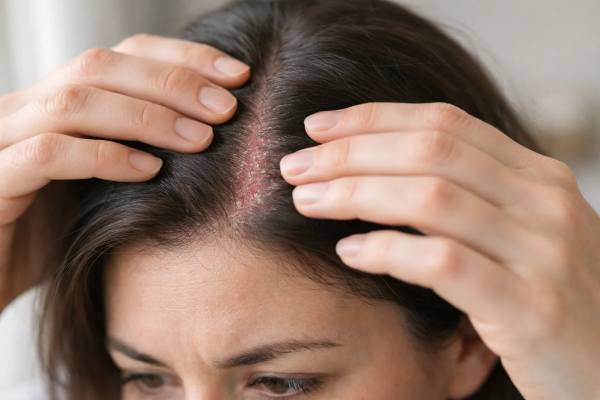
A scalp that feels itchy, sore, flaky, or hot is not just a comfort issue. In many people, it is an early warning sign that the scalp environment is becoming less friendly to normal hair growth. Inflammation can disrupt the follicle, increase shedding, worsen breakage, and in some conditions lead to permanent loss if treatment is delayed. That is why the most useful question is not simply “Why am I losing hair?” but also “What is my scalp trying to tell me?”
The good news is that many inflammatory scalp problems respond well when they are recognized early. A greasy yellow scale may point toward seborrheic dermatitis. Thick plaques that extend past the hairline suggest psoriasis. Burning, tenderness, pustules, or a shiny scar-like area raise a different level of concern. Once you know which signs matter, treatment becomes more focused and much more effective. This guide will help you connect symptoms, likely causes, and timing so you can tell the difference between a manageable flare and a scalp problem that needs prompt medical attention.
Quick Overview
- Early treatment of scalp inflammation can reduce shedding, calm symptoms, and help protect normal follicle function.
- Flaking with itch is often treatable, but pain, burning, pustules, and shiny scar-like patches need faster evaluation.
- Not all inflammation causes permanent hair loss, but scarring forms can damage follicles if they are missed.
- Avoid layering medicated shampoos, oils, and steroid products without a plan, because that can worsen irritation or mask the diagnosis.
- A practical starting step is to photograph the scalp weekly in the same lighting and track itch, pain, scale, and shedding for 2 to 4 weeks.
Table of Contents
- What scalp inflammation looks and feels like
- Why inflammation can trigger shedding
- Common conditions behind an inflamed scalp
- Signs your scalp needs treatment soon
- What treatment usually involves
- When to see a dermatologist quickly
What scalp inflammation looks and feels like
Scalp inflammation rarely announces itself with one symptom alone. More often, it shows up as a pattern: itching that keeps returning, tenderness when you move your hair, flakes that come back soon after washing, or areas that feel warmer, tighter, or more reactive than the rest of the scalp. Hair loss may appear later, which is why the earliest clues are often sensory rather than visual.
A useful way to think about an inflamed scalp is that the follicle sits inside active skin. When the surrounding skin becomes irritated or immune signals stay switched on, the follicle may start behaving differently. Some hairs loosen sooner than they should. Some break because the surface becomes rough and fragile. Some follicles miniaturize or scar if the process is intense and persistent.
Common symptoms include:
- itching that is frequent, not occasional
- burning, stinging, or a “hot scalp” feeling
- tenderness when touching the scalp or tying the hair back
- visible redness or a darker inflamed tone on deeper skin tones
- fine white flakes, greasy yellow scale, or thick adherent scale
- bumps, pustules, crusting, or areas that ooze
- a strong increase in daily shedding
- hair that seems thinner in the same areas where the scalp feels irritated
The texture of the scale often gives a clue. Fine, dry flaking can overlap with dryness or irritation. Greasy, yellowish scale often points more toward seborrheic dermatitis. Thick silvery scale with well-defined plaques suggests psoriasis. Scale that hugs individual hairs, especially around red follicles, can be more concerning because it may reflect inflammation centered on the follicle itself.
Pain is especially important. A mildly itchy scalp is common. A scalp that burns, aches, or feels sore when you part the hair deserves more attention. Follicle-centered inflammation is more likely to announce itself with tenderness, perifollicular redness, or the sense that the scalp “hurts” even when the skin does not look dramatic from a distance.
Another clue is distribution. Diffuse flaking across the scalp is different from one expanding patch at the crown, a receding inflamed hairline, or clusters of pustules on the back of the scalp. Pattern matters because it helps separate common inflammatory conditions from the scarring disorders that can quietly destroy follicles over time.
If you are unsure whether what you see is true flaking or simply dryness, it helps to compare the scalp signs with the patterns described in dandruff versus dry scalp. That distinction often changes the first treatment step.
The main point is simple: itch, scale, and tenderness are not cosmetic trivia when they persist. They are part of the clinical story. When these symptoms repeat, intensify, or line up with shedding, the scalp is usually asking for more than a gentler shampoo.
Why inflammation can trigger shedding
Hair growth depends on a calm, stable follicle environment. Inflammation disrupts that stability in several ways, and not all of them are obvious. Some forms create surface chaos with scale and redness. Others work deeper around the follicle, where immune cells, inflammatory signals, and tissue remodeling begin to interfere with normal growth.
The first mechanism is timing. Inflammatory stress can push more hairs into the resting phase, which later shows up as increased shedding. This is one reason people with a bad flare of scalp psoriasis, severe dermatitis, or a painful folliculitis can suddenly notice much more hair in the shower. The scalp problem came first. The shedding followed.
The second mechanism is mechanical. A scalp covered with crust, thick plaques, or heavy buildup is more likely to be scratched, rubbed, or aggressively cleansed. That repeated friction can snap fragile hairs or pull out hairs that were already loosened. In this setting, people may have both true shedding and breakage at the same time. If you are trying to tell those apart, the signs in breakage versus true hair loss can help you avoid misreading what is happening.
The third mechanism is follicle-specific inflammation. This is the one that matters most for long-term outcomes. When inflammation clusters around the opening of the follicle, the follicle itself becomes the target. Early on, that can cause redness, perifollicular scale, itch, or pain. Over time, some conditions begin to damage stem-cell-rich areas of the follicle. Once scar tissue replaces a functioning follicle, regrowth becomes much less likely.
That is why clinicians divide inflammatory hair loss into two broad groups:
- Non-scarring hair loss, where the follicle is stressed but still present.
- Scarring hair loss, where inflammation destroys the follicle and replaces it with fibrosis.
This distinction is more important than most people realize. Non-scarring inflammatory shedding often improves once the scalp disease is controlled. Scarring alopecias are different. The goal there is not only to reduce symptoms but to stop progression before more follicles are lost permanently.
Inflammation can also worsen other forms of thinning that were already underway. Someone with androgen-related thinning may suddenly look much sparser when seborrheic dermatitis or psoriasis becomes active. A person with naturally dense curls may not notice early shedding right away, but may notice discomfort, scalp visibility, or reduced volume in one region months later. Inflammation does not always act as the sole cause. Sometimes it acts as an amplifier.
This is also why symptom severity and hair severity do not always match. A scalp can itch intensely with limited visible loss, or feel only mildly irritated while a deeper scarring process is advancing. The lesson is not to rely on one signal alone. The best clues come from combining symptoms, pattern, and timeline. Persistent inflammation changes the growth environment. Once that happens, the hair often reflects the scalp’s condition with a delay rather than immediately.
Common conditions behind an inflamed scalp
Several very different scalp disorders can produce itch, scale, and hair thinning, which is why self-diagnosis often goes wrong. The goal is not to memorize every disease. It is to recognize the patterns that most often explain an inflamed scalp.
Seborrheic dermatitis
This is one of the most common causes of scalp inflammation. It tends to cause itch, greasy or yellowish flaking, and a scalp that feels irritated soon after washing even if it looked better for a day or two. The scale may collect around the crown, temples, behind the ears, or hairline. Hair loss is usually temporary and related to inflammation, scratching, or associated shedding rather than permanent follicle destruction. A guide to seborrheic dermatitis symptoms and triggers is often useful when the scalp feels both oily and flaky.
Psoriasis
Scalp psoriasis often creates thicker, more defined plaques than seborrheic dermatitis. The scale can be silvery, the borders sharper, and the plaques may extend beyond the hairline onto the forehead, neck, or around the ears. The itch can be intense. During active flares, temporary shedding is common. In severe cases, the inflamed plaques can lead to more obvious thinning.
Allergic or irritant contact dermatitis
This is the pattern to suspect when symptoms began after a dye, fragrance-heavy product, oil blend, preservative-rich scalp serum, adhesive, or topical medication. Burning and stinging are especially suggestive. The scalp can become red, tender, flaky, or swollen. Sometimes the face, ears, or neck react too. Repeated exposure can keep the inflammation smoldering for months.
Folliculitis
When the scalp develops bumps, pustules, crusts, or painful areas, think beyond ordinary dandruff. Some folliculitis is mild and short-lived. Other forms are chronic and destructive. Clusters of pustules, crusting, and hairs emerging in tufts from one opening are more concerning because they can signal an inflammatory disorder that scars.
Scarring alopecias
This group includes disorders such as lichen planopilaris, central centrifugal cicatricial alopecia, and folliculitis decalvans. They often share a theme: the inflammation is directed at or around the follicle itself. Warning signs include perifollicular scale, burning, tenderness, a shiny surface, patchy loss that slowly expands, and loss of visible follicle openings. One particularly useful sign is persistent perifollicular scaling, which is discussed in more detail in perifollicular scaling and what it can signal.
Alopecia areata
This condition is immune-mediated, but it does not always look overtly inflamed on the surface. The classic sign is a smooth patch of hair loss rather than a flaky red plaque. Still, it belongs in the differential when someone assumes every patch of hair loss must be caused by dandruff or irritation.
The overlap between these conditions is exactly why persistent symptoms deserve proper assessment. Two people can both say “my scalp is itchy and my hair is falling out” and have completely different diagnoses.
Signs your scalp needs treatment soon
Many people delay treatment because they assume the scalp is merely “sensitive,” “dirty,” or reacting to weather. In reality, inflammatory scalp disease becomes more treatable when the early signs are taken seriously. The key is knowing which patterns suggest a routine flare and which suggest a condition with a higher risk of ongoing follicle damage.
The scalp usually needs active treatment soon when symptoms are persistent, escalating, or beginning to change how the hair looks. That includes not only visible loss, but also a widening part, a thinner ponytail, increased scalp show-through, or breakage concentrated in irritated areas.
The most important warning signs are:
- itch or burning that lasts more than 2 to 4 weeks
- recurrent flaking that clears briefly, then returns fast
- tenderness, soreness, or pain with touching the scalp
- thick adherent scale or crust that does not lift with normal washing
- pustules, pimples, or oozing spots
- a bad flare after hair dye, fragrance-heavy products, or new scalp treatments
- patchy hair loss rather than diffuse shedding
- shiny areas, smooth scar-like skin, or loss of visible follicle openings
- shedding that is clearly worse where the scalp is red or scaly
A useful question is whether the scalp symptoms came first. If the scalp was itchy, flaky, or burning for weeks before the hair started thinning, that sequence strongly suggests the scalp disease is part of the cause rather than a side note.
Another high-value clue is location. Hairline involvement, a sore crown, patches at the vertex, or recurrent pustules on the back of the scalp deserve more urgency than mild diffuse flaking alone. Likewise, symptoms that disrupt sleep or make washing painful are not minor. They often mean inflammation is more active than the mirror suggests.
Do not ignore product history. Many people start with a mild scalp issue, then worsen it by layering essential oils, exfoliating acids, steroid products borrowed from someone else, and frequent shampoo switching. When the scalp barrier is inflamed, too many “treatments” can keep the cycle going. If the flare started after dye or styling products, it is worth reviewing signs of scalp contact dermatitis from hair products before using more active ingredients.
There is also a time threshold. If a basic anti-flake approach has been done consistently for 3 to 4 weeks with no clear improvement, continuing the same routine blindly is usually not the answer. Escalation may be needed, especially when hair loss is becoming visible.
The big mistake is waiting for bald spots before taking inflammation seriously. By the time the scalp looks obviously thinned in the mirror, the process has often been active for longer than it felt. Treatment works best when it is aimed at the symptom pattern early, not after months of guessing.
What treatment usually involves
Treatment works best when it matches the type of inflammation. That sounds obvious, but many scalp routines fail because they treat every itchy, flaky scalp as if it were the same condition. It is not. The goal is to calm inflammation, remove scale safely, protect the barrier, and reduce the chance that follicle stress turns into sustained shedding.
For mild to moderate seborrheic dermatitis, treatment often starts with a medicated shampoo rather than a leave-on serum. Common options include antifungal or anti-flake shampoos used 2 to 3 times per week during active phases, with a gentler cleanser on other wash days. Contact time matters. Leaving the lather on for about 5 minutes before rinsing often works better than washing quickly and repeatedly. A separate guide to anti-dandruff shampoo ingredients can help when labels are confusing.
When inflammation is stronger, clinicians often add a short course of anti-inflammatory treatment, especially if the scalp is very itchy, red, or tender. This is where prescription solutions, foams, or lotions are commonly used. Short-term control matters because constant scratching and friction can prolong shedding even after the primary trigger starts to settle.
Psoriasis often needs a slightly different approach. Thick scale may need softening first, then anti-inflammatory treatment to bring the plaques down. If plaques are widespread, very stubborn, or involve other body sites, topical care alone may not be enough. A more detailed look at scalp psoriasis symptoms and treatment options can help you recognize when it has moved beyond routine flaking.
Contact dermatitis is less about the perfect treatment product and more about stopping exposure. The right move is often subtraction: stop the likely trigger, simplify the routine, and let the scalp barrier recover. Fragrances, dyes, preservatives, adhesives, and certain botanical oils are frequent problems. If the trigger is not obvious, patch testing may matter more than buying another soothing serum.
Scarring inflammatory conditions usually require earlier specialist care and a more targeted plan. Treatment is aimed at lowering active inflammation and preserving the follicles that remain. That may include topical therapy, injections into active areas, oral anti-inflammatory medicines, or other systemic treatment depending on the diagnosis. The most important benefit is not cosmetic speed. It is limiting progression.
Whatever the diagnosis, a few habits help almost everyone:
- avoid scratching, picking plaques, or forcefully lifting crusts
- pause harsh scalp scrubs and multiple leave-on actives
- avoid very tight hairstyles during active inflammation
- wash often enough to control scale, not so aggressively that the barrier worsens
- take progress photos once weekly instead of checking hourly in the mirror
The biggest practical insight is that treatment success is measured first by symptom quieting. Less itch, less soreness, less scale, and fewer new inflamed spots usually come before visible density recovery. Hair often needs extra time to reflect the scalp’s improvement.
When to see a dermatologist quickly
Some scalp problems can wait for a routine appointment. Others should move to the front of the list because delay increases the chance of long-term follicle damage. The challenge is that severe disease is not always dramatic. A person can have only one small but tender patch and still need prompt attention.
Book faster evaluation when any of the following are present:
- patchy hair loss with redness, scale, or tenderness
- burning or pain rather than simple itch
- pustules, crusts, or areas that ooze
- scalp symptoms that keep returning despite 3 to 4 weeks of consistent care
- a shiny or smooth patch where follicle openings seem to be disappearing
- loss focused at the crown, frontal hairline, or one enlarging area
- worsening thinning after hair dye or scalp products
- scalp symptoms plus eyebrow loss, lash loss, or skin changes elsewhere
- fever, swollen lymph nodes, or signs of infection
A dermatologist is especially valuable when the differential includes scarring alopecia, psoriasis, allergic dermatitis, or a folliculitis that needs culture, biopsy, or prescription therapy. In those cases, guessing can cost time. Sometimes the scalp looks like stubborn dandruff on the surface while the real process is deeper and more destructive.
It also helps to arrive prepared. Bring a short timeline:
- when the itch, pain, or scale began
- when hair shedding or thinning became noticeable
- all products started in the 2 to 3 months before the flare
- body sites involved besides the scalp
- whether the problem is constant or comes in flares
Photos matter too. A weekly part-line photo, crown photo, and hairline photo in the same lighting can reveal progression that memory misses. This is especially useful for crown thinning, expanding patches, or hairline change.
In some cases, a scalp exam alone gives the answer. In others, the dermatologist may use dermoscopy, patch testing, cultures, or a biopsy. A biopsy sounds intimidating, but when scarring alopecia is on the table, it can be the fastest way to protect remaining hair by identifying the inflammatory pattern early.
Do not wait for complete certainty before seeking help. If the scalp is painful, patchy, pustular, or leaving shiny areas behind, the problem has moved beyond ordinary flaking. That is also the point where a broader review of when hair and scalp symptoms warrant a dermatologist becomes useful.
The most reassuring truth is that many inflammatory scalp disorders improve once the right diagnosis is made. The earlier the pattern is recognized, the better the chance of calming symptoms and preserving density.
References
- Seborrheic Dermatitis Revisited: Pathophysiology, Diagnosis, and Emerging Therapies—A Narrative Review 2025 (Narrative Review)
- Updates on Psoriasis in Special Areas 2024 (Review)
- Allergic contact dermatitis of the scalp: a review of an underdiagnosed entity 2024 (Review)
- Alopecia Areata: An Updated Review for 2023 2023 (Review)
- Lichen Planopilaris Trichoscopy in Caucasian Scalp: A Review 2024 (Review)
Disclaimer
This article is for educational purposes only and does not replace medical advice, diagnosis, or treatment. Scalp inflammation can range from common dandruff-like conditions to disorders that may scar hair follicles. Persistent pain, burning, pustules, patchy loss, or shiny scar-like areas should be evaluated by a qualified clinician, ideally a dermatologist. Do not start prolonged steroid treatment, antibiotics, or multiple medicated scalp products without a clear diagnosis.
If this article was helpful, please share it on Facebook, X, or another platform you use so others can recognize the signs of scalp inflammation earlier.