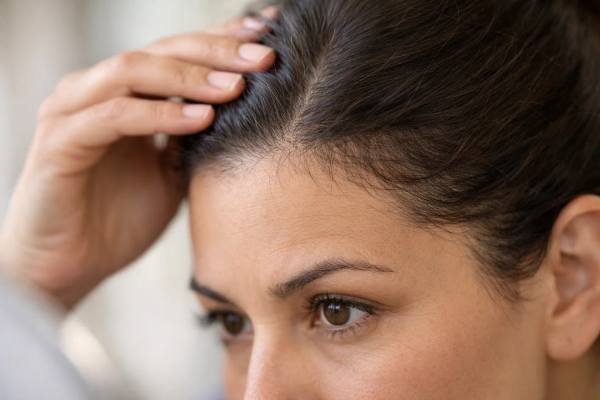
Hairline “baby hairs” can be reassuring or frustrating depending on what they really are. Sometimes they are a sign that the follicle is active again and new growth is coming in. Other times they are not new hairs at all, but snapped strands caused by tension, heat, chemicals, or rough handling. The challenge is that both can look similar at first glance: short, wispy hairs clustered around the forehead and temples.
That is why this question matters so much. If the short hairs are regrowth, the goal is to protect them and give the cycle time to continue. If they are breakage, the plan has to change. You need to reduce damage, remove the trigger, and sometimes investigate hairline loss or scalp disease. The hairline is also a tricky area because it naturally contains finer, shorter hairs than the rest of the scalp. In other words, not every little hair at the edge is a problem, and not every fuzzy halo is progress.
The most useful answer comes from pattern, texture, tip shape, timing, and what else is happening on the scalp. Once you know what to look for, the difference becomes much easier to read.
Core Points
- True regrowth usually feels soft, tapered, and evenly anchored from the scalp rather than frayed or snapped mid-strand.
- Breakage is more likely when short hairs feel rough, appear at mixed lengths, and show up after tight styling, bleaching, heat, or friction.
- Some fine hairs at the hairline are normal and do not automatically signal damage or recovery.
- Pain, burning, pustules, heavy scale, or a steadily receding hairline should not be dismissed as simple baby hairs.
- Check the same hairline area in bright natural light every 6 to 8 weeks instead of judging progress day to day.
Table of Contents
- What baby hairs at the hairline really are
- Signs they are true regrowth
- Signs they are really breakage
- Why short hairs can look so confusing
- How to protect regrowth and stop breakage
- When the hairline needs medical attention
What baby hairs at the hairline really are
The phrase “baby hairs” is convenient, but medically it lumps together several different things. Some are normal short hairs that have always lived at the hairline. Some are brand-new regrowth after shedding. Some are miniaturized hairs that have become finer and shorter over time. And some are broken strands that used to be longer but snapped before reaching full length.
That is why the first step is to stop assuming that every short hair means the same thing. A healthy hairline often has a soft border made of finer hairs. These may never grow as long or thick as the rest of the scalp hair, and they can be especially visible when the hair is pulled back tightly or styled with gel. In many people, they are simply part of the normal transition zone between forehead skin and terminal scalp hair.
True regrowth is different. It appears when a follicle re-enters an active growth phase after shedding or after a trigger has been removed. This can happen after postpartum shedding, illness, rapid weight loss, stress, traction, or treatment for pattern hair loss. Because hair grows in cycles rather than all at once, regrowth often appears as a soft fringe of short new hairs that slowly lengthens over months. If you want the broader context for why this takes time, the hair growth cycle explains why visible improvement tends to lag behind the moment recovery actually begins.
Miniaturized hairs create a third category. In pattern hair loss, some follicles gradually produce thinner, shorter hairs instead of strong terminal hairs. These miniaturized hairs can look like baby hairs, but they are not a sign of recovery. They are often softer, lighter, and less substantial than the neighboring strands, and they tend to persist in areas where density is slowly declining rather than returning.
Then there is breakage. Breakage is a shaft problem, not a root problem. The follicle may still be active, but the strand cannot stay intact long enough to reach full length. Around the hairline, this is common because the area is exposed to brushing, heat tools, edge control products, tension from ponytails or braids, and friction from scarves, bonnets, hats, and pillowcases.
So when someone asks, “Are these baby hairs regrowth or breakage?” the real answer is usually one of four things: normal edge hairs, true regrowth, miniaturization, or snapped strands. The appearance alone can mislead. The more reliable answer comes from how the hairs feel, how uniform they are, where they sit, what their ends look like, and what has been happening to the rest of the hairline.
Signs they are true regrowth
Regrowth has a certain logic to it. It tends to look organized, anchored, and consistent with a recovery story. If the short hairs showed up a few weeks to a few months after a shedding event, after loosening tight styles, or after starting a treatment such as minoxidil, that timing already pushes the answer toward regrowth.
One of the most useful clues is the tip. New hairs that have never been cut or snapped often have a naturally tapered end. They look soft and pointed rather than blunt. This is not a perfect rule, because styling and grooming can still affect the tips, but it is a helpful pattern. Regrowth also tends to emerge from the scalp in a way that looks even and intentional. The hairs may be short, but they look rooted, flexible, and progressively longer over time rather than stuck at the same fragile length.
Texture matters too. Regrowing hairs usually feel softer and more intact than broken hairs. They may be fine at first, but they do not usually feel rough, crispy, or bent in odd directions. They often move with the rest of the hair instead of poking outward like snapped fibers. In many cases, you will also notice that the hairs are gradually becoming more numerous or slightly longer over 6 to 12 weeks.
The surrounding pattern helps even more. Regrowth is more believable when it follows a known shedding phase. Common examples include:
- Postpartum shedding followed by a fringe of short hairs along the front.
- Recovery after a febrile illness or major stress.
- Early response after removing tight hairstyles.
- New hairs appearing after consistent use of a treatment plan.
- Diffuse shedding that slows down before the short hairs become obvious.
Another clue is that the rest of the scalp begins to make sense too. The shedding may be easing, the part may look less wide, or the hairline may feel fuller at the roots even before length returns. If the short hairs are part of that bigger pattern, regrowth becomes more likely. Readers sorting out whether they are dealing with recent shedding or a slower thinning process may find these shedding-versus-hair-loss differences helpful.
It also helps to remember that regrowth does not appear all at once or all at the same thickness. Early regrowth can look almost translucent. Some hairs are initially finer and then become stronger in later cycles. That means new growth may still look imperfect, fluffy, or uneven at first. The key question is not whether it looks polished. The key question is whether it is slowly advancing. Regrowth tells a forward-moving story. Breakage usually tells a stalled or repetitive one.
Signs they are really breakage
Breakage tends to look more chaotic than regrowth. The short hairs may be there, but they do not seem to progress. They remain stubby, uneven, and fragile, often with a rough feel or visible damage along the shaft. Instead of a soft new fringe, the hairline can look frayed.
The first major clue is mixed length. With breakage, the hairs are often all different sizes in a way that looks accidental. Some are a few millimeters long, some are one inch, some are three inches, and many seem to stop at random points. That is because the strands are snapping at different stages rather than growing out together from the root. Regrowth can be uneven too, but it is usually more coherent and becomes easier to recognize over time.
The second clue is the end of the strand. Broken hairs often have blunt, split, white-specked, or feathered ends rather than a fine tapered tip. Sometimes the damage is obvious only under magnification, but even without it, the overall look can seem worn rather than newly grown. Hair shaft disorders such as trichorrhexis nodosa and other breakage patterns often reflect repeated weathering from heat, chemicals, friction, or grooming stress.
Texture is another giveaway. Breakage-prone hairs may feel dry, stiff, crunchy, or weak when rolled between the fingers. They may kink, bend, or fold more easily than healthy short regrowth. The hairline may also look worse after wash day, brushing, edge styling, or heat, because the issue is mechanical damage rather than a quiet recovery process.
Then there is the trigger history. Breakage becomes much more likely when the hairline has been exposed to one or more of these:
- Tight ponytails, slick buns, braids, loc retwists, or extensions.
- Repeated use of flat irons, hot combs, or blow-dry tension.
- Bleach, relaxers, perms, smoothing treatments, or strong color changes.
- Heavy edge control products followed by brushing or scraping.
- Friction from scarves, helmets, wigs, or tight headbands.
- Habitual touching, twisting, or brushing of the front hairs.
Breakage also tends to stay localized to areas of stress. If the short hairs cluster where a brush, elastic, scarf, or extension pulls hardest, that is more suspicious for shaft damage than for general regrowth. You may also see more shedding of short pieces rather than long hairs with bulbs attached.
A final clue is repetition. Regrowth gradually changes the hairline. Breakage keeps recreating the same problem. If the front always looks fuzzy, never gains meaningful length, and worsens right after a styling routine, assume breakage until proven otherwise. Follicles can be healthy while the strands fail. That is why the hairline can feel stuck even when growth at the root has not completely stopped.
Why short hairs can look so confusing
The reason this question is hard is that several very different conditions can create short hairs around the hairline at the same time. A person may have some normal fine edge hairs, some true regrowth after shedding, and some breakage from styling all within the same inch of scalp. That overlap is why people often misread what they are seeing.
Traction is one of the biggest sources of confusion. Repeated tension can both break the strand and injure the follicle. Early on, the hairline may show broken hairs, reduced density, and a fringe of finer retained hairs. Later, if the tension continues, the area can progress toward more permanent loss. That makes the front edge tricky to interpret because short hairs can represent recovery, damage, or miniaturized “survivor” hairs all at once. If tight styling has been part of the routine, traction alopecia from hairstyles should stay high on the list.
Pattern hair loss can also muddy the picture. Miniaturized hairs near the frontal hairline or temples may look like baby hairs because they are thin and short, but they are not necessarily new. They may represent follicles producing weaker hairs over time. In this situation, the hairline may look less dense overall, the part may widen, and the short hairs may never seem to thicken into normal strands.
Shedding disorders add another layer. After telogen effluvium, many people notice new short hairs around the hairline because that is where regrowth is easiest to see. But if the same person is also using heat aggressively or wearing tight styles while the hair is fragile, some of those new hairs may break before they mature. The result is a mixed picture: real recovery hidden inside ongoing damage.
The natural anatomy of the hairline adds to the confusion. The frontal border is not supposed to look like the crown. It often contains finer, shorter, softer hairs by design. In some people they are wispy and obvious; in others they blend into the rest of the hair. Ethnicity, hair texture, hormonal background, styling habits, and age all shape that border.
Even products can distort the picture. Gel, wax, edge control, and strong hold sprays can glue fine hairs together and make them look broken. On the other hand, humidity can make short intact hairs spring upward and seem frizzier than they really are.
That is why no single clue is enough. One photo, one wash day, or one glance in the mirror can fool you. A better read comes from the full pattern: tip shape, texture, length distribution, triggers, scalp symptoms, and whether the hairline is slowly improving, staying stuck, or steadily receding. The answer is usually hidden in the trend, not in one strand.
How to protect regrowth and stop breakage
Once you suspect what the short hairs represent, the next step is practical. If you think they are regrowth, treat them like fragile new fibers. If you think they are breakage, remove as many sources of stress as possible. In both cases, the hairline benefits from less tension, less friction, less heat, and more patience.
Start with mechanics. The front hairline does not tolerate force well. Loosen ponytails, buns, braids, and extension installs. Avoid hard brushing with edge tools or boar-bristle brushes on dry, product-coated hairs. Use fingers or a soft brush to arrange the front gently. If you rely on heat, lower the temperature and reduce frequency. A good heat protectant strategy will not make hair indestructible, but it can reduce some of the cuticle stress that contributes to snapping.
Then look at the routine itself. A hairline that is constantly re-wet, re-gelled, brushed flat, and then washed aggressively is being stressed multiple times a day. Simplifying the routine often helps more than adding another serum. Focus on a few basics:
- Cleanse the scalp and hairline gently but consistently.
- Condition the front lengths well enough to reduce friction.
- Detangle with slip instead of dragging a brush through dry ends.
- Sleep with less rubbing and compression at the hairline.
- Give the front edge regular breaks from sculpted styles.
If true regrowth is the goal, time matters. Hair does not become a face-framing layer in two weeks. It needs repeated cycles of undisturbed growth. That is why “protecting the evidence” is so important. Many people begin to regrow, then repeatedly snap the new hairs off during styling and conclude that nothing is happening.
If the pattern points to shedding, miniaturization, or a medical cause, hairline care alone will not be enough. You may need to address the trigger, improve nutrition, adjust a medication plan, or use a targeted treatment such as minoxidil under professional guidance. The mistake is thinking that a cosmetic fix can override a follicle problem.
Track progress in a disciplined way. Every 6 to 8 weeks, photograph the same temple or frontal area with dry hair, no edge control, and the same lighting. Check whether the hairs are lengthening, thickening, and becoming more numerous. That slow comparison is far more reliable than daily mirror checks, which magnify anxiety and blur real change.
The hairline responds best when the routine becomes boring in the best possible way: gentle, consistent, and low drama. Recovery rarely looks dramatic at first. It looks like fewer setbacks.
When the hairline needs medical attention
Not every fuzzy hairline needs a dermatologist, but some definitely do. The main red flag is that the short hairs are accompanied by clear signs of loss, inflammation, or progression rather than quiet recovery. When that happens, “baby hairs” can become a misleading label that delays real treatment.
Pain, burning, tenderness, heavy itch, pustules, thick scale, crusting, or scalp soreness all deserve attention. Those symptoms suggest that the issue may involve inflammation, infection, dermatitis, or a scarring process rather than ordinary regrowth or simple shaft breakage. A steadily receding frontal edge is another warning sign, especially if the skin looks smoother, shinier, or more exposed over time.
Pattern also matters. Seek evaluation sooner when you notice:
- A hairline that is clearly moving backward.
- Eyebrow thinning along with frontal hair loss.
- Loss concentrated at the temples with tight-style history.
- Persistent short hairs that never gain length despite gentler care.
- Patchy loss rather than a soft diffuse fringe.
- Breakage plus marked shedding from the rest of the scalp.
A clinician may use the history, scalp exam, trichoscopy, and sometimes laboratory testing or biopsy to separate breakage from miniaturization, traction, shedding disorders, or scarring alopecia. That distinction is not academic. It changes the treatment plan and the urgency. Some causes mainly need better hair practices. Others need medical therapy to prevent permanent loss. For a broader checklist, when to see a dermatologist for hair loss is a useful next step.
It is also worth getting help when the emotional uncertainty becomes the main problem. Hairline changes are small in size but large in visibility. People stare at them every morning. That can lead to overchecking, overtreating, and aggressive styling attempts that make the issue worse. A clear diagnosis often reduces that cycle by replacing guesswork with a plan.
In the end, the most honest question is not “Do I have baby hairs?” It is “What are these short hairs telling me?” If they are regrowth, you want to protect them. If they are breakage, you want to stop the injury. If they are a sign of miniaturization or inflammation, you want to act early. The hairline can be subtle, but it is usually not silent. Read the pattern carefully, and it will tell you what needs to change.
References
- Hair Shaft Disorders in Children – An Update – PMC 2023 (Review)
- The biomechanics of splitting hairs – PMC 2024 (Review)
- The exposome impact on hair health: etiology, pathogenesis and clinical features ‒ Part I – PMC 2024 (Review)
- Treatment of Androgenetic Alopecia: Current Guidance and Unmet Needs – PMC 2023 (Review)
- Traction Alopecia – StatPearls – NCBI Bookshelf 2025 (Clinical Review)
Disclaimer
This article is for educational purposes only and is not a substitute for personal medical advice, diagnosis, or treatment. Short hairs at the hairline can reflect normal anatomy, regrowth, breakage, traction, pattern hair loss, or inflammatory scalp disease. Persistent recession, scalp symptoms, patchy loss, or worsening thinning should be evaluated by a qualified medical professional.
If this article helped you, please share it on Facebook, X, or another platform you use so more people can learn how to read hairline changes more accurately.