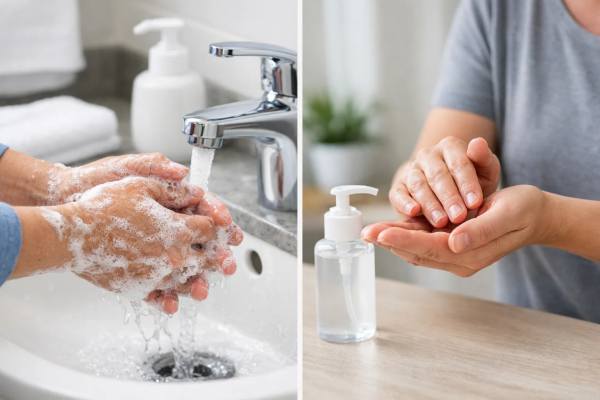
Colds are inconvenient, but they are also predictable: they spread when respiratory viruses move from someone’s hands or droplets to your eyes, nose, or mouth. That makes hand hygiene one of the few prevention tools you can use many times a day, with real control over the outcome. The confusing part is choosing which method matters most—soap and water at a sink, or an alcohol-based hand sanitizer when you are on the move.
In practice, the “best” option is the one you will use correctly, at the moments that matter. Handwashing removes germs and grime from skin; sanitizer rapidly reduces certain germs when hands are not visibly dirty. Understanding where each method shines can help you prevent more colds without turning daily life into a checklist.
Core Points for Cold Prevention
- Cleaning hands before touching your face and before eating lowers the chance that cold viruses reach your nose, mouth, or eyes.
- Soap and water is the most reliable choice when hands are dirty, greasy, or after bathroom use.
- Alcohol-based sanitizer is a strong backup when a sink is not available and can improve consistency in real life.
- Sanitizer is less effective on visibly dirty hands and is not the best tool for every type of germ.
Table of Contents
- Why hands matter for colds
- What soap and water do best
- Where hand sanitizer shines
- What the research suggests
- Technique and timing that matter most
- A practical choose-your-method guide
Why hands matter for colds
Many people picture colds spreading mainly through the air, and that can happen—especially at close range. But hands still play a major supporting role. Think of your hands as the “delivery system” that finishes the job. Viruses that cause common colds can land on skin after a handshake, a shared phone, a shopping cart, or your own tissues. From there, they only need one successful transfer to a vulnerable surface: the moist lining of your eyes, nose, or mouth.
How a cold virus reaches you
A typical sequence looks like this:
- You touch a contaminated surface or someone’s hand.
- Virus transfers to your fingertips or under your nails.
- Minutes later, you rub your nose, adjust a mask, bite a nail, or touch your lip.
- The virus reaches mucous membranes and begins replicating.
That last step matters because many cold viruses do not need a large “dose” to start trouble, especially if you are stressed, sleeping poorly, or already run down.
Why “face-touching” is the hidden habit
Most people touch their face far more often than they realize. Even careful adults adjust glasses, scratch an itch, or rest their chin on a hand. The goal of hand hygiene is not perfection; it is risk reduction at the most important moments—right before you might transfer germs to your face or food.
Where colds and stomach bugs differ
Hand hygiene prevents more than colds, but the details differ by germ. Respiratory viruses are often easier to disrupt with consistent hand cleaning than some hardy stomach viruses. That is why the “sink versus sanitizer” question is about your situation: what your hands are exposed to, whether they are visibly dirty, and how likely you are to use the method correctly.
What soap and water do best
Handwashing works through more than “killing germs.” Soap binds to oils and debris on your skin and helps lift material away so it can be rinsed down the drain. That matters because your hands are not a smooth surface. Germs can hide in skin folds, around cuticles, and under nails—especially when there is grime or grease.
Why handwashing is the most dependable option
Soap and water is the better choice when:
- Hands are visibly dirty, dusty, sticky, or greasy.
- You have been cooking, handling raw foods, or cleaning.
- You used the restroom or changed a diaper.
- You handled tissues, coughed into your hands, or cared for someone with vomiting or diarrhea.
- You were outdoors gardening, playing sports, or touching shared equipment.
In these moments, sanitizer may not spread evenly or may not penetrate layers of dirt. Washing physically removes the problem.
What “20 seconds” really means
Duration matters, but coverage matters more. A quick rinse and a little soap on the palms misses the areas that often carry germs:
- Fingertips and under nails
- Between fingers
- Thumbs and thumb webs
- Backs of hands
- Wrists (especially if you have been holding rails or pushing doors)
A practical approach is to scrub until you have intentionally covered those zones, then rinse thoroughly and dry well.
Drying is part of hygiene
Wet hands transfer germs more easily than dry hands. Drying also reduces skin irritation by removing residual soap. If frequent washing leaves your hands cracked, that is not just uncomfortable—it can make you less likely to wash consistently. A simple fix is moisturizing after washing, especially before bed, and choosing a gentle, fragrance-free soap when possible.
Where hand sanitizer shines
Alcohol-based hand sanitizer is not “second-rate soap.” When used correctly on hands that are not visibly dirty, it can reduce many germs quickly and conveniently. That convenience changes behavior—and behavior is a big part of prevention.
When sanitizer is the better real-world tool
Sanitizer tends to outperform handwashing in practice when the alternative is no cleaning at all. It is especially useful:
- During commutes, errands, or travel when sinks are scarce
- After touching shared screens, door handles, elevator buttons, and carts
- Before eating away from home
- Right after coughing or sneezing into your hands (when a sink is not nearby)
- In classrooms or workplaces where quick, frequent use is realistic
In short: sanitizer helps you clean your hands at the exact moments that often lead to face-touching or eating.
What “good sanitizer” means
For respiratory virus prevention, the most important features are:
- Alcohol-based formula (commonly ethanol or isopropyl alcohol)
- At least 60% alcohol content
- Enough volume to wet both hands fully
- Rubbed over all hand surfaces until completely dry (often about 20 seconds)
If you apply too little, wipe it off early, or miss fingertips and thumbs, effectiveness drops sharply.
Limitations you should actually care about
Sanitizer is less reliable when:
- Hands are visibly dirty or greasy
- You need to remove chemicals (for example, after cleaning products or pesticides)
- You are in situations involving certain hard-to-kill germs where washing is preferred
- Young children may lick or swallow it without close supervision
Also, sanitizer can sting on cracked skin. That is not a reason to avoid it; it is a reason to repair the skin barrier with moisturizing and, when possible, choosing gentler products.
What the research suggests
If you want a simple headline, it is this: consistent hand hygiene reduces respiratory infections, but the size of the benefit depends heavily on how reliably and how correctly people do it. Studies in schools, households, and community settings repeatedly show a protective effect, often described as modest but meaningful—especially when adopted widely.
Why results vary so much
Hand hygiene studies are tricky because they do not test soap or sanitizer in a vacuum. They test an entire package:
- Whether people remember to clean hands
- Whether products are available at the right moments
- Whether the technique is correct
- Whether people change other behaviors at the same time (like staying home when ill)
So, a study might show only a small improvement not because hand hygiene is weak, but because real life is messy.
Soap versus sanitizer in everyday settings
When studies compare soap-and-water programs with sanitizer-based programs, sanitizer sometimes comes out ahead. A key reason is friction: sanitizer takes less time, is easier to place where people need it, and may be easier on skin for frequent use. Those factors can increase total “hand hygiene events” per day—which may matter more than whether the method is theoretically perfect.
What this means for cold prevention at home
For most households, the winning strategy is a hybrid:
- Use soap and water for “high-contamination” moments (restroom, food prep, visible dirt).
- Use sanitizer for “high-frequency” moments (errands, commuting, shared surfaces).
This combination targets both the quality of cleaning and the quantity of cleaning, which is a practical way to lower cold risk across a week.
Technique and timing that matter most
If you only improve one thing, improve timing. The goal is to clean hands right before you are most likely to deliver germs to yourself or others.
The highest-impact moments
Prioritize hand hygiene:
- Before eating or preparing food
- After using the restroom
- After blowing your nose, coughing, or sneezing
- After caring for someone who is sick
- After returning home from public places
- Before putting in contact lenses or touching your eyes
- After touching high-traffic surfaces (public doors, rails, shared screens)
Notice that several of these moments cluster around the same theme: hands moving toward the face.
Handwashing: a simple coverage checklist
When you wash, aim for full coverage:
- Wet hands and apply soap.
- Lather palms, backs of hands, between fingers.
- Scrub fingertips and thumbs deliberately.
- Rinse thoroughly.
- Dry completely.
If you routinely miss one area, make it your focus for a week. Thumbs and fingertips are common weak spots.
Sanitizer: common mistakes to avoid
Sanitizer fails most often because of these habits:
- Using a tiny amount that never fully wets both hands
- Rubbing only palms and ignoring fingertips and thumbs
- Wiping hands on clothing before the sanitizer dries
- Applying on dirty or greasy hands and assuming it “overrides” the dirt
- Treating sanitizer as a substitute for washing after restroom use
A good mental model: sanitizer works best on “clean-looking hands” that still have invisible contamination.
Skin care as prevention
If your hands hurt, you will use hygiene less. Build a prevention-friendly routine:
- Moisturize after washing when you can
- Use thicker cream at night if hands crack easily
- Consider lukewarm (not hot) water to reduce dryness
- Wear gloves for cleaning tasks that strip oils from skin
Comfort supports consistency, and consistency is where prevention lives.
A practical choose-your-method guide
So which prevents colds better: handwashing or sanitizer? In controlled conditions, both can reduce germs effectively. In daily life, the better choice is the one that matches the moment and keeps you consistent.
A quick decision rule
Choose soap and water when:
- Hands are visibly dirty, greasy, or sticky
- You used the restroom
- You are handling food or cleaning up bodily fluids
- You are caring for a baby, older adult, or someone with stomach symptoms
- You want the most “all-purpose” reset for your hands
Choose alcohol-based sanitizer when:
- You are away from a sink
- You need to clean hands frequently through the day
- You just touched shared surfaces and will soon eat or touch your face
- Your priority is speed and consistency
Cold season habits that work without stress
Instead of trying to sanitize constantly, use “anchors” in your day:
- Place sanitizer where you naturally pause (car console, bag pocket, desk).
- Wash hands as soon as you arrive home, before you start unpacking.
- Pair hand cleaning with meals and snacks, not random moments.
- Teach kids one simple rule: clean hands before eating and after coughing, sneezing, or bathroom use.
If someone in your home is already sick
When a cold is circulating, tighten the hand hygiene “chain”:
- The sick person should clean hands after blowing their nose and before touching shared items.
- Caregivers should clean hands after helping with tissues, medicine, or laundry.
- Everyone should focus on pre-meal hand hygiene and avoiding face-touching.
These steps do not eliminate risk, but they can reduce how many people get sick and how quickly illness spreads through a household.
The most honest answer
Soap and water is the best single method when conditions allow, especially for dirty hands and high-contamination situations. But sanitizer is often the best method for preventing colds in the real world because it makes frequent, well-timed hand hygiene more likely. If you want the strongest overall protection, use both—each where it fits best.
References
- About Handwashing | Clean Hands | CDC 2024
- Hand Sanitizer Guidelines and Recommendations | Clean Hands | CDC 2024
- Soap versus sanitiser for preventing the transmission of acute respiratory infections in the community: a systematic review with meta-analysis and dose–response analysis – PMC 2021 (Systematic Review)
- The effect of hand hygiene frequency on reducing acute respiratory infections in the community: a meta-analysis – PMC 2022 (Meta-analysis)
Disclaimer
This article is for general education and is not a substitute for personalized medical advice, diagnosis, or treatment. If you have symptoms that are severe, persistent, or worsening—such as shortness of breath, chest pain, dehydration, confusion, or high-risk health conditions—contact a qualified healthcare professional promptly. For young children, older adults, pregnant people, and anyone with a weakened immune system, seek medical guidance early when respiratory symptoms appear.
If you found this article useful, consider sharing it on Facebook, X (formerly Twitter), or any platform you prefer so others can make informed choices during cold season.