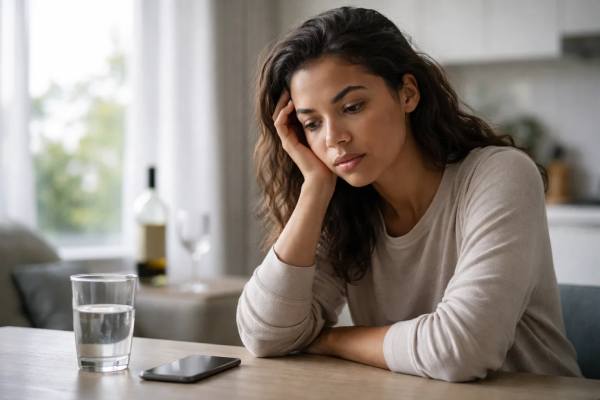
“Hangxiety” is the anxious, unsettled state some people feel after drinking—often the morning after, sometimes later that day. It can show up as a racing heart, dread, irritability, a tight chest, or a looping worry that you said or did something wrong. The confusing part is that alcohol may have felt relaxing the night before. That shift is not a character flaw; it is biology plus context. Alcohol changes brain signaling, disrupts sleep, destabilizes blood sugar, and temporarily numbs stress responses—then your system rebounds as alcohol leaves your body. Add dehydration, inflammation, and memory gaps, and the brain can interpret normal sensations as danger.
Understanding the mechanisms matters because it turns hangxiety into something you can work with. With a few choices around pacing, timing, and recovery, many people can reduce next-day anxiety—or recognize when it is a sign to change their relationship with alcohol.
Quick Summary
- Hangxiety often reflects a rebound in stress and excitatory brain activity as alcohol wears off, not “random” anxiety.
- Sleep disruption and next-day fatigue can amplify worry, irritability, and physical panic-like sensations.
- If you drink heavily or daily, sudden stopping can trigger true withdrawal anxiety that needs medical guidance.
- A practical prevention rule is to stop drinking 3–4 hours before bed and alternate alcohol with water to reduce next-day symptoms.
Table of Contents
- What hangxiety feels like
- Alcohol rebound in the brain
- Sleep disruption and next-day anxiety
- Blood sugar, dehydration, and inflammation
- Why hangxiety hits some people harder
- How to reduce hangxiety quickly
- When to seek support and cut back
What hangxiety feels like
Hangxiety is not a formal medical diagnosis, but it describes a real pattern: anxiety symptoms that appear after drinking, often when blood alcohol has dropped and your body is trying to re-stabilize. People often expect a hangover to be mostly headache and nausea. Hangxiety adds a mental and emotional layer that can be more distressing than the physical symptoms.
Common hangxiety experiences include:
- A sense of dread or “impending doom” without a clear cause
- Racing thoughts, rumination, and compulsive replaying of conversations
- Heightened social worry: “Did I overshare?” “Was I embarrassing?”
- Irritability, sensitivity to noise or light, and feeling emotionally raw
- Physical anxiety symptoms: pounding heart, shaky hands, sweating, nausea
- Restlessness with fatigue: tired but unable to settle
- A feeling of unreality, brain fog, or mental “static”
- Strong guilt or shame, sometimes disproportionate to what happened
Two details often help people make sense of it:
It can be delayed
Hangxiety does not always appear first thing in the morning. Some people feel “fine” at wake-up and then crash later, especially after caffeine, missed meals, or a stressful workday. That timing fits the rebound model: as sleep debt and physiological stress add up, the nervous system becomes more reactive.
It can be triggered by uncertainty
Alcohol can blur memory and dampen social cues. The next day, your brain tries to fill in gaps. If you are prone to anxiety, your mind may fill those gaps with worst-case interpretations. Even small uncertainties—an unanswered text, a vague memory, a lost item—can become fuel for spiraling.
Hangxiety is also common in people who already manage anxiety, panic symptoms, or stress overload. Alcohol can feel like relief in the moment, but it can intensify vulnerability afterward. The important point is that the next-day anxiety is not “all in your head.” It is a predictable interaction between brain chemistry, sleep biology, and the meaning you assign to what happened while drinking.
Alcohol rebound in the brain
Alcohol is a depressant in the sense that it slows and suppresses certain nervous system activity. Many people feel calmer or less inhibited initially because alcohol tilts the brain toward “downshifting.” The problem is that the brain adapts quickly. When alcohol leaves your system, that adaptation can overshoot in the opposite direction—creating the jittery, anxious rebound that defines hangxiety for many people.
GABA and glutamate: relaxation now, rebound later
A simplified way to think about alcohol’s short-term effect is that it increases inhibitory signaling (often discussed as boosting GABA activity) and reduces excitatory signaling (often discussed as dampening glutamate). This can feel like:
- muscles loosening
- thoughts slowing
- worry becoming quieter
- social fear fading
As the brain tries to maintain balance, it may reduce sensitivity to inhibitory signals and increase excitatory drive. When alcohol drops, you are left with a system that is temporarily more “revved” than normal. That can translate into:
- anxious arousal
- poor stress tolerance
- sensitivity to body sensations
- a mind that will not stop scanning for problems
Stress chemistry and “false alarms”
Alcohol can also influence stress hormones and autonomic activity. The next day, you may feel physical symptoms that resemble anxiety even if nothing is wrong: a faster heart rate, sweating, stomach churning, and a sense of inner restlessness. If you are prone to health anxiety or panic, those sensations can become a trigger—your brain interprets them as danger and escalates.
Reward and mood regulation
Drinking can temporarily increase reward signaling and reduce negative emotion. The next day can feel like the opposite: flatter mood, less motivation, and less ability to self-soothe. This is one reason hangxiety often includes emotional fragility—tears, irritability, or feeling overwhelmed by small tasks.
The rebound effect is not identical for everyone. Dose matters, pace matters, and your baseline matters. But the overall arc is common: alcohol can borrow calm from the next day. If you are already stressed, underslept, or anxious, that “loan” can come due as a sharp, unpleasant spike in anxiety.
Sleep disruption and next-day anxiety
Sleep is one of the strongest stabilizers of mood and attention. Alcohol can make you sleepy at first, which is why it is sometimes used as a nightcap. But sedation is not the same as restorative sleep. Alcohol commonly disrupts sleep architecture and fragments sleep later in the night—exactly the pattern that sets the stage for next-day anxiety.
Why alcohol sleep feels “fake restful”
After drinking, you may fall asleep faster. Then, as alcohol is metabolized, the body shifts toward lighter sleep with more awakenings. Even if you do not fully remember waking, your brain may not get the same depth and continuity it needs for emotional regulation.
Common next-day effects of alcohol-disrupted sleep include:
- more negative interpretation of events
- lower frustration tolerance
- increased worry and rumination
- reduced impulse control
- intensified physical anxiety sensations
REM disruption and emotional processing
REM sleep is involved in emotional processing and memory integration. When REM is disrupted, the brain can be less efficient at “digesting” emotional experiences. The result can be a heightened emotional charge the next day: you feel raw, easily startled, or prone to catastrophizing.
Breathing and sleep quality
Alcohol relaxes airway muscles and can worsen snoring and sleep-disordered breathing in some people. Poor breathing quality at night can elevate stress hormones and leave you feeling wired, headachy, and anxious the next morning. If you notice hangxiety is much worse after nights of heavy snoring or waking with a dry mouth, sleep breathing may be part of the story.
The timing trap
Two people can drink the same amount and have different next-day anxiety depending on timing. Drinking close to bedtime increases the chance that alcohol metabolism overlaps with the most restorative part of the night. A practical rule is that earlier drinking is often easier on sleep than late drinking, even when total intake is similar.
If hangxiety is a frequent pattern, it can help to treat sleep as the main target. Better sleep does not solve everything, but it dramatically changes how the brain responds to uncertainty, stress, and body sensations—three ingredients that make hangxiety feel so intense.
Blood sugar, dehydration, and inflammation
Hangxiety is often explained as “psychological regret,” but the body contributes more than most people realize. Alcohol affects hydration, digestion, and metabolic stability—changes that can feel, in the body, almost identical to anxiety.
Blood sugar swings and shaky anxiety
Alcohol can disrupt glucose regulation, especially if you drink without eating or if you skip breakfast the next day. Low or unstable blood sugar can cause:
- shakiness
- sweating
- rapid heartbeat
- irritability
- dizziness
- difficulty concentrating
Those sensations can trigger anxious thinking: “Why do I feel like this?” If you then add caffeine on an empty stomach, the physical arousal can intensify and be misread as panic.
Dehydration and electrolyte shifts
Alcohol has diuretic effects and can contribute to dehydration. Dehydration can produce symptoms that overlap with anxiety:
- headache and pressure sensations
- faster heart rate
- fatigue with restlessness
- dry mouth and nausea
When your body feels off, your brain looks for explanations. An anxious brain often lands on threatening explanations. This is one reason simple hydration and electrolytes sometimes reduce hangxiety more than you would expect.
Gut irritation and the anxiety-gut loop
Alcohol can irritate the stomach lining and alter gut motility. Nausea, reflux, and gut cramping can act as threat signals to the brain. Many people with anxiety have a sensitive gut-brain connection. If you wake with stomach discomfort, your stress system may already be activated before you have a single anxious thought.
Inflammation and “sickness behavior”
Alcohol metabolism and poor sleep can increase inflammatory signaling. When inflammation is elevated, the body can shift into a “sickness behavior” state: low energy, low motivation, social withdrawal, and heightened sensitivity. That state often feels like depression or anxiety, even when your life circumstances are unchanged.
The practical takeaway is that hangxiety is often a full-body event. If you treat it only as a mindset problem, you may miss easy wins. Stabilizing blood sugar, hydration, and digestion can reduce the physical fuel that makes anxious thoughts feel urgent and believable.
Why hangxiety hits some people harder
Not everyone gets hangxiety, and not everyone gets it every time. Vulnerability tends to come from a mix of biology, psychology, and drinking pattern.
Baseline anxiety and threat sensitivity
If you already live with generalized anxiety, panic symptoms, social anxiety, or high stress, your nervous system may be more reactive to internal sensations. When alcohol creates a rebound in arousal, your brain is more likely to interpret it as danger rather than “just a rough morning.”
Drinking pattern and dose curve
Binge-style drinking—more alcohol in a shorter window—creates a steeper rise and fall in blood alcohol levels. That steep drop can amplify rebound symptoms. Late-night drinking can also stack the deck by damaging sleep quality.
Sleep debt and life stress
Hangxiety is often worse during intense work periods, grief, relationship conflict, burnout, or chronic sleep restriction. In those seasons, alcohol may feel like relief, but your body has less reserve for the next-day rebound. The same amount of alcohol can feel “fine” in a calm month and intolerable in a stressful one.
Personality and cognitive style
People who tend to ruminate, self-criticize, or seek reassurance are more likely to experience hangxiety as a shame spiral. A small uncertainty becomes a story: “I must have messed up.” The next day’s brain fog makes it harder to reality-check that story.
Sex, body composition, and metabolism
Many factors influence alcohol effects: body size, hydration, hormone shifts, and genetic differences in alcohol-metabolizing enzymes. The point is not to calculate perfectly. It is to respect that your “normal” might be different from a friend’s, and comparing can lead you to drink past your own threshold.
Medication and stimulant stacking
Certain medications can interact with alcohol’s effects on sleep, mood, and anxiety. The day after, stimulants like high caffeine or nicotine can intensify anxious arousal. If hangxiety is a pattern, it is worth noticing what you stack with alcohol and what you stack the next day.
If hangxiety happens occasionally after an unusually heavy night, that is one story. If it happens reliably after modest drinking, that is another. Reliable hangxiety is often a meaningful signal: your nervous system is not tolerating alcohol’s rebound well, and the lowest-effort solution may be reducing quantity, changing timing, or taking breaks.
How to reduce hangxiety quickly
When hangxiety hits, the goal is not to “fix” your mood instantly. It is to lower arousal, stabilize the body, and prevent the mind from turning uncertainty into catastrophe. Think in layers: body first, then mind, then decisions.
Step 1: lower physiological arousal
Try one of these for 2–5 minutes:
- Longer exhale breathing (breathe out slightly longer than you breathe in)
- A short walk outside, focusing on steady steps and the feel of air
- A warm shower followed by 20–30 seconds of cool water on the face or wrists
These reduce the intensity that makes anxious thoughts feel urgent.
Step 2: stabilize blood sugar and hydration
Aim for a simple recovery stack:
- Water plus electrolytes (or a salty broth)
- A breakfast with protein and carbohydrates (for example: eggs and toast, yogurt and fruit, tofu and rice)
- Avoid a high-caffeine “rescue” on an empty stomach
If nausea is present, start small and bland, then build.
Step 3: reduce rumination triggers
Hangxiety loves ambiguous data. Consider a temporary boundary:
- Delay checking messages or social media for 60–90 minutes after waking
- Write down the worry in one sentence, then a second sentence with the most neutral explanation
- If you remember something cringe-worthy, limit review to one pass, then stop replaying
A practical script can help: “My brain is in rebound mode. I will not treat thoughts as facts until I’ve eaten, hydrated, and rested.”
Step 4: choose a gentle day plan
Try a “minimum viable day” approach:
- one essential task
- one supportive action (walk, light, meal prep, cleaning one small area)
- one connection (text a trusted person, brief call, quiet time with a supportive friend)
Avoid the trap of making major decisions while you feel chemically fragile. If you want to apologize, clarify, or rehash a conversation, pause until you are steadier.
Prevention that actually works
If hangxiety is frequent, prevention is often the biggest lever:
- Set a personal limit and pace drinks with water
- Eat before and during drinking
- Stop 3–4 hours before bed when possible
- Choose lower-alcohol options and avoid mixing many drink types
- Schedule a low-stress morning after, not a high-pressure one
These steps do not remove all risk, but they can reduce the intensity and duration of next-day anxiety.
When to seek support and cut back
Hangxiety can be a one-off after too much alcohol, but it can also be a signal that alcohol is creating a mental health cost you no longer want to pay. Support is especially important when anxiety is severe, when drinking is frequent, or when you feel trapped in a cycle.
Signs it is time to take hangxiety seriously
Consider reaching out to a clinician or therapist if:
- hangxiety happens after most drinking episodes, even small ones
- you are drinking to manage stress or anxiety, but anxiety is worse afterward
- you are avoiding work, relationships, or responsibilities due to next-day symptoms
- you have panic attacks, intense dread, or persistent low mood after drinking
- you repeatedly promise yourself you will cut back and cannot follow through
Know the difference between hangxiety and withdrawal
If you drink heavily or daily, next-day anxiety may reflect early withdrawal rather than a standard hangover. Withdrawal can include shaking, sweating, agitation, nausea, and insomnia. In some cases, alcohol withdrawal can be dangerous. If you suspect dependence, do not stop abruptly without medical guidance.
Support options that fit different needs
- If your drinking is occasional but hangxiety is intense: focus on sleep protection, pacing, and anxiety skills.
- If drinking is frequent or escalating: consider structured support, such as counseling, peer groups, or medication-assisted care when appropriate.
- If anxiety predates alcohol and is significant: treating the anxiety directly often reduces the urge to use alcohol as relief.
A compassionate reframe
Many people feel ashamed of hangxiety, which can increase the urge to drink again for relief. A more useful frame is: “My nervous system is telling me this pattern is costly.” Listening to that signal is not moral; it is practical health decision-making.
If you want a clear first step, try a two-week alcohol pause or reduction experiment and track:
- sleep quality
- baseline anxiety
- morning mood
- focus and energy
Even that small experiment can clarify whether alcohol is playing a meaningful role in your anxiety pattern—and what direction would support your mental health best.
References
- A Systematic Review of the Impact of the Alcohol Hangover Upon Negative Affect 2025 (Systematic Review)
- Sleep alterations in substance use disorders: a systematic review and meta-analysis 2026 (Systematic Review and Meta-Analysis)
- Associations of common mental disorder with alcohol use in the adult general population: a systematic review and meta-analysis 2021 (Systematic Review and Meta-Analysis)
- High-Risk Drinking and Alcohol Use Disorder – Province of British Columbia 2024 (Guideline)
Disclaimer
This article is for educational purposes and does not replace medical or mental health advice, diagnosis, or treatment. Anxiety after drinking can have multiple causes, including panic disorder, depression, sleep disorders, medication interactions, and alcohol dependence. If you have severe anxiety, thoughts of self-harm, feel unable to stay safe, or have symptoms that may indicate alcohol withdrawal (such as significant tremor, agitation, confusion, hallucinations, or seizures), seek urgent medical care. If you drink heavily or daily, do not stop alcohol suddenly without professional guidance, as withdrawal can be dangerous. For personalized recommendations—especially if you take prescription medications, are pregnant, or have a chronic medical condition—consult a qualified clinician.
If you found this helpful, please consider sharing it on Facebook, X (formerly Twitter), or any platform you prefer.