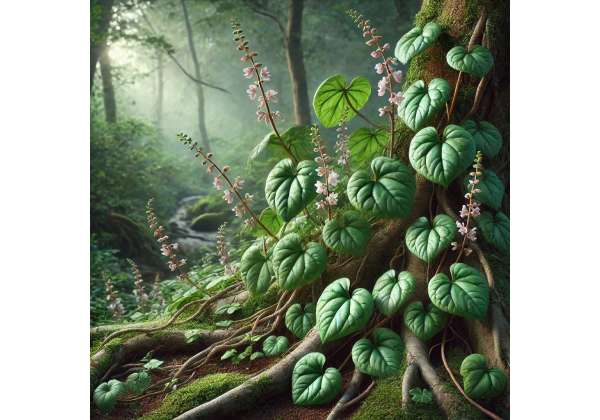
He Shou Wu, also known as Polygonum multiflorum, Fo-Ti, and in newer taxonomy often as Fallopia multiflora, is one of the most recognizable tonic roots in traditional Chinese medicine. It has long been linked with hair vitality, healthy aging, bowel regularity, and support for the liver and kidneys in classical herbal language. Modern interest focuses on its stilbenes, anthraquinones, phospholipids, and other compounds that may influence inflammation, oxidative stress, lipid metabolism, and cellular aging.
What makes He Shou Wu unusual is that its form matters as much as its name. Raw root and processed root are not interchangeable. Raw He Shou Wu is more strongly associated with laxative effects, while the processed form is traditionally used as a tonic for weakness, graying hair, and age-related decline. That distinction is essential because the herb also has a well-documented safety concern: liver injury has been reported with oral use, especially in susceptible people or with prolonged, high-dose, or poorly supervised use.
He Shou Wu is best understood as a potent traditional herb with intriguing pharmacology, meaningful limitations, and a much narrower safe role than marketing often suggests.
Quick Overview
- Processed He Shou Wu is traditionally used for hair vitality and age-related weakness, though modern human proof remains limited.
- Raw He Shou Wu is better known for bowel-moving and laxative effects than for long-term tonic use.
- Traditional ranges differ by form, with raw root often around 3 to 6 g daily and processed root around 3 to 12 g daily.
- People with liver disease, abnormal liver tests, pregnancy, breastfeeding, or multiple prescription medicines should avoid unsupervised use.
Table of Contents
- What is He Shou Wu
- Key compounds in Polygonum multiflorum
- What can it help with
- How is He Shou Wu used
- How much He Shou Wu per day
- Side effects liver risk and interactions
- What does the research show
What is He Shou Wu
He Shou Wu is the dried root tuber of Polygonum multiflorum, a climbing plant native to China and long used in East Asian herbal medicine. The herb has a strong cultural reputation as a longevity tonic, and its folklore often centers on restoring dark hair, strengthening the body, and replenishing vitality. In English-language wellness writing, it is often called Fo-Ti, though that label can hide an important detail: traditional use depends heavily on whether the root is raw or processed.
This split between raw and processed forms is one of the most important facts about the herb. Raw He Shou Wu is traditionally used for “detoxifying” actions, skin eruptions, and constipation because it has a stronger bowel-moving effect. Processed He Shou Wu, often prepared by steaming with black bean liquid, is regarded as the tonic form. It is the version more commonly associated with hair darkening, support for weakness, dizziness, soreness, and age-related depletion in classical practice. Many consumers miss this distinction and assume all He Shou Wu products are equivalent. They are not.
That difference is not just traditional theory. Processing changes the chemistry of the root, which may reduce some toxic compounds while altering the balance of active constituents. This helps explain why processed He Shou Wu is usually favored in tonic formulas, while raw root is treated more cautiously and for narrower purposes. In practice, the biggest mistake many people make is choosing a product labeled simply “Fo-Ti” without knowing which form they are buying.
He Shou Wu is also a good example of a herb whose reputation has outpaced simple consumer use. In traditional systems, it is often prescribed as part of a pattern-based formula rather than as a stand-alone capsule. That matters because the herb’s intended effect may depend on combination, constitution, and duration of use. Taken out of that context, it is easier to overestimate benefits and underestimate risks.
Modern taxonomy adds another layer of confusion. Older and still widely used literature often calls the plant Polygonum multiflorum, while newer sources may use Fallopia multiflora or Reynoutria multiflora. These names usually point to the same medicinal root, but product labels do not always make that clear. For readers and buyers, this means species identity, preparation method, and manufacturer transparency are all worth checking.
The fairest way to describe He Shou Wu is this: it is a traditional tonic root with real pharmacological activity, legitimate historical use, and a narrow safety margin compared with gentler herbs. It is not a casual superfood, not a routine anti-aging shortcut, and not a “natural” product to take indefinitely without thought. Understanding that sets up the rest of the discussion far more honestly than the usual longevity myth alone.
Key compounds in Polygonum multiflorum
He Shou Wu has drawn so much scientific attention because its chemistry is unusually rich. The root contains several classes of compounds that may help explain both its traditional benefits and its modern safety concerns. The best-known constituent is 2,3,5,4′-tetrahydroxystilbene-2-O-β-D-glucoside, often shortened to TSG. TSG is widely discussed because it appears to contribute to antioxidant, neuroprotective, lipid-lowering, and anti-aging effects in preclinical studies.
The herb also contains anthraquinones, especially emodin, physcion, and related compounds. These are important because they help explain two very different features of the plant. First, they contribute to raw He Shou Wu’s bowel-stimulating action. Second, they are also strongly implicated in the herb’s hepatotoxicity profile. In other words, the same chemistry that makes the herb pharmacologically active may also contribute to risk.
Other notable constituents include:
- Stilbenes, especially TSG
- Anthraquinones such as emodin and physcion
- Phospholipids
- Flavonoids
- Polyphenols
- Polysaccharides
- Tannins and trace minerals
This mix gives He Shou Wu a profile that looks more like a serious medicinal root than a simple folk tonic. It also explains why researchers keep exploring it for aging, metabolism, inflammation, hair biology, neuroprotection, and liver effects. Like many traditional roots, it works through multiple compound families rather than a single dominant molecule.
Processing changes that profile in meaningful ways. Traditional steaming reduces certain compounds, especially some dianthrone-related toxic markers, and shifts the ratio of stilbenes and anthraquinones. That is one reason processed He Shou Wu is often considered less irritating and more appropriate for tonic-style use. Still, “processed” does not mean risk-free. It only means the chemical balance is different. Some product makers blur this nuance by marketing the herb as if every extract behaves alike, but in reality a raw powder, a water decoction, and a concentrated alcohol extract may not deliver the same constituents in the same proportions.
Another useful point is that He Shou Wu does not fit neatly into the same consumer category as classic tonic roots that are broadly marketed for energy and resilience. It is more chemically complicated and more safety-sensitive. Its compounds can affect oxidation, inflammation, bile acid handling, metabolic enzymes, and perhaps immune signaling. That breadth helps explain its appeal, but it also makes oversimplified wellness claims especially misleading.
The smartest way to think about its chemistry is this: He Shou Wu contains a blend of active constituents with plausible biological value, but that same richness creates unpredictability. When an herb has both tonic compounds and potentially toxic ones, the form, dose, preparation, and person taking it all become more important. That is why chemistry is not just a background detail here. It is central to how the herb should be used, and whether it should be used at all.
What can it help with
He Shou Wu is traditionally associated with a wide list of benefits, but the most realistic way to assess them is to separate traditional use from modern proof. The herb is best known for claims around hair vitality, premature graying, weakness, constipation, healthy aging, lipid balance, and liver support. Some of those claims have plausible biological support. Very few have strong human clinical confirmation.
The most believable traditional distinction is this: raw He Shou Wu may help with constipation because its anthraquinone content has a bowel-moving effect, while processed He Shou Wu is used more as a tonic. That processed form is the one traditionally linked with hair darkening, support for low energy, soreness, dizziness, and age-related decline. In modern terms, it is often promoted for anti-aging, cognition, lipid metabolism, and general vitality.
Preclinical studies give some support to these broader claims. Researchers have reported antioxidant, anti-inflammatory, neuroprotective, anti-atherosclerotic, and lipid-modulating effects in cells and animals. TSG, in particular, has been studied for actions related to oxidative stress, mitochondria, cellular senescence, and hair biology. This is one reason the herb gets grouped with longevity-focused botanicals. Still, the gap between preclinical promise and dependable human outcomes remains large.
Hair-related claims deserve special caution. He Shou Wu is famous for blackening hair in folklore, and it is still heavily marketed for graying and thinning. There are mechanistic reasons this idea persists, including effects on melanogenesis pathways and hair-follicle signaling in lab and animal research. But there is not strong clinical evidence showing that oral He Shou Wu reliably reverses graying or regrows hair in real-world users. That does not mean it never helps. It means the evidence is not strong enough to promise visible results.
Lipid and metabolic support are another area of interest. Some experimental research suggests that processed He Shou Wu may influence cholesterol handling, inflammation, and fatty liver pathways. This helps explain why it is sometimes discussed alongside other liver-active tonic herbs. Even so, the herb should not be treated as a first-line choice for high cholesterol, fatty liver, or metabolic syndrome, especially given its liver-injury history.
A balanced benefit hierarchy looks like this:
- Most traditional and plausible: bowel support from raw root and tonic use from processed root
- Interesting but still limited: hair, lipid, neuroprotective, and anti-aging support
- Too early to promise: dependable treatment for hair loss, liver disease, or age-related decline
This matters because He Shou Wu has been sold for years as if “ancient use” automatically means “modern proof.” That is not how evidence works. At present, the herb’s reputation is stronger than its human trial data. It may help certain people in carefully chosen contexts, especially within traditional formulas, but it is not a broadly proven daily wellness herb. Readers who understand this point are far less likely to either dismiss it unfairly or trust it too easily.
How is He Shou Wu used
He Shou Wu is used in several forms, but the most important decision is not capsule versus tea. It is raw versus processed. Traditional practice draws a sharp line between those two. Raw root is used more for bowel regulation and clearing-type purposes, while processed root is used as the tonic form for weakness, hair concerns, and age-related depletion. If a product does not make that distinction clear, it is not giving the buyer enough information.
Common modern forms include:
- Sliced dried root for decoction
- Powdered root
- Capsules and tablets
- Granules made from concentrated decoctions
- Liquid extracts or tinctures
- Multi-herb formulas
- Topical hair products that include He Shou Wu
In traditional use, decoction remains the classic method. The dried root is simmered rather than lightly steeped because it is dense and woody. Processed root is often combined with other herbs in formulas aimed at fatigue, dizziness, low back weakness, menstrual depletion, or hair-related concerns. Raw root is more likely to appear where bowel movement is part of the goal.
This formula context matters. He Shou Wu is rarely at its best as an impulsive stand-alone purchase. Traditional formulas often pair it with roots and tonics that warm digestion, moderate its effects, or guide it toward a specific pattern. In practical terms, it may be used alongside digestive-supporting herbs when the goal is to improve tolerance and reduce stagnation. Taking it alone in concentrated modern extracts is not equivalent to classical prescribing.
There are also topical uses, especially in hair oils, scalp tonics, and shampoos. These products are popular because they seem safer than oral use. Topical use does avoid some of the liver risk associated with ingestion, but it does not prove benefit. Hair products containing He Shou Wu may appeal to consumers interested in traditional beauty rituals, yet the evidence for visible hair darkening or regrowth from topical application remains limited.
If someone is considering the herb in practice, a few questions matter more than brand marketing:
- Is the product raw or processed?
- Is the species clearly identified?
- Is the intended use constipation, tonic support, or hair-related marketing?
- Is the dose transparent?
- Is the user taking other medicines or living with liver disease?
The biggest real-world mistake is treating all He Shou Wu as a generic “anti-aging herb.” It is not. The correct form depends on the intended use, and even then the herb may not be the best choice. Someone seeking occasional bowel support might not need a tonic formula. Someone seeking hair support might be taking on more risk than expected for an uncertain benefit.
Used carefully, He Shou Wu is a traditional tool. Used casually, it is easy to misread. That is why form, purpose, and supervision matter so much more here than with gentler pantry herbs or lower-risk tonic supplements.
How much He Shou Wu per day
Dosage for He Shou Wu is one of the most important parts of safe use because the herb’s traditional range depends on the form. Raw and processed root are dosed differently in traditional references, and that difference reflects their different uses and risk profiles. The most commonly cited traditional range is about 3 to 6 g per day for raw root and about 3 to 12 g per day for processed root. These ranges come from traditional pharmacopeial practice, not from large modern randomized trials.
That distinction matters. Raw He Shou Wu is generally used in smaller amounts because of its stronger laxative and more irritating profile. Processed He Shou Wu is the tonic form and is often used across a wider range. Still, “traditional range” does not mean “safe for everyone.” It simply means these are the amounts most often discussed in conventional herbal frameworks.
For modern products, dosing becomes harder because labels vary widely. One capsule may contain powdered root, another may contain a concentrated extract, and another may list only a proprietary blend. A 500 mg capsule of extract is not automatically equivalent to 500 mg of crude root. This is a major reason people misdose the herb. Without extract ratios and preparation details, numbers on a label can be misleading.
A practical dosing framework looks like this:
- Raw root: often around 3 to 6 g daily in traditional use
- Processed root: often around 3 to 12 g daily in traditional use
- Capsules and extracts: product-specific, not directly interchangeable with crude-root grams
- Timing: commonly taken with food or within formula-based use
- Duration: short and purposeful is safer than open-ended daily use
A cautious approach is especially important for first-time users. Starting at the low end, using the correct form, and limiting duration all reduce the chance of trouble. This is not an herb to “megadose” for faster results. In fact, prolonged use and higher doses appear repeatedly in discussions of liver injury and tolerance problems.
Several groups should not self-dose at all:
- People with liver disease or past liver injury
- Pregnant or breastfeeding people
- Children
- People who drink heavily
- People taking several prescription medicines
- Anyone trying to self-treat jaundice, hepatitis, or unexplained fatigue
It also helps to be realistic about timing. He Shou Wu is not a quick herb. Claims about restoring hair color, reducing biological aging, or rebuilding vitality imply weeks to months of use, which is exactly where long-term safety becomes more important. That is one reason the herb is hard to recommend casually. The time horizon of the claim and the time horizon of the risk overlap.
The safest conclusion on dose is simple: traditional dose ranges exist, but they are not a license for self-treatment. With He Shou Wu, dosing is inseparable from preparation type, liver health, and duration of use. If those factors are not clear, the dosage is not truly clear either.
Side effects liver risk and interactions
Safety is where He Shou Wu differs sharply from many herbs marketed for vitality and aging. The most important risk is liver injury. This is not just a theoretical concern or a rare rumor. Polygonum multiflorum is a well-established cause of clinically apparent herb-related liver injury, and cases have ranged from reversible hepatitis-like illness to liver failure requiring transplantation. That alone is enough to move the herb out of the “harmless tonic” category.
Common early side effects may include:
- Nausea
- Abdominal discomfort
- Loose stool or diarrhea
- Cramping
- Loss of appetite
- Headache or dizziness
- Rash in sensitive users
These milder effects matter because they may appear before more serious problems are recognized. The warning signs of possible liver injury are more important:
- Yellowing of the skin or eyes
- Dark urine
- Unusual fatigue
- Nausea that persists
- Right upper abdominal pain
- Loss of appetite
- Itching or general malaise after starting the herb
The onset can vary. Some cases appear within days, while others develop after weeks or months. Re-exposure can trigger a faster and sometimes more severe reaction, which means anyone who has had suspected He Shou Wu-related liver symptoms should avoid trying it again.
Interaction data are not as complete as many readers would like, but the herb raises credible concerns. Because its constituents may affect liver enzymes, bile acid handling, and drug metabolism, caution is reasonable with:
- Other potentially hepatotoxic herbs or supplements
- Acetaminophen-heavy routines
- Statins
- Antiepileptic drugs
- Some antidepressants
- Immunosuppressive medicines
- Alcohol
- Multi-drug regimens processed through the liver
The point is not that every one of these combinations is proven harmful. The point is that the interaction question is serious enough that guesswork is not a good strategy.
Who should avoid unsupervised oral use? At minimum:
- Anyone with liver disease
- Anyone with abnormal liver enzymes
- Pregnant or breastfeeding people
- Children
- People with complex medication regimens
- People with a past history of herb-induced liver injury
For readers seeking gentler self-care, it often makes more sense to start with more established liver-support options or with non-herbal steps that do not carry a strong hepatotoxicity signal. That does not make He Shou Wu “bad.” It makes it relatively high stakes for an over-the-counter botanical.
The safest mindset is this: if a supplement is being considered for long-term hair, aging, or vitality goals, it should not come with a serious unmonitored liver risk. He Shou Wu crosses that line for enough people that caution is not optional. Safety is not a footnote here. It is part of the central identity of the herb.
What does the research show
The research on He Shou Wu is substantial, but it is also fragmented. There is strong evidence that the herb contains active compounds and can influence multiple biological pathways. There is also strong evidence that it can injure the liver in susceptible people. What is much weaker is the middle ground most consumers care about: clear human proof that the herb’s traditional benefits outweigh its risks in routine use.
The best-supported part of the literature is chemistry and preclinical pharmacology. Researchers have characterized stilbenes, anthraquinones, phospholipids, and other constituents in detail. Cell and animal studies show antioxidant, anti-inflammatory, neuroprotective, lipid-modulating, laxative, and anti-aging-related effects. Processing studies also confirm that raw and prepared forms differ chemically and toxicologically. These are meaningful findings, not empty marketing language.
Where the evidence becomes less convincing is clinical utility. Hair restoration, hair darkening, healthy aging, cognition, fatty liver, and lipid support are all plausible areas of interest, but robust human trial data are limited. Much of the more optimistic literature relies on animal studies, isolated compounds like TSG, or traditional interpretation rather than high-quality clinical outcomes. This does not make the herb ineffective. It means the confidence level should stay moderate to low for most consumer-facing claims.
Safety research, by contrast, is comparatively strong. Case reports, case series, mechanistic studies, and regulatory reviews consistently identify He Shou Wu as a genuine cause of herb-induced liver injury. Researchers have explored roles for anthraquinones, stilbene-related compounds, immune-mediated injury, bile acid disruption, metabolic enzyme effects, and genetic susceptibility. In a practical sense, the safety signal is easier to trust than many of the benefit claims.
This creates a clear evidence imbalance:
- Strong: phytochemistry and hepatotoxicity concerns
- Moderate: preclinical activity for oxidative stress, inflammation, metabolism, and aging pathways
- Weak to limited: consistent human proof for hair, longevity, or broad vitality claims
That imbalance is the real story of He Shou Wu. It is not an empty herb with no rationale, but it is also not a well-proven anti-aging solution. In the current evidence landscape, its marketing profile is larger than its clinical certainty.
This matters most when readers compare it with other tonic or liver-active herbs. Some botanicals have cleaner human data, simpler indications, or lower-risk profiles. He Shou Wu sits in a more ambiguous category. It remains scientifically interesting, especially as a source of TSG and other bioactive compounds, but it is better suited to targeted, informed, and supervised use than to casual self-experimentation.
The most honest conclusion is that He Shou Wu deserves respect but not hype. It has real traditional depth, real pharmacology, and real risk. For modern readers, that means its evidence supports curiosity, not confidence. Until stronger human trials clarify who benefits, which form works best, and how risk can be minimized, the herb is best approached with restraint rather than enthusiasm.
References
- Phytochemistry, pharmacology, toxicology and detoxification of Polygonum multiflorum Thunb.: a comprehensive review 2024 (Review)
- Research progress on hepatotoxicity mechanism of polygonum multiflorum and its main components 2024 (Review)
- Study on the differential hepatotoxicity of raw polygonum multiflorum and polygonum multiflorum praeparata and its mechanism 2024 (Research Article)
- Overview of Pharmacokinetics and Liver Toxicities of Radix Polygoni Multiflori 2020 (Review)
- Polygonum Multiflorum 2020 (LiverTox Monograph)
Disclaimer
This article is for educational purposes only and is not medical advice. He Shou Wu is a pharmacologically active herb with a documented risk of liver injury, especially with oral use, prolonged dosing, or use in susceptible individuals. Do not use it to self-treat liver disease, jaundice, hair loss, chronic fatigue, or age-related symptoms without guidance from a qualified healthcare professional. Stop use and seek medical care promptly if you develop yellowing of the skin or eyes, dark urine, severe nausea, unusual fatigue, or abdominal pain.
If you found this article helpful, please share it on Facebook, X, or any platform your audience prefers.