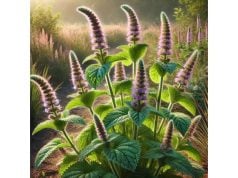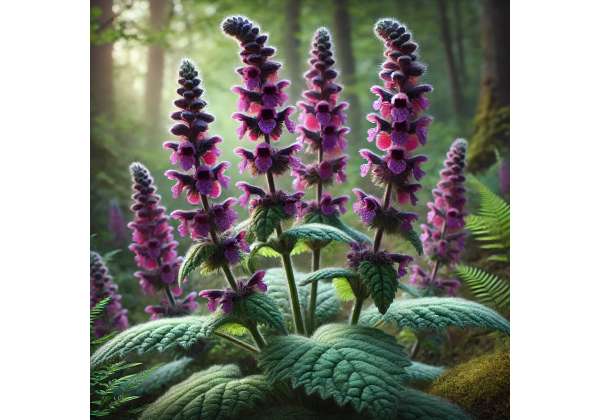
Hedge woundwort is a tall, strongly scented woodland herb from the mint family that has been valued more in folk medicine than in modern clinical herbalism. Its common name points to its oldest reputation: a plant used on wounds, swellings, and irritated tissue. Traditional records also describe hedge woundwort as a mild digestive, antispasmodic, tonic, and short-term remedy for cramps, inflammation, and minor urinary complaints. Today, interest in Stachys sylvatica centers on its phenolic acids, flavonoids, iridoids, and volatile compounds, which help explain its antioxidant, antimicrobial, and anti-inflammatory potential. At the same time, this is not a well-standardized herb with clear human dosing studies, and that matters. The most responsible way to approach hedge woundwort is as a historically important, chemistry-rich plant with promising but still limited evidence. It may have a place in topical care and short-term traditional use, but it should not be treated as a proven cure or a daily wellness staple. Used with care, it offers a fascinating example of how old herbal knowledge and modern plant science sometimes meet only partway.
Core Points
- Traditional use centers on minor wound care, mild cramp relief, and short-term digestive support.
- Modern lab studies suggest antioxidant, antimicrobial, and anti-inflammatory activity, but human evidence remains limited.
- A cautious traditional infusion is about 1 to 2 g dried aerial parts in 200 mL hot water, once or twice daily for short-term use.
- Avoid hedge woundwort during pregnancy, breastfeeding, childhood, and on deep or infected wounds.
Table of Contents
- What is hedge woundwort
- Key compounds and actions
- Does hedge woundwort help wounds and cramps
- How hedge woundwort is used
- How much should you take
- Side effects and who should avoid it
- What the research actually shows
What is hedge woundwort
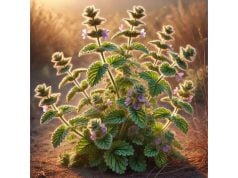
Hedge woundwort, Stachys sylvatica, is a perennial herb in the Lamiaceae family, the same broad family that includes mint, sage, and thyme. It grows in hedgerows, damp woodland edges, streambanks, and shaded field margins across much of Europe and parts of western Asia. Once you notice it, the plant is easy to remember: square stems, opposite leaves, deep reddish-purple flowers, and a strong musky odor that many people find unpleasant when the leaves are bruised.
Its common name tells you a great deal about its history. “Woundwort” is an old herb name given to plants associated with cuts, bruises, swellings, and tissue repair. In older herb traditions, the leaves or flowering tops were crushed, infused, or applied as washes and poultices. Hedge woundwort was also taken internally in some folk systems for abdominal pain, cramps, dizziness, fever, gout, menstrual complaints, and mild digestive sluggishness. In parts of Iran, it has also been described as diuretic, sedative, tonic, digestive, antispasmodic, and anti-inflammatory.
That sounds broad, but it does not mean the herb is a cure-all. It means the plant was used in practical village medicine where one herb often served several roles. That context matters. Traditional use reflects availability, observation, and local experience, not the kind of tightly defined evidence expected from modern clinical trials.
The part most often discussed medicinally is the aerial portion of the plant, especially the flowering tops, leaves, and upper stems. These are the parts most likely to be dried for tea, prepared as an extract, or used externally. The root is not the main medicinal focus.
A useful modern caution is identification. Hedge woundwort is sometimes confused with other Stachys species, especially marsh woundwort or betony-type relatives. These plants are related, but they are not interchangeable. Their traditional uses overlap, yet their chemistry and practical safety profile may not be identical. That is one reason hedge woundwort is better used by people who know the plant well rather than casual foragers making quick guesses.
In practical herbal terms, hedge woundwort sits in an interesting middle space. It is not obscure enough to be irrelevant, but it is also not mainstream enough to have standardized capsules, common retail monographs, or well-known clinical dosing. That makes it valuable as a traditional herb and a research subject, but less suitable as a self-prescribed everyday remedy. Its best modern framing is simple: a historically respected wound and cramp herb with promising chemistry and modest evidence.
Key compounds and actions
Hedge woundwort earns its medicinal reputation from a layered chemical profile rather than a single standout compound. Modern studies on Stachys sylvatica and broader reviews of the Stachys genus point most consistently to polyphenols, flavonoids, phenolic acids, iridoids, and volatile aromatic compounds.
Among the best known constituents in hedge woundwort are chlorogenic acid and related chlorogenic acid isomers. These are phenolic acids often associated with antioxidant activity and general inflammation-modulating effects. They do not guarantee a clinical result on their own, but they help explain why the plant shows antioxidant and antimicrobial potential in laboratory work.
Verbascoside is another important compound discussed in modern analyses of hedge woundwort extracts. This phenylpropanoid glycoside is widely studied in herbal chemistry and often linked with antioxidant and antimicrobial behavior. In a practical sense, its presence strengthens the case that hedge woundwort is a biologically active herb rather than just a fragrant wildflower with folklore attached to it.
The plant also contains luteolin derivatives and other flavonoids. These compounds are interesting because flavonoids often contribute to the “calming” side of an herb’s activity, especially in tissues exposed to oxidative stress or low-grade irritation. That does not mean hedge woundwort is deeply sedating or strongly anti-inflammatory like a drug. It means the chemistry supports a plausible traditional role in irritated tissue, minor digestive discomfort, and short-term external care.
Iridoids are another major piece of the picture. Reviews of Stachys chemistry have identified iridoids such as harpagide, aucubin, and catalpol in S. sylvatica. Iridoids are frequently discussed in herbal medicine because they can contribute bitterness, protective plant defense effects, and various anti-inflammatory or tissue-supporting actions. They may help explain why some Stachys species have long been used for wounds, spasms, and inflammatory complaints.
Volatile compounds matter too. Studies of hedge woundwort essential oil and extracts have identified components such as germacrene D, beta-caryophyllene, linalool, and related terpenes. These do not turn the herb into an essential-oil remedy, but they may contribute to aroma, antimicrobial behavior, and the plant’s broader biological profile.
The most useful way to think about hedge woundwort’s chemistry is in layers:
- phenolic acids and flavonoids for antioxidant and protective activity
- iridoids for bitterness and possible anti-inflammatory support
- volatile compounds for aroma and some antimicrobial potential
- a mixed whole-plant effect that is more complex than any one ingredient
That layered profile is why hedge woundwort can look medicinally promising without yet being clinically proven. Its chemistry makes many old uses plausible, especially for minor external care and crampy, unsettled states. But plausible is not the same as proven. If you want a gentler and much better-known herb for routine stomach discomfort, peppermint for digestive and cramp support is usually easier to use with confidence.
Does hedge woundwort help wounds and cramps
This is the question most readers really care about, and the fairest answer is yes in traditional practice, maybe in modern practical use, but not yet with strong human proof.
The herb’s oldest and clearest identity is topical. Folk medicine linked hedge woundwort with cleansing wounds, easing swellings, and supporting tissue recovery. That use pattern appears across broader Stachys literature as well. In plain terms, hedge woundwort belongs to a family of herbs historically used when skin and soft tissue were damaged, irritated, or inflamed. That is likely why the common name survived so well.
For minor external use, the most realistic modern expectation is not “fast wound healing” in a pharmaceutical sense. It is more modest than that. A cooled infusion, wash, or poultice may help irritated tissue feel less hot, less tight, and less inflamed. That can be useful on small, superficial problems. It is not a substitute for proper wound cleaning, infection control, or medical care.
The second traditional cluster of uses involves spasms, cramps, and digestive discomfort. Historical records describe internal use for abdominal pain, cramps, dizziness, fever, menstrual complaints, and digestive sluggishness. The likely practical interpretation is that hedge woundwort may function as a mild antispasmodic and digestive bitter rather than as a powerful pain reliever. For some people, that could mean slightly less gripping discomfort, a little more digestive movement, or a gentler sense of settling after a light infusion.
Traditional descriptions also include sedative, tonic, and anti-inflammatory effects. These should be read carefully. In old herbal language, “sedative” often meant mildly calming rather than sleep-inducing. “Tonic” often meant strengthening in a general, non-specific way. Those terms do not map neatly onto modern drug-style outcomes. It is better to think of hedge woundwort as a subtle, multi-directional folk herb rather than a targeted modern therapy.
There are also scattered records of diuretic use and even help for heart-related complaints in traditional settings. These are the least reliable areas for self-care. The evidence is much too thin to recommend hedge woundwort for swelling, blood pressure, or cardiovascular concerns.
So what may it realistically help with?
- small, superficial irritated areas when used externally
- minor crampy digestive discomfort
- short-term traditional support for menstrual or abdominal tension
- general tissue-calming in folk topical preparations
What should it not be asked to do?
- replace antibiotics for infected wounds
- treat deep cuts, ulcers, or severe burns
- manage chronic bowel pain or severe menstrual symptoms on its own
- stand in for medical treatment of urinary or cardiovascular disease
That difference is where good herbal practice begins. Hedge woundwort may be useful, but it is most likely to help when used for the kind of small, short-term issues traditional herbs handle best. For deeper soft-tissue support, many people compare it with topical comfrey for bruises and soreness, though the two herbs are not the same and should not be treated as interchangeable.
How hedge woundwort is used
Hedge woundwort is best used in simple, traditional forms. It is not a herb that benefits from overcomplicated handling. The most common preparations are infusion, wash, compress, and poultice made from the aerial parts.
The basic internal form is a light tea or infusion. Dried flowering tops and leaves are steeped in hot water, then strained. Because the herb has a noticeable, somewhat rank smell, many people find the tea less pleasant than mint-family herbs such as lemon balm or sage. That strong odor is part of the plant’s personality and one reason it never became a widely loved household tea. When people do use it internally, they usually do so for a clear purpose rather than for flavor.
The basic external form is a cooled infusion used as a wash or compress. This suits hedge woundwort well because it honors the herb’s old woundwort reputation without assuming more than the evidence supports. A clean cloth soaked in the cooled tea can be applied briefly to minor irritated skin or a tender superficial area. Traditionally, crushed fresh plant material could also be used as a poultice, though modern users should be more selective and hygienic than older folk practice sometimes was.
Some herbalists also work with tinctures or hydroalcoholic extracts. These may pull different compounds than water alone, and some modern studies have used hydroethanolic extracts in laboratory testing. Still, concentrated extracts are harder to dose sensibly at home because hedge woundwort does not have a widely accepted consumer standard. For most people, a tea or external infusion is the more grounded approach.
A practical way to use the herb is to match the form to the goal:
- For minor digestive or cramp support, choose a mild infusion.
- For superficial external comfort, use a cooled wash or compress.
- For deep, infected, or serious wounds, do not self-treat with the herb alone.
- For long-term daily use, choose a better-studied herb instead.
It also helps to think about what hedge woundwort is not. It is not a culinary herb for regular seasoning. It is not a pleasant daily wellness tea. It is not a standardized pharmacy-style supplement. Its strength lies in simple, short-term, purpose-driven use.
Storage and preparation matter more than many people realize. Dry the herb away from direct heat and light, store it in a sealed container, and use reasonably fresh material. Old, stale herb with lost aroma and dull color is unlikely to perform well. Freshly gathered material should come only from clean sites away from pesticides, road runoff, and polluted drainage.
For readers who mainly want a gentle topical herb for minor surface irritation, plantain leaf for skin comfort and simple first-aid support is often easier to work with. Hedge woundwort is more niche, more aromatic, and better suited to people who specifically want its traditional profile.
How much should you take
This is where honesty matters most. There is no well-established clinical dosage for hedge woundwort. No major modern monograph sets a standardized adult dose, and no mainstream human trial tells us exactly how much Stachys sylvatica should be used for wound support, cramps, or digestive discomfort. That means dosage should be conservative, traditional, and short term.
For internal use, a cautious traditional starting point is about 1 to 2 g of dried aerial parts in 200 mL of hot water. Steep for around 10 to 15 minutes, strain, and begin with one cup daily. If it is well tolerated and there is a clear reason to continue, some people use it up to twice daily. This is best viewed as a trial of a mild infusion, not a daily tonic.
A few practical rules help keep that dosage sensible:
- start low rather than assuming more is better
- use it for days, not weeks
- stop if the taste, smell, or body response feels off
- do not combine it with several other unfamiliar herbs at the same time
For external use, herbal practice is less exact. A somewhat stronger infusion can be made for a compress or wash, but the key variable is not mathematical precision so much as tolerance and common sense. Use a clean preparation, let it cool, apply to a small area first, and do not keep rewetted cloths sitting around for long periods.
Duration matters as much as dose. Hedge woundwort makes more sense as a short-course herb than as a routine habit. A practical window is 3 to 5 days for internal use and a similarly short period for external trial use. If a person feels the need to take it longer than that, the better question is usually why the symptom is still present.
It is also wise to avoid “upgrading” the herb too quickly. A strong tincture, a homemade concentrated extract, or repeated cups throughout the day can create more uncertainty than benefit. This is not a herb where concentration equals better results. Because the evidence base is limited, careful moderation is part of the dosage strategy.
A sensible stop-and-reassess list includes:
- worsening abdominal pain
- nausea or headache after use
- new rash or skin irritation
- dizziness, unusual sedation, or feeling unwell
- no clear benefit after a brief trial
That last point is important. A weakly studied herb should earn its place. If it does not help quickly and gently, there is little reason to push harder. For stronger cramp-focused herbal support, cramp bark as a more targeted antispasmodic option is often discussed more clearly in modern herbal practice.
Side effects and who should avoid it
Hedge woundwort does not appear to be among the most hazardous traditional herbs, but it is also not well studied enough to treat casually. Most concerns come from uncertainty, traditional cautions, and the absence of strong human safety data.
The most likely side effects are mild and non-specific: stomach upset, bitter aftertaste, nausea, or headache in sensitive people. Because the herb has a strong odor and active polyphenolic and iridoid profile, some people may simply find it unpleasant rather than soothing. Topically, fresh plant material or concentrated preparations may irritate reactive skin.
Pregnancy is the clearest caution area. Traditional sources describe emmenagogue use in related contexts, and broader Stachys literature includes mention of uterine contraction in animals for S. sylvatica. That does not prove ordinary tea use is dangerous in every case, but it is enough to avoid the herb during pregnancy and while trying to conceive. Breastfeeding is another avoid category because safety data are too thin.
Children should also avoid unsupervised use. A herb with limited dosing research and only modest modern evidence is not a good first choice for pediatric self-care.
External use has its own limits. Do not apply hedge woundwort to:
- deep or puncture wounds
- obviously infected wounds
- large open areas
- heavily bleeding injuries
- skin that needs medical cleaning, closure, or antibiotics
This is a key point because the name “woundwort” can create false confidence. A wound herb is not automatically the right herb for every wound. Sometimes the safest use of tradition is knowing when not to use it.
Drug interactions have not been well characterized. That means caution is better than certainty. Avoid combining hedge woundwort casually with prescription medications for chronic illness, especially if the goal is internal use. If someone is on multiple medicines, has liver disease, kidney disease, or a bleeding disorder, the herb is better skipped unless a knowledgeable professional advises otherwise.
A practical safety filter is simple:
- If the problem is minor and short term, the herb may be worth cautious consideration.
- If the problem is severe, infected, chronic, or poorly understood, get proper care.
- If you are pregnant, breastfeeding, or medically complex, do not experiment.
For readers who want a calmer, more familiar topical herb for small surface problems, calendula for gentle skin support is often easier to use responsibly. Hedge woundwort remains more of a traditional specialist plant than a universal home remedy.
What the research actually shows
The research story for hedge woundwort is promising but incomplete. That balance matters. The herb is not unstudied, yet nearly all of the useful work sits in phytochemistry, in vitro testing, ethnobotany, and limited animal research. Human clinical evidence is essentially absent.
Modern reviews of the Stachys genus make three things clear. First, woundwort-type herbs have a long traditional history for wounds, spasms, inflammation, and digestive complaints. Second, Stachys plants contain a large range of bioactive compounds, including phenolic acids, flavonoids, iridoids, diterpenes, triterpenes, and essential-oil constituents. Third, only a small number of Stachys species have ever been taken into actual clinical testing, and S. sylvatica is not one of the well-studied ones.
That means hedge woundwort’s traditional uses are plausible, but not clinically confirmed. A 2024 study on Stachys sylvatica collected in Southern Kazakhstan found a hydroethanolic extract rich in chlorogenic acid, luteolin derivatives, verbascoside, and related metabolites. The same study reported in vitro antimicrobial and anthelmintic activity, with stronger activity against Gram-positive organisms than Gram-negative ones. That is scientifically interesting, but it is still laboratory evidence, not proof that the herb heals infected wounds or treats human parasitic disease.
Romanian work from 2021 and 2023 adds another important piece. These studies found substantial polyphenol content, measurable antioxidant activity, and antimicrobial effects in S. sylvatica extracts, especially against some Gram-positive bacteria. Again, this supports biological plausibility. It does not tell us how a cup of tea or a home compress performs on a real person with a real wound or cramp pattern.
Animal and preliminary experimental work also suggest potential anti-inflammatory and metabolic relevance across the wider genus. But here the species distinction matters. Results from S. lavandulifolia, S. officinalis, or S. byzantina should not be casually transferred to hedge woundwort. One of the most common mistakes in herb writing is treating a whole genus as if every species behaves the same way. That is not careful herbal science.
So where does that leave the reader?
- traditional use is real
- chemical activity is real
- laboratory potential is real
- proven human benefit is still limited
That is not a disappointing conclusion. It is a mature one. Hedge woundwort deserves respect as a traditional herb with meaningful phytochemistry, especially for topical and short-term folk use. But it has not yet earned the kind of confidence that comes with repeated human trials, standardized products, and clear safety margins. Compared with herbs better known for minor wound support, such as self-heal in traditional skin and tissue care, hedge woundwort remains more historically compelling than clinically settled.
References
- Genus Stachys—Phytochemistry, Traditional Medicinal Uses, and Future Perspectives 2024 (Review)
- Anthelminthic and antimicrobial effects of hedge woundwort (Stachys sylvatica L.) growing in Southern Kazakhstan 2024
- Stachys Species: Comparative Evaluation of Phenolic Profile and Antimicrobial and Antioxidant Potential 2023
- Phytochemical Analysis and Biological Activity of Three Stachys Species (Lamiaceae) from Romania 2021
- Essential oil composition and antioxidant activity of Stachys sylvatica L. (Lamiaceae) from different wild populations in Kosovo 2012
Disclaimer
This article is for educational purposes only and is not medical advice. Hedge woundwort is a traditional herb with limited human research, so its historical uses should not be taken as proof of safety or effectiveness for any disease. Do not use it to self-treat infected wounds, severe pain, heavy bleeding, persistent digestive symptoms, or chronic inflammatory conditions. Always consult a qualified healthcare professional before using hedge woundwort internally or topically if you are pregnant, breastfeeding, taking prescription medicines, or managing a chronic illness.
If this article was useful, please share it on Facebook, X, or your preferred platform so others can find reliable, safety-first herbal information.