Hemorrhagic cardiac tamponade happens when blood collects around the heart and builds enough pressure to limit how the heart fills between beats. That pressure can develop fast, sometimes within minutes, and it can drop blood flow to the brain and organs. People often describe a sudden feeling of air hunger, chest pressure, dizziness, or “something is very wrong.” This condition is most often linked to chest trauma, a complication after a heart procedure, or bleeding from a major vessel near the heart. It may also occur in people taking blood thinners or in certain cancers. Because the symptoms can overlap with heart attack, panic, or severe lung problems, quick recognition matters. In this guide, you’ll learn what is happening inside the chest, which causes and risk factors raise concern, how clinicians confirm the diagnosis, what emergency treatment looks like, and how to reduce the chance of recurrence.
Table of Contents
- What it is and why blood changes the emergency
- What causes hemorrhagic tamponade?
- Who is at highest risk?
- Symptoms and red flags you should not ignore
- How doctors confirm the diagnosis fast
- Treatment: what happens in the first hour
- Aftercare, prevention, and when to seek help
What it is and why blood changes the emergency
The heart sits inside a thin, protective sac called the pericardium. Normally, that space contains just a small amount of slippery fluid. Cardiac tamponade occurs when fluid in this space rises enough to compress the heart and block normal filling. In hemorrhagic tamponade, the fluid is blood, and that detail changes both the pace and the treatment strategy.
The key concept is pressure. The pericardium does not stretch much in the short term. If blood fills the space quickly, pressure rises rapidly. The heart chambers—especially the right side, which runs at lower pressures—cannot expand normally. Less filling means less blood pumped out with each beat. The body tries to compensate with a faster heart rate and tighter blood vessels, but those defenses can fail quickly.
Why blood is different from other fluids:
- It often accumulates fast. Trauma, vessel tears, or procedure-related perforations can bleed briskly.
- It can clot. Clotted blood may not drain easily through a thin catheter, and “partial drainage” may not solve the problem.
- It can keep coming back. If a vessel or heart wall is still bleeding, the pressure can re-build soon after initial relief.
- It signals a structural problem. A bloody effusion often points to an injury, a tear, or fragile tissue—issues that may require surgery or targeted repair.
Another practical point: tamponade is not defined by a single “amount” of blood. A rapid 100–200 mL can be catastrophic, while a slower accumulation could be tolerated longer. Clinicians focus on the patient’s blood pressure, mental status, breathing effort, and ultrasound signs of impaired filling rather than the volume alone.
Because hemorrhagic tamponade can flip from “unwell” to “near-collapse” quickly, it is treated as an emergency pattern. The goal is to recognize obstructive shock early, relieve pressure around the heart, and stop the bleeding source—often in parallel, not in sequence.
What causes hemorrhagic tamponade?
Hemorrhagic tamponade is usually caused by bleeding from the heart itself or from large vessels near the heart. Some causes are sudden and obvious (major trauma). Others are less visible (a small perforation after a procedure or a slow bleed made worse by blood thinners). Understanding the main categories helps explain why the emergency team asks certain questions right away.
Common causes include:
- Chest trauma
- Penetrating trauma (stabbing, gunshot) can directly injure the heart or coronary vessels.
- Blunt trauma (car crashes, falls) can tear the heart muscle, rupture a vessel, or cause a small injury that bleeds over time.
- Complications from cardiac procedures
- Coronary angiography and coronary interventions can rarely perforate a vessel.
- Ablation procedures (for heart rhythm problems) can irritate or perforate nearby structures.
- Pacemaker or defibrillator leads can, in uncommon cases, perforate the heart wall.
- Heart surgery can lead to postoperative bleeding into the pericardial space, including delayed bleeding days later.
- Aortic emergencies
- An aortic dissection or rupture near the heart can leak into the pericardium.
- This is a high-risk cause because bleeding can be rapid and recurrent.
- Mechanical complications after a major heart attack
- In rare cases, a tear in the heart wall can cause sudden bleeding into the pericardial sac.
- Cancer-related bleeding
- Tumors can invade or inflame the pericardium and trigger fragile blood vessels that bleed.
- These effusions may be recurrent and may contain a mixture of blood and other fluid.
- Blood-thinner and bleeding-disorder factors
- Anticoagulants can turn a small leak into a dangerous bleed.
- Low platelets, severe liver disease, or clotting disorders can increase bleeding risk, especially when combined with trauma or procedures.
A useful way to think about causes is “one-time leak” versus “ongoing source.” A one-time leak might stop after drainage and correction of clotting. An ongoing source—such as an active vessel tear—may require surgical control, endovascular repair, or direct procedural correction.
For patients, the highest-value details to share during triage are often simple:
- Did this start after trauma or a procedure?
- Are you on blood thinners or antiplatelet therapy?
- Do you have known aortic disease or uncontrolled high blood pressure?
- Do you have a cancer history?
Those facts can move hemorrhagic tamponade higher on the list quickly and speed up life-saving imaging and intervention.
Who is at highest risk?
Most people will never experience hemorrhagic tamponade. Risk concentrates in specific situations where bleeding is more likely or where the heart and nearby vessels are more vulnerable. Knowing these scenarios helps people recognize when “mild” symptoms deserve urgent evaluation.
High-risk groups and situations include:
- Recent heart or chest procedures
- The first hours to days after procedures are the most sensitive time window.
- Delayed tamponade can occur when a small injury slowly bleeds or when blood thinners are restarted.
- Warning symptoms after discharge matter even if they seem vague.
- People taking anticoagulants
- Blood thinners can raise the risk after falls, minor trauma, or procedures.
- The risk is higher with combined therapies (for example, an anticoagulant plus antiplatelet medication) or when dosing is temporarily too strong.
- Chest trauma exposure
- High-speed accidents, major falls, sports injuries, and workplace injuries are classic triggers.
- Older adults are more vulnerable because even “low-impact” falls can cause meaningful internal injury, and they may be more likely to use blood thinners.
- Known or suspected aortic disease
- Long-standing uncontrolled high blood pressure increases risk of aortic catastrophe.
- Known aneurysm, prior aortic surgery, or inherited connective tissue disorders raise concern further.
- Cancer or advanced systemic disease
- Certain cancers can involve the pericardium and cause recurrent bloody effusions.
- People with significant weight loss, persistent fatigue, or known malignancy may have a different risk profile and follow-up plan.
- Post-surgical patients
- After heart surgery, tamponade can be harder to detect because fluid may be localized and classic signs may be absent.
- New shock-like symptoms, unexplained weakness, or sudden breathing difficulty should trigger a low threshold for imaging.
Risk is also shaped by “reserve.” People with heart failure, severe lung disease, kidney disease, or frailty can decompensate faster. A modest fall in cardiac output may cause confusion, chest pressure, or severe shortness of breath more quickly in these individuals.
One of the most practical insights is that context changes meaning. A bit of chest tightness on a normal day can be monitored. The same symptom:
- after a pacemaker placement,
- after an ablation,
- after a car crash,
- or after a fall while on blood thinners
should be treated as time-sensitive until proven otherwise.
If you are in a high-risk category, ask your clinician what symptoms should prompt urgent care and which should prompt emergency evaluation. A clear plan reduces delays when minutes matter.
Symptoms and red flags you should not ignore
Symptoms of hemorrhagic tamponade can be dramatic, but they can also start subtly. Many people experience a progression: mild discomfort and breathlessness that escalates into profound weakness, dizziness, or collapse as pressure around the heart rises.
Common symptoms include:
- Shortness of breath
- Often worse when lying flat
- May come with rapid breathing or an inability to “get a full breath”
- Chest pressure or pain
- Pressure-like discomfort is common; sharp pain can occur too
- Some people feel discomfort in the upper abdomen or between the shoulder blades
- Lightheadedness, near-fainting, or fainting
- Especially when standing or walking
- Rapid heartbeat or pounding pulse
- Marked weakness, gray or sweaty appearance
- Anxiety or restlessness
- Often reflects low blood flow and the body’s stress response, not “just panic”
Clinicians watch for obstructive shock. Signs can include:
- Low blood pressure or a downward trend
- Cool, clammy skin
- Confusion or difficulty staying alert
- Very low urine output if the state persists
- Neck vein fullness (may be absent, especially after trauma or in dehydration)
Because hemorrhagic tamponade is often linked to bleeding, additional clues may appear:
- Sudden worsening after a fall or blow to the chest
- Symptoms beginning soon after a cardiac procedure
- Unusual bruising or other bleeding signs in someone on blood thinners
Red flags that should trigger emergency evaluation right away:
- Collapse, fainting, or near-fainting
- Severe or rapidly worsening shortness of breath
- Chest pressure with weakness, sweating, or confusion
- A very fast heart rate that persists at rest
- New symptoms after chest trauma or within days of a heart procedure
- Sudden, severe chest or upper back pain (especially with known aortic disease)
A subtle warning pattern is “brief improvement, then worse again.” Pressure around the heart can fluctuate with body position, breathing, and temporary changes in blood pressure. People sometimes report a short period of feeling better, followed by sudden decline. That pattern should not reassure you.
If you suspect tamponade in yourself or someone else, avoid exertion and seek emergency care. Home remedies cannot relieve the pressure around the heart. Treatment requires imaging and, when needed, urgent drainage and control of bleeding.
How doctors confirm the diagnosis fast
Diagnosis is centered on two questions: (1) Is there fluid—specifically blood—around the heart? (2) Is it preventing the heart from filling and pumping effectively? Because hemorrhagic tamponade can deteriorate quickly, clinicians often evaluate and treat simultaneously.
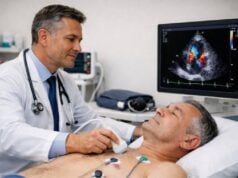
Bedside ultrasound is the pivot point
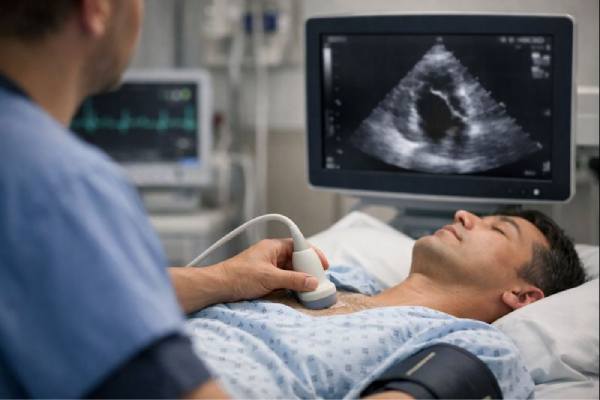
The most important tool is echocardiography (heart ultrasound), often performed at the bedside. It can:
- Show pericardial fluid
- Identify signs that the heart is being compressed during filling
- Estimate overall heart function and rule in or out other causes of shock
In trauma settings, focused ultrasound protocols may include a rapid pericardial view specifically to detect tamponade. The speed matters: the goal is a fast “yes/no” answer that triggers immediate action.
Clinical exam and vital signs help, but they are not enough
Traditional teaching highlights a trio of findings (low blood pressure, muffled heart sounds, and neck vein distension). In real life—especially after surgery or trauma—these signs may be incomplete or hard to measure. A person can be in tamponade with only some features present. That is why clinicians rely heavily on ultrasound and the patient’s trajectory.
Other tests support the picture
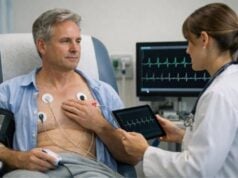
- ECG (electrocardiogram): may show a fast rhythm or patterns that suggest fluid around the heart, but it cannot confirm tamponade on its own.
- Blood tests: help detect anemia, assess clotting status, and look for organ stress.
- CT scanning: can be extremely helpful to identify causes such as aortic dissection, traumatic injuries, or postoperative bleeding—if the patient is stable enough to leave the resuscitation area.
Confirming “hemorrhagic” and finding the source
Blood in the pericardial space is sometimes obvious when fluid is drained. In more stable cases, clinicians may analyze drained fluid to guide cause (for example, malignancy-related bleeding). But in a crashing patient, the order is clear: relieve pressure first, investigate second.
A key clinical reality is that hemorrhagic tamponade often requires a “source control” mindset. The diagnosis is not complete when the effusion is seen. The team must also determine whether bleeding is ongoing and whether the safest definitive solution is catheter drainage, a surgical window, or urgent repair of an injured structure.
Treatment: what happens in the first hour
The first hour of care is about preventing cardiac arrest and organ injury. Treatment usually follows a clear priority: stabilize circulation, relieve the pressure around the heart, and stop the bleeding source. Because hemorrhagic tamponade is both a mechanical problem and a bleeding problem, clinicians often address both at the same time.
Immediate stabilization
Typical early steps include:
- Monitoring and oxygen support as needed
- Large-bore IV access for fluids and blood products
- Careful fluid administration to temporarily improve heart filling
- Vasoactive medications if blood pressure remains dangerously low
- Clotting management when bleeding risk is high, including reversal of anticoagulation when clinically appropriate
Positive-pressure ventilation can sometimes worsen tamponade by reducing blood return to the heart. If breathing support is needed, clinicians handle this carefully and prioritize relieving tamponade quickly.
Relieving pressure: drainage choices
- Pericardiocentesis (needle/catheter drainage):
- Often the fastest way to relieve pressure in a crashing patient.
- Usually guided by ultrasound to improve safety and success.
- In hemorrhagic tamponade, drainage may be incomplete if blood clots, and re-accumulation is more likely if bleeding continues.
- Surgical drainage (pericardial window or exploration):
- Often preferred when trauma is involved, when clots are suspected, or when bleeding source control is needed.
- A window allows ongoing drainage and can remove clotted blood more reliably than a small catheter.
- In some trauma cases, definitive care may require thoracotomy or sternotomy to repair cardiac injury.
Stopping the cause
Definitive treatment depends on what is bleeding:
- Procedure-related perforation: may require catheter-based correction, reversal of anticoagulation, or surgery.
- Aortic dissection or rupture: typically requires urgent surgical or endovascular management; tamponade may recur if the aorta continues to leak.
- Postoperative bleeding: may require surgical re-exploration, especially if bleeding is active or localized.
- Cancer-related effusions: often need drainage plus a longer-term plan, because recurrence risk can be significant.
What patients often experience
When tamponade is relieved, many people feel a rapid change: breathing eases, chest pressure lifts, and clarity improves. But the job is not finished. The team monitors closely for re-accumulation, anemia, rhythm problems, and signs that the underlying bleed is still active.
A helpful mental model is “drainage buys time.” In hemorrhagic tamponade, lasting safety often depends on treating the source—because pressure relief alone does not guarantee the bleeding has stopped.
Aftercare, prevention, and when to seek help
Recovery after hemorrhagic tamponade depends on the cause, the speed of treatment, and whether the event included shock or cardiac arrest. Some people recover quickly after successful drainage and a corrected procedural complication. Others need intensive monitoring, surgery, or longer hospitalization.
What follow-up usually includes
- Repeat echocardiography
- Confirms that fluid is not returning and that heart filling is normal.
- The timing depends on risk: hours for unstable causes, days to weeks for lower-risk cases.
- Blood and clotting monitoring
- Hemoglobin trends help confirm bleeding has stopped.
- Coagulation tests guide safe restarting or adjusting of blood thinners.
- Medication decisions
- Restarting anticoagulation requires individualized planning. The team balances the risk of new bleeding against the risk of clots, stroke, or valve complications.
- Blood pressure control is emphasized when aortic disease is involved.
- Cause-specific care
- Trauma patients may need rehabilitation and follow-up imaging.
- Aortic patients often need structured surveillance and strict blood pressure targets.
- Malignancy-related cases may require oncology coordination to reduce recurrence risk.
Reducing the chance of recurrence
Prevention is mostly about risk management:
- Avoid preventable trauma, especially on blood thinners. Fall-proofing at home, vision checks, and cautious alcohol use can make a real difference.
- Take blood thinners exactly as prescribed. Do not adjust doses without medical guidance.
- Know your interactions. Some over-the-counter medicines and supplements can increase bleeding risk.
- Treat high blood pressure seriously. Consistent control reduces stress on major vessels.
When to seek urgent or emergency care
After discharge, seek emergency evaluation for:
- New or worsening shortness of breath
- Chest pressure, fainting, or near-fainting
- Rapid heartbeat that does not settle at rest
- New confusion, extreme weakness, or a sudden drop in blood pressure
- Symptoms that resemble the original event, even if milder
A practical tip: if you have had a recent heart procedure or surgery, keep a short written summary of what was done and what medications you take. In an emergency, that information can speed diagnosis and help the team choose the safest treatment pathway.
Many people do well after hemorrhagic tamponade when it is recognized early and the source is treated definitively. The most protective decision is simple: if your symptoms are escalating—or if they appear in a high-risk context—treat it as urgent rather than waiting for certainty at home.
References
- Hemopericardium: A Comprehensive Clinical Review of Etiology and Diagnosis – PMC 2024 (Review)
- Pericardial Tamponade in Trauma: A Systematic Review of Diagnosis, Emergency Management, and Surgical Outcomes – PMC 2025 (Systematic Review)
- Safety and Efficacy of Echo- vs. Fluoroscopy-Guided Pericardiocentesis in Cardiac Tamponade – PubMed 2025 (Clinical Study)
- 2022 ACC/AHA Guideline for the Diagnosis and Management of Aortic Disease: A Report of the American Heart Association/American College of Cardiology Joint Committee on Clinical Practice Guidelines – PubMed 2022 (Guideline)
Disclaimer
This article is for educational purposes only and does not provide medical diagnosis or treatment. Hemorrhagic cardiac tamponade can rapidly become life-threatening and requires urgent evaluation and treatment by emergency and cardiology/surgical teams. Seek emergency care immediately for fainting, severe or worsening shortness of breath, chest pressure, confusion, or signs of shock—especially after chest trauma, after a heart procedure, or while taking blood thinners. Treatment choices (including drainage methods, surgery, and anticoagulant reversal) must be individualized by licensed clinicians based on the cause and your medical history.
If you found this article helpful, please share it on Facebook, X (formerly Twitter), or any platform you prefer, and follow us on social media. Your support helps our team continue producing clear, reliable health content.