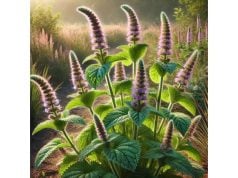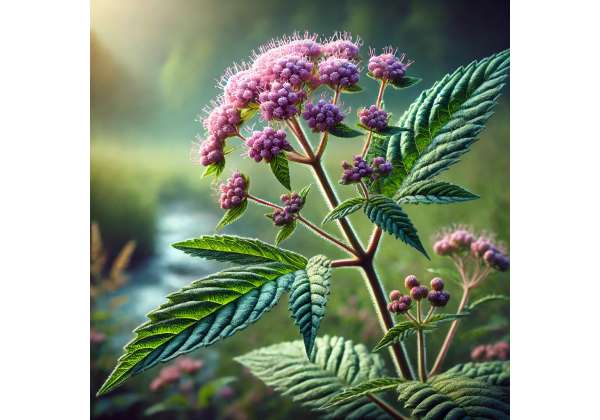
Hemp agrimony, or Eupatorium cannabinum, is a tall pink-flowering herb from the daisy family with a long history in European folk medicine. Traditional herbalists valued it as a bitter, cleansing plant for sluggish digestion, feverish illness, skin complaints, and short-term immune support. At the same time, modern interest in hemp agrimony is more complicated than its old reputation suggests. The plant contains several biologically active compounds, including sesquiterpene lactones, flavonoids, phenolic acids, and polysaccharides, but it also contains pyrrolizidine alkaloids, a class of compounds linked to liver toxicity and long-term safety concerns.
That makes hemp agrimony an herb that needs careful handling. It is interesting, chemically rich, and historically important, but it is not a casual wellness tea. The most useful modern discussion is not whether it has intriguing medicinal properties, because it does, but whether those benefits are strong enough to outweigh its risks in unsupervised use. For most people, the answer is no for routine internal use. Still, understanding its traditional role, realistic uses, dosage history, and safety profile helps separate herbal fact from romantic folklore.
Core Points
- Hemp agrimony has traditional bitter and digestive uses, but modern oral self-use is limited by liver-safety concerns.
- Its most discussed benefits are short-term bitter support and external use for minor skin applications.
- Historical tea-style use is often described at about 1 to 2 g dried herb per 200 mL water, but this is not a modern safety endorsement.
- People with liver disease, pregnancy, breastfeeding, or regular use of hepatotoxic medicines should avoid it.
- Any routine oral use is hard to justify because pyrrolizidine alkaloids are a major toxicology concern.
Table of Contents
- What is hemp agrimony
- Key compounds and medicinal properties
- What does hemp agrimony help with
- How to use hemp agrimony
- How much hemp agrimony per day
- Safety side effects and interactions
- What the evidence actually says
What is hemp agrimony
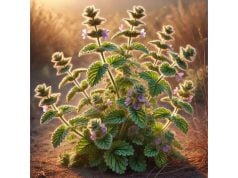
Hemp agrimony is a perennial herb native to much of Europe and parts of western Asia, usually found in damp meadows, riverbanks, hedgerows, and woodland edges. It can grow well over a meter tall, with reddish stems, narrow serrated leaves, and clusters of dusty pink flower heads that appear in late summer. Its common name comes from the shape of its leaves, which resemble hemp leaves at a glance, though the plant is unrelated to cannabis.
Historically, hemp agrimony occupied an interesting place in traditional medicine. It was used as a bitter herb, a fever herb, a liver herb, and sometimes as a plant for skin troubles or sluggish elimination. In older European practice, it was often grouped with “cleansing” plants, meaning herbs thought to help when the body felt congested, heavy, or slow to recover after illness. That language is old-fashioned, but the practical intention was clear: stimulate digestion, promote secretions, and support recovery after infection or digestive upset.
What makes hemp agrimony unusual today is the gap between its historical reputation and its modern risk profile. Many traditional herbs have become safer to use as their pharmacology was better understood. Hemp agrimony went in the opposite direction. The more researchers learned about the plant, the clearer it became that its pyrrolizidine alkaloid content raises serious safety questions, especially for internal use. So while it still appears in ethnobotanical literature and some herbal discussions, it is not one of the herbs that fits well into the “daily tonic” category.
It is also important to avoid confusion with related historical terms. Some older texts used “eupatorium” loosely, and that can cause mix-ups with other species in the genus, especially boneset. Hemp agrimony is Eupatorium cannabinum, a European species with its own chemistry and safety issues. That distinction matters because people sometimes borrow claims from other Eupatorium herbs without noticing that the evidence and risk profile may not transfer neatly.
In a modern herbal framework, hemp agrimony is best understood as:
- a traditional bitter and febrifuge-style herb
- a plant with noteworthy sesquiterpene lactones and flavonoids
- a species containing toxic pyrrolizidine alkaloids
- an herb of historical interest more than everyday self-care value
That places it closer to the category of “respect and caution” than “reach for it first.” Readers who like the traditional idea of cleansing herbs often compare it with burdock in old alterative-style practice, but burdock has a much gentler modern safety profile. Hemp agrimony remains botanically fascinating, yet its best current role is as a carefully evaluated herb rather than a routine household remedy.
Key compounds and medicinal properties
Hemp agrimony has attracted phytochemical interest because it contains several classes of compounds that can plausibly explain its traditional medicinal reputation. The most discussed are sesquiterpene lactones, flavonoids, phenolic acids, polysaccharides, volatile components, and pyrrolizidine alkaloids. This combination gives the plant a profile that is both pharmacologically interesting and toxicologically problematic.
Sesquiterpene lactones are central to the plant’s bitter and bioactive character. One of the best-known compounds associated with hemp agrimony is eupatoriopicrin, a sesquiterpene lactone often discussed in older reviews because of its cytotoxic and antimicrobial potential in laboratory models. Compounds in this class are common in the daisy family and often contribute bitterness, anti-inflammatory interest, and sometimes allergenic potential. In practical herbal terms, they help explain why hemp agrimony was used as a stimulating bitter rather than a bland soothing tea.
Flavonoids and phenolic acids add another layer. These compounds are often linked to antioxidant activity and may contribute to the plant’s traditional use in general recovery formulas. They are not unique to hemp agrimony, but they make its chemistry richer and more consistent with its old reputation as a support herb after febrile illness or digestive stagnation.
Polysaccharides are also worth mentioning because related work on Eupatorium species and mixed botanical extracts has long raised interest in immune-related signaling. This does not prove that hemp agrimony works as an immune stimulant in people, but it helps explain why the herb persisted in folk practice for colds, flu-like states, and sluggish convalescence.
Then there are the pyrrolizidine alkaloids, and these change the whole discussion. Hemp agrimony contains PAs such as echinatine, supinine, and related structures. These compounds are the main reason the herb cannot be discussed as a simple wellness plant. PAs are associated with liver injury, including hepatic veno-occlusive disease, and with genotoxic and carcinogenic concerns under repeated exposure. In other words, the same plant that contains interesting bioactives also carries a meaningful toxic burden.
That makes hemp agrimony a classic example of why “natural” is not a safety verdict. Its medicinal properties are real enough to explain its historical use:
- bitter digestive stimulation
- possible antimicrobial and antioxidant activity
- laboratory cytotoxic and immunologic interest
- topical and folk use for minor skin problems
But those properties sit next to a toxicology warning, not beneath it. Readers interested in the liver-support side of bitter herbs are usually better served learning about dandelion as a gentler digestive and bitter herb rather than relying on hemp agrimony. The chemistry of hemp agrimony is impressive, but its safety liabilities are part of the chemistry too, not an unrelated footnote.
What does hemp agrimony help with
If you read historical herbals, hemp agrimony seems to help with almost everything: fevers, digestive stagnation, liver complaints, constipation, skin eruptions, wound care, and general post-illness weakness. Modern readers should interpret that list more carefully. These uses tell us where traditional practitioners saw value, but they do not prove that the herb is effective or safe enough to recommend broadly today.
The most plausible traditional use is as a bitter digestive herb. Its strong bitter principles fit the old pattern of herbs taken before meals or during sluggish digestion to stimulate appetite and digestive secretions. In practice, that means hemp agrimony was more likely used for “heavy,” slow digestion than for ulcers, reflux, or severe inflammatory bowel problems. A bitter herb can make sense for that traditional role, but hemp agrimony is no longer an ideal choice because safer bitters exist.
A second historical use is in feverish or flu-like illness. In older European herbalism, hemp agrimony was sometimes used as a warming, clearing herb during colds or after infections. Some of that may reflect genuine pharmacologic effects, and some of it reflects premodern pattern-based medicine, where bitter or aromatic plants were expected to “move” the system after stagnant illness. Today, the evidence is too weak to recommend it as an immune herb in place of better-studied options.
A third area is skin and external use. Washes, compresses, and ointment-style preparations have been used for minor skin complaints, slow-healing areas, or irritated surfaces. This may be the most defensible traditional use in modern terms, because it lowers systemic exposure compared with oral use, though it still requires caution, especially on broken skin or large areas.
Traditional claims commonly include:
- poor appetite and sluggish digestion
- mild constipation linked to digestive inactivity
- feverish colds and recovery states
- minor skin eruptions or superficial wounds
- old-fashioned “liver and gallbladder” support
Realistic modern interpretation narrows that list. What hemp agrimony may still offer is limited, short-term, low-dose traditional benefit, especially in bitter or external applications. What it does not offer is a strong evidence base for chronic liver support, cancer treatment, detoxification, or routine immune enhancement.
This is where comparisons help. Someone looking for a bitter digestive herb, a skin herb, or an immune-support herb will usually find safer, better-characterized plants for each role. For example, readers interested in skin-focused botanicals are often better served by calendula for a more established topical approach. Hemp agrimony remains relevant mostly as a historical medicinal herb with selective, cautious use rather than as a broad modern recommendation.
How to use hemp agrimony
How hemp agrimony is used matters almost as much as whether it is used at all. Because the main safety concern is tied to internal exposure to pyrrolizidine alkaloids, form and route become critical. A reader looking for modern best practice should think first in terms of risk reduction, not extraction efficiency.
Traditional internal use was usually as an infusion, decoction, tincture, or bitter tonic formula. The aerial parts were the usual material, and the herb was taken in small amounts because of its strong taste. In some traditions it was used before meals for sluggish digestion; in others it appeared in fever or recovery formulas. That historical pattern explains why so many herbal encyclopedias still list it, but history alone is not enough to justify present-day self-medication.
If hemp agrimony is used at all in a home setting, external use is the more defensible route. A cooled infusion has been used as a compress or wash for minor skin complaints, though even here moderation matters. Applying PA-containing herbs repeatedly to large, damaged, or highly permeable areas is not a simple safety workaround. External use lowers risk, but it does not magically erase it.
A cautious way to think about forms is:
- internal tea or tincture: historically common, now difficult to recommend
- topical compress or wash: less risky, but still not casual
- ointment or salve: possible in traditional practice, though not well standardized
- concentrated extract: generally a poor choice for unsupervised use
Preparation choices also change what is extracted. Water can pull bitter and water-soluble constituents, but it does not make the herb toxin-free. Alcohol extracts may concentrate certain compounds differently, which is not automatically a benefit. This is one reason hemp agrimony does not fit modern wellness trends built around tinctures, strong extracts, or daily “cleanses.”
A practical use framework looks like this:
- Ask whether the herb is necessary at all, given the safety concerns.
- Prefer not to use it internally without expert oversight.
- If exploring traditional external use, keep the preparation mild and the use brief.
- Avoid use on large open wounds, inflamed mucosa, or extensive skin areas.
- Stop immediately if irritation, rash, nausea, or unusual symptoms occur.
Many readers are surprised by how often the best herbal advice is to use a different herb. That is especially true here. If the goal is digestive bitter support, skin calming, or immune support, a better-characterized plant is usually the wiser choice. Readers wanting a liver-focused botanical often look instead at milk thistle with a much better known supplement profile. Hemp agrimony still has ethnobotanical value, but in modern practical use, restraint is part of using it correctly.
How much hemp agrimony per day
This is the section where modern caution matters most. There is no well-established, evidence-based safe oral daily dose of hemp agrimony for self-care that I can responsibly recommend. That is not because the herb lacks active compounds. It is because the plant contains pyrrolizidine alkaloids, and those compounds make routine internal dosing difficult to justify.
That said, historical herbal practice did use dose ranges. Tea-style preparations are often described in older or traditional contexts at roughly 1 to 2 g of dried herb per 200 mL of hot water, usually taken in small amounts rather than as large-volume daily tea. Some practitioners historically used this once or twice daily for short periods. This kind of range helps explain how the herb was used, but it should not be mistaken for a modern endorsement of safe daily oral use.
The safer and more honest modern view is:
- no routine internal use for general wellness
- no long-term oral use
- no high-strength extract use without specialist oversight
- external use, if chosen, should be short-term and limited
There is also a useful distinction between herb dose and toxic exposure. For PA-containing herbal medicinal products, European regulatory discussions have emphasized keeping daily exposure to toxic unsaturated pyrrolizidine alkaloids as low as possible, with older transitional levels often framed around 1.0 microgram per day and tighter longer-term control around 0.35 microgram per day. That is not a dosing guide for hemp agrimony itself, but it explains why “just have a cup of tea” is no longer a simple answer.
If someone still encounters hemp agrimony in traditional practice, the safest dosing principles are:
- think historically, not casually
- keep any oral exposure brief and professional-led
- never use it as a daily tonic
- avoid combining it with other potentially hepatotoxic herbs or medicines
- stop entirely if symptoms persist and seek medical advice instead
For external preparations, the question is more about frequency and area than milligrams. Short-term use on a small area is inherently different from repeated use over a large inflamed surface. Even topical use should remain conservative.
Readers who primarily want bitterness, digestive movement, or a classic “before meals” herbal effect are usually better served by herbs with more defined safety margins. Hemp agrimony’s old oral dose traditions are useful historical information, but they no longer function well as everyday self-care instructions. In modern terms, the most important dosage advice is not how much to take, but when not to take it at all.
Safety side effects and interactions
Hemp agrimony should be approached first as a safety question and only second as a benefit question. The defining issue is its content of pyrrolizidine alkaloids. These compounds are associated with hepatotoxicity and long-term genotoxic and carcinogenic concerns, especially when exposure is repeated or poorly controlled. That alone places the herb outside the category of routine home remedies for most people.
The people who should avoid hemp agrimony most clearly include:
- pregnant women
- breastfeeding women
- children
- people with liver disease
- anyone taking medicines with known liver burden
- people who use alcohol heavily or have a history of alcohol-related liver injury
- those with known Asteraceae family allergy
Possible side effects are not limited to the liver. The herb can also cause:
- nausea
- stomach upset
- bitter-related digestive discomfort
- allergic skin or contact reactions
- irritation with topical use in sensitive individuals
The liver risk, however, is the headline concern. Pyrrolizidine alkaloids do not need to cause dramatic symptoms right away to be a problem. Low-level repeated exposure is part of why regulators take them seriously. This is also why occasional folk use and modern supplement thinking do not mix well. A person may not feel anything obvious and still be taking on unnecessary toxic risk.
Interactions are another practical concern. Hemp agrimony is a poor fit with:
- acetaminophen in high or repeated doses
- methotrexate
- certain antifungals
- some anti-seizure medicines
- alcohol-heavy routines
- other herbs or supplements with known liver stress potential
Even when the interaction is not directly proven for hemp agrimony itself, the logic is sound: do not stack possible liver burdens when one of them already has a recognized PA problem.
Topical use is not exempt from judgment either. External application is generally less risky than oral use, but damaged skin, prolonged use, or large body-surface exposure can narrow that margin. People sometimes assume that “not swallowing it” makes a plant harmless. That is too simple, especially with compounds that regulators already monitor closely.
This safety profile also changes how the herb should be compared with better-known herbal options. Someone looking for a mild seasonal immune herb is usually on firmer ground with echinacea for more studied short-term immune support rather than hemp agrimony. The same applies to bitters, skin herbs, and liver herbs. Hemp agrimony may still appear in traditional practice, but it belongs among the herbs that require a stronger filter of caution, not just enthusiasm.
What the evidence actually says
The evidence on hemp agrimony is a mix of traditional use, phytochemistry, laboratory pharmacology, and toxicology. That means the plant is not unsupported, but it is also not validated in the way most people expect when they search for health benefits online.
The strongest evidence is chemical and toxicological. Researchers have clearly identified pyrrolizidine alkaloids in Eupatorium cannabinum, and modern regulatory discussions about PA-containing herbal products make it clear that these compounds are not theoretical concerns. This is the part of the evidence base that is most decisive for real-world use.
The next strongest area is phytochemistry and preclinical work. Hemp agrimony contains sesquiterpene lactones such as eupatoriopicrin, along with flavonoids, terpenoids, phenolic compounds, and other secondary metabolites. In vitro and experimental studies have reported antioxidant, antimicrobial, cytotoxic, and other biologically active effects. More recent work has extended that picture with advanced profiling and novel formulation studies. This is scientifically interesting and helps explain why the herb developed a medicinal reputation.
What is much weaker is human clinical evidence. There are no strong modern trials showing that hemp agrimony is a reliable oral treatment for digestion, liver health, immunity, skin disorders, or febrile illness in everyday practice. That is a major gap. A herb can have impressive chemistry and still fail to become a good clinical option, either because the benefits are too uncertain or because the risks are too significant.
That creates a very clear evidence hierarchy:
- species-specific PA content is well supported
- laboratory bioactivity is credible
- traditional use is extensive
- high-quality human efficacy data are limited
- modern routine oral use is hard to defend
This matters because hemp agrimony is easy to romanticize. It is visually striking, historically rich, and chemically active. Those traits make it tempting material for exaggerated herbal writing. But evidence-based herbal practice does not reward that style. It asks a simpler question: does the herb offer a benefit-risk balance good enough for modern self-care? For hemp agrimony, internal use usually does not clear that bar.
So the evidence-based conclusion is not that hemp agrimony is useless. It is that the plant’s most reliable modern lesson is caution. Its constituents are worthy of study, and its history is real. Yet for the average reader, the most practical takeaway is to admire the herb’s medicinal past, understand its chemistry, and choose safer alternatives for most present-day uses.
References
- Wild-Grown Romanian Eupatorium cannabinum: Advancing Phyto-Nanocarriers via Maltodextrin Micro-Spray Encapsulation-Metabolite Profiling, Antioxidant, Antimicrobial, and Cytotoxicity Insights 2025 (Research Article)
- Pyrrolizidine Alkaloids in Foods, Herbal Drugs, and Food Supplements: Chemistry, Metabolism, Toxicological Significance, Analytical Methods, Occurrence, and Challenges for Future 2024 (Review)
- Pyrrolizidine Alkaloids as Hazardous Toxins in Natural Products: Current Analytical Methods and Latest Legal Regulations 2024 (Review)
- Use of herbal medicinal products containing toxic, unsaturated pyrrolizidine alkaloids (PAs) – Scientific guideline | European Medicines Agency (EMA) 2021 (Guideline)
- Investigation into the Presence of Pyrrolizidine Alkaloids in Eupatorium cannabinum by Means of Positive and Negative Ion Chemical Ionization GC-MS 1987 (Research Article)
Disclaimer
This article is for educational purposes only and is not medical advice. Hemp agrimony contains pyrrolizidine alkaloids and should not be treated as a routine self-care herb. Do not use it to diagnose, treat, or delay care for liver symptoms, persistent digestive problems, fever, or skin infections. Speak with a qualified healthcare professional before using any PA-containing herb, especially if you are pregnant, breastfeeding, taking regular medicines, or have any liver-related condition.
If you found this article helpful, please share it on Facebook, X, or your preferred platform so others can find careful, safety-aware herbal information.