Hemp nettle, botanically known as Galeopsis tetrahit, is a bristly annual herb in the mint family that has long lived in an odd space between wild weed and useful folk remedy. Despite its name, it is neither true hemp nor true nettle, and it does not share the same medicinal profile as either. Traditional European herbal practice has used the flowering herb mainly for coughs, chest irritation, convalescence, mild urinary complaints, and general weakness, while modern research has become more interested in its dense mix of polyphenols, iridoid glycosides, and phenylethanoid compounds. Those compounds help explain why hemp nettle shows antioxidant, anti-inflammatory, and expectorant promise in laboratory work. Still, this is not a well-standardized clinical herb, and that distinction matters. The strongest case for hemp nettle today is not as a miracle remedy, but as a traditional respiratory and supportive herb with real phytochemical interest and still-limited human evidence. Used carefully and with modest expectations, it may have a place in short-term herbal practice, especially when its traditional uses match the reason for taking it.
Essential Insights
- Traditional use centers on cough support, mild expectorant action, and recovery after long illness.
- Modern studies show strong antioxidant activity in the leaves, especially where chlorogenic acid and verbascoside are abundant.
- A cautious traditional infusion is about 2 g dried aerial parts in 200 mL hot water, up to 2 cups daily for short-term use.
- Avoid hemp nettle during pregnancy, breastfeeding, childhood, and when using seed or seed-oil preparations.
Table of Contents
- What is hemp nettle
- Key compounds and actions
- What can it help with
- How hemp nettle is used
- How much should you take
- Side effects and who should avoid it
- What the evidence actually shows
What is hemp nettle
Hemp nettle, Galeopsis tetrahit, is a rough-haired annual herb in the Lamiaceae family, the same broad plant family that includes mint, sage, thyme, and many other aromatic medicinal herbs. It is native to much of Europe and western Asia and has also naturalized in parts of North America. In fields, hedgerows, gardens, damp waste ground, and disturbed soil, it often behaves more like a farm weed than a treasured medicinal plant. That humble reputation is one reason it is often overlooked.
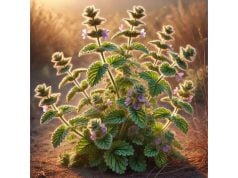
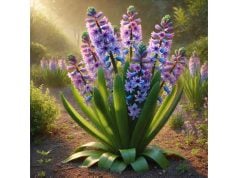
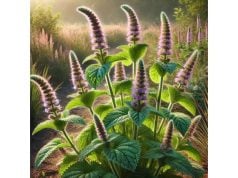
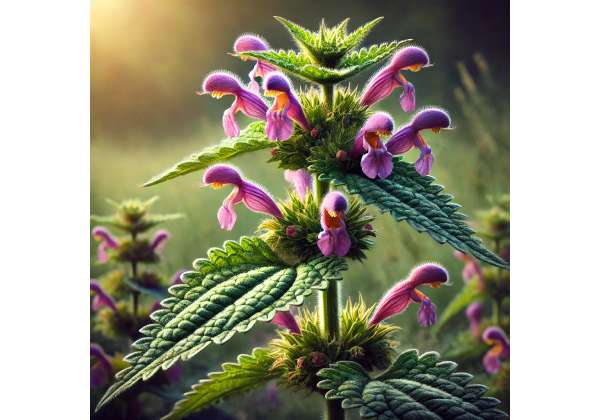
The plant is easy to recognize once you know its main features. It has square stems, opposite serrated leaves, swollen nodes, and pink to purple flowers with a pale lower lip. The leaves resemble nettle leaves at a glance, which explains the common name, but the plant does not deliver the same sting as true nettles. The “hemp” part of the name refers more to its rough, fibrous look than to any relationship with cannabis. That distinction matters because people sometimes assume hemp nettle shares the chemistry or uses of hemp. It does not.
In traditional European herbal practice, hemp nettle was valued most for the flowering herb, not the seeds. Older herb references describe it as a support for coughs, hoarseness, chest congestion, lingering respiratory weakness, and slow recovery after infection or long illness. In some regions it was also regarded as mildly astringent, slightly diuretic, and restorative for thin or weakened people. That language reflects older herbal systems, but it still offers clues about how the plant was perceived: not as a strong stimulant or purgative, but as a respiratory and rebuilding herb.
There is also a practical botanical point worth mentioning. The Galeopsis genus contains several hemp-nettle species, and traditional uses sometimes overlap across them. That can make modern herb writing sloppy, because claims from one species are often applied too broadly to another. With hemp nettle, careful writing means staying close to Galeopsis tetrahit when possible and treating broader Galeopsis data as supportive, not identical.
Today, hemp nettle is best understood as a traditional medicinal weed with a more serious phytochemical profile than its rough appearance suggests. It has a history, it has biologically active compounds, and it has enough laboratory interest to justify attention. What it does not yet have is the kind of human clinical evidence that would place it beside mainstream herbal standards. That balance of promise and uncertainty defines the herb better than any romantic folklore does.
Key compounds and actions
The medicinal interest in hemp nettle comes from its rich secondary chemistry. Recent studies on Galeopsis tetrahit and closely related Galeopsis species show a plant profile built around polyphenols, phenolic acids, phenylethanoid glycosides, flavonoids, and iridoid glycosides. That mix helps explain why the herb appears in older traditions for irritated airways, mild inflammation, and general tissue support.
One of the standout compounds in modern hemp nettle research is chlorogenic acid. In recent Romanian analyses, Galeopsis tetrahit leaves contained the highest chlorogenic acid levels among the Galeopsis samples studied, and those leaves also showed the strongest antioxidant activity. Chlorogenic acid matters because it is one of the most widely studied hydroxycinnamic acids in medicinal plants. It is associated with antioxidant behavior, tissue protection, and broader inflammation-modulating effects. In hemp nettle, it appears to be one of the plant’s central markers of activity.
Verbascoside is another important compound. This phenylethanoid glycoside appears repeatedly in newer hemp nettle work and is especially relevant because it is both measurable and pharmacologically interesting. It has been associated in broader Lamiales research with antioxidant and anti-inflammatory activity. In practice, that does not prove hemp nettle treats inflammation in people, but it does make the herb’s old use for irritated tissue, chest discomfort, and recovery states more chemically plausible.
The plant also contains other phenolic acids, including ferulic, p-coumaric, caffeic, and protocatechuic acids, especially in the leaves and aerial parts. Flavonoid patterns in Galeopsis species include luteolin- and apigenin-type derivatives, and older chemistry work also points to iridoid glycosides such as harpagide and related compounds within the genus. Those matter because iridoids often appear in herbs with bitter, protective, mildly anti-inflammatory, or tissue-supportive actions.
From a practical herbal point of view, the chemistry suggests five likely functional themes:
- antioxidant support through polyphenols and phenolic acids
- mild anti-inflammatory potential through verbascoside, flavonoids, and iridoids
- expectorant and astringent traditional action, likely from the whole phytochemical matrix rather than one isolated compound
- tissue-toning and protective effects in traditional use
- possible cognitive or acetylcholinesterase-related activity in laboratory settings, which is interesting but not yet a practical reason to use the herb
This is where hemp nettle differs from softer demulcent herbs like marshmallow for soothing irritated mucosa. Hemp nettle is not mainly a coating herb. It is more of a polyphenol-rich, mildly active herb that may help by reducing irritation and supporting clearance rather than by laying down a thick soothing layer.
The biggest insight from the chemistry is that hemp nettle is not inert. It is a real medicinal plant with meaningful constituents. But meaningful chemistry is not the same thing as a proven clinical effect. That distinction should guide expectations from the start.
What can it help with
The most credible traditional use of hemp nettle is respiratory support. Older European herb traditions describe it as a remedy for coughs, chest irritation, hoarseness, lingering catarrh, and slow recovery after respiratory infection. In modern language, the best way to frame that claim is that hemp nettle may act as a mild expectorant and airway-supportive herb rather than as a direct treatment for infection. It may help loosen or move mucus and reduce the sense of heaviness or irritation in the chest, but it should not be treated as a substitute for medical care in pneumonia, asthma attacks, or severe bronchitis.
A second traditional use is support during convalescence. Hemp nettle was sometimes given to people who looked run down after prolonged illness, especially where cough, fatigue, or poor strength lingered. That kind of traditional use is harder to measure in a modern clinical trial, but it makes sense within the herb’s overall profile. A mildly tonic, antioxidant-rich, non-stimulating herb may be valued because it is gentle enough to use when the body feels worn down rather than acutely ill.
A third area is mild urinary support. Some sources describe Galeopsis species as slightly diuretic and useful in minor urinary sluggishness. This is one of the weaker modern claims, so it is better treated as secondary rather than central. Hemp nettle is not a first-choice herb for urinary infections, stones, or significant water retention. At most, it belongs in the category of traditional, light-support herbs rather than decisive urinary agents.
There is also a traditional astringent and tissue-supportive theme. That may help explain why hemp nettle has been mentioned historically for inflamed mucosa and irritated tissue. Astringent herbs can sometimes reduce excess secretions and tighten superficial tissues slightly, which can be useful in folk medicine. Still, this is not the same as saying hemp nettle is a powerful wound herb or anti-bleeding agent.
Modern lab findings add a more cautious benefit profile. Leaf extracts with higher phenolic content have shown strong antioxidant activity and some acetylcholinesterase inhibitory potential in vitro. These findings are interesting, but they do not justify marketing the herb as a brain nootropic or a major anti-aging herb. They simply suggest the plant has more biological depth than older folk descriptions alone would imply.
The most realistic benefit list looks like this:
- mild support for coughs with mucus or chest irritation
- short-term use during recovery from respiratory strain
- modest antioxidant and tissue-protective potential
- possible mild urinary support in traditional use
The less realistic list includes claims that it cures tuberculosis, rebuilds lung tissue, reverses chronic disease, or meaningfully treats neurological disorders. Those claims move beyond what the evidence can support. For readers seeking a more established respiratory herb, great mullein for traditional expectorant support is usually better known and better explained in modern herbal practice.
How hemp nettle is used
Hemp nettle is usually used as the dried aerial herb, especially the leaves and flowering tops. The simplest and most traditional form is an infusion. This means the cut herb is steeped in hot water, strained, and taken warm. In older practice, it was often drunk slowly over the day rather than as a single large mug. That pattern fits its reputation as a gentle respiratory and supportive herb rather than a fast-acting remedy.
For coughs and lingering chest irritation, hemp nettle is typically prepared as a light tea. Some herbalists blend it with softer or more aromatic herbs because the taste is plain and slightly rough rather than pleasant. This is one reason the herb rarely became a popular everyday beverage. It was used because it was useful, not because it was enjoyable.
Another traditional use is as part of a longer convalescence blend. Rather than acting as a dramatic symptomatic herb, hemp nettle often seems to have been valued in formulas meant to support a tired body over several days. In that context, it makes sense as a background herb that contributes expectorant, astringent, and antioxidant support without strongly stimulating or sedating the person taking it.
Some references also mention decoctions and topical use, though infusion remains the most practical household form. A decoction is less common for delicate aerial herbs, but it has still appeared in traditional practice. External use is less central than with classic skin herbs, yet cooled preparations may be used on mildly irritated surfaces in folk medicine.
A useful modern point is plant part selection. Current phytochemical work suggests the leaves and upper aerial parts are richer in key phenolic compounds than roots. That supports a sensible herbal rule: use the flowering aerial parts, not the seeds and not improvised seed-oil preparations. Older toxicological concern around Galeopsis seeds is one of the clearest reasons not to experiment broadly with nontraditional plant parts.
A practical household approach looks like this:
- Use dried aerial parts rather than seeds.
- Choose infusion as the first preparation.
- Keep use short term and goal-specific.
- Stop if the herb feels irritating, unhelpful, or unusually sedating.
Hemp nettle should also be matched to the problem. It is a better fit for a rough lingering cough than for a dry, burning throat. It is a better fit for mild chest congestion than for severe wheezing. It is better used as support than as the main answer. For external soothing of minor irritated skin, plantain leaf for simple topical comfort is usually more intuitive and better established.
In short, hemp nettle works best when used simply, gently, and in the form closest to its traditional pattern: a short-course infusion made from the above-ground herb.
How much should you take
The first thing to say about hemp nettle dosage is that there is no clinically established human dose supported by modern trials. That is not a small detail. It means dosage advice has to be framed as traditional practice and cautious household use, not as evidence-based prescription.
A reasonable traditional infusion range is about 2 g of dried aerial parts in 200 mL of hot water, steeped for roughly 10 minutes. This may be taken once or twice daily for short-term use. Some older herbal references describe an average daily herb amount of about 6 g divided across several cups, which is broadly compatible with this range. Even so, it is better to begin at the lower end and assess tolerance rather than jumping to maximum folk doses.
When readers see a herb presented as “gentle,” they often assume daily, indefinite use is fine. With hemp nettle, that is not the safest interpretation. The better rule is brief, purpose-specific use. A practical duration is several days to about one week. If the cough, chest discomfort, or urinary issue continues past that point, it makes more sense to reassess the condition than to keep increasing the herb.
A careful internal use plan might look like this:
- start with 1 cup daily for the first day
- increase to 2 cups daily only if well tolerated
- keep the total dried herb near 2 to 6 g per day
- stop after 5 to 7 days unless a knowledgeable practitioner advises otherwise
For liquid extracts or tinctures, the situation is less clear. Hemp nettle is not sold in a standardized way comparable to mainstream herbs, so extract strength can vary widely. The safest rule is to follow the manufacturer’s label only if the source is reputable, and even then to favor modest dosing over aggressive use.
It is also worth remembering that the recent Romanian standardization study dealt with extract quality and verbascoside measurement, not with a proven oral treatment dose in people. That research is useful for understanding composition, but it does not replace human dosing studies.
One more caution is needed around seeds. Older toxicology reports involving Galeopsis species raise enough concern that seed and seed-oil use should be avoided entirely in self-care. Traditional herb use focuses on the aerial parts, and that is where modern chemistry work is also strongest.
The most honest dosing summary is this: hemp nettle can be used in small traditional infusion amounts, but there is no strong modern clinical basis for pushing the dose higher or using it long term. If a person needs a more defined herbal approach for the lungs, urinary tract, or inflammation, it is usually wiser to turn to a plant with clearer monographs and better dosing standards.
Side effects and who should avoid it
Hemp nettle does not appear to be among the most overtly dangerous traditional herbs when the aerial parts are used in modest amounts, but the safety profile is still incomplete. That means the correct tone is cautious, not casual.
The most likely side effects from the aerial herb are mild and nonspecific. Some users may notice stomach discomfort, nausea, a scratchy feeling in the throat, or dislike of the herb’s rough taste. Since hemp nettle is often used for respiratory support, this may seem surprising, but herbs that help one tissue system can still irritate another if taken too strongly or by sensitive people.
Pregnancy and breastfeeding are clear avoid categories. There is not enough reliable safety evidence to support internal use during either period. The same goes for children, especially because dosing is not standardized and the herb is not essential enough to justify guesswork.
The biggest traditional caution concerns seeds and seed-derived preparations. Older literature on Galeopsis species includes reports of adverse neurologic symptoms and temporary limb weakness linked to seed oil or seed exposure. These accounts are not a reason to panic over the whole plant, but they are a strong reason to stay with the aerial herb and avoid seeds in home use. This is one of the rare safety signals specific enough to shape practical guidance.
People who should avoid hemp nettle or use it only with professional guidance include:
- pregnant or breastfeeding women
- children and teenagers
- people with severe liver or kidney disease
- people with unexplained chronic cough, coughing blood, or suspected pneumonia
- anyone using unfamiliar seed or seed-oil products made from Galeopsis species
- people taking multiple medicines for chronic illness without professional review
Drug interactions are poorly documented rather than well cleared. That means the absence of evidence should not be mistaken for proof of safety. If someone takes anticoagulants, sedatives, or multiple prescription drugs, cautious restraint is better than herbal optimism.
Another practical safety issue is misidentification. Hemp nettle grows where many rough, weedy plants grow, and it can be confused with related Galeopsis species or with harmless but irrelevant look-alikes. Correct identification matters even more when a plant has active seeds and variable traditional uses.
There is also a medical-triage point that should not be skipped. A lingering cough that lasts more than a week, chest pain, fever, shortness of breath, wheezing, or recurrent urinary pain deserves proper evaluation. Hemp nettle may be a modest support herb, but it is not an excuse to delay care. For simple external soothing and skin-calming use, calendula in gentle topical care is usually easier to use with confidence.
The safest overall message is this: short-term aerial-herb use may be reasonable for selected adults, but hemp nettle is not a free-form wellness herb, and it is not appropriate for seed-based experimentation.
What the evidence actually shows
The evidence for hemp nettle is strongest in phytochemistry and in vitro testing, moderate in traditional use history, and weak in human clinical trials. That balance is important because it helps separate what the plant may do from what has actually been demonstrated in people.
Recent Romanian studies have significantly improved the picture. They show that Galeopsis tetrahit, especially the leaves, is rich in phenolic acids and other polyphenols. Chlorogenic acid stands out as the dominant compound in the leaves, while verbascoside has emerged as a useful marker for standardizing extracts. These same studies also found strong antioxidant activity in leaf samples and measurable acetylcholinesterase inhibitory activity in vitro. In research terms, that is promising. In clinical terms, it is still preliminary.
The 2026 standardization paper matters for a different reason. It showed that a Romanian leaf extract could be standardized in verbascoside with a validated analytical method, giving the plant a more concrete quality-control framework than many folk herbs ever receive. That does not prove therapeutic efficacy, but it does make future research more credible because it defines what is actually in the extract.
Broader Galeopsis literature supports the idea that the genus contains iridoid glycosides, phenylethanoid glycosides, hydroxycinnamates, and flavone glycosides. Older work also suggests antioxidant and mild central nervous system activity in some Galeopsis extracts. Traditional ethnomedical use strongly favors respiratory complaints, digestive irritation, urinary discomfort, and inflammatory conditions. But here is the key limit: much of that broader evidence comes from related species, especially Galeopsis bifida, not only Galeopsis tetrahit.
That species gap matters. It is reasonable to use related-species data to understand patterns in the genus. It is not responsible to treat them as interchangeable proof. The more specific the claim, the more closely it should stay with Galeopsis tetrahit data.
So where does the evidence leave a careful reader?
- the plant clearly contains active compounds
- leaves appear to be the most pharmacologically interesting part
- antioxidant and anti-inflammatory potential are plausible
- traditional respiratory use is coherent with the chemistry
- human proof for cough relief, urinary benefit, or convalescence support is still lacking
That means hemp nettle deserves serious interest, but not exaggerated promises. It is best seen as a traditional herb with growing laboratory support and limited clinical confirmation. For some readers, that makes it worth exploring cautiously. For others, it means choosing better-studied herbs for the same goals. If your priority is a more established urinary herb rather than a lightly diuretic traditional one, uva ursi for targeted urinary support is the more clearly defined path.
In other words, the evidence supports curiosity, modest use, and careful interpretation. It does not support hype.
References
- Standardization of Romanian Galeopsis tetrahit Leaf Extract in Verbascoside Using a Validated UHPLC-PDA Method 2026
- Phenolic Acid Investigation and In Vitro Antioxidant and Antiacetylcholinesterase Potentials of Galeopsis spp. (Lamiaceae) from Romanian Flora 2025
- Anti-inflammatory activity of verbascoside- and isoverbascoside-rich Lamiales medicinal plants 2023
- Synanthropic Plants as an Underestimated Source of Bioactive Phytochemicals: A Case of Galeopsis bifida (Lamiaceae) 2020
Disclaimer
This article is for educational purposes only and does not replace medical advice, diagnosis, or treatment. Hemp nettle is a traditional herb with limited human research, so its historical uses should not be taken as proof of clinical effectiveness. Do not use it to self-treat persistent cough, fever, shortness of breath, chest pain, urinary pain, or chronic inflammatory symptoms. Always consult a qualified healthcare professional before using hemp nettle if you are pregnant, breastfeeding, taking prescription medicines, or managing a chronic medical condition.
If you found this article helpful, please share it on Facebook, X, or your preferred platform.