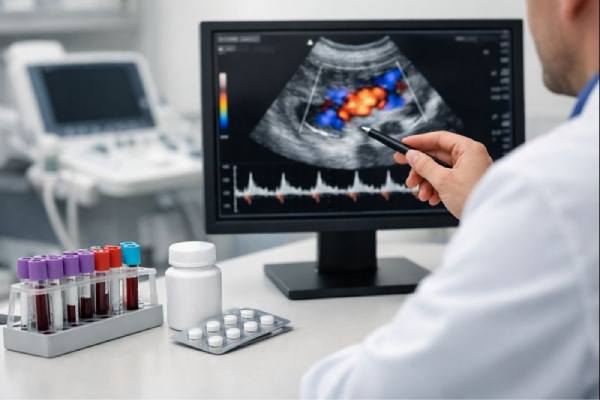
Hepatic vein thrombosis is a condition where a blood clot blocks the veins that drain blood out of the liver. It is often discussed under the name Budd–Chiari syndrome (blocked liver vein outflow). When drainage slows or stops, blood backs up inside the liver, pressure rises, and the liver can swell and become injured. Some people develop symptoms quickly and feel very unwell. Others have a quieter, slower course and only discover the problem after fluid builds up in the abdomen or routine tests show liver stress.
This topic matters because early treatment can prevent lasting damage and reduce dangerous complications. It also matters because the clot is rarely “random”—many patients have an underlying reason their blood clots more easily. In the sections below, you’ll learn what happens in the body, the most common causes and risk factors, how symptoms show up, how doctors confirm the diagnosis, and what treatment and long-term management typically involve.
Table of Contents
- What hepatic vein thrombosis does to the liver
- What causes hepatic vein thrombosis and who is at risk
- Symptoms and complications to watch for
- How hepatic vein thrombosis is diagnosed
- Treatment options and what to expect
- Long-term management prevention and when to seek help
What hepatic vein thrombosis does to the liver
Your liver is designed for one-way traffic: blood arrives through the portal vein and hepatic artery, moves through tiny channels, and exits through the hepatic veins into the inferior vena cava on its way back to the heart. Hepatic vein thrombosis blocks that “exit,” so blood cannot leave normally. The result is congestion (too much blood trapped in the liver), rising internal pressure, and reduced oxygen delivery to liver cells.
Why a blocked outflow can injure the liver fast
When outflow is suddenly blocked, the liver can swell quickly. The capsule around the liver is not very stretchy, so swelling can cause right upper abdominal pain or tenderness. As pressure rises, fluid may leak out into the abdomen, causing ascites (fluid in the belly). If the blockage is severe and untreated, liver cells can fail, leading to jaundice (yellowing of skin/eyes), confusion, or bleeding problems.
Why some cases develop slowly
Not everyone has a dramatic onset. In slower or partial blockage, the body may form alternate drainage pathways over time. This can delay symptoms but does not fully remove risk. Ongoing congestion can lead to scarring of liver tissue and portal hypertension (high pressure in the portal blood system). Portal hypertension drives many long-term problems, such as enlarged veins in the esophagus or stomach, a bigger spleen, and low blood cell counts from “hypersplenism.”
Primary vs secondary obstruction matters
Clinicians often describe hepatic venous outflow obstruction as:
- Primary: the problem is inside the vein, most often a clot or vein wall disease.
- Secondary: the vein is compressed or invaded from the outside, such as by a tumor, cyst, abscess, or a structural narrowing.
This distinction affects treatment priorities. A clot-driven problem calls for anticoagulation (blood-thinning medicine to prevent clot growth) and sometimes procedures to reopen the vein. External compression calls for treating the underlying cause while also managing the clotting risk.
A helpful mental model is to think of the liver like a city with one main highway out. If the highway closes, traffic backs up, side streets clog, and emergency routes may appear—but the city still struggles until flow is restored or a safe detour is built.
What causes hepatic vein thrombosis and who is at risk
Hepatic vein thrombosis rarely happens without a reason. In many patients, one or more factors increase clotting tendency, injure the vein lining, slow blood flow, or create external pressure on the outflow tract. Finding the cause is not a side quest—it shapes treatment length, recurrence risk, and family counseling.
Common underlying causes
Causes often fall into three overlapping buckets:
- Blood conditions that increase clotting
- Myeloproliferative neoplasms (bone marrow disorders that raise blood cell production) are a frequent cause in many regions.
- Inherited thrombophilias (genetic clotting tendencies) can contribute, especially in younger patients or those with family history.
- Antiphospholipid syndrome (an autoimmune clotting disorder) is an important, treatable cause.
- Hormonal and pregnancy-related factors
- Pregnancy and the postpartum period increase clot risk because clotting factors rise naturally.
- Estrogen-containing oral contraceptives or hormone therapy may add risk, especially in people with an underlying clotting tendency.
- Local triggers and secondary obstruction
- Abdominal infections or inflammatory conditions can raise clot risk.
- Tumors (including liver cancers or cancers near the liver) can compress or invade the venous outflow.
- Rarely, anatomical narrowing of the inferior vena cava or hepatic vein “webs” can contribute to obstruction and clot formation.
Risk factors that should raise suspicion
You should think about hepatic vein thrombosis earlier (and discuss it with a clinician) if someone has:
- New ascites without a clear cause, especially when the liver is enlarged and tender
- A history of unexplained clots (deep vein thrombosis, pulmonary embolism, splanchnic vein thrombosis)
- Recurrent pregnancy loss or autoimmune disease symptoms (possible antiphospholipid syndrome)
- Elevated blood counts, itching after hot showers, or enlarged spleen (possible myeloproliferative disorder)
- A known cancer, especially with new abdominal symptoms
Why “multiple hits” are common
Many patients have more than one contributor—for example, a mild inherited risk plus estrogen exposure, or a blood disorder plus dehydration and infection. This matters because treatment often needs to address both the clot itself and the reason it formed. If the cause is missed, the clot can recur even after a technically successful procedure.
A practical takeaway: if hepatic vein thrombosis is confirmed, expect a careful evaluation for clotting disorders and secondary causes. It is one of the best ways to prevent a repeat event and protect the liver long-term.
Symptoms and complications to watch for
Symptoms can range from subtle to life-threatening. The pattern depends on how quickly the blockage developed, how many veins are involved, and whether the liver has alternate drainage pathways.
Early symptoms people often notice
Acute or rapidly worsening cases may cause:
- Right upper abdominal pain or a sense of pressure under the ribs
- Sudden abdominal swelling from ascites
- Nausea, reduced appetite, and early fullness
- Fatigue that feels out of proportion to a typical stomach illness
More gradual cases may present with:
- Slowly increasing waist size (ascites) without much pain
- Leg swelling from fluid shifts
- Easy bruising or prolonged bleeding
- Unexplained weight loss or muscle loss over months
Signs of liver stress or failure
When the liver is significantly impaired, symptoms can include:
- Jaundice (yellow skin or eyes) and dark urine
- Itching and pale stools
- Confusion, sleep–wake reversal, or slowed thinking (a sign the liver is struggling to clear toxins)
- New bleeding from gums, nose, or gastrointestinal tract due to reduced clotting factor production
Complications that drive the biggest risks
Hepatic vein thrombosis can lead to predictable complications that require active prevention:
- Portal hypertension
- Enlarged veins in the esophagus or stomach (varices) that can bleed heavily
- Enlarged spleen and low platelets
- Persistent ascites, sometimes difficult to control
- Kidney strain and infections
- Severe ascites can reduce effective blood volume and stress kidney function
- Ascitic fluid can become infected (spontaneous bacterial peritonitis), even without obvious fever
- Liver scarring and long-term decline
- Ongoing congestion can progress to fibrosis and cirrhosis
- Some patients develop liver nodules that require careful imaging follow-up to distinguish benign regenerative nodules from cancer
Red-flag symptoms that need urgent action
Seek emergency evaluation for:
- Vomiting blood or passing black, tarry stools
- Severe shortness of breath, fainting, or chest pain
- Sudden confusion, extreme sleepiness, or inability to stay awake
- Rapidly worsening abdominal distension with severe pain or fever
A practical point: symptom intensity does not always match danger. Some people with serious outflow obstruction feel only mild discomfort at first. That is why persistent ascites, new jaundice, or unexplained liver test abnormalities should not be ignored—especially in someone with clotting risk factors.
How hepatic vein thrombosis is diagnosed
Diagnosis usually combines imaging that shows impaired venous outflow with tests that assess liver function and search for the reason the clot formed. The goal is to confirm the obstruction, map where it is, and identify complications that change treatment urgency.
First-line evaluation in most settings
Most workups start with three parallel steps:
- Blood tests
- Liver enzymes, bilirubin, and albumin to gauge liver injury and function
- INR (a clotting measure) to assess liver synthetic function and bleeding risk
- Complete blood count to look for anemia, high blood cell counts, or low platelets
- Kidney function and electrolytes to guide safe diuretic use and procedure planning
- Imaging to assess hepatic vein outflow
- Doppler ultrasound is often the first test because it can show absent or reversed flow, narrowed veins, and collateral vessels.
- Contrast CT or MRI can confirm thrombosis, identify the level of blockage (hepatic veins vs inferior vena cava), and evaluate liver texture, nodules, and ascites.
- Assessment of complications
- Evaluation for varices (often via endoscopy) when portal hypertension is suspected
- Paracentesis (sampling ascitic fluid) when ascites is new, severe, or accompanied by fever, pain, or kidney changes
When more specialized testing is needed
Some cases require deeper evaluation to guide procedures:
- Venography (contrast imaging inside the veins) can define anatomy when planning angioplasty, stenting, or shunt procedures.
- Liver biopsy may be considered in selected patients, especially when imaging is inconclusive but suspicion remains high, or when small-vein disease is suspected.
Finding the “why” behind the clot
A thorough cause evaluation often includes:
- Testing for myeloproliferative neoplasms (including mutation testing and hematology review when indicated)
- Antiphospholipid antibody testing (done carefully, sometimes repeated for confirmation)
- Inherited thrombophilia testing when appropriate (often tailored to age, history, and family context)
- Cancer screening guided by symptoms, imaging findings, and risk profile
- Review of medications, pregnancy/postpartum status, and recent infections or surgeries
One important practical detail: some clotting tests are harder to interpret once anticoagulation has started or when the liver is very impaired. Clinicians often prioritize urgent treatment first, then complete the most reliable parts of the clotting evaluation when timing is optimal. A well-organized diagnostic plan prevents both missed causes and unnecessary repeat testing.
Treatment options and what to expect
Treatment is typically stepwise, balancing speed (to prevent liver injury) with safety (to avoid bleeding complications). The plan depends on symptom severity, the extent of blockage, liver reserve, and whether a reversible cause is identified.
Core treatment goals
Most care plans aim to:
- Stop the clot from extending and prevent new clots
- Restore venous outflow when possible
- Control portal hypertension complications (ascites, varices)
- Treat the underlying pro-thrombotic condition to reduce recurrence
Anticoagulation is usually the foundation
In many patients, clinicians start anticoagulation promptly unless there is an active, uncontrolled bleed. The choice of agent varies by clinical situation:
- Heparin products are often used early in the hospital setting when rapid adjustment is needed.
- Long-term options may include vitamin K antagonists or direct oral anticoagulants in selected patients, guided by liver function, drug interactions, and the underlying cause.
Anticoagulation does not “melt” the clot instantly, but it reduces the chance the clot grows and gives the body time to stabilize or recanalize (reopen) the vein.
Procedures to reopen veins or reroute flow
When symptoms persist or liver function worsens despite medical therapy, interventional options may be recommended:
- Angioplasty and stenting
- Best suited when there is a short, treatable narrowing or obstruction of a hepatic vein or the inferior vena cava.
- Can restore more physiologic flow when anatomy is favorable.
- Thrombolysis or thrombectomy
- Considered in carefully selected early cases, often in specialized centers, because bleeding risk can be significant.
- TIPS (transjugular intrahepatic portosystemic shunt)
- Creates a controlled channel to reduce pressure and bypass the blocked outflow.
- Often improves ascites and portal hypertension-related symptoms.
- Requires follow-up imaging to ensure patency and may carry risks such as hepatic encephalopathy in some patients.
When liver transplant is considered
Transplant is generally reserved for patients with:
- Fulminant liver failure
- Progressive deterioration despite anticoagulation and interventional therapy
- Severe complications that cannot be controlled with other strategies
What “success” looks like
Success is usually measured in practical outcomes:
- Ascites improves and becomes easier to control
- Liver tests stabilize or improve
- Portal hypertension complications are reduced
- The underlying clotting driver is identified and managed
Many patients do well with the right combination of anticoagulation plus a timely procedure when needed. The key is not waiting until repeated fluid build-up, infections, or bleeding events have already weakened the body’s reserve.
Long-term management prevention and when to seek help
Living with hepatic vein thrombosis often means managing two realities at once: the liver’s recovery and the long-term tendency to clot. Good management is less about constant restriction and more about structured follow-up, medication safety, and early response to warning signs.
Long-term anticoagulation and monitoring
Many patients need extended or lifelong anticoagulation, especially when an ongoing clotting disorder is found. Practical management points include:
- Take medication at the same time daily and avoid missed doses.
- Review all new prescriptions and supplements for interactions, especially if using warfarin.
- Keep a clear plan for monitoring: INR checks for warfarin, kidney/liver labs for some direct oral anticoagulants, and periodic blood counts to watch for anemia or low platelets.
If varices are present, clinicians usually coordinate anticoagulation with bleeding-prevention strategies rather than avoiding anticoagulation altogether. This balance is nuanced and should be individualized.
Preventing and managing portal hypertension complications
Common strategies include:
- Ascites control
- Sodium reduction tailored to the patient’s needs
- Diuretics with careful monitoring of kidney function and electrolytes
- Paracentesis when fluid is tense or causing breathing difficulty, often paired with albumin replacement in large-volume taps
- Variceal bleeding prevention
- Endoscopic screening and banding when indicated
- Beta-blockers in selected patients, depending on blood pressure, kidney function, and overall tolerance
Healthy habits that support recovery
These habits do not “cure” the condition, but they reduce stress on the liver:
- Avoid alcohol or follow specialist guidance if any alcohol is permitted.
- Maintain adequate protein and calories to prevent muscle loss, especially if ascites reduces appetite.
- Stay physically active within tolerance; even short daily walks help preserve muscle and circulation.
- Get vaccinated as recommended (particularly for hepatitis viruses and respiratory infections), since infections can destabilize liver disease.
Special situations: pregnancy and procedures
Pregnancy planning should involve early specialist input because clot risk changes during pregnancy and postpartum. Many patients can have safe pregnancies with coordinated anticoagulation and close monitoring. For surgeries, dental work, and invasive procedures, anticoagulation plans should be made in advance to avoid both clot recurrence and bleeding.
When to seek urgent care
Get emergency evaluation for:
- Vomiting blood, black stools, or fainting
- Fever with severe abdominal pain or worsening ascites
- New confusion, marked sleepiness, or inability to concentrate
- Sudden severe jaundice, rapidly worsening swelling, or shortness of breath at rest
Long-term success often comes from a written plan: your diagnosis details, anticoagulation regimen, what to do if you miss a dose, red-flag symptoms, and the names of the specialists coordinating your care.
References
- EASL Clinical Practice Guidelines on vascular diseases of the liver 2025 (Guideline) ([PubMed][1])
- Budd-Chiari syndrome: consensus guidance of the Asian Pacific Association for the study of the liver (APASL) 2021 (Guideline) ([PubMed][2])
- TEN-YEAR OUTCOMES OF TIPS FOR BUDD-CHIARI SYNDROME: SYSTEMATIC REVIEW AND META-ANALYSIS 2024 (Systematic Review, Meta-Analysis) ([PubMed][3])
- Effect of Direct Oral Anticoagulants Versus Traditional Anticoagulation in Budd-Chiari Syndrome 2025 (Systematic Review) ([PMC][4])
Disclaimer
This article is for educational purposes and does not replace medical advice, diagnosis, or treatment from a licensed clinician. Hepatic vein thrombosis can progress quickly and may cause serious complications such as internal bleeding, infection of abdominal fluid, or liver failure. If you have vomiting of blood, black stools, fainting, severe abdominal pain with fever, new confusion, or sudden worsening jaundice, seek emergency care immediately. Treatment choices—especially anticoagulation and procedures—must be personalized based on liver function, bleeding risk, and the underlying clotting cause.
If you found this article helpful, please share it on Facebook, X (formerly Twitter), or any platform you prefer, and follow us on social media. Your support through sharing helps our team continue producing clear, reliable health content.