
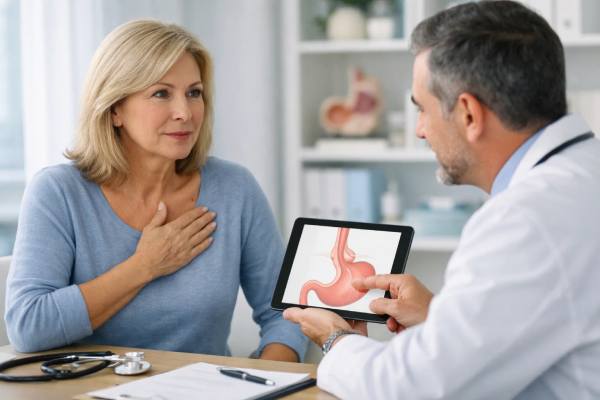
A hiatal hernia happens when part of the stomach slides or rolls upward through the natural opening in the diaphragm (the hiatus) where the esophagus passes into the abdomen. Many people have one and never know it. For others, it becomes the missing puzzle piece behind stubborn heartburn, chest discomfort after meals, or swallowing trouble that seems to come and go. The good news is that most hiatal hernias can be managed safely and effectively—often with targeted lifestyle changes and the right medications. When symptoms are severe, or when the hernia is the type that can twist or obstruct, modern surgical repair is usually straightforward and increasingly personalized to your anatomy and symptoms. This guide explains what a hiatal hernia is, how it is diagnosed, and how to choose treatment options that fit your situation.
Essential Insights
- Most hiatal hernias are manageable with reflux-focused habits and correctly timed acid-suppressing medication.
- Ongoing reflux can irritate the esophagus, so treating symptoms early may reduce complications such as inflammation and narrowing.
- Sudden severe chest or upper-abdominal pain, persistent vomiting, black stools, or trouble swallowing should be assessed urgently.
- The best long-term results often come from pairing treatment with weight and pressure reduction (constipation control, cough control, and meal sizing).
- Surgery is typically reserved for complications, large paraesophageal hernias, or reflux that remains disruptive despite optimized medical care.
Table of Contents
- What a hiatal hernia is
- Symptoms and red flags
- Why hiatal hernias happen
- How it is diagnosed
- Nonsurgical treatment options
- When surgery is the best choice
What a hiatal hernia is
Your diaphragm is a broad muscle that separates the chest from the abdomen. The esophagus passes through it via a small opening called the hiatus before connecting to the stomach. A hiatal hernia forms when the stomach (and sometimes other tissue) moves upward through that opening.
Hiatal hernias are usually described by type, because the type predicts symptoms and risk:
- Type I (sliding hiatal hernia): The junction where the esophagus meets the stomach slides above the diaphragm. This is the most common type and is strongly linked with acid reflux because the anti-reflux “seal” can be less effective.
- Type II (paraesophageal): The esophagus-stomach junction stays where it belongs, but part of the stomach bulges up beside the esophagus. This can cause pressure symptoms and, rarely, twisting.
- Type III (mixed): Features of both sliding and paraesophageal hernias.
- Type IV: A larger hernia where other organs (such as colon) can also move into the chest alongside the stomach.
A helpful way to think about it: the diaphragm and the lower esophageal sphincter work like a coordinated valve system. The diaphragm provides a muscular “pinch,” and the sphincter provides a pressure barrier. A hiatal hernia can weaken that teamwork. The result may be reflux symptoms (burning, sour taste, regurgitation), mechanical symptoms (food sticking, chest pressure), or no symptoms at all.
Hiatal hernias are common, especially with age. Many are discovered incidentally during imaging or an upper endoscopy performed for another reason. That is why the goal is not simply to “treat the hernia,” but to treat what the hernia is doing in your body—reflux, irritation, swallowing disruption, anemia, or breathing limitation.
Symptoms and red flags
Symptoms vary widely. Some people feel classic heartburn, while others mainly notice throat irritation, chest tightness after meals, or a sense that food is slow to pass. It helps to separate common patterns from warning signs that need prompt evaluation.
Common symptoms
A sliding hiatal hernia often shows up as reflux-related symptoms:
- Burning behind the breastbone (heartburn), often after meals or when lying down
- Sour or bitter taste, regurgitation, or “wet burps”
- Belching, bloating, or a sensation of fullness with smaller meals
- Throat clearing, hoarseness, or cough that seems worse after eating or at night
- Chest discomfort that feels like pressure or burning (always worth discussing with a clinician, because chest pain has many causes)
A larger paraesophageal hernia may cause more mechanical or pressure symptoms:
- Early satiety (getting full quickly) or post-meal chest pressure
- Shortness of breath with exertion or after eating (the hernia can crowd the chest space)
- Trouble swallowing, especially with bread or meat
- Nausea or retching after meals
- Iron-deficiency anemia from small erosions that can occur where the stomach rubs at the diaphragm
Red flags that deserve medical attention
Seek urgent care or emergency evaluation if you have:
- Sudden, severe chest or upper-abdominal pain, especially with vomiting
- Inability to keep down fluids, persistent retching, or a swollen, painful upper abdomen
- Vomit that looks like coffee grounds, black stools, or bright red blood
- Progressive difficulty swallowing, unintentional weight loss, or persistent vomiting
- New chest pain or pressure that could be cardiac (especially with sweating, shortness of breath, arm or jaw pain, or faintness)
These symptoms do not always mean a hiatal hernia complication, but they can signal bleeding, obstruction, significant inflammation, or another condition that should not be delayed.
Why symptoms can be confusing
Heartburn and chest pressure have many look-alikes: gallbladder disease, medication irritation (like certain anti-inflammatories), esophageal spasm, ulcers, and heart disease. A hiatal hernia can be part of the story without being the whole story. That is why good testing matters when symptoms are persistent, atypical, or severe.
Why hiatal hernias happen
Most hiatal hernias are not caused by a single event. They develop from a mix of tissue looseness and pressure over time.
Core drivers
- Age-related tissue changes
The connective tissues that help anchor the esophagus and stomach can gradually stretch. This makes it easier for the stomach to slide upward, especially when pressure in the abdomen rises. - Increased abdominal pressure
Repeated pressure pushes upward on the stomach and the junction area. Common contributors include:
- Central weight gain
- Pregnancy
- Chronic constipation and straining
- Chronic cough (from smoking, asthma, reflux, or lung disease)
- Heavy lifting without proper bracing
- Tight garments that compress the abdomen
- Anatomy and posture
Spinal curvature changes (such as kyphosis) and changes in diaphragmatic shape can alter the geometry of the hiatus. Over time, this can make herniation more likely. - Genetic and connective tissue tendencies
Some people are more prone to hernias in general. If you have a history of multiple hernias (inguinal, umbilical) or known connective tissue disorders, your risk may be higher.
Do certain foods cause a hiatal hernia?
Foods do not cause the hernia itself. However, foods can strongly influence symptoms by affecting stomach acid, gastric emptying, and pressure. Large meals, high-fat meals, peppermint, chocolate, alcohol, and late-night eating commonly worsen reflux symptoms—especially when a hiatal hernia is present. That is why symptom control often improves more from meal structure than from eliminating long lists of foods.
Why the same hernia can feel different over time
Symptoms often fluctuate with:
- Weight changes
- Stress and sleep disruption (which can heighten pain sensitivity and reflux perception)
- Changes in bowel regularity and bloating
- Medication use (some drugs relax the lower esophageal sphincter)
- Meal timing, portion size, and posture after eating
A practical takeaway: even if the hernia itself is stable, the “pressure environment” around it changes daily. Successful management often means reducing the pressure spikes that provoke symptoms.
How it is diagnosed
A hiatal hernia is diagnosed by seeing it—either directly or indirectly—using tests that evaluate anatomy and function. The best test depends on your symptoms and whether surgery is being considered.
Typical starting point
- Clinical history and exam: The exam often looks normal. What matters most is the symptom pattern, triggers (meals, lying down), and whether alarm features are present.
- Upper endoscopy (EGD): A flexible camera evaluates the esophagus and stomach lining. It can detect inflammation, ulcers, narrowing, and signs of chronic reflux. It may also visualize the hernia, although size estimates can vary.
Tests that clarify anatomy and mechanics
- Barium swallow (esophagram): You drink contrast while X-ray images are taken. This test is excellent for showing how the esophagus moves, whether part of the stomach sits above the diaphragm, and whether there is twisting or obstruction. It is often the clearest “roadmap” when surgery is being planned.
- High-resolution esophageal manometry: This measures the pressure and coordination of esophageal muscles. It helps distinguish reflux-related symptoms from motility disorders and guides surgical planning (for example, whether a full or partial wrap is more appropriate).
- Reflux monitoring (pH or impedance-pH testing): If symptoms persist despite treatment, or if the diagnosis is uncertain, reflux monitoring can show how often acid or non-acid reflux reaches the esophagus and whether symptoms correlate with reflux events.
Imaging in special situations
- CT scan or chest imaging: Often done when symptoms are severe, when complications are suspected, or when a large paraesophageal hernia is found during evaluation for breathing symptoms. CT can show the extent of herniation and rule out other causes of pain.
What test results mean for your plan
A key point is that a hernia on a test does not automatically require treatment. Many people have small sliding hernias without meaningful reflux injury. On the other hand, a modest hernia with significant reflux on monitoring, or with esophageal inflammation on endoscopy, supports a more structured treatment plan.
If surgery is on the table, clinicians usually want three pieces of clarity:
- Anatomy: what type and size of hernia is present
- Mucosal health: whether reflux has injured the esophagus
- Function: whether the esophagus moves well enough to tolerate a wrap
Nonsurgical treatment options
Most people with hiatal hernia symptoms can start with a focused, stepwise approach aimed at reducing reflux and abdominal pressure. The best results typically come from combining habit changes with medications used correctly.
Pressure reduction: the overlooked foundation
Because pressure pushes the stomach upward and encourages reflux, lowering pressure often improves symptoms faster than cutting out many foods.
- Address constipation: Aim for soft, easy-to-pass stools and avoid straining. Regular fiber intake, adequate fluids, and a consistent bathroom routine help.
- Reduce bloating triggers: Carbonated drinks, large raw salads, and rapid eating can increase stomach distension, which encourages reflux.
- Manage chronic cough: Persistent coughing repeatedly spikes abdominal pressure. Treating allergies, asthma, or reflux-related cough can indirectly improve hernia symptoms.
- Weight and waist reduction: Even modest loss can decrease reflux frequency and intensity for many people.
Meal structure that protects the esophagus
Try these adjustments for 2 to 4 weeks and track symptom changes:
- Eat smaller, more frequent meals rather than one very large dinner.
- Stop eating 2 to 3 hours before lying down.
- If nighttime symptoms are common, elevate the head of the bed (a wedge or bed risers tends to work better than extra pillows).
- Favor lower-fat evening meals, since fat slows stomach emptying and can increase reflux.
- Consider left-side sleeping if nighttime reflux is an issue, since anatomy can reduce backflow in that position for some people.
Medications: what to use and how to use it
Common options include:
- Antacids: Fast relief for occasional symptoms. Best for quick, short-term use.
- Alginates: These form a “raft” that sits on top of stomach contents and can reduce post-meal regurgitation. Many people find them especially helpful after dinner.
- H2 blockers: Useful for mild to moderate symptoms or nighttime breakthrough. They may be less effective over time if used continuously.
- Proton pump inhibitors (PPIs): Stronger acid suppression, typically taken before the first meal of the day for best effect. They are often used for a defined course (such as several weeks) and then adjusted to the lowest effective plan.
A practical medication rule: if you are taking a PPI “whenever symptoms happen,” it may feel inconsistent because PPIs work best when taken consistently and timed before meals. If your main issue is sudden post-meal regurgitation, an alginate approach may be a better match.
When nonsurgical care is not enough
If you still have frequent symptoms after optimizing timing, meal structure, and medication strategy—or if you have anemia, recurrent aspiration, or significant swallowing issues—it is reasonable to revisit diagnosis and consider whether a surgical consultation is appropriate.
When surgery is the best choice
Surgery is not the default for every hiatal hernia. It is usually considered when the hernia is paraesophageal or large, when symptoms remain disruptive despite optimized medical therapy, or when complications develop.
Common reasons surgery is recommended
Surgical repair is more likely to be advised when there is:
- A symptomatic paraesophageal hernia (types II to IV), especially with chest pressure, early satiety, shortness of breath, or recurrent vomiting
- Evidence of obstruction, twisting (volvulus), or intermittent blockage
- Bleeding or iron-deficiency anemia linked to stomach irritation at the diaphragm level
- Reflux complications (persistent esophagitis, narrowing, or reflux-related respiratory issues) that continue despite appropriate therapy
- A large hernia with significant quality-of-life impact, even if symptoms vary day to day
For people with minimal symptoms, shared decision-making matters. Some hernias stay stable for years, while others gradually become more symptomatic.
What hiatal hernia surgery typically involves
Most repairs are performed laparoscopically (small incisions). While details differ by surgeon and anatomy, the core steps often include:
- Reducing the hernia: Gently bringing the stomach back into the abdomen.
- Repairing the hiatus: Tightening the opening in the diaphragm so the stomach is less likely to move upward.
- Reinforcing reflux control: Often with a fundoplication (a wrap using the upper stomach) or, in selected cases, another reflux-control approach.
- Additional tailoring if needed:
- A partial wrap may be chosen if esophageal motility is weak.
- A gastropexy (anchoring the stomach ‘down’) may be added for certain paraesophageal hernias.
- In specific cases, surgeons address a shortened esophagus or complex anatomy.
Benefits and trade-offs
Potential benefits:
- Reduced regurgitation and heartburn
- Improved ability to eat without pressure symptoms
- Lower risk of acute twisting or obstruction in paraesophageal hernias
- Improvement in anemia when bleeding is related to hernia irritation
Common short-term issues:
- Temporary swallowing difficulty while swelling settles
- Gas-bloat symptoms or trouble burping for some patients
- Dietary progression (often liquids to soft foods to regular foods over weeks)
Long-term considerations:
- Recurrence can happen, especially with larger hernias or ongoing pressure factors. This is one reason constipation control, cough control, and weight strategy remain important even after surgery.
- The “best” repair is individualized. A thoughtful preoperative evaluation helps match the technique to your symptoms and esophageal function.
If you are considering surgery, ask directly: what symptoms is surgery expected to improve, what is the plan if symptoms persist, and what lifestyle steps reduce recurrence risk afterward. The clarity of those answers often predicts satisfaction with the outcome.
References
- Guidelines for the Surgical Treatment of Hiatal Hernias – A SAGES Publication 2024 (Guideline)
- Hiatal Hernias Revisited—A Systematic Review of Definitions, Classifications, and Applications – PMC 2024 (Systematic Review)
- Current Trends in the Management of Hiatal Hernia: A Literature Review of 10 Years of Data – PMC 2024 (Literature Review)
- Optimizing outcomes in paraesophageal hernia repair: a novel critical view – PMC 2024 (Study)
- ACG Clinical Guideline: Guidelines for the Diagnosis and Management of Gastroesophageal Reflux Disease – PMC 2022 (Guideline)
Disclaimer
This article is for educational purposes and is not a substitute for personalized medical care. Hiatal hernia symptoms can overlap with other conditions, including heart and lung problems. Seek urgent evaluation for severe chest or upper-abdominal pain, vomiting with inability to keep fluids down, black stools, vomiting blood, fainting, or rapidly worsening trouble swallowing. If you are pregnant, have kidney disease, take blood thinners, or use acid-suppressing medicines long term, discuss the safest treatment plan with a qualified clinician.
If you found this guide helpful, please consider sharing it on Facebook, X (formerly Twitter), or any platform you prefer.





