Himalayan raspberry, also called yellow Himalayan raspberry, is the fruit of Rubus ellipticus, a thorny shrub that grows across parts of the Himalayas and neighboring regions. It has a long record of traditional use as both a food and a folk remedy. The ripe berries are eaten fresh, while the leaves, roots, and bark have been prepared as juices, decoctions, poultices, and other traditional preparations for digestive upset, sore throat, fever, wound care, and related complaints.
What makes this plant interesting is the gap between tradition and modern science. The fruit is clearly a nutritious wild berry with fiber, vitamin C, and a mix of polyphenols, tannins, and organic acids. Early research also suggests antioxidant, antimicrobial, anti-inflammatory, wound-healing, and blood-sugar-related effects. At the same time, most of that evidence comes from lab and animal work, not human clinical trials. That means Himalayan raspberry is best approached as a useful functional food first, and a medicinal herb second. Used that way, it may offer practical value while keeping expectations realistic and safety in focus.
Quick Facts
- Himalayan raspberry is best supported as a nutrient-dense wild berry with antioxidant and digestive support potential.
- Its most discussed compounds include polyphenols, tannins, ellagic acid, catechins, and vitamin C.
- A practical food-first range is about 50 to 100 g of fresh ripe fruit per serving.
- Pregnant people should avoid medicinal use, especially root bark and concentrated extracts.
- Concentrated herbal preparations are not a substitute for treatment of diabetes, infection, arthritis, or cancer.
Table of Contents
- What is Himalayan raspberry
- Key compounds and properties
- Does Himalayan raspberry help
- How to use it
- How much to take
- Side effects and who should avoid it
- What the evidence actually says
What is Himalayan raspberry
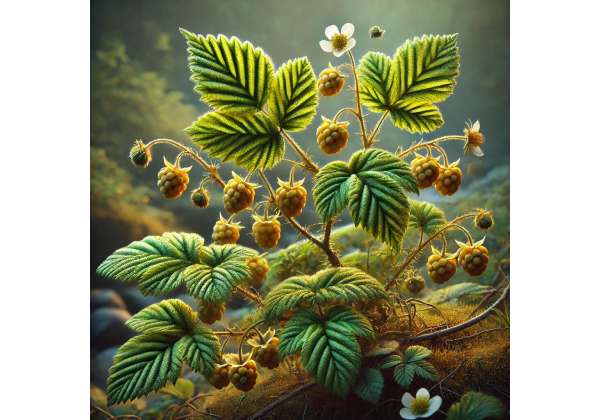
Himalayan raspberry is a wild bramble in the rose family, the same broad botanical group that includes blackberries, raspberries, strawberries, apples, and roses. Unlike the familiar red raspberry, Rubus ellipticus produces small golden-yellow fruits when ripe. The plant is shrubby, thorny, and vigorous, with arching canes and oval leaves. It grows in hilly and mountainous areas, often along roadsides, forest margins, and disturbed ground.
From a practical health perspective, the plant has two identities. First, it is a seasonal food. The fruit is tart-sweet, juicy, and easy to eat fresh, which makes it the gentlest and most realistic form for everyday use. Second, it is a traditional medicinal plant. In several local systems of use, people have relied on different parts of the plant for stomach pain, diarrhea, sore throat, fever, wound support, and inflammatory complaints. The shoots may be chewed, the fruit juice consumed, and the roots or bark prepared as stronger remedies.
That distinction matters. The fruit behaves mostly like a functional berry food. The leaves, bark, and roots behave more like herbal materials, with a stronger tannin-rich and astringent profile. Those traditional preparations are also the forms most likely to raise safety questions, especially when the dose is unclear or the user belongs to a higher-risk group.
The plant’s appeal also comes from its local resilience. It is a hardy wild species, not a fragile specialty crop. That means it has value beyond herbalism: it can contribute to wild food traditions, small-scale food processing, and seasonal nutrition. Jams, juices, sauces, and dried products are all plausible ways to use it, even if medicinal claims remain modest.
One useful way to think about Himalayan raspberry is this: it sits at the border between food and medicine. As food, it is easy to justify. As medicine, it is promising but not fully established. Readers who already enjoy related berries may find it helpful to compare it with blackberry’s broader Rubus profile, especially when thinking about fiber, tannins, and polyphenols.
For most people, the safest starting point is the ripe fruit. It offers the plant’s nutritional advantages without the greater uncertainty that comes with concentrated extracts or root-based traditional remedies.
Key compounds and properties
The medicinal interest in Himalayan raspberry comes largely from its chemical makeup. The fruit, leaves, and other parts contain a mix of nutrients and secondary plant compounds that help explain why the plant has an astringent taste, a long shelf of folk uses, and encouraging preclinical data.
The most important groups include:
- Polyphenols, which contribute antioxidant activity and broader cellular protection.
- Tannins, which help explain the plant’s drying, tightening, or astringent feel.
- Phenolic acids such as gallic acid, chlorogenic acid, caffeic acid, and ellagic acid.
- Flavonoids such as quercetin, kaempferol, catechin, epicatechin, and related compounds.
- Ellagitannins, which are especially interesting because gut microbes can transform them into bioactive metabolites.
- Organic acids and vitamin C, which contribute both tartness and antioxidant support.
- Small amounts of carotenoids, minerals, and fiber in the fruit itself.
These compounds do not all do the same job. Tannins are most associated with short-term digestive tightening and traditional use for loose stools or irritated tissues. Polyphenols and flavonoids are more often linked to antioxidant balance, inflammation signaling, vascular protection, and microbial effects. Fiber and organic acids make the fruit more useful as a whole food than as an isolated “active.”
That is why the plant should not be reduced to a single miracle ingredient. Himalayan raspberry works, if it works at all, through a pattern of compounds acting together. The fruit is not especially famous for one dominant molecule in the way turmeric is linked to curcumin or tea to catechins. Its strength is synergy: fiber, acids, pigments, tannins, and phenolics in the same edible package.
The color can mislead people. Because the berries are yellow rather than dark red or purple, they may look less “antioxidant rich” than other berries. That is too simple. The pigment profile is different, but the fruit still contains meaningful phenolics and related compounds. It may not match the anthocyanin-heavy reputation of darker berries, yet it remains chemically active and nutritionally useful. For readers interested in vitamin C–rich fruit comparisons, acerola is a good example of a fruit where vitamin C clearly dominates the conversation more than it does here.
The practical medicinal properties most often discussed for Himalayan raspberry are astringent, antioxidant, antimicrobial, anti-inflammatory, nutritive, and possibly wound-supportive. Those labels are reasonable as a starting summary, but they do not mean the plant has proven clinical effects in humans. They simply describe the types of biological activity suggested by its chemistry and early research.
In everyday terms, the key takeaway is simple: the fruit looks like food first, while the leaves and roots look more like herbal tools. That difference should shape how boldly or cautiously each form is used.
Does Himalayan raspberry help
The most honest answer is yes, but mainly in limited and realistic ways. Himalayan raspberry appears helpful as a nourishing wild berry and may have secondary medicinal value. What it does not have is strong human proof for treating major disease.
The clearest likely benefit is nutritional support. As a berry, it provides fiber, natural acids, micronutrients, and a mix of protective plant compounds. That combination makes it a good “quality of diet” food. Eaten regularly in season, it may help replace lower-value sweet snacks while adding more polyphenols and fiber to the diet.
Digestive support is the next most plausible benefit. Traditional use often centers on abdominal discomfort, diarrhea, dysentery, sore throat, and stomach upset. This makes sense chemically because tannins can create a short-term tightening effect on mucosal tissues, while the fruit itself is mild enough to be used as food. Still, that does not mean it should be treated as a primary therapy for persistent diarrhea or gastrointestinal disease. It is better understood as gentle support, not definitive treatment. If the main goal is stool regulation through fiber, more standardized tools such as psyllium husk are usually easier to dose and study.
Antioxidant and anti-inflammatory support is also plausible. The fruit and leaves contain compounds that can reduce oxidative stress markers in laboratory systems. That matters because long-term oxidative stress and inflammatory signaling are tied to metabolic, cardiovascular, and degenerative conditions. Even so, the real-world effect of eating the berry is likely modest and cumulative, not dramatic.
Blood-sugar support is often mentioned, and it deserves a careful reading. Some early work suggests antidiabetic or glucose-related activity, but most of this comes from extract studies or traditional use patterns. That is not the same as showing that the fruit or leaf tea reliably lowers blood sugar in people. Anyone with diabetes should treat Himalayan raspberry as an adjunctive food, not as a replacement for monitoring or prescribed care.
Other possible areas include antimicrobial, wound-healing, and anti-arthritic effects. These are intriguing, especially in preclinical studies using leaf extracts. But the jump from lab activity to personal self-treatment is large. A plant that inhibits bacteria in a dish or improves wound parameters in animals may still fail to produce meaningful results in human use.
So what should readers expect? Not a cure. A better expectation is this:
- The fruit may support general diet quality, digestion, and antioxidant intake.
- Traditional external or stronger herbal uses may have a rationale, but they are less certain and require more caution.
- The most dramatic health claims remain preliminary.
That balanced view does not diminish the plant. It simply places it where it belongs: promising, useful, and still under-proven.
How to use it
How you use Himalayan raspberry should depend on your goal. If the goal is everyday wellness, the fruit is the best starting point. If the goal is traditional herbal action, the leaves, bark, or roots may enter the conversation, but those forms deserve more caution because they are less standardized and often more pharmacologically active.
The easiest and most sensible uses are food-based:
- Fresh ripe berries eaten plain as a seasonal snack.
- Mashed berries stirred into yogurt, porridge, or soft cheese.
- Lightly cooked berries in sauces, chutneys, or compotes.
- Preserves, jams, or fruit leather, though these usually contain added sugar.
- Frozen or dried fruit when fresh fruit is not available.
Using the fruit this way keeps the plant in its safest lane. You get the fiber and phytochemicals while avoiding the uncertainty of strong extracts. This is the same reason many traditional plants are better used as foods before they are used as concentrated remedies.
There are also more herbal or folk-style uses:
- Fruit juice or pulp
This is the mildest medicinal form and is often associated with sore throat, digestive irritation, or simple nourishment. - Leaf infusion
The leaves are more astringent than the fruit and may be prepared as a tea. This is a stronger herbal use, not just casual hydration. - Root or bark decoction
This is the most traditional but also the most caution-worthy preparation. Decoctions concentrate tougher plant materials and are harder to standardize. They should not be treated as casual home remedies. - Poultice or external application
Traditional wound use has been reported, but modern hygiene matters. Fresh plant material should never replace proper wound cleaning or medical care.
If you use it as food, pair it with protein or fat for better satiety and steadier blood sugar response. If you use it as tea, keep the purpose narrow and short term. If you use any stronger preparation, the safest default is restraint.
Commercial powders and extracts may appear attractive, especially because “wild berry extract” sounds potent. But these products vary widely in plant part, solvent, and concentration. A freeze-dried fruit powder is very different from an alcohol extract of leaves or roots. Readers who enjoy comparing functional berry powders may also want to look at goji berry, another fruit often used in both food and wellness contexts.
A simple rule works well here: choose the least processed form that still fits your goal. Whole fruit for nourishment, gentle tea only when needed, and concentrated extracts only with a clear reason and good safety judgment.
How much to take
Dosage is the area where Himalayan raspberry becomes tricky. There is no well-established clinical dosage for Rubus ellipticus as a medicinal herb. Most of the literature describes traditional preparations, laboratory extracts, or animal-study doses rather than a standardized human regimen. That means the safest dosing advice is conservative and food-first.
For general use, the ripe fruit is the most practical form.
A reasonable food range is:
- About 50 to 100 g fresh ripe fruit per serving.
- Around 1 serving daily in season, or several times per week as part of a mixed diet.
That amount is large enough to make the berry nutritionally relevant without turning it into a pseudo-medicine. People with sensitive digestion may prefer to start lower, especially if they are not used to fiber-rich berries or seeded fruit.
For dried or powdered fruit, there is even less standardization. A practical culinary range is often:
- About 5 to 10 g of freeze-dried fruit powder added to smoothies, yogurt, or oats.
This is best thought of as a fruit-equivalent convenience dose, not a therapeutic dose.
For leaf tea or other herbal preparations, the right answer is not a number but a caution: traditional use exists, but modern dose consistency does not. If someone chooses a leaf infusion, it should be mild, short term, and purpose-specific rather than used continuously. Stronger root or bark preparations are not good candidates for casual self-experimentation.
Timing matters less than form. As food, Himalayan raspberry can be eaten with breakfast, as a snack, or with meals. If used for digestive comfort, a small amount with or after food may be gentler than taking it on an empty stomach. If used as tea, it makes more sense to match the timing to the symptom, such as short-term use during mild throat or stomach discomfort.
Duration also matters. Food use can be regular and seasonal. Herbal use should be shorter. A few days is very different from daily long-term use of concentrated preparations.
The safest way to summarize dosage is this:
- Food use is flexible and comparatively low risk.
- Powder use should stay moderate.
- Medicinal use has no validated standard adult dose.
- Children, pregnant people, and anyone on medication should not improvise concentrated dosing.
That may sound less satisfying than a bold number, but it is more medically responsible. With Himalayan raspberry, precision is lower than promise, so conservative use is the smarter choice.
Side effects and who should avoid it
When eaten as ripe fruit, Himalayan raspberry is likely low risk for most healthy adults. Problems become more likely when people move from food use into concentrated herbal use, especially with leaves, root bark, or multi-ingredient extracts.
The most likely mild side effects are digestive:
- Bloating or gas from fiber if large amounts are eaten quickly.
- Mouth-drying or constipation from tannin-rich preparations.
- Stomach discomfort if strong decoctions are used on an empty stomach.
- Seed-related irritation in people with very sensitive digestion.
Allergic reactions are possible, though not commonly highlighted. Because the plant belongs to the rose family, people with known sensitivity to related fruits or botanicals should use some caution at first.
Pregnancy is the clearest group for avoidance. Traditional reports include root bark use as an emmenagogue and abortifacient, and animal work has also raised antifertility and anti-implantation concerns with some extracts. Even if these findings do not prove the same effect in humans, they are strong enough to justify a firm practical rule: avoid medicinal use of Himalayan raspberry during pregnancy, especially roots, bark, and concentrated extracts. Food-level intake of the ripe fruit is a separate question, but even there, moderation makes sense.
Breastfeeding deserves caution too. There is not enough reliable human data to support concentrated use. Occasional food intake is one thing; herbal dosing is another.
People with diabetes or those taking glucose-lowering medication should be careful with extracts. The plant is sometimes promoted for blood-sugar support, but that creates the possibility of stacking uncertain herbal effects on top of medication. The fruit itself is much less concerning than concentrated preparations.
People with chronic diarrhea, inflammatory bowel disease, kidney disease, liver disease, or active infection should avoid treating themselves with this plant as if it were a proven therapy. The same is true for arthritis, cancer, or wound care. Traditional use does not replace diagnosis.
Who should avoid or limit medicinal use most clearly:
- Pregnant people.
- Breastfeeding people unless specifically advised otherwise.
- Children, especially for root or bark remedies.
- People taking diabetes medications.
- Anyone using anticoagulants, multiple daily medicines, or complex herbal combinations.
- People with serious digestive, kidney, liver, or inflammatory conditions.
A final safety point is quality control. Wild-collected plants can vary by location, season, contamination, and correct identification. A homemade decoction made from the wrong part, the wrong species, or a polluted site is a bigger risk than most readers realize.
In practice, the safety hierarchy is simple: fresh fruit is the gentlest form, leaf tea is more caution-worthy, and root or bark remedies should be treated with the most restraint.
What the evidence actually says
The evidence for Himalayan raspberry is promising but still early. That is the most accurate bottom line.
There are three main evidence streams. The first is ethnomedicinal use. Communities in Himalayan regions have used the plant for digestive complaints, sore throat, fever, wound support, and other problems for a long time. Traditional use matters because it helps researchers decide what to study. But tradition alone does not prove effectiveness.
The second stream is phytochemical and nutritional analysis. This is the strongest part of the case. Modern studies consistently show that the fruit and other plant parts contain meaningful compounds such as polyphenols, tannins, flavonoids, phenolic acids, vitamin C, and minerals. The fruit is clearly a real nutraceutical food source, not an empty folk reputation.
The third stream is preclinical pharmacology. This is where much of the excitement comes from. Lab and animal studies suggest antioxidant, antimicrobial, anti-inflammatory, anti-arthritic, wound-healing, antiproliferative, antidiabetic, and other activities. Those findings help explain why the plant keeps appearing in reviews and why it attracts interest in food, cosmetic, and pharmaceutical discussions.
But there is a major limit: human clinical evidence is thin to absent. That means we do not yet know the best therapeutic form, dose, duration, patient group, or risk-benefit ratio for most medicinal claims. We also do not know which impressive preclinical effects translate into measurable everyday benefits for real people.
This gap should shape how the plant is presented:
- Strong claim: Himalayan raspberry is a nutritious wild berry with relevant phytochemicals.
- Moderate claim: traditional uses and preclinical findings justify scientific interest.
- Weak claim: it can treat specific diseases in people.
- Unsupported claim: it is proven for diabetes, arthritis, cancer, or infection.
For readers, that difference is important. It protects against two opposite mistakes. One mistake is dismissing the plant because it is “just folklore.” The other is overpromoting it because a study in cells or rats looked impressive.
A fair conclusion is that Himalayan raspberry deserves attention as a seasonal functional food and a culturally important medicinal plant. It may also become more important in future research, especially in areas such as nutraceutical development, phytochemistry, and targeted extract design. For now, though, the most evidence-based way to use it is simple: enjoy the fruit as food, treat stronger herbal uses cautiously, and do not expect it to do the work of established medical care.
References
- Pharmacological and phytochemical potential of Rubus ellipticus: a wild edible with multiple health benefits 2023 (Review)
- Yellow Himalayan Raspberry (Rubus ellipticus Sm.): Ethnomedicinal, Nutraceutical, and Pharmacological Aspects 2023 (Review)
- A review of botany, traditional applications, phytochemistry, pharmacological applications, and toxicology of Rubus ellipticus Smith fruits 2024 (Review)
- Effect of altitude and harvest year on nutraceutical characteristics of Rubus ellipticus fruits 2024 (Open Study)
- Himalayan Yellow Raspberry (Rubus ellipticus Smith): A Plant with Multiple Medicinal Purposes 2022 (Review)
Disclaimer
This article is for educational purposes only and is not medical advice. Himalayan raspberry is a traditional food and medicinal plant, but current evidence for therapeutic use is still limited and relies heavily on laboratory, animal, and ethnomedicinal data. It should not be used to diagnose, treat, cure, or prevent disease without guidance from a qualified healthcare professional. Seek medical care for persistent digestive symptoms, infection, uncontrolled blood sugar, wounds, pregnancy-related questions, or any serious health concern.
If you found this article useful, please share it on Facebook, X, or your preferred platform to help more readers discover evidence-aware herbal guidance.