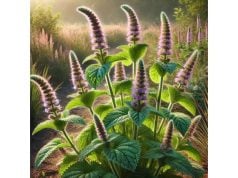
Himalayan Zingiber, botanically Zingiber capitatum, is a lesser-known wild ginger from the Himalayan to eastern Indian belt. It belongs to the same family as culinary ginger, galangal, and cardamom, but it has a more local, traditional identity. In regional practice, its rhizome has been used for digestive discomfort, stomach pain, chronic dysentery, skin boils, and hemorrhoids, while early laboratory studies suggest antioxidant, antimicrobial, and glucose-enzyme inhibitory activity. That mix of folk relevance and preliminary science makes it interesting, but it also calls for restraint. This is not a well-studied clinical herb, and there is no standard human dosage backed by large trials. The plant is better understood as a traditional rhizome with promising bioactive compounds rather than a proven therapeutic product. For most readers, the most useful questions are practical ones: what it contains, what it may realistically help with, how it is traditionally used, and where caution matters. Approached that way, Himalayan Zingiber becomes much easier to assess honestly and use more responsibly.
Core Points
- Traditional use centers on digestive complaints such as stomach pain, indigestion, and chronic dysentery.
- Early lab and animal studies suggest antioxidant, antimicrobial, and glucose-enzyme inhibitory potential.
- A recorded folk oral use is 1 g rhizome paste twice daily for up to 3 weeks, but no validated clinical dosage exists.
- Avoid unsupervised medicinal use during pregnancy, breastfeeding, and in children.
- Treat it as a lightly studied wild ginger, not as a proven substitute for medical care.
Table of Contents
- What is Himalayan Zingiber
- Key ingredients and how they work
- Does Zingiber capitatum help
- How to use Himalayan Zingiber
- How much per day
- Safety, interactions, and who should avoid it
- What the research really says
What is Himalayan Zingiber
Zingiber capitatum is a perennial rhizomatous plant in the Zingiberaceae family. If that family name sounds familiar, it is because it includes several better-known aromatic rhizomes and spices. What makes Zingiber capitatum different is not that it belongs to some unusual branch of herbal medicine, but that it has remained mostly regional and underdocumented. In botanical references it is commonly described as a wild ginger rather than as a mainstream medicinal crop. Its native range spans the Himalaya to eastern India, and it grows as a subtropical rhizomatous geophyte.
This matters because many readers assume that a plant in the ginger family should behave just like kitchen ginger. That is not a safe assumption. Plants in the same family can share broad aromatic traits while still differing in chemistry, strength, and traditional use. Himalayan Zingiber is best treated as a related but distinct species, with its own local history and a much thinner research record.
In ethnobotanical reports, the rhizome is the most important part. That fits the family pattern. Rhizomes in Zingiberaceae often concentrate aroma, pungency, and many of the compounds people care about in medicine. Folk uses recorded for Zingiber capitatum include stomach pain, gastric complaints, indigestion, chronic dysentery, hemorrhoids, and boils. These uses do not prove clinical efficacy, but they do show that the plant has been trusted most often for digestive and topical support rather than for broad tonic use.
The physical identity of the plant also helps explain its appeal. It is a robust, aromatic perennial with thick rhizomes and terminal spike-like inflorescences. That places it closer in habit to other rhizomatous ginger relatives such as galangal rhizomes than to delicate culinary leaf herbs. In traditional settings, that usually means it is harvested with purpose, in small amounts, and used more like a remedy than like a casual vegetable.
The smartest way to frame Himalayan Zingiber is as a niche wild ginger with traditional digestive importance and preliminary pharmacologic promise. That frame prevents two common mistakes. The first is overstating the plant as a cure-all. The second is dismissing it as folklore with no basis at all. The reality lies in between. It is a botanically legitimate, culturally meaningful plant whose reputation is stronger than its clinical evidence. That makes it worth examining, but only with careful language and realistic expectations.
Key ingredients and how they work
Himalayan Zingiber does not owe its potential value to one famous molecule. Instead, the rhizome appears to contain several layers of compounds that may contribute to its traditional effects. Early phytochemical work and GC-MS analysis point to sterols, aliphatic acids, aromatic compounds, esters, and a broader mix of phenolic and secondary-metabolite groups. Separate screening work has also reported alkaloids, tannins, saponins, cardiac glycosides, carbohydrates, and measurable antioxidant-associated compounds such as phenolics, flavonoids, and ascorbic acid in rhizome extracts.
That sounds like a long list, but the practical question is simpler: what might these compounds actually do?
A useful way to think about the chemistry is to divide it into four working groups:
- Aromatic volatile compounds, which likely shape the rhizome’s smell, taste, and some antimicrobial behavior.
- Phenolics and flavonoids, which are often linked with antioxidant and cell-protective effects.
- Sterols and lipid-like constituents, which may contribute to membrane and enzyme interactions.
- Traditional extractable constituents such as tannins and saponins, which often influence astringency, surface activity, and tissue response.
An essential-oil study on the rhizome reported a composition dominated by 1,8-cineole and linalool, with smaller amounts of compounds such as beta-pinene and alpha-terpineol. These are familiar aromatic molecules in many medicinal plants. Their presence does not automatically make Himalayan Zingiber medicinal, but it does help explain why the plant has been associated with antimicrobial and aromatic digestive uses. A warm, sharp rhizome that contains these compounds may act in part through sensory stimulation, mild antimicrobial activity, or changes in secretory and digestive tone.
The 2023 preclinical antidiabetic investigation adds another layer. It identified sterols, aliphatic acids, aromatics, and esters in a methanol extract, then linked those findings with enzyme inhibition and docking results against alpha-glucosidase, alpha-amylase, and glycogen phosphorylase. That is important because it suggests the chemistry is not random. Some of the detected constituents may interact with carbohydrate-processing and glucose-related pathways, at least in experimental models.
Still, this is where readers need discipline. A compound profile does not equal a clinical effect. The fact that Himalayan Zingiber contains aromatic and phenolic constituents does not mean it will work like a standardized drug or even like common ginger. Chemistry offers plausibility, not proof.
The best interpretation is that Zingiber capitatum has a rhizome chemistry consistent with a traditional warming digestive plant. Its volatile and phenolic profile gives reasonable support to folk uses involving digestion, skin applications, and possibly inflammation. If you already know aromatic spice medicines such as cardamom seeds, the easiest comparison is functional similarity rather than equal strength. The plant seems to belong in that broad aromatic-medicinal tradition, but with far less clinical validation and much more uncertainty about standardization.
Does Zingiber capitatum help
The most honest answer is yes, possibly, but mainly in narrow and still tentative ways. The strongest case for Himalayan Zingiber comes from traditional digestive use and early laboratory support, not from human trials. That means it may help in the settings where folk medicine has used it most consistently, but stronger disease claims go beyond the evidence.
The most plausible area is digestive support. Multiple ethnobotanical records associate the rhizome with stomach pain, gastric complaints, indigestion, dyspepsia-like symptoms, and chronic dysentery. This pattern matters. When different regions keep using the same part of the plant for overlapping digestive problems, it suggests there may be a real functional effect, even if the exact mechanism is not fully known.
A second plausible area is mild antimicrobial or topical support. Older screening work on rhizome extracts reported antioxidant and antimicrobial activity, and traditional uses include boils. That does not mean the plant is a proven skin treatment, but it does make topical folk use more understandable.
A third area, and the one most likely to attract modern attention, is glucose-related research. In a 2023 study, the methanol extract showed alpha-glucosidase inhibition with an IC50 close to a pharmaceutical comparator and reduced fasting blood glucose in diabetic mice at a higher experimental dose over 20 days. This is promising science, but it is still preclinical science. It justifies interest, not self-medication for diabetes.
A balanced list of realistic possibilities looks like this:
- It may support digestion in traditional short-term use.
- It may offer antioxidant activity in extract form.
- It may show mild antimicrobial or topical value.
- It may have glucose-enzyme inhibitory potential in experimental settings.
What it should not be sold as is just as important:
- not a proven diabetes treatment
- not a clinically validated anti-inflammatory herb
- not an established ulcer medicine
- not a replacement for medical care in chronic gastrointestinal disease
For symptom matching, Himalayan Zingiber seems most believable when the goal is to support a sluggish or unsettled digestive system rather than to suppress severe symptoms. If someone needs a gentler, cooling-style digestive herb, something like peppermint may feel more directly soothing. Wild ginger-type rhizomes usually make more sense where warmth, stimulation, and aromatic action are desired.
This distinction matters because reader intent often drifts toward overreach. A person with recurring diarrhea, bleeding, weight loss, reflux, or abdominal pain should not treat a lightly studied rhizome as a complete plan. At the same time, it would be unfair to say the plant has no value at all. The traditional record and early laboratory data do point in a meaningful direction. They just stop short of clinical proof.
So the practical conclusion is this: Himalayan Zingiber may help most in mild, traditional digestive contexts and possibly in carefully limited topical use, while its metabolic and broader medicinal promise remains early-stage and unconfirmed in people.
How to use Himalayan Zingiber
Because Zingiber capitatum is not a mainstream commercial herb, practical use depends more on traditional form than on standardized products. The rhizome is the central medicinal part, and regional records describe it as paste, juice, or other simple preparations rather than capsules with guaranteed extract ratios. That is an important clue. The plant has historically been used in direct, low-tech ways.
The most common practical forms are likely to be:
- fresh rhizome paste
- expressed rhizome juice
- dried rhizome powder
- decoction or strong infusion
- external paste for local application
Traditional use patterns suggest that internal use focuses on digestive complaints, while external use is more associated with boils or localized issues. That division is helpful because it keeps the reader from treating every preparation as interchangeable.
A careful home-use framework would look like this:
- Confirm correct plant identity before using wild material.
- Start with the rhizome only, not mixed unidentified plant parts.
- Use a simple single preparation rather than combining several herbs at once.
- Begin with very modest amounts and short duration.
- Stop if irritation, worsening digestive symptoms, or allergy-like reactions appear.
This last point deserves emphasis. Wild rhizomes from the ginger family can be warming, pungent, and biologically active. That is part of their appeal, but it also means a stronger home extract is not always better. The safest interpretation of the traditional record is that people used the plant intentionally, not casually.
If the goal is digestive support, a light decoction or small amount of powdered rhizome is more reasonable than a large, concentrated homemade extract. If the goal is topical use, a patch test is wise before broader application, especially on sensitive or broken skin. Folk use for boils does not automatically mean that fresh paste is suitable for every inflamed skin condition.
In culinary-style practice, the plant may also be treated as a warming aromatic similar in spirit to other spice rhizomes, though not necessarily in identical dosage. A modest amount can potentially be paired with digestive kitchen herbs in warming preparations. Something as simple as combining a small amount of prepared rhizome with cumin, coriander, or a little fennel seed may fit the traditional digestive logic better than turning it into a high-dose supplement experiment.
One more practical issue is availability. Because Himalayan Zingiber is not a widely standardized herbal product, quality control can be poor. If you cannot verify the plant’s identity and source, restraint is the safer choice. In niche herbs, misidentification often causes more trouble than the herb itself.
The best advice, then, is to use Himalayan Zingiber in a traditional, limited, single-herb way. Think rhizome, small amounts, short-term purpose, and clear monitoring. That respects both what the plant may offer and what the evidence still does not tell us.
How much per day
This is the part of the article where caution matters most. There is no clinically validated adult dosage for Zingiber capitatum based on human trials. That means any number given should be treated as a traditional or pragmatic guide, not as a medically established standard.
What do we actually know? One recent ethnobotanical record documented a rhizome paste preparation taken orally at 1 g twice daily for up to 3 weeks in a hemorrhoid remedy. Another field record linked rhizome juice with gastric complaints, indigestion, and chronic dysentery, although it did not standardize the amount in the same rigorous way. These data are useful because they show how communities have actually used the plant. They are not enough to define a universally safe dose.
For that reason, the safest way to discuss amount is to separate three levels of use:
- documented traditional amount
- conservative home-use starting amount
- amount to avoid exceeding without expert guidance
A practical interpretation would be:
- Documented traditional oral use: 1 g rhizome paste twice daily in one recorded hemorrhoid remedy.
- Conservative starting approach: 0.5 g dried rhizome powder once daily or a very mild tea made from a small amount of sliced rhizome.
- Upper boundary for self-experimentation: do not move quickly toward repeated full traditional doses without guidance, especially if symptoms are chronic or medications are involved.
If using a simple tea or decoction, keep the preparation modest and short-term. If using powder, start low and watch for warming irritation, reflux-like symptoms, or bowel upset. Because the rhizome is aromatic and likely bioactive, the old herbal rule applies: the smallest effective amount is the best place to begin.
Timing may also matter. For digestive support, using the rhizome before or around meals is more logical than taking it randomly at bedtime. A small dose before a heavier meal may align better with its traditional role as a digestive rhizome. For topical use, “dosage” is less about quantity and more about surface area, preparation strength, and tolerance.
Here is a sensible short trial structure:
- Start with one low-dose preparation.
- Use it for no more than several days at first.
- Reassess symptoms honestly.
- Stop immediately if pain, bleeding, nausea, reflux, or skin irritation worsens.
- Do not continue beyond two to three weeks without a clear reason and a knowledgeable clinician.
That final point matters because people often treat herbs as harmless simply because they are traditional. A plant with thin clinical evidence deserves more restraint, not less.
If you compare Himalayan Zingiber with better-studied aromatic digestive plants such as artichoke leaf, the difference is not just chemistry. It is evidence quality. With Zingiber capitatum, dosing should remain conservative precisely because the confidence level is lower. In practical terms, this is a plant to edge into, not one to push.
Safety, interactions, and who should avoid it
Safety for Himalayan Zingiber is less about a known pattern of severe toxicity and more about missing data. That is a crucial distinction. The species has traditional medicinal use, but it does not have the kind of modern safety record that lets you assume everyone can take it freely.
The clearest groups who should avoid unsupervised medicinal use are:
- pregnant people
- breastfeeding people
- children and adolescents
- anyone with a known allergy to ginger-family plants
- anyone using multiple prescription medicines for bleeding or blood sugar
Why these groups? First, there are no strong human safety trials in pregnancy or breastfeeding. Second, children are more vulnerable to dosing uncertainty. Third, Zingiberaceae plants often contain active aromatic compounds that can interact with digestion, circulation, or inflammation in ways that are hard to predict when the exact preparation is unknown.
There are also practical caution groups who should think twice before self-treating:
- people with active ulcers or burning reflux
- people with unexplained gastrointestinal bleeding
- people with gallbladder pain or complex digestive disease
- people with diabetes already taking medication
- people scheduled for surgery or already using anticoagulants or antiplatelet drugs
This last category is worth explaining carefully. There is no firm clinical proof that Zingiber capitatum itself causes meaningful drug interactions in humans. But preclinical work suggests glucose-related activity, and broader ginger-family logic supports caution with blood-sugar and blood-thinning pathways. So this is a prudence issue, not a confirmed interaction list.
Possible side effects from poorly chosen or overly strong use may include:
- stomach burning or irritation
- nausea
- loose stools
- mouth or throat warmth that feels excessive
- skin irritation from external paste
Topical use deserves its own caution. Folk use for boils does not mean the raw rhizome is suitable for every rash, wound, or inflamed lesion. Broken skin, eczema-prone skin, or reactive skin may respond badly to pungent rhizome pastes. If a gentler topical plant is needed, something like calendula usually has a softer comfort profile.
Another overlooked safety issue is substitution. Because this is a niche wild ginger, market material may not always be correctly labeled. Misidentification can create more risk than the authentic herb. If a product does not clearly identify the species, plant part, and origin, the safest choice is to pass.
So what is the bottom line? Himalayan Zingiber may be reasonable for limited, traditional-style use in healthy adults, but it is not a herb for broad assumptions. Until human data improve, the safest principle is simple: short-term use, modest amounts, careful sourcing, and clinician oversight whenever there is a chronic illness, regular medication use, pregnancy, or any sign of a serious digestive disorder.
What the research really says
The evidence for Himalayan Zingiber is real, but it is early and uneven. That is the fairest summary.
The research base comes from three main layers. The first is ethnobotanical documentation. This is where most of the plant’s human relevance begins. Different field studies record rhizome use for digestive complaints, dysentery-like conditions, stomach pain, hemorrhoids, and boils. Ethnobotanical evidence matters because it shows repeated human use patterns. But it cannot, by itself, prove efficacy or safety.
The second layer is phytochemical and bioactivity screening. Older extract studies and later essential-oil or GC-MS work show that the rhizome contains multiple classes of bioactive compounds and can demonstrate antioxidant and antimicrobial behavior in laboratory assays. This is helpful because it moves the conversation beyond folklore and shows that the plant is chemically active.
The third layer is targeted preclinical pharmacology. The 2023 study on glucose-related enzymes and diabetic mice is the strongest modern mechanistic paper tied specifically to Zingiber capitatum. It suggests that the plant may have meaningful antidiabetic potential in model systems, but it still stops well short of proving benefit in patients.
What is missing is just as important:
- no strong human clinical trials
- no standardized commercial monograph
- no validated species-specific safety profile
- no established long-term use data
- no clear therapeutic dose for defined medical conditions
That means the plant should not be described as proven for diabetes, chronic colitis, ulcer disease, piles, or inflammatory disorders. The best language is more modest: traditional digestive rhizome, experimentally promising, clinically unproven.
A useful evidence ranking would look like this:
- Most credible: traditional digestive use and rhizome-based household medicine.
- Moderately plausible: antioxidant and antimicrobial support in experimental settings.
- Interesting but unproven: glucose-lowering potential and broader metabolic use.
- Not established: treatment of serious disease in humans.
This is why Himalayan Zingiber is best kept in the same conversation as under-researched family relatives rather than better-studied rhizomes such as curcuma. The family resemblance is helpful, but the evidence gap remains large.
For readers who want a practical conclusion, here it is. The plant deserves respect, curiosity, and restraint. Respect, because it has a real traditional record. Curiosity, because its chemistry and preclinical data are promising. Restraint, because promising is not the same as proven.
In modern evidence terms, Himalayan Zingiber is a plant worth tracking, not overselling. Right now its strongest position is as a traditional digestive wild ginger whose therapeutic reputation is plausible but not yet clinically secured. That may not be the most dramatic conclusion, but it is the one that best fits the science we actually have.
References
- Zingiber capitatum Roxb. 2025
- Phytochemicals from Zingiber capitatum rhizome as potential α-glucosidase, α-amylase, and glycogen phosphorylase inhibitors for the management of Type-II diabetes mellitus: Inferences from in vitro, in vivo and in-silico investigations 2023
- Quantitative ethnobotanical evaluation of medicinal flora utilized for Digestive system disorders in Parvathipuram Manyam District, Eastern Ghats, India 2025
- Medicinal plants used by the tribal communities of Bandarban Hill District, Bangladesh 2024
Disclaimer
This article is for educational purposes only and is not medical advice. Himalayan Zingiber is a lightly studied wild ginger with limited human research, and it should not replace diagnosis, prescribed treatment, or individualized guidance from a qualified clinician. Seek professional care for ongoing abdominal pain, bleeding, chronic diarrhea, unexplained weight loss, persistent hemorrhoids, suspected infection, or any metabolic disorder such as diabetes. Use extra caution with self-harvested rhizomes, concentrated extracts, pregnancy, breastfeeding, and medication use.
If you found this article useful, please share it on Facebook, X, or your preferred platform so more readers can find careful, evidence-aware herbal information.