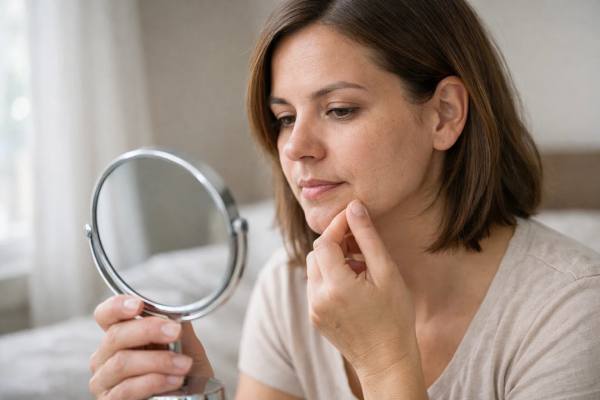
Excess facial hair is often treated as a cosmetic problem first and a hormone problem second, but for many women the order is reversed. New or worsening coarse hair growth on the chin, upper lip, jawline, chest, or lower abdomen can be one of the clearest visible signs of androgen excess. At the same time, not every case points to a serious endocrine disorder. Some women have mild hirsutism with normal hormone levels, while others have hair growth linked to polycystic ovary syndrome, non-classic congenital adrenal hyperplasia, medication effects, or, much less commonly, an androgen-secreting tumor. The emotional burden can be heavy either way, especially because facial hair often affects self-image long before a diagnosis is made. This article explains what hirsutism really means, which hormone causes are most common, when facial hair is a red flag, how testing usually works, and what treatment options actually make sense when you want both medical control and practical day-to-day improvement.
Quick Facts
- Hirsutism usually reflects increased androgen effect on hair follicles, with PCOS as the most common cause.
- Treatment can improve unwanted facial hair, but visible change is usually slow because the hair cycle is measured in months, not days.
- Rapid hair growth, voice deepening, scalp hair loss, or missed periods raise more concern for significant hormone imbalance.
- Medical treatment is not ideal during pregnancy planning, so contraception and fertility goals should be discussed early.
- The most practical approach combines evaluation for the cause with hair-removal methods and enough treatment time to judge whether a plan is working.
Table of Contents
- What Counts as Hirsutism
- The Most Common Hormone Causes
- When Facial Hair Is a Red Flag
- How Evaluation and Testing Usually Work
- Treatment Options That Actually Help
- What Results to Expect Over Time
What Counts as Hirsutism
Hirsutism means excess terminal hair growth in a male-pattern distribution in women. “Terminal” matters here. These are coarse, pigmented hairs, not the fine, light vellus hairs that many people naturally have on the face or body. The areas most often involved are the upper lip, chin, sideburn area, jawline, chest, lower abdomen, back, and inner thighs. A few isolated chin hairs are common and do not always indicate a hormone disorder. Hirsutism becomes more clinically meaningful when the hair is clearly coarser, darker, more widespread, or progressively increasing over time.
This is where confusion often starts. Hirsutism is not the same as general excess hair. Some people have more body hair because of family background, ethnicity, age, or normal variation in follicle sensitivity. Others have hypertrichosis, which is diffuse hair growth in places that are not mainly androgen-sensitive and usually has a different cause. Hirsutism specifically points clinicians toward androgen action, whether the androgens are truly elevated in the blood or whether hair follicles are especially responsive to them.
Severity is often assessed with the modified Ferriman-Gallwey score, which looks at hair growth across several androgen-sensitive body sites. In real-world practice, many clinicians also rely on the patient’s history, the rate of change, and the emotional burden rather than a number alone. That is important because the same amount of facial hair can be mildly bothersome to one person and deeply distressing to another. Treatment decisions should account for both the physical pattern and the personal impact.
One reason hirsutism deserves proper evaluation is that it is a sign, not a diagnosis. It may be the visible end result of increased ovarian androgen production, adrenal androgen excess, lower sex hormone-binding globulin, insulin resistance, medication effects, or increased local conversion of testosterone to dihydrotestosterone in the skin. In that sense, hirsutism often sits within the broader picture of androgen excess symptoms, which can also include acne, scalp hair thinning, and menstrual irregularity.
It also helps to know what hirsutism does not automatically mean. It does not prove that testosterone is high. Many women with clinically significant excess facial hair have androgen levels in the normal laboratory range. It does not always mean fertility is impaired. It does not always mean PCOS. And it definitely does not mean a dangerous tumor unless the pattern is unusually fast, severe, or accompanied by virilization.
The most useful starting question is simple: has the hair pattern changed in a way that feels clearly different from your baseline? If the answer is yes, especially if other symptoms came with it, the next step is not just better tweezers. It is figuring out why the follicles are getting a stronger androgen signal than before.
The Most Common Hormone Causes
The most common cause of hirsutism is polycystic ovary syndrome. In PCOS, hair growth is often part of a larger pattern that may include irregular periods, acne, weight gain, insulin resistance, scalp hair thinning, or difficulty ovulating. The hormone problem is not simply “too much testosterone” in a straightforward way. Ovarian androgen production, insulin signaling, luteinizing hormone patterns, and lower sex hormone-binding globulin can all contribute. That is why hirsutism in PCOS often travels with metabolic symptoms rather than appearing as an isolated finding. If the pattern sounds familiar, a broader look at PCOS symptoms can help make the hair changes easier to place in context.
The second major group includes idiopathic hirsutism. This term is used when a woman has excess terminal hair growth but regular cycles, no clear biochemical hyperandrogenism, and no other disorder explaining the pattern. In these cases, the issue may be increased sensitivity of the hair follicle to normal androgen levels or higher local conversion to more potent androgens within the skin. It is still real hirsutism, even if the bloodwork does not look dramatic.
Other hormone causes matter because some are treatable and a few are urgent. Non-classic congenital adrenal hyperplasia can present with hirsutism, acne, and cycle issues and may look very similar to PCOS at first. Cushing syndrome can sometimes contribute, especially when facial hair appears alongside central weight gain, easy bruising, muscle weakness, or purple stretch marks. Hyperprolactinemia and thyroid disorders are not classic direct causes of hirsutism, but they can complicate cycle patterns and broader endocrine evaluation. Certain medications can also trigger or worsen hirsutism, including some androgens, anabolic agents, danazol, and a few less common drugs.
The rarest but most important cause is an androgen-secreting ovarian or adrenal tumor. These cases usually do not look subtle. Hair growth tends to come on faster, testosterone levels are often markedly elevated, and signs of virilization may appear, such as voice deepening, clitoromegaly, increasing muscle bulk, or rapid scalp hair loss.
A helpful way to organize the cause list is this:
- ovarian androgen excess, especially PCOS
- adrenal androgen excess, including non-classic congenital adrenal hyperplasia
- idiopathic hirsutism with normal ovulation and often normal labs
- medication-related hirsutism
- rare tumors causing rapid, severe androgen excess
The key clinical point is that excess facial hair is often a skin-level clue to a hormone pattern that starts elsewhere. Sometimes the signal is relatively mild and chronic. Sometimes it reflects a more obvious endocrine syndrome. And sometimes the most important “cause” is not a dangerous disease but a hair follicle that is unusually sensitive to otherwise ordinary hormone exposure.
What matters most is matching the facial hair pattern with the rest of the story. Gradual chin hair plus irregular periods points the workup in one direction. Rapid beard-like growth plus virilization points in another. The hair itself matters, but the company it keeps matters even more.
When Facial Hair Is a Red Flag
Most hirsutism is not caused by a tumor, but some presentations should make both patient and clinician move faster. The biggest red flag is speed. Hair growth that comes on rapidly over a few months, especially if it becomes dense or spreads quickly beyond the chin and upper lip, is more concerning than a slow increase that has been building since the late teens or early twenties. The second major red flag is virilization, which means signs of stronger androgen effect than hirsutism alone.
Virilization may include:
- voice deepening
- clitoral enlargement
- rapidly worsening scalp hair loss
- marked increase in muscle bulk
- loss of breast tissue fullness
- severe acne that appears suddenly
- very abrupt change in libido or body odor
These signs do not always mean cancer, but they do raise concern for more substantial androgen excess, including the possibility of an androgen-secreting ovarian or adrenal tumor. A high androgen level in this setting deserves prompt evaluation rather than a wait-and-see approach.
Menstrual history matters almost as much as the hair pattern. Hirsutism with irregular cycles, absent periods, infertility, or new menstrual disruption is more likely to reflect a meaningful endocrine cause than facial hair with normal, predictable ovulation. That does not mean women with regular cycles cannot have hirsutism. They can. But the combination of hair growth and reproductive changes pushes the differential more strongly toward PCOS, adrenal causes, or other hormone imbalance.
The physical exam can add important clues. Acanthosis nigricans may suggest insulin resistance. Purple striae, bruising, and proximal muscle weakness raise concern for cortisol excess. Galactorrhea may suggest prolactin-related issues. Obesity does not cause hirsutism by itself, but it can intensify androgen signaling through insulin pathways. On the other hand, severe hirsutism in a lean woman with rapid change deserves just as much attention, sometimes more.
One practical rule is worth remembering: mild, slowly progressive facial hair from adolescence is usually a lower-risk pattern than sudden, significant facial hair beginning well after an established baseline. Another is that the more “male secondary sex characteristic” features appear, the less likely this is to be a simple cosmetic issue.
This is also why lab interpretation matters. Markedly high testosterone, especially when combined with virilization, is a different situation from mild hirsutism with normal or borderline results. If testing shows a clear rise in androgens, clinicians start thinking not just about common causes but about how high and how fast. For readers comparing possibilities, high testosterone in women offers a helpful companion framework.
The emotional burden can also be a signal. Many women minimize facial hair for months or years because they have adapted to constant removal. A good history asks not only what the face looks like today, but how much effort it takes to keep it that way. A patient who says, “It only looks mild because I shave every morning,” may be giving more diagnostic information than the exam alone.
How Evaluation and Testing Usually Work
A good hirsutism evaluation is targeted rather than excessive. The goal is not to order every hormone test available. It is to determine whether the facial hair pattern fits a common endocrine cause, whether there are red flags for something more serious, and whether the results would actually change treatment. The workup usually starts with a focused history: when the hair started, how fast it changed, whether periods are regular, what medications or supplements are being used, whether acne or scalp hair loss is present, whether pregnancy is possible, and whether there is a family pattern of similar hair growth.
The next step is often a physical exam and selective lab testing. Total testosterone is usually central, and many clinicians also check sex hormone-binding globulin or calculate free androgen measures depending on the lab approach. If hyperandrogenic hirsutism is suspected, additional testing often includes dehydroepiandrosterone sulfate and 17-hydroxyprogesterone, particularly when adrenal causes or non-classic congenital adrenal hyperplasia are on the list. Thyroid or prolactin testing may be added if menstrual irregularity or other symptoms point that way.
Testing is not identical for every patient. In mild, stable hirsutism with normal cycles and no signs of endocrine disease, extensive labs may not be necessary. In moderate to severe hirsutism, irregular periods, infertility, virilization, or rapid onset, the threshold for bloodwork is much lower. That is because the chance of finding a clinically meaningful hormone pattern is higher.
Timing can matter, especially for reproductive hormone evaluation. Some tests are best interpreted in the early follicular phase if cycles are present, and medication use can complicate the picture. Combined hormonal contraception can suppress ovarian androgen production and shift lab values, sometimes masking the baseline pattern. That is one reason the timing and setup of testing are almost as important as the panel itself. If you want the broader framework, timing hormone tests is often more important than people expect.
Imaging is not the first step for everyone. Pelvic ultrasound may be used when PCOS is suspected or when ovarian pathology is a concern. Adrenal or ovarian imaging becomes more urgent when testosterone is very high, DHEA-S is markedly elevated, or virilization suggests a tumor source.
A sensible evaluation usually answers five questions:
- Is this true hirsutism or another type of hair growth?
- Is the pattern mild and stable or rapid and concerning?
- Are there menstrual, metabolic, or virilizing clues pointing toward a cause?
- Do lab results suggest ovarian, adrenal, or idiopathic hirsutism?
- Is the treatment goal mainly diagnosis, fertility planning, symptom control, or all three?
One of the most helpful truths to keep in mind is that hirsutism can be real even when labs are not dramatic. Normal bloodwork does not erase the condition. It simply changes what the likely mechanism is and how treatment should be framed.
Treatment Options That Actually Help
The best treatment plan usually combines two tracks: reducing the hormone signal when appropriate and directly managing the hair that is already there. That matters because even the most effective medical treatment does not make existing terminal hairs disappear overnight. Hair follicles need time to cycle, and visible improvement is slow.
For women not trying to conceive, combined hormonal contraceptives are commonly used as first-line medical treatment when there are no contraindications. They help by suppressing ovarian androgen production and increasing sex hormone-binding globulin, which lowers free testosterone activity. They can be particularly helpful when hirsutism is part of PCOS or another ovarian hyperandrogenic pattern. If contraception is part of the decision, it is worth understanding how birth control changes hormone patterns and why that affects both symptoms and lab interpretation.
Antiandrogens are another major option. Spironolactone is commonly used and can reduce the androgen effect on hair follicles over time. Other antiandrogens may also be considered in selected cases, depending on local practice and safety considerations. These medicines usually require reliable contraception because of the risk of feminization of a male fetus if pregnancy occurs. That safety point is central, not optional.
Topical and mechanical approaches are often just as important as pills. Options include shaving, trimming, waxing, threading, depilatories, electrolysis, and laser or light-based treatments. Laser hair reduction can be especially useful for dark hair on lighter skin, though it can also be tailored more broadly by experienced practitioners. It usually works best over multiple sessions and often performs better when underlying androgen excess is being treated at the same time. Electrolysis remains the more traditional choice for individual hairs and can be useful for lighter hairs that laser does not target well.
Where available, topical eflornithine has sometimes been used to slow facial hair growth, often as an adjunct rather than a stand-alone answer. It does not remove hair but may reduce the rate at which it returns.
Treatment choices are usually shaped by four factors:
- whether pregnancy is desired soon
- whether the cause is PCOS, idiopathic hirsutism, adrenal disease, or something rarer
- how severe and emotionally burdensome the hair growth feels
- whether the goal is camouflage, reduction, or long-term control
Lifestyle change is sometimes part of treatment, especially in PCOS with insulin resistance or weight-related metabolic features. Weight loss does not cure all hirsutism, but in some patients it can lower androgen burden enough to improve the overall pattern. Still, it should not be presented as the sole answer. Facial hair management deserves direct treatment too.
The most effective message for patients is often the simplest: hirsutism usually responds best to a layered plan, not a single magic fix. Hormones can be treated, follicles can be targeted, and distress can be reduced, but the plan has to be sustained long enough for the biology to catch up.
What Results to Expect Over Time
One of the biggest reasons hirsutism treatment feels disappointing is that people often expect skin-speed results from a hair-cycle problem. Facial hair does not respond in days or even a few weeks. Once a terminal hair follicle has been activated, meaningful change usually takes months. That is not a sign that treatment failed. It is how the hair cycle works.
Medical therapy generally needs at least six months before significant improvement can be judged fairly, and many patients need longer to see a difference that feels meaningful in the mirror. This is especially true for coarse facial hair that has been present for years. What usually improves first is the rate of new growth or the speed at which hairs return after removal. Existing hairs may become finer over time, but they rarely vanish quickly without direct hair-removal treatment.
This is why combination care tends to be the most satisfying approach. Medication may slow new androgen-driven growth, while laser, electrolysis, or consistent mechanical removal handles what is already visible. Patients who use only medication often become discouraged too early. Patients who use only cosmetic methods may get temporary relief without addressing the reason the follicles remain activated.
A realistic expectation looks something like this:
- first 2 to 3 months: little obvious change, though regrowth may begin to slow
- around 6 months: clearer reduction in growth rate and density if treatment is working
- beyond 6 months: more visible benefit, especially when medical and physical methods are combined
- after stopping treatment: recurrence is common, because follicle sensitivity and hormone drivers often return
That last point matters. Hirsutism management is often long-term control, not a permanent cure. Laser and electrolysis can provide durable reduction, but medical therapy usually has to be maintained if the hormonal driver is still active. This is particularly true in PCOS and idiopathic hirsutism.
It also helps to measure progress in more than one way. Ask whether you are shaving less often, spending less time on removal, noticing softer regrowth, or feeling less distressed. Those are real outcomes, even if complete hair disappearance is not immediate. Photos taken every few months can be more useful than daily mirror checks.
Follow-up becomes especially important if treatment is not working as expected. Lack of response may mean the diagnosis needs rethinking, the treatment duration has been too short, the androgen driver is stronger than expected, or the plan needs escalation. It may also mean the case is complex enough to justify specialist input. In situations involving rapid progression, virilization, fertility concerns, or confusing labs, knowing when endocrine referral is warranted can make the next step much clearer.
The most helpful mindset is steady rather than urgent. Hirsutism is usually treatable, often improvable, and sometimes dramatically better with the right combination plan. But it rewards patience, good follow-up, and realistic timelines far more than quick fixes.
References
- Recommendations From the 2023 International Evidence-based Guideline for the Assessment and Management of Polycystic Ovary Syndrome 2023 (Guideline)
- Guideline No. 444: Hirsutism: Evaluation and Treatment 2023 (Guideline)
- Efficacy and safety of anti-androgens in the management of polycystic ovary syndrome: a systematic review and meta-analysis of randomised controlled trials 2023 (Systematic Review)
- Laser and Light-Based Therapies for Hirsutism Management in Women With Polycystic Ovarian Syndrome: A Systematic Review 2024 (Systematic Review)
- Practise Updates: Diagnosis and Management of Idiopathic Hirsutism 2024
Disclaimer
This article is for educational purposes only and does not replace medical advice, diagnosis, or treatment. Excess facial hair can have several causes, from common conditions such as PCOS to rare but important causes such as androgen-secreting tumors. Seek medical evaluation for rapidly worsening hair growth, voice deepening, irregular or absent periods, scalp hair loss, or other signs of virilization, and discuss treatment choices carefully if pregnancy is possible or planned.
If this article helped you, please share it on Facebook, X, or another platform you use so more people can find practical, evidence-based information about hirsutism and hormone care.