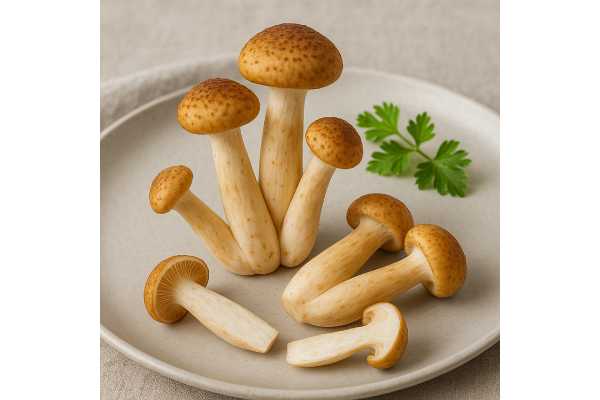
Honey mushrooms—most often referring to the Armillaria mellea group and close relatives—are a cool-weather staple across Europe, Asia, and North America. In kitchens, they earn a place for their concentrated savory flavor, meaty chew, and reliability in braises, soups, and pickles. In forests, they’re famous as wood-decayers (and sometimes tree pathogens) that fruit in dense clusters on stumps and buried roots. Properly cooked, honey mushrooms can be delicious: their caps brown well, stems lend body to stocks, and their robust texture stands up to long simmering in stews or sour cream sauces. Nutritionally, they’re low in calories and fat yet supply B-vitamins, potassium, copper, and mushroom-specific antioxidants like ergothioneine. They also dry and pickle remarkably well, which is why households in Eastern Europe often keep a jar on hand for winter cooking. This guide focuses on confident identification pointers, a practical per-100-gram nutrition profile, how honey mushrooms can support balanced eating, and the safety rules—especially thorough cooking—that make them a smart, seasonal ingredient.
Key Takeaways
- Typical serving: 100 g fresh (about 1½ cups sliced) or 8–10 g dried; enjoy 1–3 times per week in mixed meals.
- Benefits: low calorie and saturated fat; good source of niacin and riboflavin; provides potassium, copper, β-glucans, and ergothioneine.
- Safety caveat: must be fully cooked; some people experience gastrointestinal upset—start with a small portion the first time.
- Who should limit or avoid: anyone with mushroom allergy, those without expert identification, and people advised to avoid wild foods due to medical conditions.
Table of Contents
- Honey mushroom essentials
- Nutrition profile per 100 g
- Honey mushroom health benefits
- Risks, allergies and interactions
- Quality, sustainability and storage
- Preparation and nutrient retention
- Portions, comparisons and FAQs
Honey mushroom essentials
Honey mushrooms are a cluster of closely related species in the Armillaria genus. In markets and cookbooks they’re commonly grouped under “honey fungus,” with caps ranging from honey-brown to olive-tan. They grow in tight troops on wood—living trees, stumps, buried roots, and sometimes buried wood in lawns—often appearing overnight after autumn rains. Caps are convex to flattened with moist, sometimes slightly scaly surfaces; many species show a partial veil in youth that leaves a skirt-like ring on the stem. Gills are attached and pale, darkening with age; spore prints are white. Stems are fibrous; many cooks keep the upper stems and reserve the lower, woodier portions for stock.
Taste and texture change with age. Young caps are best: dense, mildly nutty, and pleasantly chewy after cooking. Older clusters can become tougher and may develop a slight bitterness unless well browned or simmered. The defining culinary rule is to cook thoroughly. Honey mushrooms contain heat-labile compounds that can provoke gastrointestinal upset if undercooked; long sautéing, boiling, or braising neutralizes these. Traditional methods in Central and Eastern Europe include par-boiling before further cooking or pickling in vinegar with spices.
In recipes, honey mushrooms shine anywhere you want deep, savory notes and a resilient bite: hunter’s stews, barley soups, buckwheat kasha, stuffed cabbage, sour cream gravies, and soy-glazed stir-fries. Their caps brown well in hot fat; their stems thicken broths; and their flavor stands up to acid (wine, vinegar), smoke (bacon, paprika), and ferments (miso, soy sauce). Dried or pickled, they carry through winter, ready to lift pan sauces and simple grains.
Nutrition profile per 100 g
How to use these tables. Direct lab values differ across Armillaria species, habitat, and handling. The per-100-gram figures below reflect realistic raw values for edible wild mushrooms with adjustments from Armillaria-focused analyses where available. Cooking reduces water and concentrates many nutrients per cooked weight. %DV uses adult reference values.
Macros and electrolytes (per 100 g, raw)
| Nutrient | Amount | %DV |
|---|---|---|
| Energy | 25–35 kcal | — |
| Water | ~88–92 g | — |
| Protein | 2.5–3.5 g | — |
| Total fat | 0.3–0.6 g | 0–1% |
| Carbohydrate | 4.0–6.0 g | 1–2% |
| Dietary fiber | 2.0–3.0 g | 7–11% |
| Total sugars | 1.5–2.5 g | — |
| Sodium | 5–20 mg | 0–1% |
| Potassium | 300–450 mg | 6–10% |
Carbohydrates (per 100 g, raw)
| Component | Amount | Notes |
|---|---|---|
| Starch | ~0–0.3 g | minimal |
| Free sugars | 1.5–2.5 g | mannitol common |
| β-glucans | present | viscosity-forming fibers |
Fats and fatty acids (per 100 g, raw)
| Lipid | Amount | Notes |
|---|---|---|
| Total fat | 0.3–0.6 g | very low |
| Saturated fat | ~0.05–0.1 g | negligible |
| Monounsaturated fat | ~0.05–0.1 g | trace |
| Polyunsaturated fat | ~0.2–0.3 g | linoleic acid predominant |
| Cholesterol | 0 mg | fungi contain none |
Protein and amino acids (per 100 g, raw)
| Item | Amount | Notes |
|---|---|---|
| Protein | 2.5–3.5 g | modest |
| Flavor amino acids | — | glutamate/aspartate (umami) |
Vitamins (per 100 g, raw)
| Vitamin | Amount | %DV |
|---|---|---|
| Thiamin (Vitamin B1) | 0.05–0.10 mg | 4–8% |
| Riboflavin (Vitamin B2) | 0.15–0.25 mg | 12–19% |
| Niacin (Vitamin B3) | 4–7 mg | 25–44% |
| Pantothenic acid (Vitamin B5) | 1.0–1.5 mg | 20–30% |
| Vitamin B6 (Pyridoxine) | 0.07–0.15 mg | 4–9% |
| Folate (Vitamin B9) | 35–60 µg | 9–15% |
| Vitamin C | 1–3 mg | 1–3% |
| Vitamin D2* | 0–several µg | 0–50% |
*Vitamin D2 forms from ergosterol when mushrooms are exposed to ultraviolet light (sun or UV processing). Sun-dried caps can contain meaningful D2, but content varies.
Minerals (per 100 g, raw)
| Mineral | Amount | %DV |
|---|---|---|
| Phosphorus | 90–130 mg | 7–10% |
| Magnesium | 12–20 mg | 3–5% |
| Calcium | 2–6 mg | 0% |
| Iron | 0.5–1.5 mg | 3–8% |
| Zinc | 0.5–1.2 mg | 5–11% |
| Copper | 0.1–0.3 mg | 11–33% |
| Selenium | 1–3 µg | 2–5% |
| Manganese | 0.05–0.15 mg | 2–7% |
Bioactives and phytonutrients (qualitative)
- Ergothioneine (antioxidant amino-acid derivative).
- β-glucans (1,3/1,6-glucans) with immunomodulatory and viscosity effects.
- Phenolics and terpenoids (low to moderate, habitat-dependent).
- Ergosterol (vitamin D2 precursor under UV).
Allergens and intolerance markers
- Rare IgE-mediated allergy to mushroom proteins.
- Mannitol and fermentable fibers may trigger bloating in sensitive individuals.
Glycemic and acid–base metrics
- Low glycemic load; near-neutral acid–base impact in mixed meals.
Variability notes
- Wild mushrooms’ minerals and bioactives vary by species, soil, tree partners, and handling. Dried product concentrates most nutrients per 100 g and stores well.
Honey mushroom health benefits
Savory swaps that lower calories and saturated fat. Honey mushrooms offer dense umami with very little fat or sugar. Replacing part of the meat or cream in stews, gravies, and sauces with well-browned caps can meaningfully reduce saturated fat and energy density while keeping meals satisfying. Over weeks and months, these small swaps support heart-smart, weight-conscious patterns without feeling restrictive.
β-glucans and fiber in everyday dishes. The β-glucans and other soluble fibers in edible fungi add thickness to broths and may contribute to modest improvements in cholesterol and post-meal glucose when mushrooms displace refined starches or higher-fat ingredients. A practical approach is to stir a generous handful of sautéed honey mushrooms into barley soup, buckwheat, or lentil ragout, where viscosity and umami combine to curb the need for extra cream or salt.
Ergothioneine for redox balance. Ergothioneine accumulates in tissues subject to oxidative stress and is relatively heat-stable in culinary use. Including mushrooms such as honey fungus adds this uncommon antioxidant to meals that already emphasize vegetables, legumes, and whole grains.
Vitamin D2 potential when sun-dried or UV-treated. While wild content varies, exposure to sunlight or UV during drying can raise vitamin D2 in mushrooms. Treated products have been shown to raise circulating vitamin D2 in humans. Use sun-dried mushrooms as supportive contributors rather than your sole vitamin D strategy.
Mineral support with low sodium. Per 100 g, honey mushrooms typically provide several percent of daily phosphorus, copper, and potassium with minimal sodium, aligning well with blood-pressure-friendly eating.
Behavioral benefits: pantry flexibility. Because honey mushrooms pickle, dry, and freeze well, they make quick, flavorful meals easier—an overlooked way ingredients help sustain better habits. A jar of pickled caps or a pouch of dried slices can turn eggs, grains, or pan sauces into complete dinners in minutes.
How much makes sense? A realistic pattern is 100–150 g fresh per serving (8–10 g dried by weight), one to three times weekly in season. There’s no need for high-dose powders or extracts to capture culinary benefits; save supplements for clinical contexts and discuss them with a professional.
Risks, allergies and interactions
Identification and look-alikes. Honey mushrooms fruit in clusters on wood—stumps, logs, buried roots, or at the base of living trees. Typical field cues include honey-brown caps, sometimes with fine scales; a partial veil in youth that leaves a ring on the stem; white spore print; and attached, pale gills. Dangerous confusion is possible if you rely on cap color alone. The most serious look-alike is Galerina marginata (“funeral bell”), a deadly wood-growing species with rusty-brown spores and a different cap and ring texture. If you’re new to foraging, seek confirmation from a trained local identifier and never eat any wild mushroom you cannot identify with certainty.
Must be cooked thoroughly. Raw or undercooked honey mushrooms can cause gastrointestinal upset (nausea, cramps, chills, sweating). Long cooking neutralizes the problem compounds. Many traditions par-boil caps and discard the water before further cooking, especially for pickling or cream-based dishes. Regardless of method, heat to a steaming hot center and avoid quick, light sautés that leave interiors underdone.
Allergy and intolerance. True mushroom allergy is uncommon but possible; symptoms may include oral itching, hives, wheeze, or rarely anaphylaxis. Fermentable fibers and sugar alcohols like mannitol can cause bloating. Try a small, well-cooked portion the first time, and avoid leftovers if you’ve had past sensitivity.
Environmental contaminants. Wild fungi can accumulate heavy metals from soil and dust. Harvest far from roads, industry, treated timber, or polluted sites; trim away dirt-contact stem bases; and rinse briefly only when needed, drying thoroughly before cooking.
Medication and condition notes.
- Diabetes therapy: Larger shifts in high-fiber foods can slightly alter post-meal glucose; monitor if you use insulin or sulfonylureas.
- Gout: Mushrooms contain moderate purines; many people with gout tolerate modest portions—coordinate during flare-prone periods.
- Immunocompromised or pregnancy: Prefer verified sources (e.g., certified sellers); cook thoroughly.
Food-safety basics. Refrigerate leftovers within 2 hours. Reheat to piping hot. Discard mushrooms that smell sour, feel slimy, or show extensive insect damage.
Emergency guidance. Concerning symptoms after wild mushroom meals—severe vomiting/diarrhea, confusion, heavy sweating, reduced urine, or jaundice—require urgent medical care. Preserve raw and cooked samples if possible for identification.
Quality, sustainability and storage
Safest sourcing choices.
- Best for most readers: buy from reputable vendors selling fresh, dried, or pickled honey mushrooms with clear species names and lot information.
- If foraging: harvest only when several features agree (cluster on wood, cap color/texture, ring on stem, white spores), and have a trained identifier confirm your find. Avoid relying on apps or single-photo comparisons.
Quality cues (fresh).
- Caps: firm, convex to flat, honey-tan to olive-brown; avoid waterlogged, slimy, or very darkened caps.
- Gills: pale to cream; avoid dark, mushy gills.
- Stems: fibrous but not hollow or spongy; cut off dirty stem bases in the field.
- Aroma: clean, bready, faintly sweet; sour or fishy odors indicate decay.
Quality cues (dried or pickled).
- Dried slices should snap rather than bend; avoid visible mold or excess grit.
- Pickled jars should be clear, with intact pieces and sealed lids.
Sustainability pointers.
- Cut or twist mushrooms cleanly at the base; leave mycelium undisturbed.
- Take only what you’ll cook or preserve.
- Respect local regulations, permits, and private property.
- Use every part: caps for quick sautés, stems for long braises or stocks, trimmings for mushroom broth.
Storage and handling.
- Fresh: keep unwashed in a breathable container at 1–5 °C; use within 2–4 days.
- Dried: store airtight, dark, and cool up to 12 months.
- Freezing: best after a brief sauté; cool, portion, and freeze 2–3 months.
- Pickling: follow tested vinegar-salt ratios; refrigerate after opening and use within several weeks.
Buying questions to ask. Species and origin, post-harvest cleaning methods, best-by date, and whether lots are inspected for debris. For imported, preserved products, favor producers with transparent quality controls.
Preparation and nutrient retention
Prep basics. Brush off debris; if needed, rinse quickly just before cooking and dry thoroughly (wet mushrooms steam). Trim gritty stem bases and reserve firm stems for longer cooking. For dried mushrooms, soak in warm water or stock for 15–20 minutes; squeeze gently and strain the soaking liquid through a coffee filter to catch grit—this liquid is liquid gold for soups and pan sauces.
Thorough cooking, several reliable paths.
- Par-boil then sauté: Boil caps 5–10 minutes, drain, and pat dry; sauté in hot fat until edges brown. Good for pickling or cream sauces.
- Hard sauté from raw: Work in wide pans on medium-high heat; give pieces space; cook 10–15 minutes until well browned and fully tender.
- Roast: Toss with oil and salt; roast on a preheated sheet at 220 °C for 15–18 minutes, stirring once.
- Braise: Simmer with stock, wine, or tomato 15–25 minutes; the stems lend body and the caps keep a pleasant chew.
- Pickle: After par-boiling, simmer briefly in vinegar, water, salt, sugar, and spices; pack hot into clean jars and chill.
Retention of nutrients and bioactives.
- Water-soluble vitamins (B-complex, vitamin C) can leach into cooking liquids; use pan juices or soaking liquid.
- Minerals (potassium, phosphorus, copper) are heat-stable and concentrate as water cooks off.
- Ergothioneine tolerates typical kitchen heat; sautéing, roasting, and braising retain useful amounts.
- Vitamin D2 formed by UV exposure is reasonably heat-stable; avoid prolonged boiling if maximizing D.
- β-glucans persist and add subtle viscosity to soups and sauces.
Flavor architectures that flatter honey mushrooms.
- Herbs and aromatics: thyme, bay, dill, parsley, garlic, shallot.
- Acids: dry white wine, sherry vinegar, lemon.
- Umami boosters: miso, soy sauce, anchovy, smoked paprika.
- Dairy and ferments: sour cream, crème fraîche, kefir, cultured butter.
Two kitchen templates.
- Autumn barley soup: Sweat onion and carrot, add well-browned honey mushrooms, barley, bay, and stock; simmer to tender; finish with dill and a spoon of sour cream.
- Soy-glazed skillet: Sauté par-boiled caps hard; glaze with soy sauce, mirin, and a splash of the strained soaking liquid; toss with sesame seeds and scallions.
Safety checkpoints. Always cook to a steaming hot center; refrigerate within 2 hours; reheat leftovers until bubbling. If you’re trying the species for the first time, eat a modest portion and wait a day before larger servings.
Portions, comparisons and FAQs
Practical portion and frequency. A typical serving is 100 g fresh (about 1½ cups sliced) or 8–10 g dried. Enjoy 1–3 times per week in season or as pantry pickles/dried slices in off-season meals.
How do honey mushrooms compare to chanterelles and oyster mushrooms? Honey mushrooms are chewier and more robust than chanterelles, with a deeper, slightly earthy savor; they’re denser and more “meaty” than oyster mushrooms and hold up to braising and pickling better than many species. All three are low in calories and provide B-vitamins and potassium; honey mushrooms often need the longest cooking.
Can honey mushrooms provide vitamin D? When sun-dried or UV-treated, mushrooms can provide vitamin D2. Treat this as a support to overall intake rather than a sole source. For consistent vitamin D status, maintain a varied diet and discuss supplementation with a clinician if needed.
Do I need to par-boil? It’s optional but common. Par-boiling and discarding the water can reduce bitterness and heat-labile irritants, especially for pickling or creamy dishes. If you don’t par-boil, use a longer, higher-heat sauté or a full braise so interiors are fully cooked.
Are stems edible? Yes, but many find the lower stems too fibrous for quick sautés. Slice them thin for braises, or simmer in stock and strain.
Is pickling safe? Yes, with a tested vinegar-salt ratio and clean jars stored in the refrigerator. Pickling is not a substitute for proper identification or for heat-processing shelf-stable preserves.
Budget and access tips. Dried or preserved honey mushrooms are cost-effective and convenient. Use them as a flavor “booster” in mixed dishes rather than the sole bulk of a recipe.
References
- Mushroom Poisoning 2020 (Review).
- Vitamin D from UV-Irradiated Mushrooms as a Way for Vitamin D Supplementation: A Systematic Review on Classic and Nonclassic Effects in Human and Animal Models 2023 (Systematic Review).
- Edible Mushrooms and Beta-Glucans: Impact on Human Health 2021 (Systematic Review).
- Effects of an Armillaria mellea Polysaccharide on Learning and Memory of D-Galactose-Induced Aging Mice 2022 (Research).
- Analysis of heavy metal characteristics and health risks of edible mushrooms in the mid-western region of China 2024 (Research).
Disclaimer
This article is for general education and is not a substitute for professional medical advice, diagnosis, or treatment. Do not eat wild mushrooms unless each specimen is identified with certainty by a qualified expert. If you are pregnant, immunocompromised, over 65, managing chronic illness, have a history of mushroom allergy, or take prescription medications, consult your healthcare professional before changing your diet or using mushroom products. In any suspected mushroom poisoning, seek urgent medical care.
If this guide helped you, please consider sharing it on Facebook, X (formerly Twitter), or your preferred platform. Your support helps us continue creating careful, evidence-informed nutrition content. Thank you.