Hop tree, also called wafer ash, is a small North American tree in the citrus family that has a much bigger herbal reputation than its modest size suggests. Traditional North American and Eclectic herbal practice used the bark, root bark, leaves, and sometimes the fruit as a bitter tonic for sluggish digestion, poor appetite, periodic fevers, and general convalescence. Modern interest centers less on old fever claims and more on the plant’s chemistry: hop tree contains coumarins, alkaloids, flavonoids, and aromatic volatile compounds that may help explain its bitter taste and some of its laboratory-observed effects.
What makes hop tree worth a careful look is the contrast between tradition and evidence. It has a long record of use and some intriguing preclinical data, including antimicrobial activity from alkaloids and early skin-related findings from flower extracts. At the same time, it is not a mainstream, well-standardized herb, and there is no modern human dosing framework to lean on. For most readers, the practical question is not whether hop tree sounds impressive, but whether it is useful, how it is taken, and when caution matters most.
Key Insights
- Hop tree is best understood as a traditional bitter herb that may support appetite and sluggish digestion.
- Laboratory studies suggest antioxidant, antimicrobial, and early skin-repair potential, but human proof is still limited.
- Historical liquid dosing was small, often about 1–20 drops of a concentrated preparation before meals.
- Avoid unsupervised use during pregnancy, breastfeeding, active ulcer disease, severe reflux, or after topical use before sun exposure.
Table of Contents
- What hop tree is
- Key compounds and actions
- Potential benefits and uses
- How to use hop tree
- How much hop tree per day
- Side effects and who should avoid it
- What the evidence really shows
What hop tree is
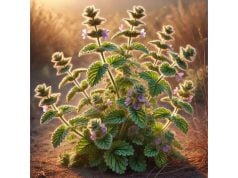
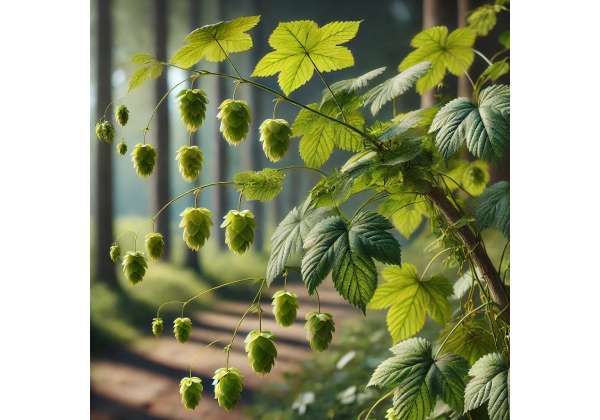
Hop tree, botanically known as Ptelea trifoliata, is a shrub or small tree native to much of eastern and central North America. It belongs to the Rutaceae family, the same broader family as citrus, which helps explain its aromatic character and the presence of coumarin-like compounds often found in related plants. The plant is easy to recognize by its trifoliate leaves, clusters of small flowers, and flat, wafer-like fruits that gave rise to the name “wafer ash.” The name “hop tree” comes from the historical use of the fruit as a bitter substitute for hops in some brewing traditions.
As a medicinal plant, hop tree has usually been treated as a bitter aromatic rather than as a daily nutritive herb. That distinction matters. It was not traditionally valued because it supplied vitamins, minerals, or fiber in meaningful amounts. It was valued because its bitterness and volatile chemistry seemed to stimulate appetite, settle weak digestion, and support recovery when the stomach felt unreceptive to food.
Traditional records describe several plant parts in use:
- Root bark and bark as the main medicinal material in bitter tonics.
- Leaves in external applications or infusions.
- Fruit as an aromatic bitter and occasional hop substitute.
Old herbal writers often described hop tree as useful for people who felt run down after illness, had weak appetite, or experienced a heavy, stagnant digestive pattern. In that older language, it was a “tonic.” In modern terms, that usually points to a bitter herb intended to increase oral secretions, digestive readiness, and tolerance for food rather than to a stimulant in the caffeine sense.
Hop tree is not widely used in everyday herbal commerce now, and that is partly because better-studied bitters are easier to source and standardize. Even so, its long medicinal history keeps it relevant, especially for readers interested in traditional North American materia medica. The main practical takeaway is that hop tree is a specialized herb with a bitter, aromatic profile and a narrow but recognizable traditional role.
Key compounds and actions
The medicinal interest in hop tree comes from a layered phytochemical profile rather than from one single star compound. Different plant parts contain different proportions of active constituents, which is one reason older preparations varied so much in strength and effect.
The most discussed groups of compounds include:
- Coumarins and related prenylated coumarins, including auraptene.
- Alkaloids, especially quinoline or furoquinoline-type constituents and quaternary alkaloids reported from older analyses.
- Flavonoids and phenolic compounds, including hyperoside and chlorogenic acid in recent flower work.
- Volatile aromatic compounds, including monoterpenes, sesquiterpenes, and esters that contribute to scent and bitterness.
These compounds matter because they suggest several plausible actions.
First, bitterness itself is part of the mechanism. A bitter herb does not need to act like a drug to be useful. When a bitter taste hits the tongue, it can trigger salivation and prime digestive secretions. That is why hop tree was grouped with appetite-stimulating tonics rather than soothing mucilaginous herbs. Its value was expected before or around meals, not after the fact.
Second, alkaloids help explain why hop tree attracted scientific attention. Older laboratory work found antimicrobial activity in alkaloid fractions from Ptelea trifoliata. That does not mean a cup of hop tree tea works like an antibiotic, but it does show that the plant is chemically active in a meaningful way.
Third, recent flower research points to antioxidant and enzyme-modulating effects. In cell and extract studies, hop tree flowers showed activity relevant to oxidative stress and skin-related processes. That finding is interesting because it broadens hop tree beyond its classic digestive role, although it remains early-stage evidence.
Fourth, the plant’s aromatic fractions may contribute to its identity as a stimulating bitter. Floral and bark studies describe a profile rich in volatile compounds, which likely shape the scent, taste, and some of the sensory experience of using the herb.
A practical way to understand hop tree is this: the herb combines bitterness, aromatic oils, and biologically active secondary metabolites. That mix helps explain why it was historically used in small, purposeful doses instead of as a casual tea herb. It is chemically complex, but still under-studied, which means its traditional reputation is clearer than its modern pharmacology.
Potential benefits and uses
The strongest traditional use case for hop tree is digestive support, especially when appetite is poor and digestion feels slow rather than inflamed. In practical terms, that means the herb may be most relevant for people who feel full too quickly, do not want food after illness, or seem to digest better when a bitter herb is taken before meals. In that role, hop tree sits in the same broad category as digestive bitters like gentian root, though gentian is much better studied and more standardized.
Potential benefits most often discussed include:
- Appetite stimulation.
This is the clearest traditional claim. The bitter taste may encourage salivation and digestive readiness, which can make meals feel more manageable. - Sluggish digestion and post-illness weakness.
Older texts often paired hop tree with convalescence. The idea was not that it cured a disease directly, but that it helped the digestive system tolerate nourishment again. - Mild antimicrobial potential.
Laboratory findings on hop tree alkaloids suggest the plant contains compounds with antimicrobial activity. This is a preclinical observation, not a proven clinical use. - External use for minor skin concerns.
Folk use included topical preparations, and recent flower-extract research hints at antioxidant and wound-healing potential in laboratory models. - General bitter tonic action.
Some traditions used hop tree where a sharp, stimulating bitter was preferred over a gentler herb.
At the same time, readers should keep the likely benefits in perspective. Hop tree is not a first-line herb for chronic digestive disease, ulcers, inflammatory bowel disease, or unexplained abdominal pain. It is better suited to mild, functional patterns: weak appetite, slow digestive tone, and short-term digestive fatigue.
It is also not a modern “wellness tonic” in the casual sense. It is more specific than that. Its value, when it works, is often in a narrow window: before meals, in small amounts, for a defined reason.
A sensible summary is that hop tree may help with appetite, mild sluggish digestion, and perhaps topical skin applications, but its strongest support remains traditional experience plus early lab research. The herb sounds broader in old texts than the evidence can justify today, so the best reading of those claims is cautious and practical rather than sweeping.
How to use hop tree
Hop tree has traditionally been used in a few different forms, but it is not an herb most people find in common grocery teas or standard supplement aisles. When it is used, the form matters because the plant’s effects depend heavily on bitterness, extraction strength, and plant part.
Common traditional forms include:
- Tincture or concentrated liquid extract.
This is the most practical historical format because small drop doses can deliver a clear bitter signal before meals. - Powdered bark or root bark.
Older herbal systems sometimes used powdered preparations, though this is less convenient today and harder to dose consistently. - Infusion or cold preparation.
Some historical accounts describe infusions, but water alone may not extract hop tree as fully as alcohol-containing preparations. - External wash or poultice.
Leaf or flower-based preparations have been used topically in traditional and experimental settings.
For internal use, the best fit is usually before meals rather than after them. A bitter herb used at the right time is meant to prepare the digestive tract, not simply sit in the stomach. That timing is one reason hop tree may feel more useful to someone with low appetite than to someone whose main problem is burning reflux or ulcer pain.
For external use, caution is more important than enthusiasm. Recent lab findings on flower extracts are interesting, but they are not the same as established dermatologic use. If someone is looking for a more familiar plant for minor skin support, calendula has a far clearer modern topical tradition. Hop tree belongs in the experimental or specialist category, not the “everyday skin herb” category.
A few practical use principles help:
- Choose the correct reason for use. Hop tree fits weak digestion better than irritated digestion.
- Keep the dose small at first. This herb was traditionally used in measured amounts, not large casual servings.
- Pay attention to plant part and preparation. Bark tincture, leaf wash, and flower extract are not interchangeable.
- Do not use vague homemade preparations as though they are standardized products.
Because hop tree is less standardized than mainstream herbs, quality and identification matter. Misidentification, poor extraction, or overly strong homemade products can turn a potentially helpful bitter into an irritating one. For most people, this is a plant best approached through a trained herbal practitioner or a carefully sourced preparation rather than through guesswork.
How much hop tree per day
This is where hop tree requires the most honesty: there is no modern, evidence-based standard daily dose supported by human clinical trials. Any dosage guidance is therefore historical, preparation-dependent, and cautious by necessity.
Traditional Eclectic and historical sources describe several ranges:
- Concentrated liquid preparations in very small amounts, often around 1–20 drops.
- Some texts extend “specific medicine” use to roughly 1–30 drops.
- Powdered bark was described in older systems in gram-level daily use, but those preparations were not equivalent to modern extracts.
- Larger tincture measures appear in older literature too, but those are difficult to compare because the plant-to-solvent ratios were not standardized the way modern supplements often are.
The safest practical interpretation is not to average those numbers together. They were based on different preparations with different strengths. A 20-drop dose of a concentrated extract is not comparable to a teaspoon of a weak tincture or to a gram of crude powder.
For real-world use, the most conservative approach looks like this:
- Start with the lowest end of a liquid preparation if a professionally made product is being used.
- Take it 10 to 20 minutes before meals if the goal is appetite or digestive stimulation.
- Use it for a short trial, such as several days to two weeks, then reassess.
- Stop if it worsens nausea, heartburn, cramping, or headache.
Because hop tree is a strong bitter, timing often matters as much as amount. A small dose before food may work better than a larger dose taken randomly. More is not always better; with bitters, too much can flip from stimulating to irritating.
Duration also matters. Hop tree makes the most sense as a short-course herb:
- After illness when appetite is slow to return.
- During a temporary spell of weak digestion.
- Under professional guidance when used in a custom formula.
It is less well suited to indefinite daily use. If someone needs a long-term bitter herb, a gentler and more familiar option such as dandelion is often easier to work with and better tolerated.
So the bottom line on dose is straightforward: use only small, measured amounts; favor short-term use; and do not treat historical ranges as interchangeable modern instructions.
Side effects and who should avoid it
Hop tree deserves a careful safety conversation because it sits in the category of “interesting but under-studied” herbs. That means the lack of published harm data should not be mistaken for proven safety.
Possible side effects include:
- Nausea or stomach irritation from excessive bitterness.
- Worsening heartburn in people with reflux-prone digestion.
- Headache or digestive discomfort if the dose is too strong.
- Skin irritation or photosensitivity concerns with topical use, especially if sun exposure follows.
That last point matters. Hop tree belongs to the Rutaceae family, and coumarin-related compounds are part of its chemistry. In plant medicine more broadly, some coumarin and furanocoumarin-containing plants can increase phototoxic risk on skin. That does not mean every hop tree preparation will do this, but it is enough reason to avoid casual topical experimentation before going into sunlight.
People who should avoid unsupervised use include:
- Pregnant or breastfeeding people, because safety data are lacking.
- Children, unless guided by a qualified clinician.
- Anyone with active ulcers, gastritis, or severe reflux, because bitter stimulation may aggravate symptoms.
- People using multiple prescription medicines when interaction risk has not been assessed.
- Anyone with a history of strong reactions to aromatic or citrus-family plants.
Caution is also reasonable for:
- People on anticoagulant or antiplatelet therapy.
- Those with significant liver disease.
- Anyone using photosensitizing medication or undergoing light-based skin treatment.
- People with unexplained digestive pain, weight loss, vomiting, or black stools.
One common mistake is assuming that a traditional bitter is automatically gentle. Some are; some are not. Hop tree was historically respected precisely because it was active. That is a reason to measure it carefully, not to use it casually.
Topical use needs the same mindset. Patch testing on a very small area, avoiding broken skin unless guided professionally, and minimizing sun exposure afterward are prudent steps. If redness, burning, or delayed hyperpigmentation develops, stop immediately.
In short, the main safety rule is simple: hop tree is better approached as a specialized herb than as a harmless kitchen botanical. Use it deliberately, not routinely.
What the evidence really shows
The evidence for hop tree is promising in a narrow scientific sense and limited in the broader clinical sense. That distinction is the most important thing to understand before using it.
What the evidence supports fairly well:
- Hop tree contains biologically active compounds, including alkaloids, coumarins, flavonoids, and aromatic volatiles.
- Older laboratory research found antimicrobial activity in quaternary alkaloid fractions from the plant.
- Recent flower-extract research found antioxidant activity, enzyme-modulating effects, and improved scratch closure in a fibroblast wound-healing model.
- Traditional literature clearly documents longstanding medicinal use.
What the evidence does not yet support:
- A standardized human oral dose.
- Reliable clinical benefit for appetite, indigestion, infection, or skin healing in controlled human trials.
- Strong interaction data.
- Long-term safety data.
One recent study deserves special context. Flower extracts of Ptelea trifoliata were tested in vitro and showed measurable antioxidant activity, hyaluronidase inhibition, and wound-healing effects in a scratch assay using human skin fibroblasts. That is useful early evidence. It shows the plant is not pharmacologically empty. But it is still not proof that a home-prepared hop tree tea or tincture will heal human skin wounds in real life.
The same caution applies to the older antimicrobial work. Finding a bioactive alkaloid in a lab fraction is important, but it does not justify self-treating infections with hop tree.
This leaves hop tree in an interesting middle ground:
- More credible than a purely folkloric remedy with no chemistry.
- Less proven than a clinically established herbal medicine.
For an herbalist or well-informed reader, that middle ground can still be useful. It means hop tree may have a role as a traditional bitter or as a research-worthy plant, especially in specialist practice. For the average person, though, it should be viewed as an optional, carefully chosen herb rather than a foundational one.
A realistic verdict is this: hop tree has authentic traditional value, credible phytochemistry, and early preclinical promise, but the evidence is not strong enough to justify broad claims. Its best current use is cautious, targeted, and informed by the limits of the data.
References
- Bioactive Potential of Ptelea trifoliata Flower Extracts: Antioxidant, Enzyme-Modulating, and Wound Healing Activities with Possible Biomedical and Dermal Applications 2026 (Preclinical study). ([MDPI][1])
- New Insights Concerning Phytophotodermatitis Induced by Phototoxic Plants 2024 (Review). ([PubMed][2])
- Arctigenin: pharmacology, total synthesis, and progress in structure modification 2022 (Review). ([PubMed][3])
- Antimicrobial agents from higher plants. The quaternary alkaloids of Ptelea trifoliata 1975 (Lab study). ([PubMed][4])
- Medicinal Uses of Ptelea Trifoliata 1866 (Historical article). ([PubMed][5])
Disclaimer
This article is for educational purposes only and is not medical advice. Hop tree is a traditional herb with limited modern human research, so its benefits, ideal dosage, and interaction profile are not fully established. Do not use it to self-treat serious digestive symptoms, infection, skin injury, or any condition that needs professional care. People who are pregnant, breastfeeding, taking prescription medicines, or managing chronic illness should speak with a qualified clinician before using hop tree.
If you found this article useful, please share it on Facebook, X, or your preferred platform to help more readers discover evidence-aware herbal information.