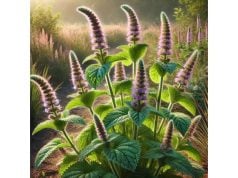
Hornwort, also called coontail, is a fully submerged freshwater plant better known in ponds and aquariums than in modern herbal cabinets. That alone makes it unusual. Unlike familiar medicinal herbs that are dried, brewed, and sold in standard forms, Ceratophyllum demersum sits at the edge of herbal medicine, ethnobotany, and laboratory research. Traditional records describe it for problems such as diarrhea, wounds, fever, bleeding-related complaints, and excess thirst, while newer studies have looked at its antioxidant, antimicrobial, glucose-related, and anticancer potential.
Still, hornwort is not a mainstream wellness herb, and that is the most important starting point. Most of what is known comes from test-tube work, animal studies, and ethnomedicinal reports rather than human trials. It also has a practical safety issue many readers miss: because it grows in water and is often studied for pollutant uptake, the source of the plant matters as much as the plant itself.
So hornwort is best approached with curiosity and caution. It may contain promising compounds, but promise is not the same as proven therapeutic use.
Quick Facts
- Traditional use focuses on diarrhea, minor wounds, fever, and bleeding-related complaints.
- Early studies suggest antioxidant, antimicrobial, and glucose-modulating activity.
- Animal research has used 250 to 500 mg/kg extracts and a 5% topical ointment, but no validated human dose exists.
- Avoid self-dosing with wild or aquarium hornwort, especially during pregnancy, breastfeeding, childhood, or chronic illness.
Table of Contents
- What is hornwort?
- Key compounds and medicinal properties
- Does hornwort have real benefits?
- How hornwort is used
- How much hornwort per day?
- Side effects, interactions, and who should avoid it
- What the evidence really says
What is hornwort?
Ceratophyllum demersum is a rootless aquatic plant that floats below the water surface in ponds, lakes, canals, and slow-moving streams. It forms soft, branching whorls that can look feathery from a distance and slightly rough up close. In gardening and aquarium circles it is prized for oxygenation, shelter, and water quality. In traditional medicine, however, it appears in a very different role: as a freshwater herb used in selected local systems for digestive complaints, wounds, fever, bleeding, and cooling applications.
One source of confusion is the name itself. “Hornwort” can refer to a whole group of bryophyte-like plants in botany, but in herbal and ethnomedicinal discussions tied to Ceratophyllum demersum, people usually mean this submerged species, also called coontail. That distinction matters because information about one “hornwort” is not always information about the other.
Historically, hornwort was never as globally established as herbs such as ginger, chamomile, or mint. Its use was regional, practical, and often tied to wetland communities that lived close to ponds and streams. Records describe leaf juice, decoctions, pastes, or whole-plant preparations rather than standardized capsules. That tells you a lot about how the plant should be understood today. It belongs more to traditional local medicine and exploratory pharmacology than to evidence-based self-care.
There is also a striking ecological detail that changes how modern readers should think about it. Hornwort is excellent at pulling substances out of water. Researchers have studied it for phytoremediation, meaning cleanup of polluted aquatic environments. That ability is scientifically interesting, but it creates an obvious caution for human use. A plant that readily accumulates materials from water may also collect metals, pesticides, or other contaminants depending on where it grows.
That makes sourcing more important than usual. A dried root from a cultivated medicinal herb and a submerged plant clipped from an aquarium or pond are not remotely equivalent. Aquarium hornwort may carry fertilizers, algae treatments, fish medications, or microbial contamination. Wild-collected hornwort may come from nutrient-loaded or polluted water.
So before discussing benefits, it helps to frame hornwort accurately. It is an aquatic medicinal plant with real traditional use and intriguing lab findings, but it is not a routine kitchen herb, not a standardized supplement with mature dosing data, and not a plant that should ever be improvised from decorative water systems. Readers who understand that from the start are much less likely to overestimate what hornwort can safely offer.
Key compounds and medicinal properties
The medicinal interest in hornwort comes from its secondary metabolites, especially flavonoids, phenolic acids, terpenoid-related compounds, fatty acids, sterols, tannins, and other small bioactive molecules identified in extracts. More recent phytochemical work has expanded that picture and suggests the plant is chemically richer than older folk summaries implied. In modern terms, hornwort is not one active ingredient with one effect. It is a mixed chemical system, and that is part of both its promise and its uncertainty.
Several research threads stand out.
First, hornwort appears to contain antioxidant-active compounds. That does not mean swallowing the plant automatically produces strong antioxidant effects in humans, but it does help explain why the plant shows free-radical scavenging activity in extract studies. That chemistry is not unique to hornwort—many phenolic-rich botanicals such as green tea antioxidants behave similarly in the lab—but it gives researchers a reasonable starting point.
Second, some compounds isolated from hornwort have shown alpha-glucosidase inhibitory activity. That matters because alpha-glucosidase is an enzyme involved in carbohydrate breakdown. Inhibiting it may slow glucose absorption after meals, which is why researchers are interested in hornwort’s possible role in blood sugar management. This is still preclinical territory, but it is more specific than a vague claim that the plant is “good for diabetes.”
Third, hornwort extracts have shown antimicrobial and antifungal activity in small experimental settings. These results are interesting, especially because aquatic plants are not usually the first place people look for antimicrobial leads. Still, antimicrobial activity in a petri dish is not the same as having a safe herbal medicine for human infection. The step from extract screening to real treatment is large.
Fourth, some studies have reported anti-inflammatory, wound-healing, antiulcer, antidiarrheal, and even anticancer-related effects in experimental models. These are the properties most often repeated in review articles. But the crucial phrase is “experimental models.” Hornwort may influence inflammatory pathways, epithelial repair, digestive motility, or cell survival signals, yet that does not prove reliable benefit in people.
A useful way to think about hornwort’s medicinal properties is to separate mechanism from outcome.
- Mechanism asks what the compounds appear capable of doing.
- Outcome asks whether those effects matter in a real patient, at a safe dose, in a usable form.
Hornwort currently looks much stronger on mechanism than on outcome. Its chemistry supports why researchers keep testing it. But chemistry alone does not turn an aquatic plant into a validated herbal therapy.
That is why careful articles on hornwort should avoid two extremes. One is dismissing it as meaningless pond weed. The other is treating it as a proven medicinal powerhouse. The more accurate view is in the middle: hornwort contains compounds with plausible biological activity, and some of those activities look promising enough to justify further work, but the evidence is still early and uneven.
Does hornwort have real benefits?
Hornwort may have real benefits, but most of them are still provisional rather than confirmed. That distinction is the heart of this article.
The clearest traditional benefit pattern centers on digestive upset, wound care, fever, and bleeding-related complaints. Ethnomedicinal records and older herbal summaries repeatedly mention diarrhea, ulcer-like symptoms, wounds, piles, hemorrhagic complaints, excess thirst, and cooling uses. That tells us the plant was valued for more than one narrow purpose. It also suggests people were responding to effects they considered tangible, not purely symbolic.
Modern studies partly line up with those traditions. Animal work has reported antidiarrheal and wound-healing activity. Other preclinical studies suggest anti-inflammatory and antiulcer potential. More recent chemical and extract studies add antioxidant, antimicrobial, and alpha-glucosidase inhibitory findings to the list. On paper, that is a broad and appealing profile.
But breadth is not the same as certainty. Hornwort has several kinds of possible benefit, each supported by modest evidence, rather than one benefit supported by strong evidence. That is why readers should use cautious language when describing it. It is reasonable to say hornwort “shows potential” for digestive, topical, and metabolic applications. It is not yet reasonable to say it “works” for those uses in the way a clinician or patient would normally mean.
The most realistic benefit areas are probably these:
- Supportive digestive use, especially where traditional medicine used it for diarrhea or ulcer-like irritation.
- Topical or wound-related support suggested by folk use and animal data.
- Experimental metabolic interest because of alpha-glucosidase inhibition.
- General antioxidant and antimicrobial potential at the extract level.
Even here, the outcome a person can expect is likely modest and uncertain. Hornwort is not a fast, dependable, standardized tool. It is better understood as an exploratory plant whose traditional uses are being partially echoed by modern research.
An original but important insight is that hornwort’s “health benefits” may eventually matter more to product developers than to casual herb users. In other words, its future value may lie in purified compounds, standardized extracts, or lead molecules rather than in homemade tea or self-prescribed whole-plant remedies. That is common in medicinal plant research. A plant can be scientifically important before it is practically useful as a home remedy.
For topical folk applications, readers often expect the same ease and predictability they would get from gentler, better-known plants such as calendula for skin support. Hornwort does not yet offer that level of confidence.
So does hornwort have real benefits? Probably yes, in the sense that it has authentic traditional uses and measurable biological activity. But not yet in the stronger sense of having clear, reproducible, human-tested therapeutic outcomes. That is a meaningful difference, and it should guide how much confidence a reader places in the plant.
How hornwort is used
Hornwort has been used in several different ways, and the form matters almost as much as the plant itself.
Traditional use generally falls into a few preparation styles: decoctions of the whole plant, leaf juice, external pastes, and other simple water-based preparations. Some ethnomedicinal records also note grinding or fresh processing before application. These older forms make sense in communities with easy access to fresh aquatic plants and a long habit of local preparation.
Modern research, however, uses a different language. Studies often examine aqueous, methanolic, ethanolic, ethyl-acetate, or mixed-solvent extracts. These are research tools, not everyday kitchen methods. A solvent extract that shows antimicrobial or enzyme-inhibiting activity in the lab does not automatically translate into a safe household preparation.
That gap between traditional form and research form creates the main practical problem for users. When people ask, “How do I use hornwort?” the answer depends on which world they mean.
In traditional or ethnobotanical contexts, hornwort may be used as:
- A decoction for internal complaints.
- Fresh juice in selected traditional systems.
- A paste or ointment-style preparation for external use.
- A whole-plant remedy for short, targeted purposes rather than daily supplementation.
In modern experimental contexts, hornwort is used as:
- Standardized extracts for chemical analysis.
- Solvent fractions for activity screening.
- Isolated compounds for mechanistic work.
- Experimental materials in animal or cell studies.
For everyday readers, the most practical answer is also the most cautious one: hornwort is not a herb that should be casually foraged and self-prepared. The plant’s aquatic habitat creates unusual sourcing risks. A person might identify the species correctly and still end up with material contaminated by heavy metals, sewage exposure, pond treatments, algicides, insecticides, or fish medications. That is not a minor concern. It is a central one.
If someone still wants to explore hornwort in a traditional or herbal context, a few rules matter:
- Do not use aquarium or ornamental pond hornwort.
- Do not assume wild freshwater sources are clean.
- Do not treat experimental extracts as instructions for home preparation.
- Prefer authenticated medicinal material from a reputable source, if such sourcing is even available.
- Keep the duration short and the goal specific.
This is one of those herbs where restraint is a form of good practice. In many cases, people would be safer choosing a better-studied digestive or topical herb rather than trying to force hornwort into a self-care role it has not fully earned.
So hornwort can be used, but the honest answer is that it is mostly used traditionally in local medicine and experimentally in research, not confidently or routinely in modern unsupervised herbal practice.
How much hornwort per day?
There is no established human daily dose for hornwort. That is the first and most important dosage fact.
Unlike common supplements with studied serving ranges, Ceratophyllum demersum does not have a validated oral dose backed by clinical trials. Readers looking for a simple answer such as “take 300 mg twice a day” will not find a trustworthy one here. The literature is too scattered, the preparation methods are too inconsistent, and the human evidence is too thin.
What we do have are three different types of dosing information, and they should not be confused with one another.
The first is ethnomedicinal preparation. Traditional records describe decoctions, leaf juice, whole-plant use, and external applications. These records tell us the plant was used in real communities, but they rarely give the kind of standardized gram-based dosing that modern readers expect.
The second is animal research. In one rat study, hornwort extracts were tested orally at 250 and 500 mg/kg for antidiarrheal activity, and a 5% w/w ointment was used for wound healing. These numbers are useful for understanding research design, but they are not a safe shortcut to human dosing. Animal doses cannot simply be copied into self-treatment.
The third is in vitro or extract chemistry work. Hornwort has been tested in concentrations such as mg dried material per mL or microgram-level cell culture concentrations. Again, those data are scientifically useful but clinically non-transferable.
Because of that, the best dosage guidance is more about boundaries than about instructions.
- No validated human oral dose exists.
- No validated long-term dose exists.
- No standard timing has been established.
- No standard duration has been established.
- Different extraction methods may change activity substantially.
That means even two products labeled “hornwort extract” could behave differently. One could be rich in flavonoids or phenolic compounds, while another could be chemically weak or contaminated. That is another reason the question “How much should I take?” has no responsible universal answer.
If a clinician trained in herbal medicine ever recommends hornwort in a specific traditional context, they may base the amount on source quality, preparation type, body size, purpose, and duration. But without that supervision, self-dosing is guesswork.
The safest public guidance is simple. Do not translate animal doses into personal doses. Do not rely on aquarium, pond, or wild-harvest material. Do not keep escalating the amount because a weak or impure preparation seems inactive. And do not mistake a traditional decoction reference for a modern standardized dosage recommendation.
In practical terms, hornwort is a plant with medicinal interest but without a dependable human dosing framework. That puts it in a very different category from herbs that can be used with far more confidence and consistency.
Side effects, interactions, and who should avoid it
Hornwort’s safety profile is defined less by dramatic known toxicity and more by uncertainty, contamination risk, and lack of human data. That combination is enough to justify caution.
The first safety issue is source contamination. Because hornwort grows submerged in freshwater and is often studied for its ability to absorb pollutants, it may carry exactly the substances you would not want in a medicinal product. Heavy metals, agricultural runoff, sewage-related microbes, and residues from aquarium treatments are all realistic concerns. This is a rare case where the plant’s environmental usefulness increases its herbal risk.
The second safety issue is incomplete clinical knowledge. We do not have good human trial data on short-term tolerability, repeated use, pregnancy safety, liver effects, kidney effects, or medication interactions. When evidence is this thin, safe practice means assuming the unknown matters.
Possible problems may include:
- Gastrointestinal upset from crude preparations.
- Microbial exposure from poor-quality material.
- Contaminant exposure from polluted water sources.
- Unpredictable effects from nonstandard extracts.
- Theoretical blood sugar lowering if potent alpha-glucosidase activity carries into real use.
Interaction concerns are also mostly theoretical but still reasonable. Because preclinical work suggests possible effects on carbohydrate digestion and because traditional use includes bleeding-related complaints, caution makes sense with:
- Diabetes medicines.
- Antidiarrheal medicines.
- Anticoagulants or antiplatelet drugs.
- Diuretics or medicines used in frail older adults.
- Any drug where dehydration, diarrhea, or poor intake would be risky.
Who should avoid hornwort altogether?
- Pregnant or breastfeeding people.
- Children and teenagers.
- Anyone with kidney or liver disease.
- Anyone with diabetes using glucose-lowering drugs.
- Anyone who is immunocompromised.
- Anyone with a history of significant plant allergies.
- Anyone planning to self-harvest from ponds, canals, or aquariums.
Older adults should also be cautious because even mild digestive upset, fluid shifts, or contaminated material can cause outsized problems. The same applies to people with chronic illness or multiple prescriptions.
A useful rule is that the weaker the human evidence, the stronger the case for choosing a better-known alternative. For digestive discomfort, for example, many readers would be safer using better-established options such as peppermint for digestive support rather than experimenting with a submerged aquatic plant.
Safety is also about expectations. Hornwort is not a herb that has earned “generally gentle” status. It may prove helpful in future standardized forms, but at present it should be treated as a research-adjacent traditional plant with real unanswered questions. When a plant has limited human data and high source variability, the responsible approach is not fear, but restraint.
What the evidence really says
The evidence on hornwort is intriguing, layered, and incomplete.
At the base, there is ethnomedicinal evidence. Communities have used Ceratophyllum demersum for digestive complaints, bleeding-related problems, wounds, fever, and cooling applications. That gives the plant historical credibility. It tells us hornwort was not invented by the supplement market; it had real local use before modern pharmacology became interested in it.
Above that, there is a meaningful preclinical layer. Extracts and isolated compounds show antioxidant, antimicrobial, alpha-glucosidase inhibitory, anti-inflammatory, antidiarrheal, wound-healing, and anticancer-related activity in laboratory or animal settings. This is enough evidence to justify scientific attention. It is not enough evidence to justify confident self-medication.
What is missing is the clinical bridge.
We do not have strong human studies showing that hornwort reliably improves diarrhea, wound healing, glucose control, inflammation, or cancer-related outcomes in actual patients. We do not have validated oral dosing. We do not have long-term safety data. We do not have a standardized extract that readers can reasonably expect to match the research.
That last point matters more than it seems. Hornwort may end up being valuable not as a crude herbal remedy, but as a source of lead compounds. In other words, the plant’s future may lie in isolation, purification, and standardization rather than in direct folk-style internal use. That is a respectable path in botanical medicine, but it is different from saying the herb is already ready for routine consumer use.
So how strong is the evidence by category?
- Traditional use: meaningful.
- Phytochemistry: increasingly well described.
- Cell and animal studies: promising.
- Human clinical evidence: very weak to absent.
- Standardized practical use: not established.
That profile should shape how readers interpret every benefit claim. When an article says hornwort may support wound healing or glucose regulation, the right reaction is not “proven,” but “promising, early, and unconfirmed.” That may sound restrained, yet it is also the fairest reading of the literature.
Hornwort is a good example of why herbal writing should not flatten all evidence into one level of confidence. Some plants are traditional and clinically useful. Some are chemically interesting but not yet practically dependable. Hornwort belongs in the second group.
The most honest conclusion, then, is this: Ceratophyllum demersum is a legitimate medicinal plant in the sense that it has traditional uses and biologically active constituents, but it is not yet a dependable modern self-care herb. It deserves more research, better standardization, and stricter sourcing before it deserves routine confidence.
References
- Ethnomedicinal Use, Phytochemistry, and Other Potential Application of Aquatic and Semiaquatic Medicinal Plants 2022 (Review)
- Diversity and traditional knowledge of medicinal plants used by Shui people in Southwest China 2023
- Ceratophyllum demersum the submerged macrophyte from the mining subsidence reservoir Nadrybie Poland as a source of anticancer agents 2024
- Chemical constituents with their alpha-glucosidase inhibitory activity from the whole plant of Ceratophyllum demersum 2025
- Evaluation of antidiarrhoeal and wound healing potentials of Ceratophyllum demersum Linn. whole plant in rats 2011 (Animal Study)
Disclaimer
This article is for educational purposes only and is not medical advice, diagnosis, or treatment. Hornwort is not a well-standardized modern herbal supplement, and its evidence base is limited mostly to traditional use, laboratory studies, and animal research. Do not use wild, aquarium, or pond-grown hornwort as a self-treatment. Speak with a qualified healthcare professional before using any hornwort preparation, especially if you are pregnant, breastfeeding, have a chronic condition, or take prescription medicines.
If you found this guide useful, please share it on Facebook, X, or another platform your readers use most.