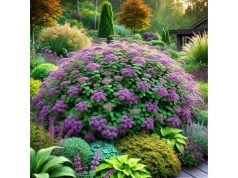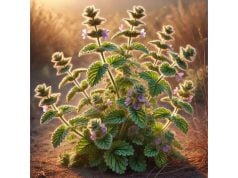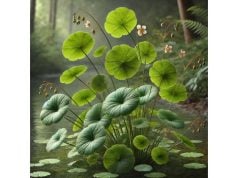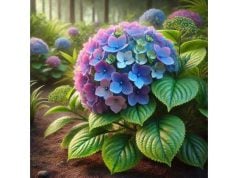
Houstonia caerulea, better known as bluets or Quaker ladies, is a tiny spring wildflower that belongs more often to meadow walks and woodland edges than to modern herbal practice. That difference matters. While many herb profiles can lean on a long record of formal medicinal use, Houstonia sits in a much narrower lane: a delicate North American native with one modest but genuine ethnobotanical thread, most often linked to Cherokee use as an infusion for bedwetting. Beyond that, the modern evidence becomes very thin.
That does not make the plant uninteresting. It makes it easy to misread. The beauty of the flower, its place in folk plant lore, and its family relationship to other medicinal Rubiaceae species can tempt writers to overstate what it does. A more honest approach is better. Houstonia may have historical value, possible mild urinary relevance in folk practice, and botanical interest, but it does not have the clinical backing, standardized extracts, or well-defined dosing that readers usually expect from a medicinal herb. In other words, its main lesson is not herbal certainty, but herbal restraint.
Core Points
- The best-documented traditional use is a Cherokee infusion for bedwetting.
- Houstonia is valued more for ethnobotanical history than for proven modern therapeutic effects.
- No standardized dose range in mg or mL has been established for human use.
- Avoid self-dosing during pregnancy, breastfeeding, childhood, or while taking prescription medicines.
Table of Contents
- What is Houstonia caerulea?
- Key compounds and what is known
- Does Houstonia have real health benefits?
- How Houstonia has been used
- How much Houstonia per day?
- Safety, interactions, and who should avoid it
- What the evidence really says
What is Houstonia caerulea?
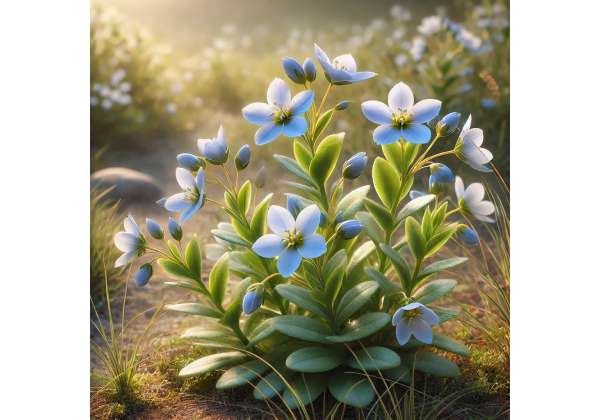
Houstonia caerulea is a small perennial wildflower native to eastern North America. It grows close to the ground, often in lawns, meadows, open woods, gravelly clearings, and thin soils where larger plants leave it some room to breathe. Its flowers are tiny but memorable: usually pale blue to bluish-white with a yellow center and four delicate lobes. Because it appears in soft spring drifts, many people know it first as a sign of the season rather than as a medicinal plant.
That botanical identity is the first important piece of context. Houstonia is not a standard apothecary herb. It is not widely sold as a dried tea, tincture, capsule, or standardized extract. In fact, most people encounter it through native plant gardening, wildflower guides, or natural history writing. The medicinal discussion around it comes mostly from ethnobotanical notes rather than from a deep body of herbal literature.
The best-known traditional reference points to Cherokee use of an infusion of the plant for bedwetting. That is a narrow and specific use. It is not the kind of broad, multi-purpose traditional profile seen with herbs used for pain, digestion, fever, skin conditions, and respiratory complaints all at once. This narrowness is actually helpful. It suggests that if Houstonia had a practical medicinal role, it may have been subtle and targeted rather than dramatic.
Common names also reveal how easily folk memory and plant identity can blur together. Bluets, little bluet, azure bluet, Quaker ladies, and even regional names associated with urinary folk use have all been attached to the plant. But common names are not evidence by themselves. They can preserve clues, yet they can also magnify half-remembered uses into stronger claims than the record supports.
Another important point is scale. Houstonia is tiny. That means any internal use would have required gathering a meaningful quantity of small aerial parts for only a modest infusion. From a practical standpoint, that makes it less likely to have become a major household medicine. Herbs that become staples are usually abundant, easy to harvest, easy to dry, and easy to dose. Houstonia is charming, but it is not efficient in that way.
So what is Houstonia, medically speaking? It is best described as a small native wildflower with one well-known ethnobotanical use and very limited modern medicinal development. That is a respectable place to start. It keeps the plant grounded in what is real, rather than turning a spring wildflower into a therapeutic legend it has not earned.
Key compounds and what is known
This is where Houstonia becomes especially interesting, because the honest answer is not that we know a great deal about its active medicinal compounds. It is that we know far less than many herb profiles imply.
For widely used medicinal plants, the “key ingredients” section can often name clear phytochemical groups and describe them with some confidence. Houstonia does not offer that level of clarity. Publicly accessible, species-specific phytochemical work on Houstonia caerulea is sparse, and modern herbal literature does not point to a well-established active marker compound comparable to arbutin in bearberry or menthol in peppermint.
That does not mean the plant is chemically empty. All higher plants produce complex mixtures of pigments, structural compounds, sugars, organic acids, and defensive metabolites. Because Houstonia belongs to the Rubiaceae family, it is reasonable to suspect the presence of common plant phenolics, pigments, and possibly other family-typical secondary compounds. But suspicion is not the same as documented species-specific evidence. The responsible phrasing is “likely,” not “proven.”
This matters for two reasons.
First, when active compounds are not well characterized, dosage becomes guesswork. Even if two preparations are made from the same species, differences in habitat, season, plant part, drying, and extraction can change what ends up in the cup or tincture. Without a defined compound profile, there is no good way to standardize potency.
Second, when compounds are not well characterized, benefit claims become harder to judge. A writer may say the plant is “anti-inflammatory,” “antioxidant,” or “detoxifying,” but those labels are often borrowed from general plant chemistry rather than measured for the species in question. That kind of language sounds scientific without actually telling the reader much.
A better way to think about Houstonia is to separate three levels of knowledge:
- Botanical knowledge: quite solid.
- Ethnobotanical knowledge: limited but real.
- Pharmacological knowledge: very thin.
That third point is the key. If a plant has no well-defined medicinal chemistry in mainstream sources, then its “key ingredients” section should not be padded with borrowed claims from related species. It should say plainly that the active profile remains poorly described.
This is also where comparison can help. With a plant such as bacopa and its defined bioactive compounds, readers can follow a much clearer line from chemistry to potential effect. Houstonia does not yet offer that same path.
So the most accurate summary is this: Houstonia caerulea almost certainly contains ordinary plant constituents and perhaps some family-typical secondary metabolites, but no modern, well-established medicinal compound profile has been clearly defined for routine herbal use. That may feel unsatisfying, yet it is exactly the kind of honesty that keeps a plant profile useful. When the chemistry is uncertain, certainty should not be invented.
Does Houstonia have real health benefits?
Houstonia may have a real traditional benefit, but it does not have a broad, proven modern benefit profile.
The clearest historically documented use is as a folk remedy for bedwetting. That is a specific urinary aid claim, not a general promise of kidney cleansing, bladder healing, or fluid balance. Readers should hold that distinction carefully. Traditional use can point toward a plant’s practical role, but it does not automatically prove effectiveness in the modern clinical sense.
From a realistic perspective, the “health benefits” of Houstonia fall into three categories.
The first is ethnobotanical value. This is the strongest category. The plant has a documented place in traditional knowledge, and that matters. It tells us Houstonia was observed, remembered, and used with purpose, even if only in a narrow setting.
The second is possible gentle urinary relevance. Because the main historic use concerns bedwetting, the plant may have had some effect that made it seem helpful in urinary control. That effect might have involved mild astringency, soothing action, ritual context, timing, or simply the consistent caregiving practices that came with a prepared infusion. We do not know which of those mattered most.
The third is symbolic or practical value as a minor folk herb. Some plants stay in tradition not because they are powerful all-purpose medicines, but because they serve one modest household role. Houstonia seems closer to that category than to the rank of major medicinal plants.
What Houstonia does not currently have is convincing evidence for claims like these:
- reliable diuretic action,
- bladder infection treatment,
- anti-inflammatory therapy,
- digestive support,
- immune support,
- wound healing,
- or metabolic effects.
Those may sound plausible to modern readers because tiny native herbs often get folded into the same language as more established medicinal plants. But the evidence for Houstonia is simply not there.
A useful insight is that narrow traditional use can actually be more trustworthy than broad internet marketing. When a plant shows up historically for one very specific purpose, that often means tradition remembered a practical niche, not a miracle herb. The problem begins when modern summaries turn that one niche into a half-dozen benefits with no new evidence behind them.
If someone is looking for a urinary herb with a much fuller tradition and clearer therapeutic framing, corn silk for urinary comfort is an easier comparison point. Houstonia is not in that same evidence category.
So does Houstonia have real health benefits? Possibly one modest folk urinary benefit, yes. Stronger or broader benefits, not based on what is currently documented. That may sound restrained, but it is a more useful answer than exaggerated wellness language. In herbal writing, realism is often the most helpful benefit of all.
How Houstonia has been used
Houstonia has been used mainly as an infusion in folk practice, not as a modern supplement system with standardized forms. That distinction tells you almost everything you need to know about its place in herbal medicine.
The traditional preparation most often mentioned is an infusion, essentially a tea-like preparation made from the plant. In practical terms, that suggests a gentle extraction method rather than a strong decoction, resinous tincture, or concentrated powdered extract. It also suggests a household remedy rather than a formalized medicinal product.
Because the ethnobotanical record is so limited, it is wise not to overdescribe the preparation. We do not have the kind of detailed instructions that would justify exact claims about steeping time, weight, or preferred plant part. Some modern summaries say leaves; others refer more broadly to the plant or to bluet infusions. When sources diverge at that level, the safest phrasing is simply that Houstonia was used as an infusion in traditional practice for bedwetting.
That narrow mode of use reveals several practical realities.
First, Houstonia was likely used fresh or simply prepared, not industrially extracted. Second, the remedy may have depended as much on context as on chemistry. Folk medicine is often relational. The same plant becomes part of a routine involving timing, care, repetition, and observation. Third, Houstonia does not seem to have developed into a common commercial herb, which usually happens when a plant proves easy to cultivate, process, store, and market.
In modern terms, Houstonia is rarely encountered as:
- a standardized capsule,
- a clinically used tincture,
- a routine pharmacy herb,
- or a practitioner staple.
That absence is meaningful. If a plant had clearer and repeatable results, it would likely have moved further into organized herbal use by now.
There is also a practical harvesting issue. Bluets are small, and collecting enough plant material for repeated internal use would take time and may not be ecologically sound in wild settings. For a delicate native plant, large-scale casual harvest makes little sense. This is one reason Houstonia feels more like a historical footnote than a practical self-care herb for everyday use.
For readers used to gentle, familiar infusions such as chamomile tea for common home use, Houstonia may sound similar in form but very different in evidence. One is well established and widely prepared. The other is lightly documented and not standardized.
So how has Houstonia been used? Historically, as a simple infusion associated with a narrow urinary folk purpose. How is it used now? Mostly as a native wildflower admired for beauty and remembered for a small but intriguing place in plant tradition. That is not a weakness. It is simply the accurate scale of the herb.
How much Houstonia per day?
There is no established modern human dose for Houstonia caerulea. That is the core dosage fact, and it should be stated before anything else.
Unlike common medicinal herbs that have traditional gram ranges, modern monographs, or at least informal practitioner norms, Houstonia does not have a validated dose in mg, mL, cups per day, or duration of use. The available record is simply too thin. One traditional use exists, but the step from “used as an infusion” to “use this exact dose” has not been properly documented.
That leaves readers with an important decision point. When a plant has no defined dose, there are only two responsible options: either leave it out of self-treatment or treat it as a historical curiosity rather than an active remedy. Guessing is not a dosage strategy.
A few reasons explain why Houstonia dosing remains undefined:
- No modern clinical trials establish a therapeutic range.
- No standard extract appears to be in regular medicinal use.
- The active compound profile is not well characterized.
- Traditional preparation details are too limited to translate into a modern protocol.
- The plant is not commonly cultivated or sold for medicinal intake.
Even the seemingly simple question “which part is used?” becomes part of the dosage problem. If one source refers to a bluet infusion and another implies leaf tea, the uncertainty begins before any amount is measured.
This is exactly why restraint matters. A plant may have a genuine folk use and still be a poor candidate for modern self-dosing. Houstonia fits that pattern well. The evidence is enough to support interest, but not enough to support confident instructions.
For practical readers, the most useful dosage advice is really a set of boundaries:
- Do not invent a dose based on plant size or similarity to other herbs.
- Do not assume a stronger infusion is a better one.
- Do not treat a folk use note as a dosing manual.
- Do not use repeated daily self-dosing as an experiment.
- Do not give it to children simply because the traditional use involved childhood bedwetting.
That last point is especially important. Folk records are not pediatric safety studies.
If someone is specifically looking at urinary herbs with clearer dosing traditions, uva ursi and similar urinary-focused herbs have much more developed preparation language, even if they still require caution. Houstonia does not have that foundation.
So the most honest dosage section is also the simplest: no standardized human dose has been established, and there is no evidence-based daily amount that can be responsibly recommended. In herbal medicine, “dose unknown” is not a minor footnote. It is often the clearest sign that a plant should not be used casually.
Safety, interactions, and who should avoid it
Houstonia is a good example of a plant that may not be known as toxic, yet still should not be treated as automatically safe. Those are not the same thing.
At the moment, the main safety issue is not a well-defined poison profile. It is the lack of human safety data. We do not have modern clinical information on repeated internal use, pregnancy exposure, lactation, pediatric dosing, drug interactions, or long-term effects. In practice, that means caution should be stronger than curiosity.
There are several reasons for that caution.
First, uncertainty itself matters. When a plant is only lightly documented medicinally, the absence of reported harm may simply reflect the absence of study. It should not be mistaken for proof of safety.
Second, wildflower harvesting creates quality problems. Houstonia is a low-growing native species that may be exposed to lawn chemicals, roadside contamination, animal waste, or soil residues depending on where it is gathered. A tiny plant growing in an ordinary lawn is not a medicinal raw material just because it is the right species.
Third, misidentification is always a concern with small spring wildflowers. Even if Houstonia is distinctive when flowering, self-collected plants are a weak starting point for internal use unless identification and collection methods are solid.
Possible concerns, even if largely theoretical, include:
- stomach upset from crude preparations,
- unpredictable reactions in sensitive individuals,
- interference with medicines if the plant has any real urinary or astringent effect,
- and contamination-related problems that have nothing to do with the plant itself.
Because of that, the safest groups to avoid self-use are easy to define:
- pregnant people,
- breastfeeding people,
- children,
- anyone taking prescription medicines,
- anyone with kidney or bladder disease,
- anyone with chronic illness,
- and anyone using multiple herbal products at the same time.
Children deserve special mention. Since the folk use is tied to bedwetting, it would be easy to assume Houstonia is a child-friendly herb. That is exactly the kind of leap good herbal practice avoids. A historical use involving children does not equal modern pediatric safety.
Interactions are also unknown rather than clearly absent. If a plant was used for urinary control, even mild or indirect effects could theoretically matter alongside bladder medicines, diuretics, sedatives used at night, or drugs where fluid balance matters. None of those interactions are proven, but uncertainty is enough reason not to improvise.
For topical or household care, it usually makes more sense to choose a plant with a much better safety tradition, such as calendula for gentle skin-oriented use, rather than pushing Houstonia into a role it does not clearly have.
So the best safety summary is straightforward: Houstonia is not a known mainstream toxic herb, but it is also not a studied, standardized, or well-cleared medicinal one. In situations like that, responsible use usually means not using it internally at all.
What the evidence really says
The evidence on Houstonia caerulea is sparse, narrow, and mostly historical. That is not a flaw in the plant. It is simply the truth of the record.
At the strongest level, we have botanical clarity. We know the species, its habitat, its distribution, and its role as a small native perennial in eastern North America. We also have a recognizable ethnobotanical note: Cherokee use of an infusion for bedwetting. That is the plant’s clearest medicinal thread.
After that, the evidence thins rapidly.
There are no widely cited human clinical trials establishing Houstonia as a treatment for urinary complaints. There is no standard dosage guide used in mainstream herbal practice. There is no well-developed modern monograph describing its active medicinal constituents, pharmacokinetics, therapeutic window, or risk profile. There is also no broad commercial use that would suggest repeated practical success over time.
That leaves Houstonia in an unusual but important category: a plant with real cultural and botanical significance, but not enough modern evidence to support routine therapeutic confidence.
For many readers, the most useful question is not “Does it work?” but “How should I think about a plant like this?” The answer is that plants can matter in several ways at once. Houstonia matters as a native species, as a spring wildflower, as a fragment of Cherokee plant knowledge, and as an example of how easily modern wellness writing can stretch a tiny historical use into oversized claims.
A good rule is to watch how many claims a weakly documented plant attracts. If the evidence base is one narrow folk use and the article promises urinary cleansing, anti-inflammatory power, detox, immune support, and nervous system balance, the writing has outrun the record. Houstonia teaches the opposite lesson. The smaller the evidence base, the smaller the claims should become.
It also shows why “not enough evidence” is a useful conclusion, not a disappointing one. That conclusion protects readers from self-dosing, protects the plant from needless harvest pressure, and protects the idea of herbal medicine from becoming a collection of decorative myths.
If someone wants a model of an herb with a much stronger bridge between tradition, preparation, and modern use, peppermint for practical digestive support is a far better example. Houstonia is not in that class of evidence.
So what does the evidence really say? It says Houstonia caerulea has one modest, documented traditional medicinal use and very little else that can be stated confidently. That may sound quiet, but it is exactly the kind of quiet answer that good plant writing should preserve.
References
- Houstonia caerulea — little bluet 2026.
- Houstonia caerulea L. 2026.
- Houstonia caerulea L. – PLANTS Database – USDA 2026.
- Houstonia caerulea (Azure Bluet, Bluets, Common Bluets, Innocence, Quaker Ladies) | North Carolina Extension Gardener Plant Toolbox 2026.
- Houstonia caerulea L. | Plants of the World Online | Kew Science 2026.
Disclaimer
This article is for educational purposes only and is not medical advice, diagnosis, or treatment. Houstonia caerulea is not a well-studied medicinal herb, and current information does not support standardized self-treatment, especially for urinary problems in children or adults. Do not use this plant as a substitute for medical care, and do not self-harvest it for internal use without expert botanical identification and professional guidance.
If this article helped you, please share it on Facebook, X, or any other platform your audience uses.