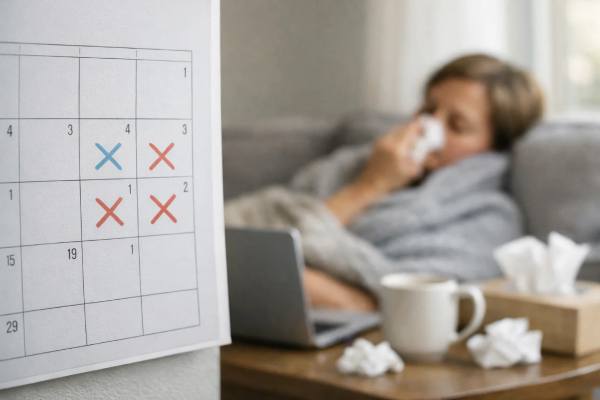
Knowing when to stay home is one of the most practical health decisions you make for yourself and for everyone around you. A “minor” illness can still be highly contagious, especially in the first days, when viral levels are often highest and symptoms are new. At the same time, staying home too long can create real strain: missed work, missed school, and delayed responsibilities. The goal is not perfection. It is to reduce spread during the riskiest window, support recovery, and return to normal life in a way that is considerate and realistic.
Modern guidance increasingly focuses on how you feel and how your illness is trending rather than a rigid day count. This article walks you through a clear decision framework, symptom milestones that matter most, and practical steps for isolation and a safe return to work, school, and public life.
Essential Insights
- Staying home protects others during the period when you are most likely to spread infection and often helps you recover faster.
- Returning too early increases outbreak risk in workplaces, schools, and households, especially around infants, older adults, and immunocompromised people.
- If fever, vomiting, or severe symptoms are present, use stricter “stay home” rules and seek medical advice sooner.
- Plan to return after 24 hours of overall improvement and no fever without fever-reducing medicine, then use extra precautions for 5 more days.
Table of Contents
- The decision framework in two questions
- Symptom timelines that change your plan
- Fever and gut symptoms: simple rules
- Protecting high-risk people and settings
- Making home isolation practical and humane
- Return-to-work and school: a phased approach
- When to test and when to seek care
The decision framework in two questions
When you wake up sick, it is tempting to ask, “What do most people do?” A better approach is to ask two questions that stay useful across colds, flu, COVID-19, RSV, and many “mystery” viruses.
Question 1: Can you safely participate in your day?
This is not about toughness. It is about whether your symptoms make normal activities unrealistic or unsafe. Strong fatigue, dizziness, shortness of breath, frequent coughing fits, nausea, or heavy congestion that prevents sleep are signs your body is asking for rest. If you cannot do your usual tasks without pushing through, staying home is often the faster route back.
Question 2: Could you reasonably spread something to others today?
If you have new respiratory symptoms (cough, sore throat, runny nose), fever or chills, body aches, or “coming down with something” feelings, assume you are contagious early on. Even if symptoms are mild, the first 1–3 days are often the most infectious period for common respiratory viruses.
A practical baseline rule many clinicians use is:
- Stay home if symptoms are not improving overall, especially if they are new or worsening.
- Stay home if you had a fever in the last day, unless you have been fever-free for a full day without fever-reducing medicine and your overall symptoms are improving.
- Stay home if symptoms would force you to break basic prevention habits, like needing to cough constantly near others or being unable to wear a mask when appropriate.
If you need an even simpler filter, use this quick triage:
- Stay home: fever, vomiting, diarrhea, new/worsening cough, chest tightness, severe sore throat with inability to swallow fluids, “I feel wiped out,” or you cannot reliably cover coughs and wash hands.
- Consider staying home: early cold symptoms, mild sore throat, runny nose, or a cough that is new and frequent, especially if you work closely with others.
- Return cautiously: symptoms are improving overall, you are fever-free for 24 hours without medication, and you can function normally.
The goal is not a perfect diagnosis. It is good judgment, paired with clear symptom milestones.
Symptom timelines that change your plan
People often ask for a single number of days. The problem is that contagiousness is not a calendar event. It is a curve: risk tends to be highest early, then decreases as symptoms improve, with a “tail” where you might still spread infection even when you feel mostly better.
Here are the timeline patterns that matter most:
1) The early phase is usually the riskiest.
For many respiratory viruses, contagiousness increases around symptom onset and peaks in the first few days. That is why going to work on “Day 1” with a scratchy throat and mild chills can be more disruptive than staying home for a short period. You may feel only slightly ill while still shedding a lot of virus.
2) Fever is a strong signal, but not the only one.
Fever often tracks with higher viral activity and inflammation. But many people, especially older adults or immunocompromised individuals, may not mount a clear fever. If you have no fever but feel acutely unwell, you can still be contagious.
3) Improvement beats “almost.”
A lingering cough can persist for 1–3 weeks after a cold or flu because airways stay irritated, not because you are still highly contagious. What matters more is whether your illness is trending better overall: less fatigue, less body ache, less sore throat, fewer coughing fits, and a return of appetite and energy. If you are “not worse, but not better,” treat that as a reason to be cautious.
4) Different viruses, different tails.
As a general guide, adults often spread influenza for roughly a week after onset (sometimes longer), COVID-19 often has meaningful risk through the first week and can extend beyond that, and RSV commonly spreads for several days with longer shedding in young children. These are averages, not guarantees. Children, in particular, can shed virus longer, and they have more hands-on contact with others, which increases spread.
5) Your environment changes the risk.
A brief masked interaction in a well-ventilated space is not the same as an 8-hour shift in a crowded room. If your day involves close contact, shared equipment, or caring for vulnerable people, plan for a stricter stay-home period and a slower return.
A helpful mindset is: stay home for the peak, then reduce the tail risk with added precautions for several days after you return.
Fever and gut symptoms: simple rules
Some symptoms should immediately change your plan because they are either strongly linked to contagious illness or make it hard to safely be around others.
Fever rules that work in real life
Use these principles:
- Treat a measured fever as a stay-home sign. In adults, fever is often considered 100.4°F (38°C) or higher, but even “low-grade” fever can signal a contagious stage.
- Wait a full 24 hours fever-free without fever-reducing medicine before returning. Medicines like acetaminophen (paracetamol) and ibuprofen can mask fever and give a false sense of readiness.
- If fever returns after you go back, that usually means you returned too early or developed a complication. Go back to staying home and reassess.
Vomiting and diarrhea: the overlooked spreaders
Even when your main illness is “a cold,” some viruses can cause stomach symptoms. And separate stomach bugs spread easily in workplaces and schools.
Practical guidance many schools and employers use:
- Stay home while actively vomiting or having frequent diarrhea.
- Return after 24–48 hours without vomiting or diarrhea, when you can eat and drink normally and manage hygiene reliably.
If you work with food, young children, older adults, or patients, lean toward the longer end of that window.
Severe sore throat, eye symptoms, and “specific” infections
Not every illness is a generic virus. A few situations call for extra caution:
- Strep throat: after starting antibiotics, many people are much less contagious after about 24 hours, but you should also be fever-free and feeling well enough to function.
- Pink eye (conjunctivitis): viral conjunctivitis can be highly contagious; return depends on symptom severity, hygiene reliability, and setting policies, especially in childcare.
- Unexplained rash with fever: stay home and seek medical guidance, especially if the rash is spreading, painful, blistering, or associated with lethargy.
“I can push through” is not the same as “I should”
If you have symptoms that force constant coughing, repeated nose-blowing with poor hand access, or frequent close contact, staying home is not only kinder to others, it often prevents a longer recovery and secondary infections.
Simple rules work best when they are consistent: fever-free for a day, symptoms improving overall, and no active stomach illness.
Protecting high-risk people and settings
One reason “stay home until you feel better” can be too vague is that risk is not evenly distributed. The same mild virus that barely slows you down can lead to hospitalization for someone else. Decisions should change when vulnerable people or high-risk settings are involved.
People who need extra protection
Be more conservative if you live with, regularly visit, or work closely around:
- Infants (especially under 6 months) and premature babies
- Adults over 65, particularly with chronic heart or lung disease
- People who are pregnant
- Anyone with a weakened immune system (from medications, cancer treatment, transplant history, or certain conditions)
- People with severe asthma, COPD, or other lung disease
In these situations, consider extending your “extra precautions” window beyond the basics. For example, even after you return to normal activities, you might choose to avoid close contact with high-risk people for longer, especially if you still have a frequent cough or heavy congestion.
Settings where “mild symptoms” still matter
Some environments amplify spread and consequences:
- Healthcare and elder care: policies are often stricter than general community guidance for good reason. Follow workplace protocols, which may include testing or longer exclusion.
- Childcare and early grades: kids share saliva, touch faces, and struggle with consistent hygiene. Returning too early often triggers a chain reaction of illness.
- Food service: vomiting, diarrhea, and fever are particularly important exclusions; even mild illness can create high downstream risk.
- Congregate living (dorms, shelters, corrections): close quarters raise spread risk and outbreaks can be difficult to control.
The “two-layer” return: a practical compromise
A balanced approach is to think in two layers:
- Stay home during the peak: until you are improving overall and fever-free for 24 hours without fever-reducing medicine.
- Reduce tail risk after return (for about 5 days): choose actions that match your context, such as better ventilation, careful hand hygiene, reducing close contact, and wearing a well-fitting mask in indoor shared spaces.
This helps protect vulnerable people without demanding a long absence for every mild illness. If your setting involves high-risk individuals, consider keeping that second layer in place longer or being selective about which interactions you resume first.
Making home isolation practical and humane
Isolation is easiest on paper. In real homes, people share bathrooms, care for children, and live in small spaces. The goal is to reduce exposure, not to create misery.
Set up a “low-spread” routine
If you can, do these early, when symptoms first appear:
- Pick one main space where the sick person rests, ideally with a window for fresh air.
- Improve airflow: crack windows when weather allows, run exhaust fans, and avoid crowding in small rooms.
- Separate what matters most: cups, utensils, towels, and toothbrushes. You do not need to disinfect everything constantly, but you do want to prevent obvious cross-contact.
Prioritize high-yield prevention
These actions give the most benefit for the least burden:
- Masking during shared indoor time, especially in close quarters or around high-risk people
- Hand hygiene at key moments: after blowing your nose, after bathroom use, before preparing food, and before touching shared devices
- Cover coughs and sneezes, then wash hands
- Clean “high-touch” surfaces if others are frequently using them (door handles, faucet handles, phone screens)
Keep the sick person supported
A common reason people break isolation early is not stubbornness, it is unmet needs.
- Prepare a simple “sick-day kit”: tissues, thermometer, fluids, easy food, and any doctor-recommended medications.
- Set check-in times if you are isolating from family members, especially if you feel weak or dizzy.
- Protect sleep. Poor sleep worsens symptoms, increases irritability, and can prolong recovery.
If you are the caregiver
Caregiving changes the math. If you must care for a child or dependent adult:
- Keep caregiving to one primary person when possible.
- Use ventilation and hand hygiene as your main tools.
- If the caregiver becomes sick too, simplify expectations: focus on hydration, nutrition, and rest, and ask for help early if you can.
When isolation ends, your habits matter
Even after you are “clear to return,” you may still have some transmission risk. Plan your first days back to be low-contact: avoid crowded indoor meals, choose distance when possible, and keep airflow in mind.
Humane isolation is sustainable isolation. The best plan is the one your household can actually follow.
Return-to-work and school: a phased approach
A smart return is less about a dramatic “I’m back” moment and more about reducing friction and relapse risk.
The minimum return checklist
Before you return, aim for all of the following:
- Overall symptoms are improving for at least 24 hours
- No fever for 24 hours without fever-reducing medication
- You can complete normal tasks without pushing through
- You can manage cough and hygiene responsibly in shared spaces
If you meet these criteria but still have residual symptoms (like congestion or a mild cough), that is common. Plan your return around minimizing close contact.
The first 5 days back: treat it as a “re-entry” window
This is when you reduce tail risk and protect others:
- Choose a well-fitting mask for indoor shared spaces if feasible, especially in crowded areas or close meetings.
- Adjust your schedule: stack solo tasks earlier, delay long in-person meetings, and avoid shared meals if you can.
- Use cleaner-air habits: open windows when possible, take breaks outdoors, and avoid tiny rooms with many people.
- Be selective with close contact: if you can, postpone visits to older relatives or newborns until you feel fully recovered.
Special considerations by job type
- Physically demanding jobs: returning before your energy is back can prolong illness. If you have lingering chest symptoms or unusual shortness of breath, do not “train through it.”
- Voice-heavy jobs (teaching, call centers): persistent throat irritation and coughing fits can worsen with heavy speaking. Build in vocal rest and hydration.
- Healthcare and care homes: follow your facility’s protocols, which may require testing or longer exclusions, particularly after confirmed infections.
School and daycare: function matters
For children, “feels a bit better” is not enough if they cannot participate.
A practical child-ready checklist:
- Fever-free for 24 hours without medicine
- Eating and drinking well enough to stay hydrated
- Energy and behavior close to normal
- Cough and runny nose manageable with basic hygiene
- No active vomiting or frequent diarrhea, and accidents are unlikely
If a child returns too early and “crashes” midday, it usually means the body needed another rest day. A slightly longer stay-home period can shorten the overall illness and reduce household spread.
A phased return is not weakness. It is a strategy: protect others, protect your recovery, and prevent the bounce-back that keeps people sick for weeks.
When to test and when to seek care
Staying home is only one part of getting better. Sometimes the smartest move is to test early or get medical input, especially when treatment timing matters.
When testing helps
Consider testing when the result could change what you do next:
- You are at higher risk of severe illness (older age, pregnancy, chronic heart or lung disease, diabetes, immunocompromised status).
- You live with or will soon visit someone high-risk, such as a newborn or someone receiving chemotherapy.
- You need clarity for work or school policies, especially during outbreaks.
- Your symptoms are strongly suggestive of flu or COVID-19, such as fever with body aches, marked fatigue, or a sudden onset illness.
Early identification can also help you access time-sensitive treatments. Flu antivirals work best when started early, and COVID-19 treatments for eligible people are also time-dependent.
When to contact a clinician promptly
Seek medical advice sooner (same day or next day) if you have:
- High-risk health conditions and new flu-like symptoms
- Symptoms that are rapidly worsening rather than gradually improving
- A return of high fever after initial improvement
- Severe sore throat with inability to swallow fluids, drooling, or dehydration signs
- Persistent wheezing, chest tightness, or asthma flare that is not responding to your usual plan
When to seek urgent or emergency care
Do not wait at home if you or a family member has:
- Trouble breathing, bluish lips or face, or severe shortness of breath
- Chest pain or pressure that is persistent or worsening
- Confusion, fainting, or inability to stay awake
- Signs of dehydration (very dark urine, dizziness, inability to keep fluids down)
- In infants: poor feeding, fewer wet diapers, unusual lethargy, or breathing that looks labored
A final reality check: some people stay contagious longer
Children and people with weakened immune systems can shed viruses for longer. If you are immunocompromised, or caring for someone who is, consider a more cautious plan and ask your clinician what “return” should look like for your situation.
The best isolation guideline is the one that fits your symptoms, your risks, and your setting. When in doubt, choose the option that prevents spread and supports recovery, then reassess daily as symptoms improve.
References
- Preventing Spread of Respiratory Viruses When You’re Sick | Respiratory Illnesses | CDC 2025. ([CDC][1])
- CDC updates and simplifies respiratory virus recommendations | CDC Online Newsroom | CDC 2024. ([CDC][2])
- What To Do When You Are Sick With COVID-19 or Another Respiratory Virus | Washington State Department of Health 2024. ([Washington State Department of Health][3])
- Influenza virus shedding and symptoms: Dynamics and implications from a multiseason household transmission study – PMC 2024 (Research Study). ([PMC][4])
- Risk period for transmission of SARS-CoV-2 and seasonal influenza: a rapid review – PMC 2025 (Rapid Review). ([PMC][5])
Disclaimer
This article is for general educational purposes and does not replace individualized medical advice, diagnosis, or treatment. Isolation and return-to-work or school decisions can vary by condition, local public health recommendations, workplace policies, and personal risk factors. If you are pregnant, immunocompromised, have chronic medical conditions, or your symptoms are severe, worsening, or unusual, contact a licensed clinician promptly. For emergency warning signs such as serious breathing difficulty, chest pain, confusion, or dehydration, seek urgent or emergency care right away.
If you found this guide useful, consider sharing it on Facebook, X (formerly Twitter), or any platform you prefer so others can make safer, more informed decisions when they are sick.