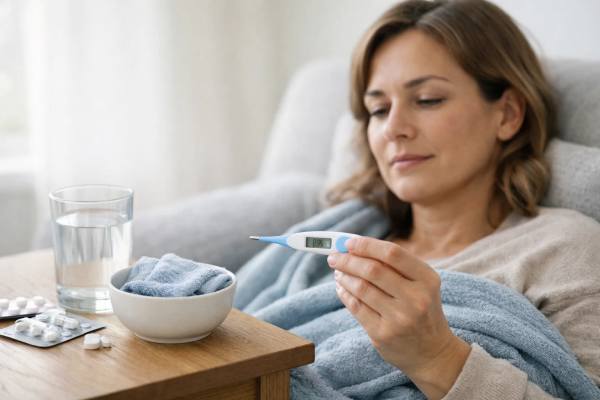
A fever can feel alarming, but it is often the body’s purposeful response to infection. The goal is not to “erase” every degree of temperature—it is to help you (or your child) stay comfortable, hydrated, and monitored for warning signs. When you use the right tools, most fevers improve with simple steps: accurate temperature checks, sensible dosing of fever reducers when truly needed, and supportive care that prevents dehydration and exhaustion. The biggest risks usually come from common mistakes: overdosing medications, combining products that contain the same ingredient, using extreme cooling methods, or delaying medical care when symptoms suggest something more serious. This guide focuses on safe, practical ways to bring a fever down while protecting your liver, kidneys, stomach, and overall recovery—and it clarifies when a fever should be treated at home versus evaluated urgently.
Key Insights
- Lowering fever can improve comfort, sleep, and fluid intake, which often supports recovery.
- Treat how the person feels, not the thermometer number alone, in most routine viral illnesses.
- Avoid doubling up on acetaminophen-containing products and avoid aspirin for anyone under 19.
- Use weight-based dosing for children and track dose times to prevent accidental overdose.
- Seek urgent care immediately for young infants with fever or for any fever with severe symptoms.
Table of Contents
- Know what a fever is and when it helps
- Decide when to treat and when to watch
- Use fever reducers correctly: acetaminophen and ibuprofen
- Non-drug ways to cool down and feel better
- Special situations: infants, kids, pregnancy, older adults and chronic illness
- Common mistakes that keep fevers high or make you sicker
- When to call a clinician or seek urgent care
Know what a fever is and when it helps
A fever is usually defined as a core body temperature of 38.0°C (100.4°F) or higher. It is not a disease by itself—it is a signal that the immune system is reacting to something, most commonly a viral or bacterial infection. Fever can make it harder for some germs to multiply and can enhance certain immune responses. That does not mean every fever is “good,” but it helps explain why the body defends a higher set point instead of treating it as an emergency by default.
A key safety detail: how you measure matters. Temperatures can differ by site and device. Rectal measurements (commonly used in infants) tend to reflect core temperature more closely, while armpit readings often run lower and can miss a true fever. Forehead scanners can be convenient but may be less reliable if the room is cold, the skin is sweaty, or the device is used too far away. If a decision depends on the number (for example, whether an infant needs urgent care), use the most reliable method you can and repeat the measurement if it does not match how the person looks.
Also notice the pattern of the illness. Many routine infections cause fevers that rise and fall over a few days. A fever that briefly improves with medication and returns later is common and not automatically dangerous. What matters more is the whole picture: breathing, hydration, alertness, urine output, rash, pain location, and whether symptoms are improving overall.
Finally, “breaking a fever” is often misunderstood. You are usually aiming for a modest drop—enough to reduce chills, headache, muscle aches, or irritability—so the person can drink, rest, and recover. Chasing a perfectly normal temperature can lead to overtreatment and mistakes that cause more harm than the fever itself.
Decide when to treat and when to watch
In most otherwise healthy people, treating a fever is primarily about comfort and function. If the person is drinking fluids, breathing comfortably, and able to rest, you may not need medication just because the thermometer reads 38–39°C (100.4–102.2°F). On the other hand, even a lower fever may deserve treatment if it causes significant discomfort, prevents sleep, worsens dehydration, or triggers migraines.
Use these practical questions to decide what to do next:
- How does the person look and act? A child who plays, makes eye contact, and drinks after calming is less concerning than a child who is listless, inconsolable, or difficult to wake.
- Can they hydrate? Dry mouth, no tears, dizziness on standing, or minimal urination are reasons to focus on fluids first—and they can also be reasons to seek care.
- Is there a clear cause and a typical timeline? Cold-like symptoms with a fever for 1–3 days is common; fever that persists beyond several days, or returns after improving, deserves more attention.
- Are there risk factors? Pregnancy, immune suppression, significant heart or lung disease, and very young age change the threshold for calling a clinician.
For many viral illnesses, the safest “watchful waiting” plan is simple: check temperature only when it affects decisions (not every hour), encourage frequent fluids, and reassess symptoms at set times (for example, morning, mid-afternoon, and bedtime). If you choose to use a fever reducer, treat it like a measured intervention: give an appropriate dose, wait long enough to see the effect, and then focus on rest and hydration rather than repeated temperature checks.
One more nuance: studies in adults with fever (especially in hospital settings) suggest that aggressively suppressing fever does not necessarily improve major outcomes like survival. That is another reason to treat fever thoughtfully—aiming for comfort and safety rather than a “perfect number.”
Use fever reducers correctly: acetaminophen and ibuprofen
For most people, the safest and most effective fever reducers are acetaminophen (paracetamol) and ibuprofen. They work differently, so the right choice depends on age, medical history, hydration status, and other medications.
Acetaminophen (paracetamol): when it fits best
Acetaminophen is often preferred when you want a gentler option for the stomach. It can reduce fever and ease aches, and it is commonly used across age groups (including pregnancy, with clinician guidance).
Key safety rules:
- Adults: follow the label carefully and be conservative with total daily dose. Many clinicians advise staying at or below 3,000 mg per day unless specifically directed otherwise.
- Children: dose by weight, not by age. A common range is 10–15 mg/kg per dose every 4–6 hours as needed, with a daily maximum based on weight and product guidance.
- Avoid doubling: acetaminophen is hidden in many multi-symptom cold and flu products. Accidental overdose is a major cause of liver injury.
Avoid or use only with clinician guidance if you have significant liver disease, heavy alcohol use, or you are taking other medications that affect the liver.
Ibuprofen: when it can be a better choice
Ibuprofen is an NSAID (nonsteroidal anti-inflammatory drug). It reduces fever and inflammation and may help more with sore throat pain, body aches, or inflammatory discomfort.
Key safety rules:
- Adults: take with food if possible to reduce stomach upset. Avoid exceeding labeled daily limits.
- Children: dose by weight; a common range is 5–10 mg/kg per dose every 6–8 hours as needed, with a daily maximum based on weight and product guidance.
- Avoid in dehydration: NSAIDs can stress the kidneys when someone is vomiting, has diarrhea, or is not drinking well.
Avoid or use only with clinician guidance if there is kidney disease, a history of stomach ulcers or GI bleeding, certain heart conditions, anticoagulant use, or NSAID allergy. Ibuprofen is generally not recommended in pregnancy unless specifically advised, especially later in pregnancy.
Should you alternate or combine them?
Alternating can be confusing and increases dosing errors. In many homes, the safest approach is:
- Choose one medication based on age and risk factors.
- Give a correct dose.
- Reassess after the expected onset (often 30–60 minutes).
- Only consider switching strategies if symptoms remain significant and you can track doses accurately.
If a clinician recommends alternating, write down the exact schedule, dose, concentration, and time given. Most mistakes happen at 2 a.m. when someone relies on memory instead of a written log.
Non-drug ways to cool down and feel better
Non-drug care often makes the biggest difference because it supports the body while the immune system does the work. It can also reduce how much medication you need.
Focus on hydration first
Fever increases fluid loss through faster breathing and sweating. Aim for small, frequent sips rather than large amounts at once, especially if nausea is present. Helpful options include water, oral rehydration solutions, broths, and diluted juice. For children, popsicles or oral rehydration ice chips can be an easy win. A practical target is regular urination and a mouth that is not dry and sticky.
Create a “cool but not cold” environment
Overheating from heavy blankets can keep a fever feeling worse. Use light clothing, breathable bedding, and a comfortably cool room. If chills are intense, use a light blanket until shivering settles, then remove extra layers. The goal is to stop the cycle of shivering (which generates heat) without trapping too much warmth afterward.
Use gentle cooling only
Tepid (lukewarm) measures can help if the person feels hot and uncomfortable:
- A lukewarm sponge bath on exposed skin can provide temporary relief.
- A fan can help evaporate sweat, but avoid blasting cold air that triggers shivering.
Avoid extreme methods like ice baths, very cold showers, or rubbing alcohol on skin. These can cause shivering, which raises internal temperature, and alcohol can be absorbed through the skin or inhaled.
Support sleep and reduce strain
Rest is a real intervention. Lower lights, reduce noise, and avoid “checking the temperature” repeatedly unless symptoms change. If congestion is disrupting sleep, humidified air, saline rinses (age-appropriate), and head elevation can improve breathing comfort, which often improves the overall fever experience.
A useful mindset: fever care is often a hydration and comfort plan with medication as a tool—not the whole strategy.
Special situations: infants, kids, pregnancy, older adults and chronic illness
Some groups need a lower threshold for action because complications are more likely or symptoms are harder to interpret.
Infants and young babies
Fever in very young infants can signal a serious infection even when the baby does not look severely ill.
- Under 3 months: a rectal temperature of 38.0°C (100.4°F) or higher is typically treated as urgent and should be evaluated promptly.
- 3–6 months: higher fevers or any concerning symptoms warrant a call to a clinician the same day.
Do not give fever reducers to a very young infant without guidance. In this age group, the priority is accurate measurement and prompt evaluation.
Children
For most children over 6 months, fever is common and usually not dangerous by itself. The goals are comfort, hydration, and monitoring. Focus on behavior and drinking more than the number.
Medication tips for kids:
- Always use the dosing syringe or cup that comes with the product.
- Dose by current weight and confirm the concentration (infant drops and children’s liquids can differ by region and product).
- Avoid multi-symptom products for young children unless advised, because they increase the risk of ingredient overlap.
Febrile seizures can occur in some children (usually 6 months to 5 years). They are frightening but often brief and not typically prevented by fever reducers. If a seizure happens, place the child on their side, keep them safe from injury, and seek urgent evaluation—especially for a first seizure.
Pregnancy
Fever in pregnancy should be taken seriously because sustained high temperature can be harmful, especially early in pregnancy. Contact an obstetric clinician for guidance about cause, monitoring, and medication choice. Acetaminophen is commonly used when needed; avoid NSAIDs unless specifically directed.
Older adults and people with chronic illness
In older adults, fever may be lower even in significant illness, and dehydration can happen quickly. People with chronic kidney disease, heart failure, stomach ulcers, bleeding risk, or immune suppression should call a clinician earlier in the course of illness.
If the person takes blood thinners, steroids, chemotherapy, biologic immune therapies, or has had an organ transplant, treat fever as a reason to seek advice promptly—even if the temperature is only mildly elevated.
Common mistakes that keep fevers high or make you sicker
Most fever “problems” come from preventable errors. These are the ones clinicians see most often.
1) Overdosing or stacking ingredients
The most dangerous mistake is taking multiple products that contain acetaminophen (paracetamol) or combining NSAIDs without realizing it. Cold and flu multisymptom products are frequent culprits. If you are using a fever reducer, keep other medications simple and check the active ingredients line by line.
2) Alternating medications without a written plan
Alternating acetaminophen and ibuprofen can be done, but confusion causes missed doses, double doses, or too-frequent dosing. If you alternate, use a written log with:
- medication name
- dose (mg and mL)
- time given
- next eligible time
3) Using extreme cooling methods
Ice baths, cold showers, and alcohol rubs can backfire by triggering shivering and stress. Shivering generates heat and can make a fever harder to bring down. Alcohol on skin is unsafe, especially for children.
4) Bundling up to “sweat it out”
Heavy blankets and too many layers trap heat and can increase discomfort. Use light layers and adjust gradually based on chills versus overheating.
5) Treating the number instead of the person
Repeated temperature checks can create anxiety and overtreatment. If someone is improving—drinking, urinating, breathing comfortably, and resting—obsessing over small fluctuations can lead to unnecessary medication.
6) Ignoring dehydration and nutrition basics
Fever reduces appetite. That is usually fine for a day or two, but fluids are non-negotiable. If vomiting or diarrhea is present, prioritize oral rehydration solutions. Small sips every few minutes are often more effective than large drinks.
7) Assuming antibiotics are needed
Most fevers are viral. Unnecessary antibiotics can cause side effects and do not shorten viral illness. The better approach is monitoring symptoms and seeking evaluation when warning signs suggest bacterial infection or complications.
Fixing these mistakes often “breaks” the fever experience faster than adding more medication.
When to call a clinician or seek urgent care
Use symptoms and risk level—not only temperature—to decide when to seek help. The situations below deserve prompt medical advice or urgent evaluation.
Seek urgent care immediately for:
- Infants under 3 months with temperature 38.0°C (100.4°F) or higher
- Trouble breathing, blue lips, or severe wheezing
- Chest pain, fainting, severe weakness, or new confusion
- Stiff neck, severe headache with light sensitivity, or persistent vomiting
- Seizure (especially a first seizure), or any seizure lasting more than a few minutes
- A rapidly spreading rash, a rash that does not blanch with pressure, or purple spots
- Signs of severe dehydration: very little urine, very dry mouth, no tears, lethargy
- Fever after significant immune suppression (chemotherapy, transplant meds, high-dose steroids, certain biologics)
Call a clinician the same day if:
- Fever is 39.4°C (103°F) or higher in adults, or the person looks very ill
- Fever lasts more than 3 days in adults or keeps returning after improving
- There is severe sore throat with drooling or difficulty swallowing, ear pain with worsening symptoms, or localized pain (such as one-sided facial pain, chest pain with cough, or flank pain)
- A child is not drinking, has fewer wet diapers than usual, or is unusually sleepy or irritable
- You suspect a medication reaction or you cannot safely manage dosing at home
A practical “safety check” at home
After a dose of fever reducer (if used) and some fluids, reassess within 60–90 minutes:
- Is breathing easier?
- Is the person more alert?
- Are chills and aches calmer?
- Can they sip fluids and keep them down?
If the answer is consistently “no,” or symptoms are worsening, it is time to seek care—even if the temperature is not extremely high. Trust the overall trend more than one reading.
Prompt evaluation is especially important when fever is paired with severe symptoms, very young age, pregnancy, or immune suppression. Early care is not overreacting—it is risk management.
References
- Evaluation and Management of Well-Appearing Febrile Infants 8 to 60 Days Old – PubMed 2021 (Guideline)
- Fever in under 5s: assessment and initial management – NCBI Bookshelf 2021 (Guideline)
- Fever therapy in febrile adults: systematic review with meta-analyses and trial sequential analyses – PMC 2022 (Systematic Review)
- Antipyretic Use in Noncritically Ill Patients With Fever: A Review – PMC 2024 (Review)
Disclaimer
This article is for general educational purposes and does not replace individualized medical advice, diagnosis, or treatment. Fever can be a sign of minor illness or a serious condition depending on age, medical history, and symptoms. Always follow the dosing instructions on the medication label and use weight-based dosing for children. Seek urgent medical care for young infants with fever, for fever with severe or rapidly worsening symptoms, or if you are pregnant, immunocompromised, or unsure how to manage symptoms safely.
If you found this guide helpful, consider sharing it on Facebook, X (formerly Twitter), or any platform you prefer so others can use it when fever strikes.