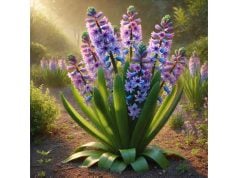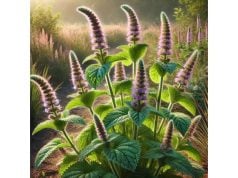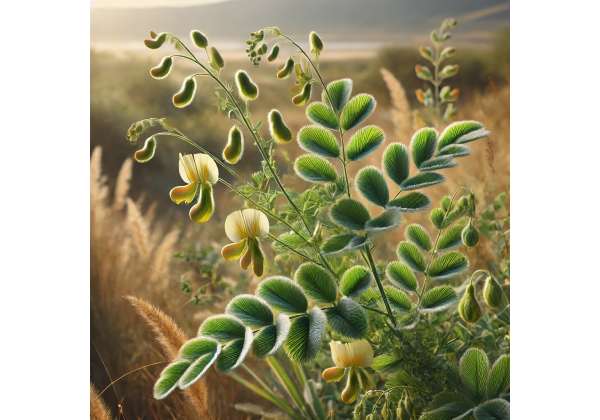
Huang Qi is one of the best-known tonic roots in traditional Chinese medicine, valued for supporting resilience, recovery, appetite, and the body’s “protective qi.” Modern readers usually encounter it as astragalus root, a supplement promoted for immune support, fatigue, stress adaptation, and general vitality. One clarification matters before anything else, though. The title combines a traditional herb name with a botanical label that do not usually point to the same standard medicinal source. In practice, Huang Qi almost always refers to Astragali Radix, prepared from Astragalus membranaceus or Astragalus mongholicus rather than Astragalus baicalensis. Because that distinction affects quality, safety, and evidence, this article discusses Huang Qi in its usual medicinal sense.
That herb has earned lasting attention because it sits at an interesting crossroads: deeply traditional, chemically complex, and actively researched. Its polysaccharides, saponins, and flavonoids help explain why it is studied for immune, metabolic, and fatigue-related effects. Even so, Huang Qi works best as a supportive herb, not a shortcut or cure-all.
Key Takeaways
- Huang Qi is most often used to support immune function and recovery during fatigue or stress.
- Traditional use also includes low appetite, loose stools, spontaneous sweating, and weak post-illness energy.
- A common traditional daily range is 9 to 30 g of dried root in decoction form.
- People who are pregnant, breastfeeding, or managing autoimmune disease should avoid self-prescribing it.
Table of Contents
- What is Huang Qi really?
- Key compounds and medicinal properties
- What Huang Qi may help with
- How Huang Qi is used
- How much Huang Qi per day?
- Side effects, interactions, and who should avoid it
- What the evidence really says
What is Huang Qi really?
Huang Qi is the traditional Chinese name for Astragali Radix, a medicinal root used for more than two millennia. In everyday English, it is usually sold simply as astragalus root. The official medicinal material comes mainly from Astragalus membranaceus and Astragalus mongholicus. That point deserves emphasis because the title of this article uses Astragalus baicalensis, which is not the usual pharmacopoeial source of Huang Qi. The distinction is not a minor botanical detail. It affects what chemistry you get, what evidence applies, and whether a product matches the research people quote.
In traditional Chinese medicine, Huang Qi belongs to the class of qi tonics. It is commonly described as sweet, slightly warm, and linked especially with the lung and spleen systems. Traditional uses include weak appetite, tiredness, loose stools, spontaneous sweating, poor recovery after illness, and a low-resilience pattern sometimes described as “defensive qi deficiency.” That language is classical rather than biomedical, but it points to a recognizable theme: Huang Qi is used to help people rebuild capacity rather than to produce a quick symptomatic effect.
The part used is the root, usually harvested after a few years of growth, sliced, dried, and then simmered. This is important because many consumers think of astragalus as a capsule first, when historically it was a broth herb and decoction herb. In traditional practice, it is often cooked slowly, sometimes with food, and rarely treated as an isolated “super supplement.”
Another reason Huang Qi stands out is that it bridges two worlds unusually well. Traditional practitioners value it as a foundational tonic. Modern researchers value it because its chemistry is rich and measurable. That has made it one of the most studied classic tonic herbs, especially in work on immune signaling, inflammatory pathways, metabolic stress, and cellular aging.
Still, Huang Qi is easy to misunderstand. It is not caffeine-like, not a direct stimulant, and not a magic shield against illness. Its role is steadier and more supportive. People usually take it to build resilience over days or weeks, not to create a dramatic same-day change. That makes it closer in spirit to eleuthero as a steady resilience herb than to something used for fast relief.
So what is Huang Qi, really? It is a traditional tonic root with a long record of use, a strong identity in Chinese medicine, and a growing but still imperfect modern research base. To understand it well, you need both halves of the picture: the traditional herb name and the correct medicinal species behind it.
Key compounds and medicinal properties
Huang Qi’s reputation is closely tied to three major groups of compounds: polysaccharides, saponins, and flavonoids. These are the constituents most often used to explain why the root is studied for immune modulation, fatigue support, metabolic effects, and tissue recovery.
The polysaccharides are probably the most discussed in modern immunology-oriented research. Rather than acting like a simple “immune booster,” they appear to interact with immune signaling in a more regulatory way. That matters because good herbal support is not always about pushing the immune system higher. Sometimes it is about nudging balance, barrier function, and resilience under stress.
The saponins include astragalosides, especially astragaloside IV, which has become a marker compound in quality assessment and mechanistic research. Astragalosides are often linked with cellular protection, cardiovascular interest, and aging-related pathways. They are one reason Huang Qi is frequently discussed in relation to vascular health and longer-term resilience rather than just cold-season support.
The flavonoids, including compounds such as calycosin and formononetin, add antioxidant and signaling activity to the picture. These molecules help explain why the herb is studied not only in immune contexts but also in inflammation, glucose handling, oxidative stress, and tissue repair models.
Taken together, these compounds help give Huang Qi its broad medicinal profile. The most commonly described properties include:
- immunomodulatory rather than purely stimulating effects,
- adaptogen-like stress support,
- antioxidant activity,
- anti-inflammatory signaling,
- metabolic and kidney-related interest,
- and support for recovery and wound repair.
That sounds impressive, but the practical lesson is more nuanced. Complex chemistry can make a herb versatile, yet it can also make it harder to reduce the herb to one headline claim. Huang Qi is not just “for immunity,” even though that is how it is often marketed. Its traditional role is broader: helping an underpowered body regain stability.
This chemistry also explains why form matters so much. A slow decoction draws a different profile than a concentrated capsule, and a standardized extract may emphasize certain compounds more than a traditional soup broth does. That is one reason modern research results do not always map neatly onto classical use.
Readers who like chemically well-defined herbs may notice that Huang Qi sits between whole-herb tradition and modern constituent science. It is not as narrowly identified as a single-compound drug, but it is far better characterized than many folk herbs. In that sense, it resembles botanicals with recognizable bioactive groups, where the chemistry helps explain the tradition without fully replacing it.
The most useful conclusion is this: Huang Qi’s medicinal properties are plausible because its chemistry is rich, diverse, and biologically active. But chemistry alone does not prove clinical benefit. It gives the herb a serious scientific basis, while the real test remains how well those compounds perform in human use.
What Huang Qi may help with
Huang Qi is best understood as a support herb for low vitality states, not as a targeted herb for one isolated symptom. Traditional use and modern research overlap most clearly in three areas: immune resilience, fatigue or low stamina, and supportive use during chronic recovery.
For immune health, Huang Qi is often used when someone seems to “catch everything,” recovers slowly, or feels run down after stress. Traditional language would describe this as weak protective qi. Modern language tends to focus on immune signaling, stress burden, and recovery capacity. That does not mean Huang Qi prevents every infection. It means it may be useful when a person’s baseline resilience feels low.
Fatigue is another major reason people use it. This is usually not the kind of fatigue improved by one strong coffee. Huang Qi is more often chosen for gradual, dragged-out tiredness, weak appetite, low motivation during recovery, and stress-linked depletion. Its adaptogen label comes from that broader pattern: it may help the body tolerate physical and mental strain over time rather than sharply raising energy in the moment.
Digestive support is also part of the traditional profile, especially when tiredness and loose stools appear together. In classical terms, this is spleen qi deficiency. In practical terms, it points to people who feel depleted, undernourished, or slow to recover after illness rather than people seeking a strong digestive bitter or laxative herb.
Other uses are more conditional. Huang Qi appears in formulas aimed at:
- spontaneous sweating,
- post-illness weakness,
- poor wound recovery,
- edema or fluid issues in traditional contexts,
- and supportive care in chronic disease settings.
In modern clinical literature, adjunctive use has been explored for kidney disease, cancer-related fatigue, and broader supportive care. These areas are promising but not settled. Many positive findings come from formula studies, hospital settings, or add-on use rather than from Huang Qi alone. That means the herb may be helpful, but the size and certainty of its effect remain harder to pin down than supplement marketing often suggests.
A practical way to judge Huang Qi is to ask whether the goal is “build and steady” or “attack and fix.” If the goal is building recovery capacity, supporting mild stress fatigue, or maintaining immune steadiness over time, Huang Qi makes sense. If the goal is a quick symptom shutdown, it is usually not the best first pick.
It also differs from short-horizon immune herbs. Someone may choose echinacea for brief immune-season support, but Huang Qi is more often chosen as a longer-range tonic strategy.
So what may Huang Qi help with? Most plausibly, it may support immune resilience, help with fatigue tied to stress or recovery, and fit broader formulas for low-strength patterns. What it should not be sold as is a guaranteed immune shield, a substitute for medical treatment, or a universal cure for chronic illness. Its strength lies in support, not spectacle.
How Huang Qi is used
Huang Qi has been used in more forms than many people realize. The traditional image is a pot of sliced root simmering slowly, but modern use now includes capsules, powders, tinctures, granules, teas, and concentrated extracts. Each form changes the experience slightly, and sometimes it changes the expectations too.
The classic method is decoction. Sliced or dried root is simmered in water, often for 20 to 25 minutes or longer, then strained and consumed. This form suits traditional tonic use because it is gentle, food-like, and easy to combine with other roots. Many people also add Huang Qi to broths and soups, especially in convalescence or during cold seasons. In practice, this is often more consistent with historical use than grabbing a high-potency capsule.
Capsules and powders are the most common modern forms. They are convenient, portable, and better suited to people who do not want to prepare decoctions. The tradeoff is that convenience can flatten a traditionally nuanced herb into a generic “immune pill.” That does not make capsules wrong, but it does make thoughtful product selection more important.
Tinctures and liquid extracts are sometimes chosen for stress, fatigue, or formula blending. These can work well in clinical herbal practice, but the label should clearly show the herb identity, plant part, extraction ratio, and solvent type. Astragalus products vary widely, and vague labeling often hides that variation.
Granules, common in Chinese medicine practice, are another useful middle ground. They dissolve in hot water and are easier to standardize than home-prepared roots. For people who want a traditional style of use without cooking roots daily, granules can be a practical compromise.
Huang Qi is also frequently combined with other herbs rather than used alone. It often appears with roots or tonics chosen for blood building, digestive support, or recovery. One classic example is pairing with Chinese angelica in restorative formulas, where the goal is broader rebuilding rather than a single-action effect.
In practical use, people often take Huang Qi in these situations:
- During periods of frequent minor illness or slow recovery.
- When chronic stress leaves them feeling depleted rather than overstimulated.
- As part of a longer-term tonic routine in colder months.
- During recovery from illness, surgery, or burnout, when approved by a clinician.
- As part of a formula rather than as a solo herb.
The most important usage tip is to match the form to the goal. Decoction or broth makes sense for traditional rebuilding. Capsules make sense for convenience. Granules make sense for formula-style use. What matters is not choosing the fanciest format, but choosing one that fits the intended use, the person’s routine, and the quality of the product.
How much Huang Qi per day?
Huang Qi dosing depends heavily on the form and the purpose. That is why dosing advice can look confusing until you separate traditional root use from extract use.
For traditional Chinese medicine decoctions, a common daily range is 9 to 30 g of dried root. This is the best-known classical range and the one most often cited in pharmacopoeial and clinical summaries of Huang Qi. At that level, the herb is typically simmered as a decoction rather than swallowed dry. This is a meaningful point: 9 to 30 g of root in a pot is not the same thing as 9 to 30 g of powder in capsules.
For modern nonstandardized oral use aimed at general immune support or adaptogen-style stress support, lower dried-root equivalents such as 2 to 4.8 g per day are also commonly used. These lower ranges often apply to powders, extracts, or supplement-style products rather than to full traditional decoctions.
This gives Huang Qi two practical dose worlds:
- Traditional tonic dose: usually 9 to 30 g dried root per day in decoction.
- Modern supplement-style support dose: often around 2 to 4.8 g dried-root equivalent per day, depending on the preparation.
Timing depends on the intention. Huang Qi is often taken earlier in the day or split into two doses because it is used for steady support, energy, and recovery. Many practitioners avoid giving large amounts late at night in people who are already wired, agitated, or heat-prone, though this is more a matter of traditional pattern judgment than a universal rule.
Duration also matters. Huang Qi is usually not chosen as a one-dose herb. It tends to be used over days or weeks, especially when the goal is recovery, resilience, or gradually improved stamina. If a product promises dramatic same-day immune transformation, it is selling the herb in the wrong spirit.
A few dosing mistakes are common:
- comparing grams of root directly with milligrams of concentrated extract,
- assuming more is always better,
- using a high-dose decoction when the goal is only light daily support,
- and forgetting that formulas can change how much of the herb is appropriate.
For people new to tonic herbs, dosing discipline matters as much as the herb itself. A modest, well-chosen dose taken consistently is usually more useful than aggressive dosing based on internet enthusiasm. This is especially true because the herb’s effect is usually cumulative and supportive.
Compared with more standardized daily-support herbs such as Asian ginseng in structured tonic use, Huang Qi still requires a little more attention to form and purpose. That is not a flaw. It is part of what makes traditional herb dosing more contextual than supplement dosing.
Side effects, interactions, and who should avoid it
Huang Qi is often described as well tolerated, but “well tolerated” is not the same as universally safe. Most people who use appropriate oral amounts do not report dramatic adverse effects, yet caution still matters, especially with chronic disease, pregnancy, and immune-related medications.
Mild side effects, when they occur, tend to be fairly ordinary. Some people notice digestive discomfort, bloating, or loose stools if the form or dose does not suit them. Others simply feel that the herb is too warming or too tonic during acute illness, especially when fever, irritability, or strong inflammatory symptoms are present. In traditional terms, that is why it is not always used in “excess” conditions.
The most important modern safety issue is immune context. Because Huang Qi may influence immune signaling, people with autoimmune disease should be cautious. That does not automatically mean no one with autoimmunity can ever use it, but it does mean self-prescribing is a poor idea. The same caution applies to anyone taking immunosuppressive medication, including after organ transplantation or during treatment for autoimmune disorders.
Pregnancy and breastfeeding are also important caution zones. Human safety data are not strong enough to make routine use casual, and animal data raise enough concern to justify avoidance unless a qualified clinician specifically recommends it.
Other groups who should be careful include:
- people taking multiple prescription medicines,
- people with severe inflammatory or autoimmune disease,
- people using the herb as a substitute for medical care,
- and anyone buying poorly labeled products with unclear species or extract strength.
Potential interaction areas include:
- immunosuppressant medicines,
- drugs used in autoimmune disease management,
- therapies where immune activation would be undesirable,
- and, in some cases, medications for blood sugar or blood pressure when formulas are complex.
Not every interaction is firmly established, but the responsible approach is conservative. A herb with immune and metabolic effects should not be layered onto a complicated medication regimen without review.
There is also a traditional contraindication issue that modern readers rarely hear about. In classical use, Huang Qi is not considered appropriate for every pattern. When there is acute excess, marked heat, or certain stagnation patterns, it may be the wrong herb even if the person feels tired. This is one reason tonic herbs are more context-sensitive than people assume.
Compared with herbs known for more obvious interaction profiles, such as licorice and its medication concerns, Huang Qi may look gentler. But gentler is not the same as risk-free.
The safest bottom line is simple: Huang Qi is usually a low-drama herb when used properly, but it should be avoided or professionally reviewed in pregnancy, breastfeeding, autoimmune disease, and any situation involving immune-suppressing drugs or significant chronic illness.
What the evidence really says
The evidence for Huang Qi is stronger than the evidence for many traditional herbs, but it is still more mixed than supplement marketing suggests.
The strongest part of the evidence is not a single blockbuster trial. It is the overall pattern: long traditional use, well-described chemistry, a large amount of laboratory work, animal data, and a growing body of human studies. This gives Huang Qi a real foundation. It is not a vague folk herb with no scientific footprint.
At the same time, the human evidence has several limitations that readers should keep in view.
First, many clinical studies use Huang Qi as part of a formula or as an adjunct to standard care, not as a stand-alone herb. That is faithful to how Chinese medicine often works, but it makes it harder to say exactly how much benefit comes from Huang Qi alone.
Second, study quality is uneven. Some reviews report promising results for kidney-related outcomes, cancer-related fatigue, immune-related measures, or recovery support, but they also repeatedly mention small sample sizes, limited geographic concentration, varying formulas, and methodological weaknesses. That means the signal is interesting, but the confidence level is not as high as people often assume.
Third, mechanisms are easier to prove than clinical outcomes. It is fairly plausible that astragalus polysaccharides and astragalosides influence immune and inflammatory pathways. It is much harder to prove that taking a supplement in daily life creates a large, consistent, patient-noticeable effect across different conditions.
This is the most honest way to summarize the evidence:
- Traditional use is strong.
- Chemical plausibility is strong.
- Preclinical support is strong.
- Human clinical support is promising but uneven.
- Condition-specific claims are often broader than the best evidence allows.
That does not reduce Huang Qi to hype. It simply places it where it belongs: a useful supportive herb with serious traditional credibility and meaningful modern interest, but not a universal answer. For fatigue, immune steadiness, and recovery, it may help the right person. For serious disease, it belongs in supportive care, not as a replacement for diagnosis, medication, or evidence-based treatment.
This is also why Huang Qi is best framed as a tonic strategy rather than a miracle herb. People looking for gradual improvement in resilience may get more from it than people expecting a fast, dramatic effect. That pattern is common in traditional tonics and one reason comparisons with schisandra and other long-range adaptogenic herbs are often more useful than comparisons with quick-relief supplements.
In the end, the evidence says Huang Qi is worth taking seriously, but not uncritically. It has earned respect. It has not earned exaggeration.
References
- ASTRAGALUS – ASTRAGALUS MEMBRANACEUS 2025 (Monograph)
- Astragali radix (Huangqi): a time-honored nourishing herbal medicine 2024 (Review)
- From Traditional Efficacy to Drug Design: A Review of Astragali Radix 2025 (Review)
- Astragalus polysaccharides: structure-immunomodulation relationships, multi-target pharmacological activities, and cutting-edge applications in immune modulation 2025 (Review)
- Efficacy of Astragalus Membranaceus (Huang Qi) for Cancer-Related Fatigue: A Systematic Review and Meta-Analysis of Randomized Controlled Studies 2025 (Systematic Review)
Disclaimer
This article is for educational purposes only and is not medical advice, diagnosis, or treatment. Huang Qi can interact with medical conditions and medications, especially those involving immune suppression or autoimmune disease. It should not replace prescribed care for kidney disease, cancer, chronic fatigue, infections, or any other serious health problem. Speak with a qualified healthcare professional before using Huang Qi if you are pregnant, breastfeeding, take prescription medicines, or have a chronic condition.
If this guide was useful, please share it on Facebook, X, or another platform your readers trust.